The global workplace is facing a silent productivity drain: depression and anxiety now strip away an estimated 12 billion working days every single year, roughly US $1 trillion in lost output.
Yet the most powerful lever for reversing that loss isn’t a corporate HQ in Geneva or Silicon Valley; it’s the desk (or screen) of the frontline manager. A 2023 Workforce Institute study found that 69% of employees say their direct manager has as much impact on their mental health as their spouse, and more than their doctor or therapist.
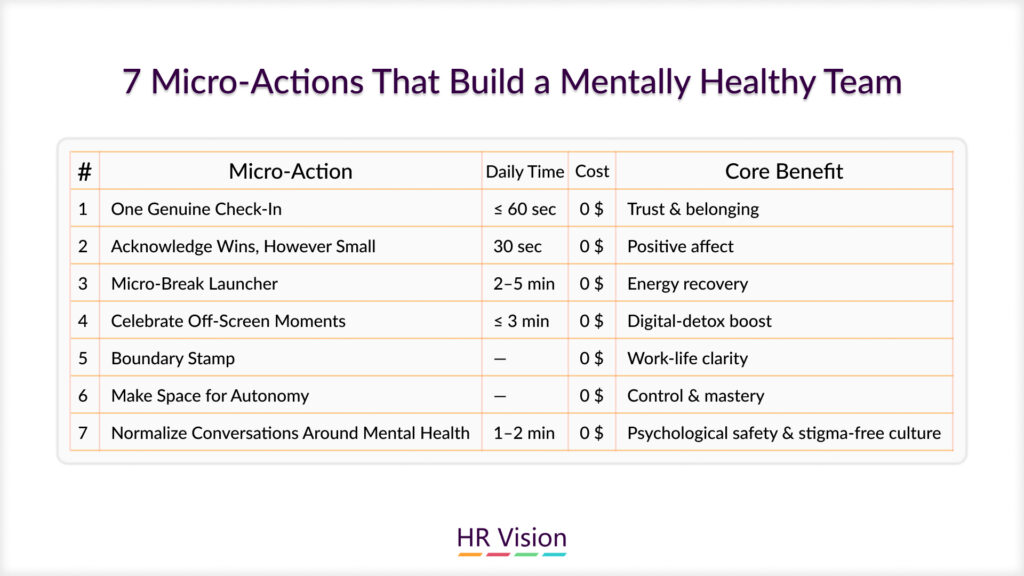
Culture isn’t forged in annual wellness drives; it’s written in the micro-moments we repeat every day—the quick check-in, the after-hours email you don’t send, the 30-second shout-out. The seven micro-actions that follow take minutes, cost nothing, and compound into a team that’s healthier, happier, and higher-performing.
- One Genuine Check-In
What it is: Kick off every workday or meeting with a sincere “How are you — really?” It’s a 60-second habit that replaces polite small-talk with real connection.
Why it works: When managers skip regular one-to-ones, engagement nose-dives: only 15% of those employees feel engaged. But when managers do meet with their people consistently, engagement almost triples. Mental Health America flags “regular manager check-ins” as the very first step toward a supportive, lower-stress culture.
How to make it effortless:
- • Drop a one-line pulse question into every agenda (e.g., “Energy level 1-5?”).
- • Model candour yourself: “I’m running low today, so I’ll tackle lighter tasks first.”
- • Remote team? Automate a morning Slack prompt that asks, “How’s your headspace?”
Metric to watch: Add “My manager cares about me as a person” to your weekly pulse survey. A steady climb means the habit is sticking.
- Acknowledge Wins, However Small
What it is: Throw confetti for the little stuff — a solid first draft, a rescued client call, a bug zapped before lunch. Publicly naming these micro-victories takes 30 seconds, but lets people know their effort is seen.
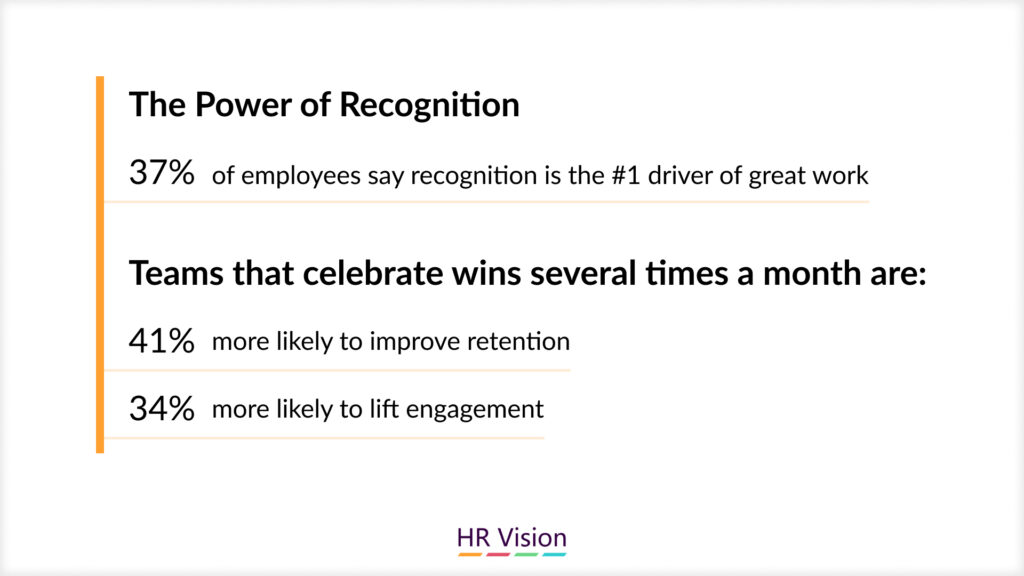
Why it works: Our brains love progress. Even minor accomplishments trigger a burst of dopamine that boosts mood and motivation and nudges us to keep going. Teams that bake recognition into daily life reap hard numbers too: in one 2024 survey, 37% of employees ranked recognition the single biggest driver of great work, and companies that celebrate wins several times a month are 41% more likely to improve retention and 34 % more likely to lift engagement. The University of Minnesota’s “Small Wins, Big Impact” guide underscores that noticing everyday progress sustains energy during long projects.
How to make it stick:
- • Spin up a #small-wins Slack or Teams channel and prompt “Who deserves a quick high-five today?”
- • End stand-ups with a 60-second shout-out circle—peer-to-peer, not just top-down.
- • Keep praise specific (“Thanks for turning that deck around under an hour”) and timely (within 24 hours of the action).
Metric to watch: Simply count shout-outs per month and track the engagement-survey item “I receive recognition when I do good work.” A steady uptick in both numbers is your green light that the habit is landing.
- Micro-Break Launcher
What it is: Make ultra-short pauses (stretch, 2-minute walk, quick chat) the norm, not the exception. Think of them as “mental blinkers” that reset attention before fatigue snowballs.
Why it works: Productivity isn’t a straight line; it’s a wave. Harvard Business Review calls small breaks “an essential energy-management tool,” noting they can restore focus and ward off burnout even on the busiest days. A 2025 study highlighted in ScienceAlert found that accountants who sprinkled in micro-breaks—and had supportive supervisors—reported significantly lower end-of-day fatigue and made fewer errors, with some pauses lasting as little as one minute.
How to make it stick
- • Adopt a “90 min on → 5 min off” rhythm; schedule Outlook or Google nudges so breaks don’t rely on willpower.
- • Share a “micro-menu” of break ideas (door-frame stretches, balcony breath, refill-your-water laps) to remove decision friction.
- • In virtual meetings, rotate a break DJ who cues a 2-minute stretch video or invites everyone to stand.
Metric to watch: Add a weekly pulse item (“I finish the day with energy to spare”) and track error rates or task cycle times. Rising energy and falling rework tell you the habit is paying off.
- Celebrate Off-Screen Moments
What it is: Make “offline time” worth cheering for: a meeting-free hour, a lunchtime walk without phones, a white-board brainstorm in a room where laptops stay shut. Publicly celebrating these pockets of disconnection says, Screens off is success, not slacking.
Why it works: Short digital-detox bouts lower stress hormones, sharpen focus, and can even lift productivity. One 2025 CTO Magazine case study reported a 30% jump in output after a creative agency trialled tech-free blocks each week. Neuroscientists also found that just 72 hours of “essential-only” phone use rewired brain activity linked to distraction and fatigue, underscoring how quickly the mind rebounds when notifications go silent.
How to make it stick:
- • Launch a “Best Offline Recharge” shout-out every Friday in Slack/Teams; winners share a photo from their walk, sketchbook, or paper notebook.
- • Drop screen-free vouchers (book-shop coupons, café tabs) into the rewards budget.
- • Protect meeting-free windows by blocking them on the team calendar—and praise anyone who defends them.
Metric to watch: Add a weekly pulse question: “Did you take a true offline break today?” Rising yes-rates signal that disconnecting is becoming a cultural norm.
- Boundary Stamp
What it is: Draw a bright line around personal time: no pings, emails, or chat messages after hours unless the building is literally on fire. The simple act of not pressing “Send” at 10 p.m. tells people it’s safe to unplug.
Why it works: Studies show that simply expecting an evening email raises cortisol and tanks mood the next morning, while routine after-hours email use predicts emotional exhaustion and faster burnout.
How to make it stick:
- • Schedule-send anything typed between 18:00 – 08:00. Outlook and Gmail both have it—use it by default.
- • Praise the pause. Shout-out teams or individuals who defer non-urgent messages until business hours.
- • Set a “right-to-disconnect” banner in Slack/Teams reminding everyone that silence after hours is the norm.
Metric to watch: Track after-hours email volume in your mail analytics and pair it with the engagement-survey item “I can fully switch off from work.” A downward slope in messages and an upward tick in recovery scores means the boundary is holding.
- Make Space for Autonomy
What it is: Hand people the steering wheel. Give them real say in how and when they hit goals, while keeping guard-rails on deadlines and quality.
Why it works:
- • A 2025 UK cohort found that workers stuck with “low job control” were 32 % more likely to develop major-depression symptoms than peers who had a voice in their work.
- • A JAMA Network-Open analysis of 15,000 U.S. employees showed that high schedule flexibility cut the odds of serious psychological distress by roughly one-quarter.
- • Decades of meta-analysis echo the pattern: autonomy tracks with lower emotional distress, absenteeism, and turnover.
How to make it stick:
- • Team-designed playbook. Let the group vote on sprint rituals, stand-up times, or whether code reviews run live or async.
- • Rotate task ownership. Give each person the wheel on a piece of the project they want to master—then switch next sprint.
- • Flex-hour blocks. Protect two meeting-free hours daily; employees choose when to deploy them for deep work.
- • “Inform-and-proceed” rules. For routine decisions, replace approval chains with a quick Slack heads-up.
Metric to watch: Add “I have the freedom to decide how I do my work” to your pulse survey and cross-tab it with stress or GHQ-12 items. Rising autonomy scores alongside falling distress tells you the space you’ve ceded is paying dividends.
- Normalize Conversations Around Mental Health
What it is — Braid mental-health talk into everyday rituals: stand-ups start with “Stress check-in, 1–5,” retros include a quick “what helped you recharge?” and 1-1s leave a minute for “anything weighing on you?” Resource reminders (EAP, mental-health days, crisis lines) ride along so help is always one click away.
Why it works:
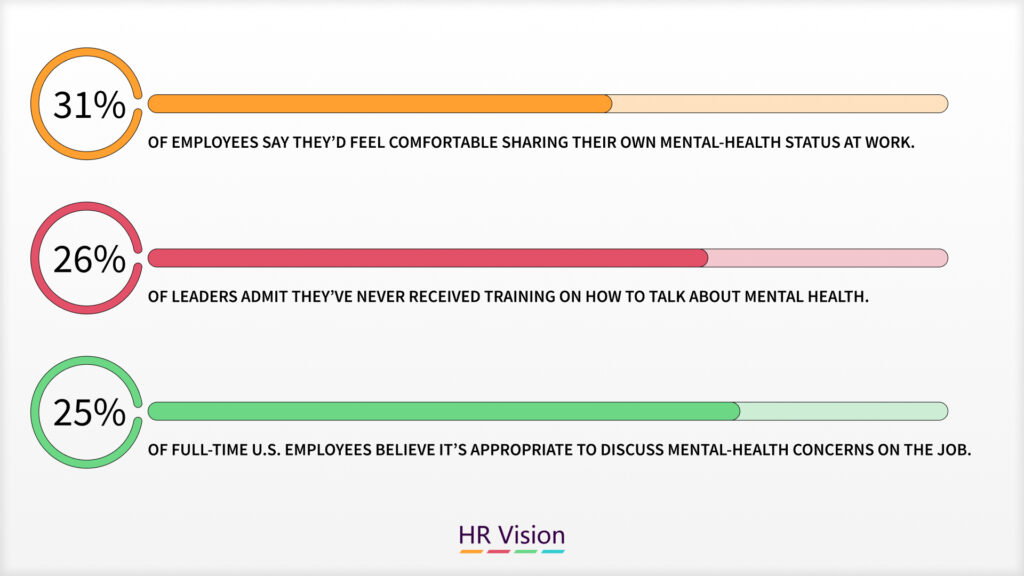
- • Stigma shrinks when silence breaks. Three-quarters of U.S. employees believe it’s appropriate to discuss mental health, yet only 58% feel comfortable doing so, pointing to a confidence gap you can close with practice.
- • Well-supported cultures reap concrete payoffs. Workers in companies that visibly back mental health are twice as likely to report no burnout or depression compared with peers in low-support settings.
- • Managers are the missing link. 70% of leaders admit they’ve never been trained to talk about mental health—meaning your team may be waiting for you to go first.
How to make it stick:
- • “MH Moment”—add a 30-second slot to every agenda for a coping tip or a 1-to-5 stress rating.
- • Resource drip-feed. Work an EAP slide into monthly all-hands; pin a “Where to Get Help” post in Slack.
- • Model vulnerability. Share your own strategies (“Therapy Tuesdays keep me sharp” or “I walk the dog between calls”). Authentic disclosure signals safety better than any poster.
Metric to watch — Track EAP usage or mental-health-day requests, and include a pulse item such as “I feel safe discussing mental-health issues at work.” Rising uptakes and scores confirm that talk is translating into action.
Implementation Roadmap
| Week | Key Step | Supports |
| 1 | Lunch-and-learn: introduce the 7 actions & cheat-sheet | HR/L&D |
| 2 | Pilot in one team; gather baseline metrics | People Analytics |
| 3 | Review feedback; refine scripts & nudges | Team Leads |
| 4 | Roll out company-wide; launch Slack “Micro-Action Tracker” bot | IT & Comms |
| Quarterly | Publish a “Micro-Action Scorecard” and spotlight success stories | Exec Sponsor |
Conclusion
Big wellness programs move the needle—but cultures change in the tiny, repeatable moments that happen today, tomorrow, and the next day.
- Pick just two micro-actions and promise your team you’ll practice them for one week.
- Measure the ripple: pulse one question (“Has this habit helped your day?”) or watch the metrics we outlined.
Layer in the rest once the first two feel automatic, turning minutes into momentum.
Small moves, made visible, compound into a workplace where mental health is protected—and productivity thrives—every single day. Ready to start? Screens off, breath in, genuine check-in: go.
Want to go deeper on building people-centered cultures that protect mental health? Join us at HR Vision, where top HR leaders will explore the future of work, including how micro-habits, HR tech, and talent strategy are shaping healthier, more human workplaces.