


We are here to discuss with Catharina Monster, CHRO, Hyva Group, her vision on how the new workforce will change organizations. It goes without saying that improvement can only be there if people accept change, and make the most out of it.
‘‘To improve is to change; to be perfect is to change often’’. Winston Churchill
Q Catharina, how do you think, what advantages are from the new workforce influence on the outcomes of performed work expected?
We need to keep in mind that there are four generations working Side by Side in 2020. We have the Baby Boomers (born 1940 – 1959), Generation X (born 1960 – 1979), Generation Y – the so-called Millennials (born 1980 – 1994) and the Generation Z (born 1995 – 2010). Each Generation have brought something new, so will the new Generation X and Z.
In 2020, millenials will count to more than half of all workforce. It is important for companies to understand what this new generation will bring and how the companies need to adapt the way of working. The Generation X was responsible for much of the tech industry, using the computer on a regular basis. The Millennials and Generation Z never experienced a world without a laptop, tablet or smartphone. Many of the current Millennials developed social networks. Millennials rely on technology, using social media channels to communicate with each other. In this digitized world, the new Generation knows how to multitask and integrate technology in their daily lives. This Generation is asking for new technical developments and that is one of the forces that will change the way of working in companies.
How the workforce of the future will look like and how this will influence the outcome of the performed work is not an easy question. There are more forces that influences company’s business growth and its business model. Think about regulations and laws, customer and governments demand, competitor influences, investment possibilities and having the right leaders in place to drive the business going forward. We don’t know the exact time, but companies will change to an automated workplace.
The key advantages that I anticipate from the new workforce will be the ability to early-adopt the rapid innovations. As we move away from the traditional waterfall model to a cloud-based way of working, people and teams will be more agile and faster to go to the market with ideas and products.
Q Could you think of the changes that have ever turned to a negative experience?
As companies are changing, there is a need to hire employees with different backgrounds and competences. There is a resources scarcity in the technical industry which could make it difficult for companies to adapt the speed of change. There is a gap between how the new workforce grew up with the available technology in the consumer industry versus the existing technology in companies. For the new generation this could have an impact on their way of communication. This generation grew up with a high level of involvement and management from their parents in every aspect of their lives. Since they are used to very involved parenting, they will not appreciate the sink or swim approach in their work-life which was more common for the Generation X, who were more independent and entrepreneurial. The new Generation wants to have regular check-ins and get feedback on their performance. Our leaders need to manage and motivate in a different way that aligns with their unique character and business needs, a clear and meaningful purpose to attract and retain employees, and then the New Generation could well become the most productive generation we’ve ever seen.
Q How long does it take in average for the companies to have the changes adopted?
The adaptation time depends on the willingness and the acceptance of the change. People will not change when they do not have a clear understanding of why the change is needed. Besides having a clear direction of the business, leaders need to understand how people respond differently to change. When you look at the new Generation, certain behaviours will be similar for the new workforce, but we also should not forget that we talk about human individuals with different characters, behaviors and needs.
Deployment of change takes time, but with the right engagement of leaders, close cooperation with their employees, continuous monitoring and having an open approach for dialogue and alignment/adjustments then companies will be successful in adapting the new way of working.
One of the key components of successful change management is the ability to understand where each person sits on the Change Continuum and to spend energy on those who will make change happen – not the professional naysayers. In companies such as ours, we identify our Top 100 emerging leaders and invest heavily in them to develop their skills, create development plans and outfit them to become agile and self-managed. With this model, we have seen a rapid movement in our change speed with the result of our mid and upper level managers assuming roles of ambassadors, advocates and champions of change and innovation initiatives.
Q Tell us about some of the difficulties, how to keep people motivated and open to the changes? Especially, if they are not yet sure these changes are good for them or they simply are not ready to adhere to the rapidly changing company’s strategy.
Companies that do not change will not be successful. People like change. For example: Look at yourself at home. If you are doing always the same thing day after day, you will get bored and then you are looking for new challenges. That works the same in a company.
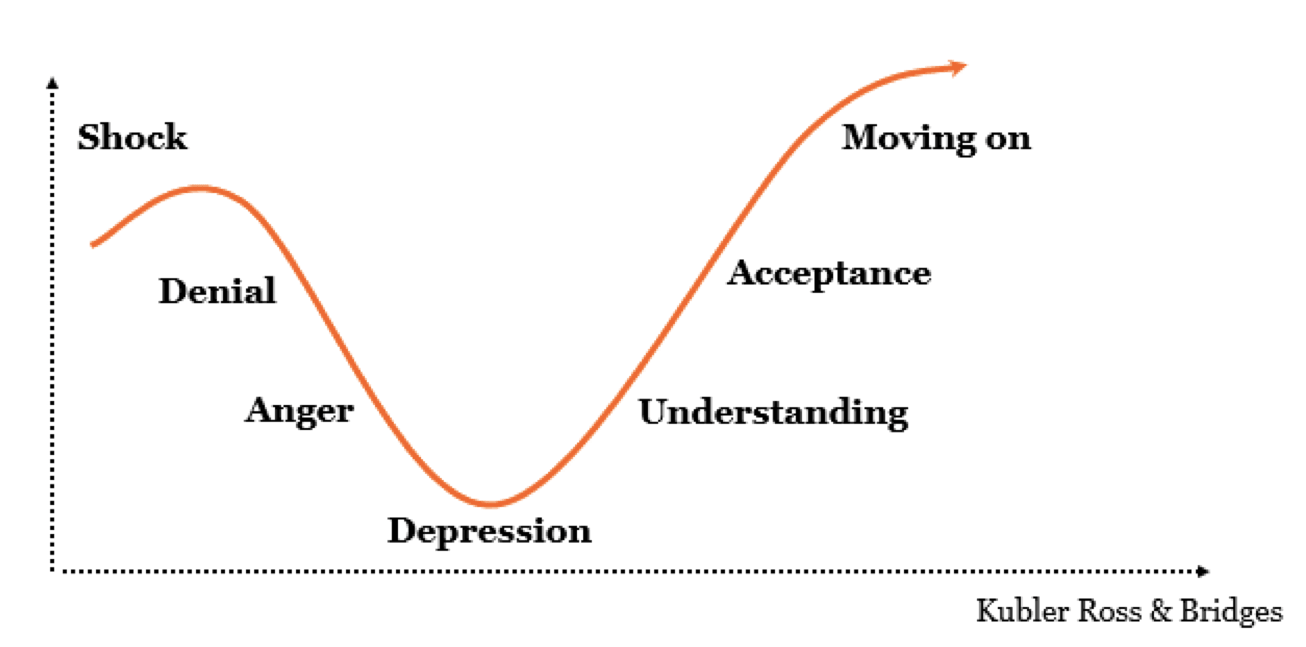 Employees are not afraid of change, but when employees are not involved and engaged in a right way, or when they do not have a good understanding of the direction of the company, they feel lost. Then you will recognize the Kubler-Ross Change Curve in the emotions of employees. With the right approach of Leaders, the negative feelings will change over time.
A study by The Intelligence Group reports that 64% of Millennials would rather earn 40k/year at a job they love than 100k/year at a job they find unfulfilling. And that same group is more loyal to a company that aims to do more than just earn a profit. They need to see how their company is making the world a better place and how they can contribute to those efforts.
When you are told to do something without a good understanding, you hesitate and probably (depends on the country culture) you will start a discussion with your manager.
It is important for Leaders to be clear about the results you expect from your employees, and the steps they need to take to be successful. Don’t let them think they can advance quickly. Provide a path for success. Show them specific actions to take, the metrics you will use, and this will guide them to success.
It is critical for management to change to create a communication strategy which will provide a clear, frequent and ongoing message of the change. As we are so consumed with a rapidly changing business landscape, we can inadvertently overlook sharing the vision or the eminent change. When this is forgotten or overlooked, people feel disenchanted, and disconnect from the company; they can withdraw and assume a left-out-ot-the-loop mentality. Invest in your message and be sure you have a range of cross-functional advocates sharing the message, reinforcing the message and preparing for the change as the whole group and not in a silo or isolation.
Thank you, Catharina, for sharing with us your valuable insights on the topic. We believe, your answers will be useful for a lot of people.
We are looking forward to many more inspirational topics. Don’t miss our speakers sharing their valuable insights, experience, and tips at Attend our upcoming HR Vision event – register now!


