Meet Saurabh Gupta, HR Head – Americas and Europe at Intellect Design Arena Limited in our next interview. In his previous conversation with the HR Vision team he shared HR Lessons in Transformation of a Global FinTech Company: Business, Strategy, Culture and Engagement. Today, we caught up with Saurabh to understand the HOW part of this journey.
Q Design Thinking is a complex subject. Tell us something more about how Intellect leverages Design Thinking and applies it?
True, Design Thinking can be overwhelming as a concept. At Intellect, besides being early adaptors of embracing design thinking, right from the top leadership we have a commitment to practice design thinking at the workplace in solving problems for our customers and crafting solutions. The way we are able to do this is by breaking down Design Thinking into simpler concepts for everyone at Intellect to apply it in their work.
Q What are the key Design Thinking principles that you apply in solving your customer’s problems?
Design Thinking is a vast topic and many experts views are available from academia to practitioners. At Intellect, we believe in ‘Design the Thinking’ before ‘Thinking the Design’. We have a 4 pronged approach: Design Mind, Design Space, Design Process and Design Frameworks. One can find further details on this at our School of Design Thinking site.
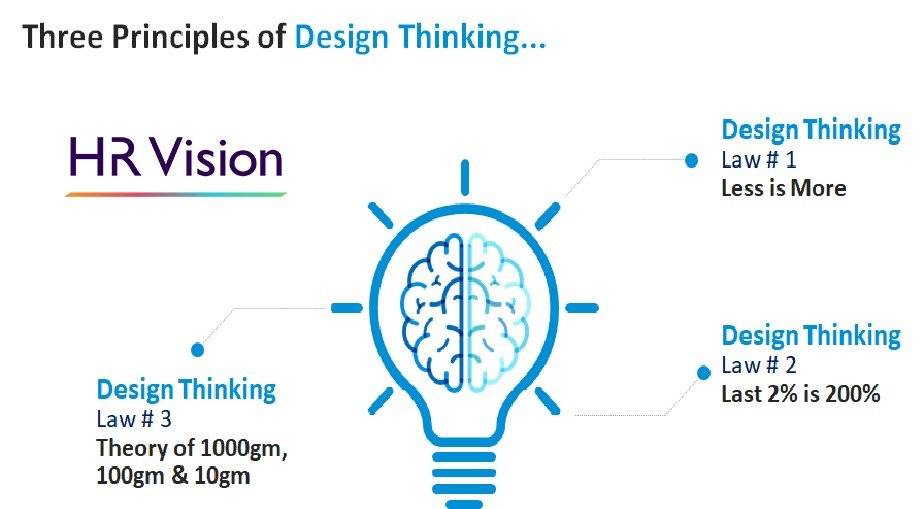
However, coming back to design thinking at Intellect, in the most simplified way, we talk about three Design Thinking principals:
- Last 2% is 200%
- Prioritise 10 gm / 100 gm / 1000 gm items
- Less is More
Q Can you elaborate on these principals with some examples?
Sure, we chose the most relevant principals that can create a difference in their way of working and create a competitive advantage for our customers when they choose Intellect products.
- Last 2% is 200% – This is all about understanding that most software products are at similar levels. The difference comes in putting in the last 2% with attention to detail at every aspect of design, engineering and delivery of software products.
- Prioritize 10 / 100 / 1000 grams – We all can get incredibly busy and have competing priorities. A successful manager must learn to prioritize. We make it easy by insisting to prioritize items based on the impact that is what we refer to as 1000 grams, 100 grams and 10 grams items.
- Less is More – It is very important to remain focused. In software products and engineering, we can easily get distracted to add more functionality and more features, getting into the trap of expanding scope, time and cost. While designing software, and almost in everything else we do at work, we need to remain focused and try to resist an attempt to overload features and functionalities instead we need to design keeping in mind the principle of “Less is More“.
To summarise in one line, we create higher value in last 2% completion, prioritize 1000 gram items and deliver on time with ‘Less is More’.
As you see the principals are incredibly simple and everyone can adapt and put their own personal touch in applying these principals. It takes some practice to imbibe these in day-to-day work and we provide certain tools and frameworks to make this a Way of Working for everyone.
To be continued…
In the meantime, Learn How to improve employees’ performance, become Pro at workforce management and aim for the future of work with HR Vision Events where you can meet senior HR practitioners, talent acquisition experts, and global executives from large complex organizations inspired with super insightful HR Strategies earned through decades of professional experience!