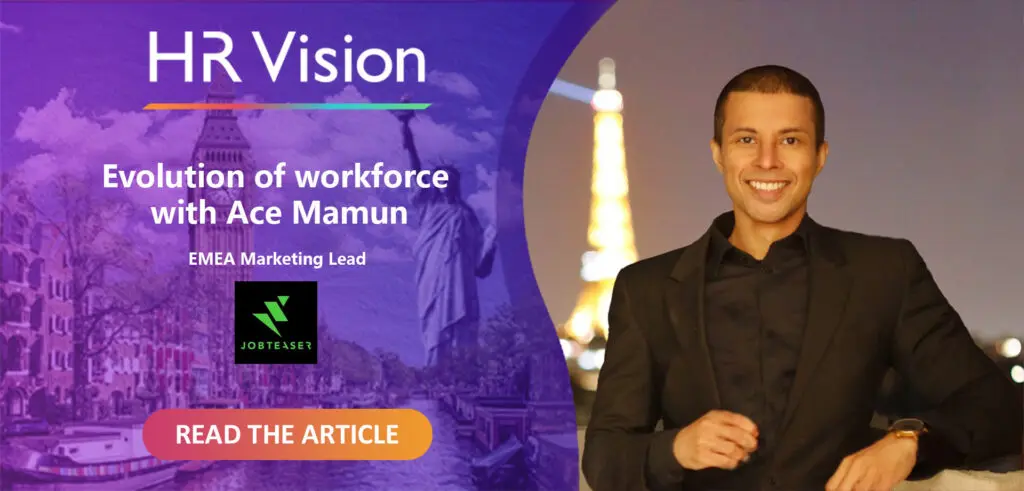
As we witness the world’s constant evolution, our needs, desires, and our very relationship with work are transforming as well. Ace Mamun from JobTeaser EMEA, a TEDx speaker on social dynamics, delves into the changing landscape of our connection to life and work, exploring the implications for future generations.
Tell us a bit about the work you’re doing.
In essence, we’re engaged in the rather fascinating challenge of deciphering and defining the future of work.
We’re partnered with Europe’s largest network of universities across 25 countries, conducting insightful research on the evolution of work and developing extensive guidance to help our future generations towards a “calling” that is fulfilling and meaningful to the community. We also work actively with brands spanning all industries – LVMH to Unilever, Amazon to Deloitte, Johnson & Johnson to Airbus – to better align with the needs and desires of the generations to come such as Gen Z.
Let’s start with the basics – what are the principal shifts in the dynamics of the social context of work?
As we see the “active” generation transition from Baby Boomers to Gen X, Y, and Z, there are two key trends that emerge. The older generation, which benefited from a resource boom, held a heightened sense of “tribal” obligations—pertaining to work, family, and marriage. In contrast, the future generation, facing a decline in personal resources and an increase in uncertainty, is less bound by these obligations and more focused on cultivating connection, balance, and meaning in life.

How do these transformations affect life priorities?
As we navigate an era marked by a succession of crises, future generations, such as Gen Z, increasingly prioritize issues that truly matter on a macro level—climate, equality and equity, a sense of security and well-being, and more. This shift in focus extends to their expectations of financial giants and corporations, as they demand that these entities prioritize these issues – demonstrating their choice through work and buying power. A significant portion, up to half, of the future generation will decline to work with organizations that do not fully align with their values. Similarly, an impressive eight out of ten would forgo work that lacks meaning.
What do these numbers suggest about the evolution of values?
We are indeed witnessing a paradigm shift in societal values. As future generations increasingly yearn for impact and connection, we are transitioning from the era of “Instagram perfection” to one that places greater value on authenticity and truth, particularly for Gen Z. This trend is perfectly exemplified by the rise of the “no filter” movements on social media. The upcoming generation is also up to 82% more receptive to authenticity in communication, whether it comes from employers or brands. However, it is striking to note that nearly half of all companies are not making adequate adjustments to align with this change.

As values and priorities shift, how does this impact their relationship with work?
As priorities become more human-centric and personal, this is reflected in how the younger generations relate to work. Recent research indicates that nearly one out of two individuals would quit their jobs if they didn’t feel a sense of belonging or if their work inhibited their ability to enjoy life. Additionally, a significant number would refuse work that does not provide adequate work-life flexibility. In fact, flexibility is emerging as a rapidly growing priority in work. In a recent survey, nearly seven out of ten young workers expressed interest in flexible work over traditional fixed hours, while a mere one out of ten see themselves remaining in their current role or organization long-term.
How does this desire for flexibility influence work choices?
Although major brands were often the most alluring, the newer entrants into the workforce seek more intimate experiences in the next stages of their careers, be it through SMEs, freelance contracts, or dynamic startups. Reduced bureaucracy, flatter structures, and increased mobility/opportunities are some of the key attractions for them. This flexibility also comes with a heightened agility in adapting how they approach work. For instance, our recent research shows that Gen Z is up to 1.7 times more likely to immediately integrate AI into their work and output.

What role do educational institutions play in this new paradigm?
Across our network of over 750 universities – from Sciences Po to Copenhagen Business School, to Frankfurt School of Finance and Management – guidance is becoming increasingly vital in helping students, graduates, and young people at large find their direction in this complex ecosystem and ultimately their “calling.”
In regard to this “calling,” how can companies and work best align with the needs of the future workforce?
A fundamental aspect of fostering a meaningful connection with the evolving workforce lies in authenticity. As the world becomes increasingly adept at discerning marketing messages, transparency emerges as the optimal modus operandi for maintaining relevance in the face of a highly informed generation.
Equally important is the prioritization of the human element: the cultivation of community, collaboration, and culture. Emphasizing balance, mental health, and values is paramount. We are now in the era that necessitates a holistic connection with our collaborators, where life takes precedence.
If you’re looking for new ideas, fresh perspectives and insights on the future of work, then you’ll want to attend HR Vision Events.