


Quiet quitting, where employees silently disengage and leave without expressing their concerns, is a significant challenge in today’s business landscape. It negatively impacts employee engagement, team dynamics, and overall productivity. Empowering employees to speak up is crucial to address this issue. When employees feel valued and heard, they contribute to the organization’s success by providing insights and suggestions to improve processes, identify issues, and foster innovation. Prioritizing open communication fosters a culture of trust, collaboration, and problem-solving, resulting in increased engagement and organizational benefits.
Why Employees Choose Silence?
When employees quietly quit instead of voicing their concerns, the repercussions ripple throughout the organization. The hidden costs of silent departures can be detrimental to both employee well-being and organizational success. Employees who do not feel comfortable speaking up may continue to endure unresolved issues, leading to decreased job satisfaction, lower productivity, and disengagement. The lack of open communication can foster a toxic work environment, perpetuating unresolved conflicts and limiting collaboration.
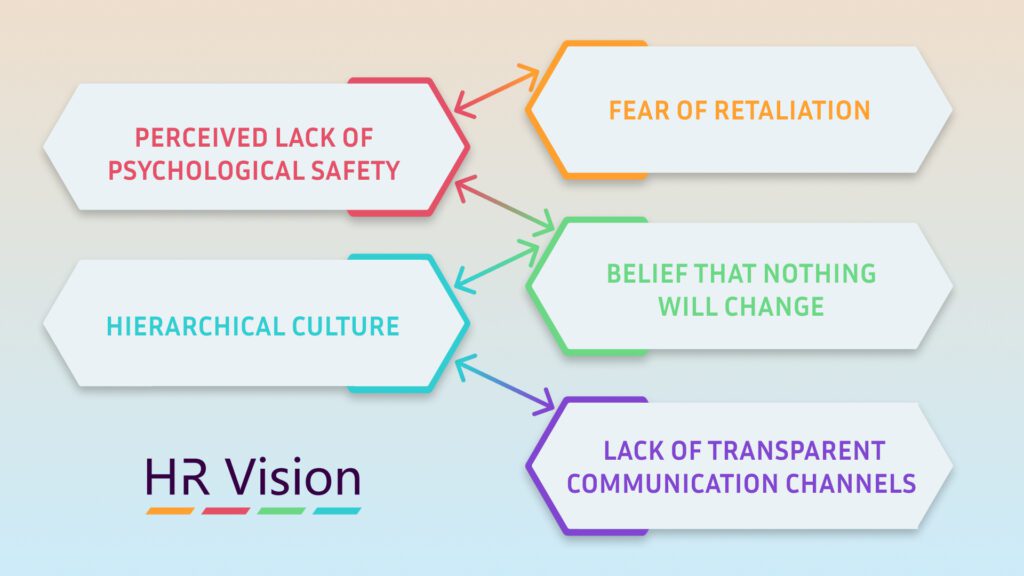
According to recent statistics, a concerning 21% of workers fall into the category of “quiet quitters,” where they disengage from their work and merely fulfill the bare minimum requirements. What’s even more alarming is that a staggering 8 in 10 individuals who fall into this category also experience the debilitating effects of burnout. Employees may choose to remain silent due to fear of retaliation, a perceived lack of psychological safety, belief in the futility of speaking up, hierarchical culture, or lack of transparent communication channels. Organizations should understand these reasons to foster open dialogue and create a supportive environment.
Silent quitting negatively impacts organizational culture and productivity by disrupting team dynamics, reducing trust, and hindering collaboration. It stifles innovation and problem-solving, as valuable insights and perspectives go untapped. Over time, a culture of silence can impede the organization’s ability to adapt and thrive.
To mitigate these consequences, organizations should address barriers to open communication. By fostering a safe environment for employees to voice concerns and share ideas, organizations can encourage a culture of open communication. This empowers employees, harnesses their insights, and promotes growth and success.
1. Empowering Employees to Speak Up
In order to address the issue of silent quitting, organizations must empower their employees to break the silence and voice their concerns. Creating an environment that fosters open communication is paramount to nurturing a culture where every employee feels safe, valued, and encouraged to speak up. By embracing employee voice, organizations can tap into a wealth of insights, ideas, and feedback that can drive positive change and enhance overall employee engagement and satisfaction.
To empower employees to speak up, organizations must create a safe and inclusive environment that values their perspectives. This involves cultivating trust, respect, and open dialogue while fostering psychological safety.
Organizations can implement various strategies to encourage and empower employees to voice their concerns. This includes fostering strong relationships between employees and their managers, providing regular opportunities for one-on-one conversations and feedback sessions.
Implementing effective channels for feedback and suggestions is critical in creating an environment that encourages open communication. Regular pulse surveys and town hall meetings provide opportunities for collective discussion and feedback, ensuring that employee voices are heard and acted upon. Transparent and timely communication regarding the outcomes of employee feedback demonstrates the organization’s commitment to valuing employee contributions.
2. Building Trust and Psychological Safety
Trust is the bedrock of open communication within organizations. When employees trust their leaders and colleagues, they are more likely to feel comfortable speaking up and sharing their thoughts and concerns. Building trust requires transparency, consistency, and integrity in communication and actions. By fostering trust, organizations create an environment where employees feel supported, valued, and confident in expressing their ideas and feedback.
Psychological safety is a critical component of empowering employees to speak up. It refers to an environment where individuals feel safe to take interpersonal risks, share ideas, and express concerns without fear of negative consequences. Psychological safety encourages innovation, collaboration, and constructive conflict resolution. When employees feel psychologically safe, they are more likely to contribute their unique perspectives and engage in open dialogue, leading to enhanced problem-solving and overall team performance.
3. Listening and Taking Action
Active listening is a fundamental skill that leaders must possess to encourage employee voice. It involves giving undivided attention, demonstrating empathy, and seeking to understand the perspectives and concerns of employees. By actively listening, leaders create an environment where employees feel valued and heard, fostering trust and encouraging further engagement.
Create Time and Space. Dedicate specific time slots for open-door conversations, team meetings, or one-on-one sessions where employees can freely express their thoughts. Make sure to provide a comfortable and non-judgmental space for open dialogue. Put yourself in the shoes of your employees and seek to understand their experiences and challenges. Validate their feelings and concerns, demonstrating empathy and compassion. Show your engagement in the conversation by paraphrasing and summarizing what employees have shared. This demonstrates that you have actively listened and understood their perspectives.
Listening is only the first step; organizations must also take meaningful actions based on employee feedback. This demonstrates a commitment to addressing concerns and improving the workplace. Share the actions taken as a result of employee feedback and clearly communicate the impact these actions will have on the organization. This demonstrates that their voices are heard and valued. Encourage employee participation in decision-making processes that affect their work. This creates a sense of ownership and empowerment, and employees are more likely to feel invested in the outcomes. Ensure that employees have the necessary resources and support to address their concerns effectively. This may include additional training, access to mentors, or the implementation of new policies or procedures.
4. Nurturing a Culture of Feedback
Feedback loops play a crucial role in fostering ongoing communication and nurturing a culture of open dialogue. By establishing feedback mechanisms, organizations create opportunities for continuous improvement, growth, and learning. Feedback loops enable employees to provide input, share suggestions, and receive guidance, facilitating a culture of constant feedback and development. Managers play a pivotal role in providing constructive feedback and support to their teams. They should actively seek opportunities to offer specific, timely, and actionable feedback that helps employees enhance their skills and performance. By providing guidance, mentoring, and coaching, managers create an environment where employees feel supported and motivated to achieve their full potential.
Managers should also encourage a feedback culture within their teams by leading by example. They can initiate feedback discussions, actively listen to their team members’ perspectives, and foster an environment where feedback is seen as a tool for growth rather than criticism. By promoting psychological safety and trust, managers empower their teams to openly share ideas, concerns, and suggestions.

The Benefits of a Culture of Open Communication
A culture of open communication brings numerous benefits to both employees and organizations. It fosters trust, transparency, and collaboration, creating an environment where ideas are freely shared, concerns are addressed, and feedback is valued. When employees feel heard, supported, and empowered, they are more likely to be engaged, motivated, and committed to achieving organizational goals.
To cultivate a culture that encourages employee voice, organizations must take action. This requires providing platforms and channels for employees to share their thoughts, concerns, and suggestions. It also entails actively listening, acknowledging the feedback received, and implementing meaningful changes based on that feedback. By demonstrating a commitment to employee feedback and concerns, organizations signal that they value their employees’ voices and are dedicated to continuous improvement.
Empowering employees to speak up instead of silently quitting is essential for organizational success in today’s dynamic work landscape. By fostering a culture of open communication, organizations can harness the power of employee voice, drive positive change, and create a workplace where employees feel valued, engaged, and motivated. Let us seize the opportunity to embrace open communication and empower our employees to be active contributors to a thriving and inclusive work environment.
Are you passionate about empowering your employees to speak up and contribute to a thriving work environment? Join us at HR Vision Conference, where we bring together top HR leaders to explore the best practices in creating a culture of open communication and employee empowerment.


