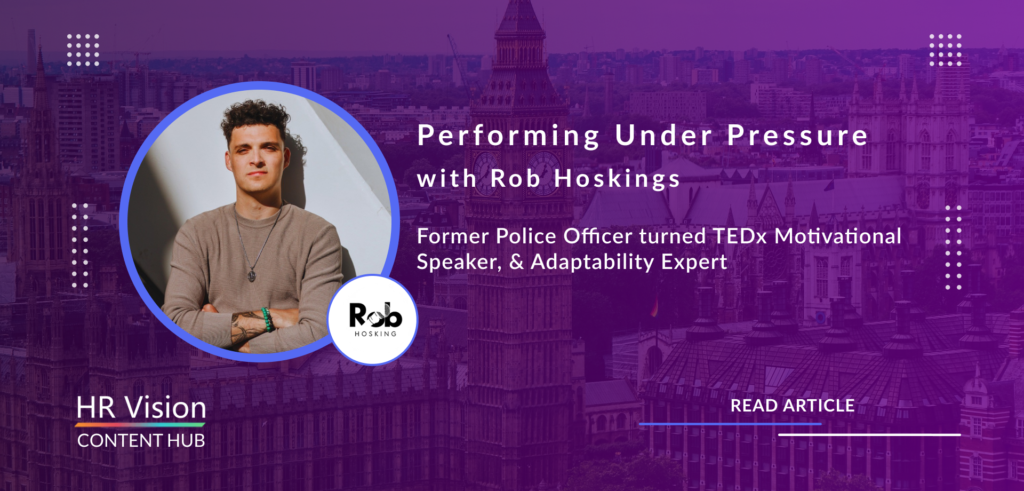
- You spent years responding to emergency calls. What did those moments teach you about how people really behave under pressure?
What I saw most clearly is that pressure doesn’t have to break you, it often brings out your best if you stay adaptable. People who succeed under stress aren’t always the ones with the most experience, they’re the ones who can assess, adjust, and keep moving despite uncertainty. Being able to pivot, think on your feet, and stay open to changing circumstances makes the difference between freezing and performing at your best.
- What’s a simple decision rule you used on the job that still works in meetings and boardrooms?
I had a simple rule: “Pause, check your facts, then act.” Even under intense pressure, you get a few seconds to breathe and process before you commit. In the office, it’s the same, take a moment, gather the essentials (not the unknown), then make the call. It keeps you calm and reduces mistakes.
- People often freeze under pressure. What’s one small action that reliably breaks that freeze?
I’d tell someone to start with the next obvious small step, no matter how minor. In policing, when everything felt overwhelming, taking the first small action, radio in, move forward, talk to a colleague, broke the paralysis. At work, the principle is identical: do the next small thing rather than trying to solve the whole problem at once.
- When things go wrong at work, what’s the most helpful question a leader can ask in the moment?
“What do you need right now?” It’s simple, but it immediately shifts focus from blame to support. On the frontline, asking that instead of pointing fingers saved situations and kept teams functioning. In the office, it shows leadership and keeps people engaged rather than frozen by guilt or fear.
- What’s one early sign that someone is close to burnout, but managers often miss?
Small changes in habits and energy. They might stop speaking up, stop double-checking details, or get quieter than usual. It’s subtle, not dramatic, and if you catch it early and have the conversation, you can prevent bigger problems.
- You’ve seen people at their best and worst. What tiny habit makes the biggest difference to resilience over time?
Sometimes you have to zoom out. Even just a minute to step back, assess, and focus on what you can control makes a massive difference over months and years. It sounds small, but it’s a resilience multiplier.
- What’s a common workplace behaviour that actually increases stress, even though it’s meant to help?
Overloading people with constant check-ins or “just in case” instructions. The intention is to help, but it creates distraction, doubt, and stress. On the frontline, micromanaging or over-explaining slows response; in offices, it just chips away at focus and confidence.
- Finally, what role does teamwork play when everything feels uncertain?
Everything. You can’t rely on one person under pressure. Teams share the load, spot blind spots, and provide perspective. Even the smallest support, a nod, a quick check-in, or sharing information, stabilises everyone’s performance. Trust in your team is the hidden buffer against chaos.
Ready to stay ahead in the ever-changing world of HR? Join us at HR Vision, where top HR leaders gather to explore the future of work, HR trends, and the power of HR analytics and technology.