The modern workplace is undergoing a significant demographic shift. Life expectancy is rising, and retirement ages are trending upwards. This means a growing number of experienced workers are choosing to stay in the workforce longer. However, despite their valuable skills and knowledge, these workers often face a hidden hurdle: ageism.
What is Ageism?
Ageism, as defined by the World Health Organization (WHO), refers to stereotypes (how we think), prejudice (how we feel), and discrimination (how we act) towards others or oneself based on age. It encompasses negative stereotypes, prejudices, and biased behaviors directed towards individuals or groups because of their age group. These biases can be conscious or unconscious, but their impact on careers and modern workplace dynamics is undeniable.
A Shifting Landscape: The Rise of the Older Workforce
The demographics of the workforce are undergoing a significant transformation. As life expectancy increases and retirement ages trend upwards, the number of older workers is steadily rising. This shift is driven by several factors:
- The Aging Baby Boomer Generation: By 2030, all baby boomers will be at least 65 years old. This large demographic group will continue to participate in the workforce for longer than previous generations.
- Increased Life Expectancy: Global life expectancy has risen dramatically in recent decades. This translates to a larger pool of healthy and qualified older workers.
- Shifting Retirement Trends: Traditional retirement ages are becoming less rigid. Many workers choose to continue working past the age of 65, either full-time or part-time.
Statistics paint a clear picture of this trend. According to projections, by 2030, 9.5 percent of the civilian labor force is projected to be older than 65. Looking ahead, by 2050, the global population of people aged 60 and over will double to a staggering 2.1 billion.
Characteristics of Ageism in the Workplace
Here’s a closer look at the characteristics of ageism commonly seen in the workplace:
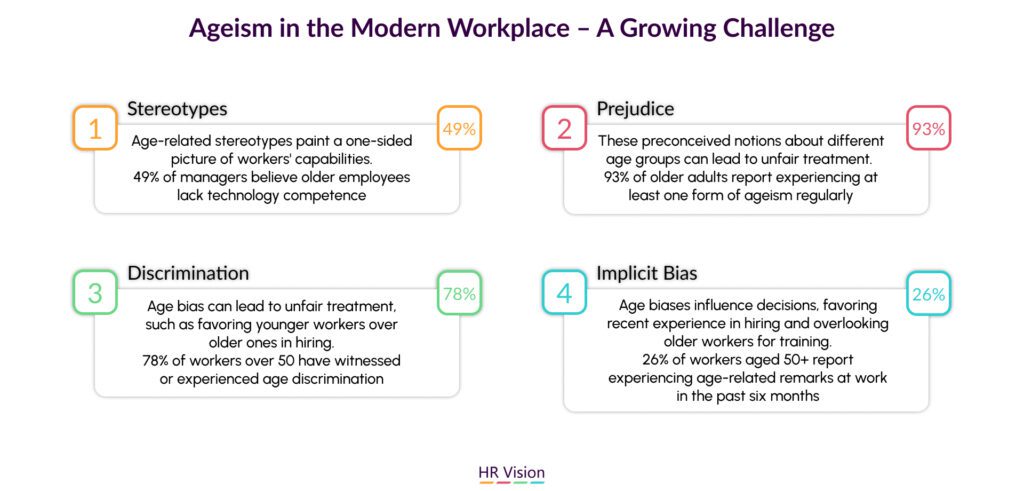
- Stereotypes
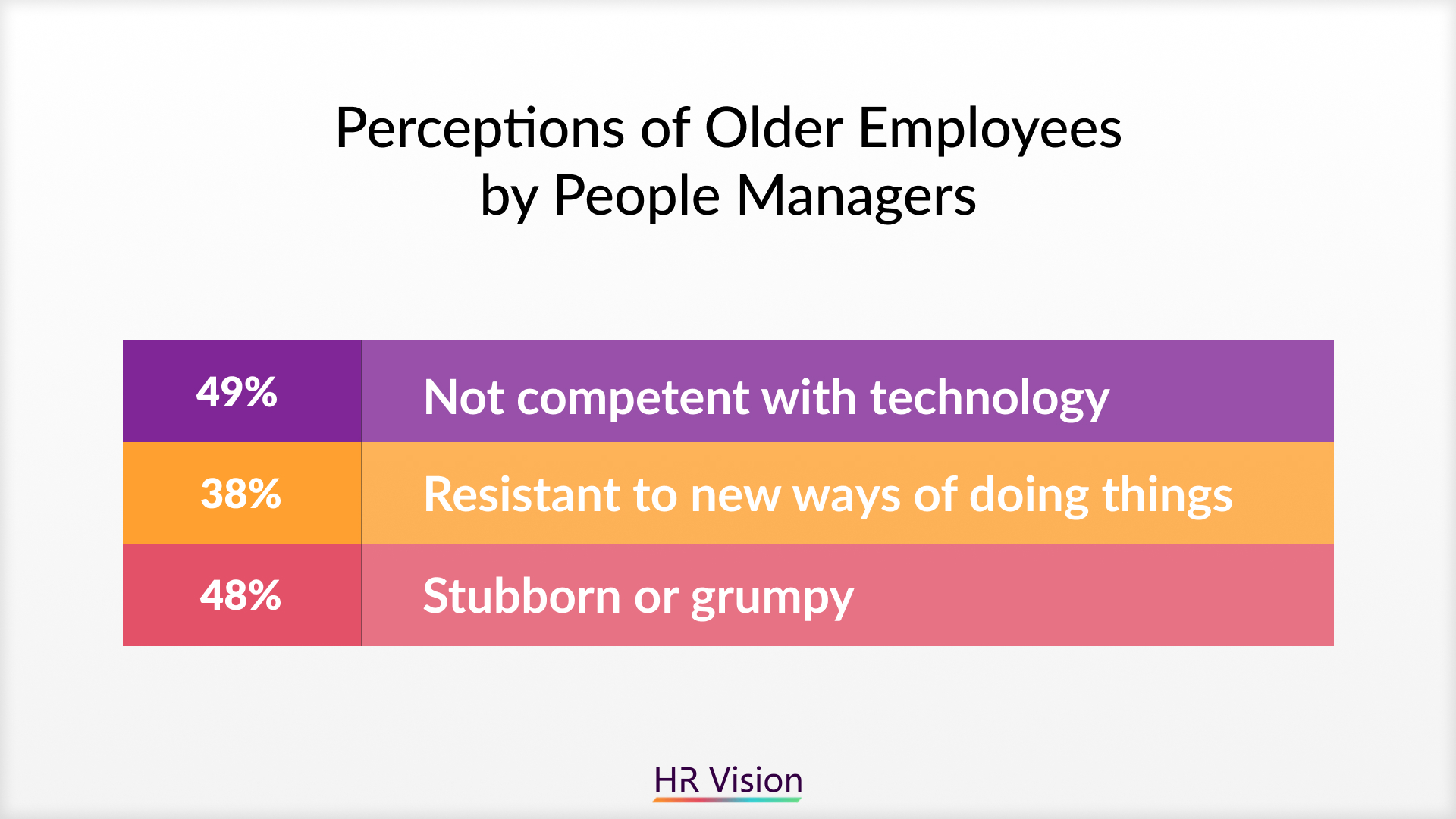
Age-related stereotypes paint a one-sided picture of workers’ capabilities. For example, older workers might be stereotyped as being resistant to new technology, while younger workers might be perceived as lacking experience or work ethic.
- Prejudice
These preconceived notions about different age groups can lead to unfair treatment. For instance, a manager might be prejudiced against hiring an older worker for a leadership role, assuming they lack the necessary energy or innovative spirit.
- Discriminatory Practices
Age bias often translates into concrete actions that disadvantage certain age groups. This can include overlooking qualified older candidates during the hiring process, favoring younger workers for promotions, or assigning less challenging tasks to older employees.
- Implicit Bias
Unconscious biases based on age can influence decision-making throughout the employee lifecycle. Recruiters might favor resumes with recent experience (younger candidates) or managers might subconsciously bypass older workers for training opportunities.
These characteristics of workplace ageism can have a significant impact on employee morale, job satisfaction, and overall company performance.
Ageism Examples in the Workplace
The concept of ageism can be abstract, but it manifests in real ways that impact employees’ careers. Here are some concrete examples of ageism you might encounter in the workplace:
- Age-based job advertisements: Job postings that specify a desired age range or use terms like “recent graduate” or “energetic” can unintentionally exclude older workers.
- Focus on age during interviews: Asking questions about retirement plans or highlighting physical limitations associated with age can be discriminatory.
- Limited training opportunities for older workers: The assumption that older workers are less adaptable to new technologies can lead to being excluded from training programs.
- Social exclusion: Intentionally or unintentionally excluding older colleagues from social activities or team outings can lead to feelings of isolation.
The Devastating Impact of Ageism
1. Impact on Employees
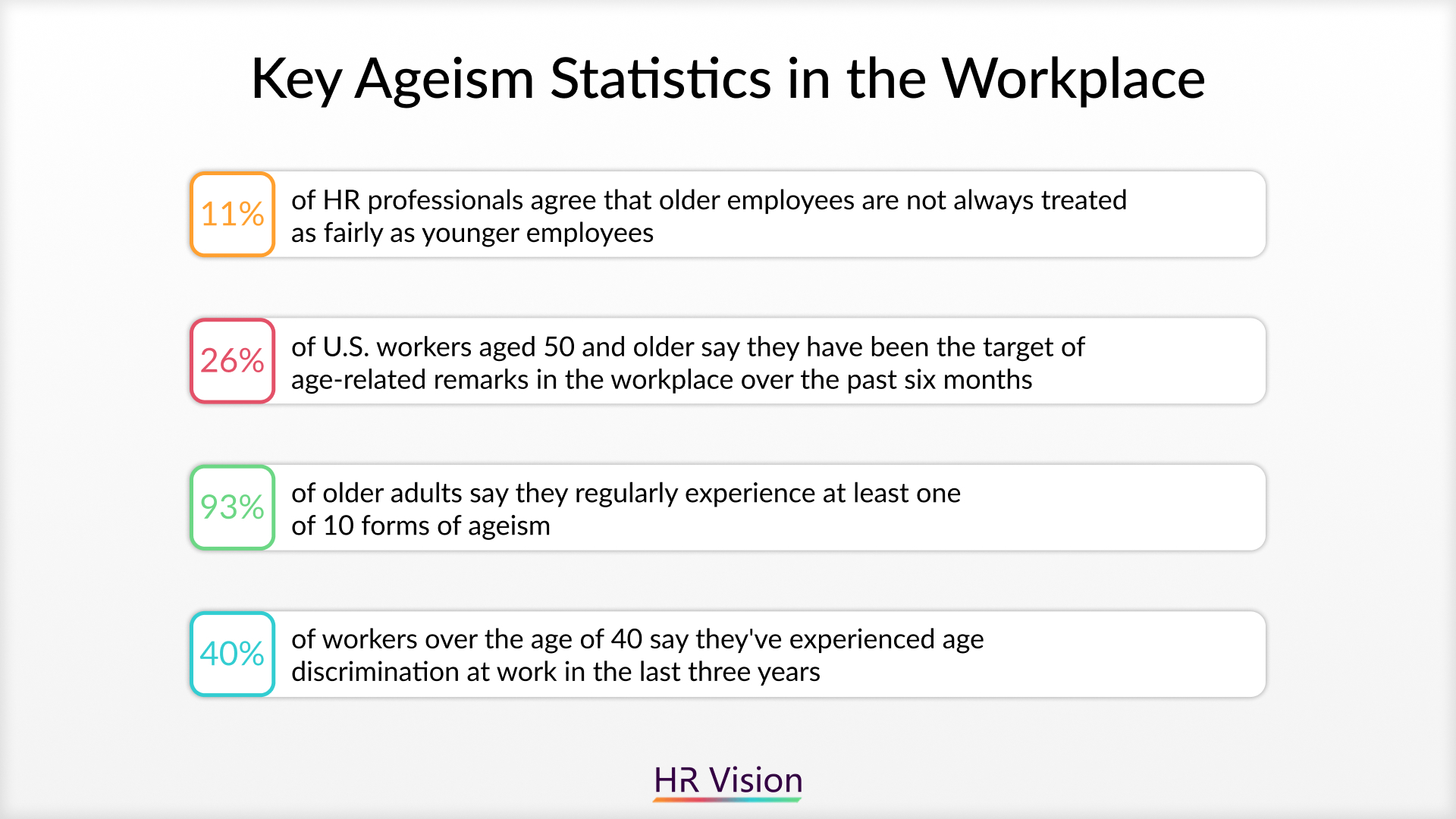
The consequences of workplace ageism are far-reaching, impacting both employees and businesses. A staggering 93% of older adults report experiencing at least one form of ageism regularly. This can manifest in subtle ways, like the assumption they struggle with technology (45% reported feeling this way). These microaggressions create a hostile work environment, leading to reduced job satisfaction and motivation. The constant feeling of being undervalued can cause increased stress and even contribute to mental health issues. Furthermore, age bias limits career advancement opportunities. Almost 25% of employees aged 45 and older have faced negative age-related comments, hindering their growth within the company. The most extreme form of ageism is unfair dismissal or forced retirement, a practice that disregards valuable experience and contributions.
2. Impact on Businesses
The impact on businesses is equally concerning. By overlooking older workers, companies lose a wealth of experience, skills, and institutional knowledge. This is particularly evident in the tech industry, where the average employee age at leading companies is a mere 32. A diverse workforce, with a mix of ages and perspectives, fosters a more dynamic and innovative environment. Ultimately, ageism in the workplace can lead to difficulty in attracting and retaining top talent across all age groups. Additionally, companies risk facing legal repercussions from age discrimination lawsuits. With 60% of older employees experiencing workplace ageism, the potential for legal action is significant.
Ageism: Not Just for Older Workers
While the focus on ageism often centers on older workers, younger generations like millennials and Gen Z also face this challenge. Statistics show a significant portion of these demographics report experiencing age discrimination in the workplace.
1. The Perception of Inexperience
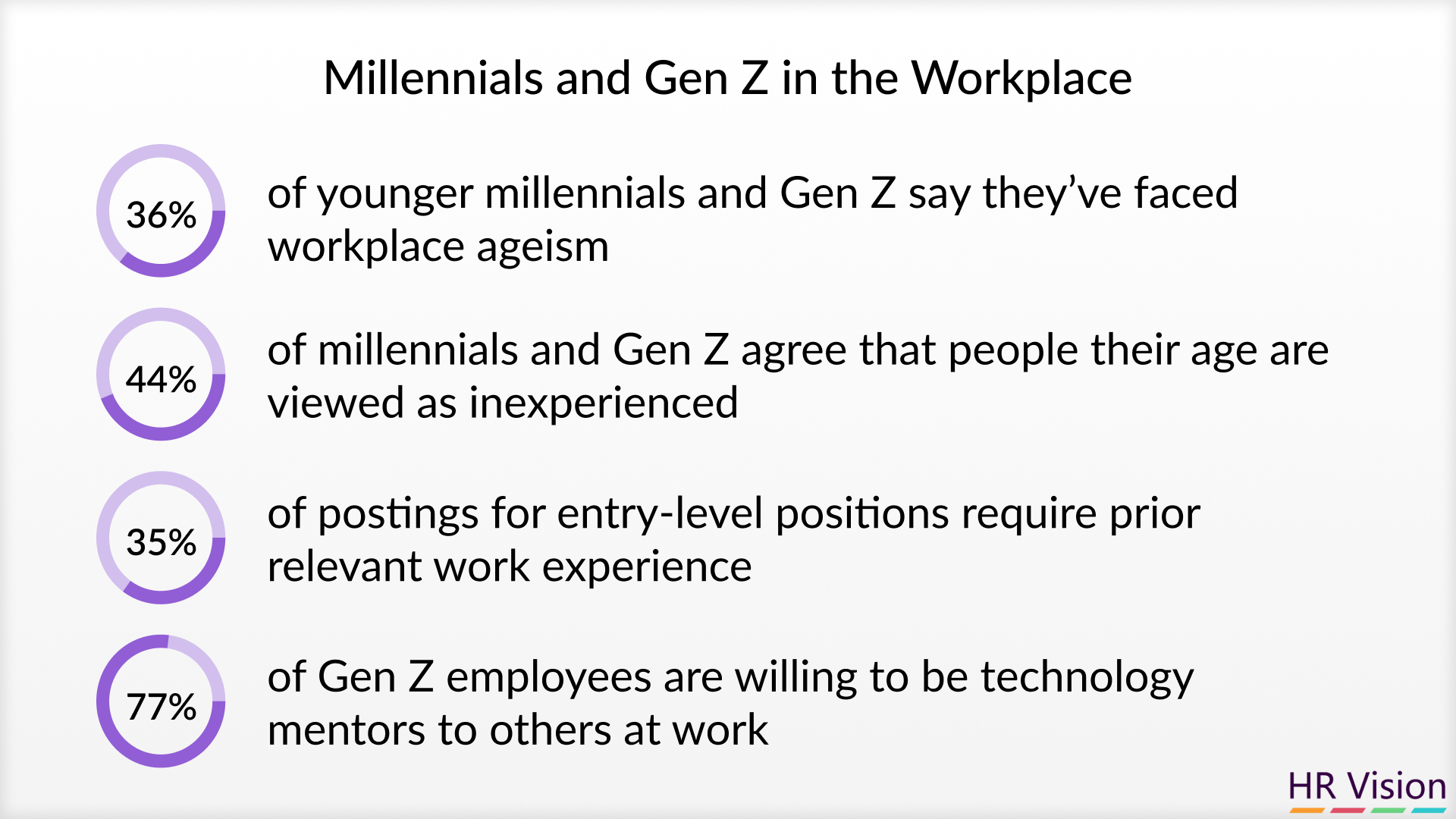
A 2021 Fast Company-Harris Poll revealed that 36% of younger millennials and Gen Z feel they’ve been subjected to ageism, often due to a perceived lack of experience (44% of this group agree they’re seen as inexperienced). This perception can be a significant hurdle, particularly for entry-level positions where companies often demand prior experience (35% of postings for entry-level jobs require it, according to LinkedIn). This creates a catch-22 situation for young workers trying to gain a foothold in their careers.
2. Beyond Experience: Feeling Out of Touch
Interestingly, the same Fast Company-Harris Poll found that 38% of Gen Z and younger millennials, and even 30% of older millennials, feel they’re viewed as out of touch at work. This perception, while seemingly contradictory to the lack of experience concern, highlights a different form of workplace ageism. Younger workers may be stereotyped as lacking traditional work experience, but also as being unfamiliar with the nuances of the corporate world or specific industry practices.
3. A Generational Divide?
A Center for Innovative Public Health Research (CIPHR) survey paints a concerning picture, with 73% of 18-24-year-olds and 50% of 25-34-year-olds reporting discriminatory attitudes and behaviors at work. These experiences can range from microaggressions to outright bias during recruitment.
4. The Myth of Digital Disconnect
One common stereotype paints younger generations as tech-savvy but lacking broader professional skills. However, a Dell study revealed that 77% of Gen Z employees are willing to be technology mentors to others at work. This statistic dismantles the myth of a digital disconnect between younger workers and technology.
Conclusion
The impact of ageism is undeniable, affecting both employees and businesses. We’ve explored how age-related stereotypes, prejudice, and discriminatory practices can hinder the potential of workers across generations. While older workers often face challenges due to a perceived lack of technical skills or outdated work styles, younger generations like millennials and Gen Z are also subjected to ageism, stereotyped as inexperienced or out of touch.
Ageism in the workplace is a pervasive issue with far-reaching consequences. It not only harms employees’ well-being and career prospects but also hinders business success by limiting access to valuable talent and diverse perspectives.
This requires a multi-pronged approach. Implementing diversity and inclusion policies that address age is a crucial first step. Developing age-neutral hiring practices that focus on skills and qualifications is essential. Unconscious bias training for all employees, including managers, can help address preconceived notions about age and create a more objective decision-making process.
Want to discover cutting-edge HR practices for the future of work? Join us at HR Vision, the premier conference bringing together top HR leaders to navigate the ever-evolving world of work.