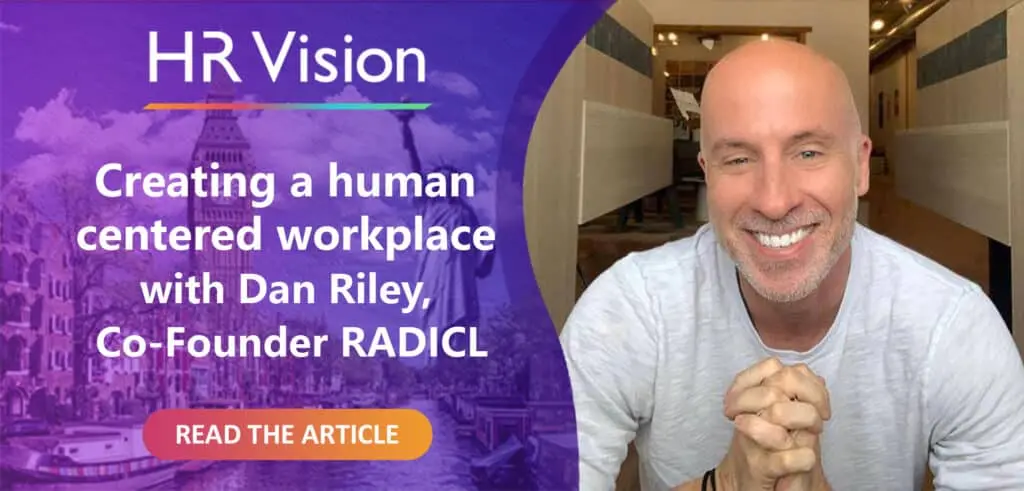
1. Hi, Dan! What inspired you to co-found RADICL and what is the company’s mission? Why so radical company name? 🙂
Thanks for inviting me to speak at HR Vision again! So excited to deliver the opening keynote in Amsterdam on May 9th.
RADICL believes inspired change is possible. RADICL was created as a movement of inspired change designed to meet at the intersection of employee engagement, experience and culture. What inspires, motivates and engages people is changing beyond what happens at work. We believe in the whole-person experience, which has become a critical focus area for organizations as they remodel their people strategy for the future.
The shift in how and where we work has created a critical need to redesign employee experience. The relevance and urgency for what we offer has made it clear the time was now to bring RADICL to market.
Change is meant to be uncomfortable. RADICL is a movement to overcome inertia — because organizations today have an obligation to take action so they may do better for the humans who work for them.
2. You’ve mentioned your extensive experience in the HR and technology industry. Can you tell us about a project you’re particularly proud of the most in your career path?
My favorite success stories are those where real, sustainable change can be seen, experienced, and felt.
I’m so proud every day for the opportunity I have and the amazing people I am lucky enough to work with. And I love when the magic happens. The same magic that draws your eyes to the movie screen, that makes you want to get up and dance to a song, those are the same emotions that motivate me at work.
So, whether it’s playing music, producing a movie, advising an organization, or developing enterprise software – it’s all about making magic happen by surrounding yourself with amazing human beings!

3. You’re known for being a thought leader in the area of people experience and the future of work. What are some trends you’re seeing in these areas that you believe will have a significant impact on businesses in the coming years?
As a thought leader in people experience and the future of work, I’ve observed some key trends shaping the way we work and how businesses will be impacted in the coming years. For example, remote work is flourishing as companies increasingly offer flexible arrangements, allowing employees to work from home or other locations outside of the traditional office.
Another trend is the rise of automation and artificial intelligence, which will play a bigger role in the workplace, streamlining operations and reducing costs. This change will inevitably lead to the automation of certain jobs and the creation of new ones to manage these emerging technologies.
Upskilling and reskilling are interconnected with the previous trend as technology evolves, requiring new skills and knowledge for employees to remain competitive in the job market.
We’re also witnessing the growth of the gig economy, with more people opting for freelance or independent contractor roles, and companies increasingly relying on these workers for specific projects or tasks.
The future of work will be marked by increased flexibility, greater use of technology, and a focus on diversity, inclusion, and continuous learning. Organizations that prioritize their people, foster trust, connection, and transparency will undoubtedly thrive in this ever-changing landscape.
4. Can you explain what a human centered workplace is, and why it’s important for organizations to create one?
A human centered workplace is a work environment that is designed to prioritize the needs, well-being, and experiences of employees. This approach puts the employees at the center of the workplace design and decision-making processes.
This typically involves creating a work culture that promotes increased employee engagement & experience, empowerment, and development. This can include offering flexible work arrangements, providing opportunities for professional growth and development, encouraging open communication and collaboration, and promoting work life balance.
A human centered workplace also involves designing the physical workspace to support employee comfort, productivity, and well-being. Overall, it prioritizes the human aspect of work, recognizing that employees are a company’s most valuable asset, and seeks to create an environment where they can thrive and reach their full potential.
Being human-centered isn’t just a good idea. It’s necessary business transformation.

5. How do you see the concept of employee engagement evolving in the future?
Traditional employee engagement is not enough to understand the whole-person experience. The context for work has changed, and there is an obligation for companies to provide something greater, act responsibly, and give back. With heightened social uncertainty and stress, workers expect their employers to understand who they are as a whole person. This includes their personal pursuits and lives, and they expect those organizations to address important topics including social justice, environmental sustainability and community involvement.
The future of employee engagement is likely to be shaped by ongoing changes in technology, societal values, and the nature of work itself. Companies that are able to adapt to these changes and create engaging workplaces that meet employees’ evolving needs will be well-positioned for success in the years to come.
A more comprehensive approach to well-being is on the horizon, with companies recognizing the importance of supporting not just their employees’ physical health, but also their mental, emotional, and social well-being.
The rise of remote work and digital communication means that technology will likely play a significant role in employee engagement. From virtual reality training to digital platforms for recognition and feedback, technology will help shape how we engage and support employees.
Employees are increasingly seeking more than just a paycheck from their work; they want a sense of purpose and meaning. To keep employees engaged, companies will need to emphasize their impact on society and provide opportunities for social or environmental activism.
Lastly, a more personalized approach to employee engagement will emerge as companies gather more data about their workforce. By leveraging machine learning algorithms to identify patterns in employee behaviour and preferences, organizations can deliver tailored experiences and incentives that resonate with individuals on a personal level.
The future of employee engagement will be shaped by a holistic focus on well-being, technological advancements, a greater emphasis on purpose and meaning, and more personalized strategies to connect with employees.
6. How would you comment on the current rise of AI? How will it change the world of HR?
AI is already transforming the world of HR in some significant ways, and this trend is expected to continue in the future. Here are some of the significant changes that AI is bringing to the world of HR:
- Streamlining Recruitment Process: AI can help automate many routine tasks in the recruitment process, such as screening resumes, conducting initial interviews, and scheduling interviews. This can help reduce the workload of HR professionals and increase the speed and efficiency of the recruitment process.
- Predictive Analytics: AI can help HR professionals identify patterns and trends in employee data, which can be used to predict future outcomes, such as employee turnover, performance, and engagement. This information can be used to make more informed decisions about hiring, training, and retention.
- Employee Engagement: AI-powered tools can analyze employee feedback and sentiment data to provide insights into employee engagement levels. This can help HR professionals identify areas where improvements can be made to increase employee satisfaction and retention.
- Training and Development: AI can personalize training and development programs based on an employee’s skills, experience, and learning style. This can help employees learn new skills more effectively and efficiently.
- Bias Reduction: AI can help reduce bias in the recruitment process by removing human biases from job descriptions, resumes screening, and selection processes. AI can also help identify and mitigate bias in performance evaluations and compensation decisions.
Overall, AI has the potential to revolutionize the HR industry, making it more efficient, data-driven, and unbiased. However, it is important to ensure that AI tools are used ethically and transparently to avoid unintended consequences.

7. You’re also a keynote speaker and film producer. How do you approach creating a compelling and impactful message for your audiences?
My approach to creating a compelling and impactful message for my audience involves always having the “story” top of mind. Storytelling is critical in music, film, or speaking.
A few steps I recommend for anyone:
- Understand the audience: To create a message that resonates with your audience, you need to understand their needs, interests, values, and beliefs.
- Define your message objective: Once you understand your audience, you need to define the objective of your message. Are you trying to persuade, inform, or entertain? Knowing the purpose of your message will help you create content that meets the needs of your audience.
- Craft a clear and concise message: Your message should be clear, concise, and easy to understand. Avoid using jargon, technical terms, or complicated language that your audience may not understand.
- Use a compelling tone and voice: Your message tone and voice should be engaging and compelling. It should capture the attention of your audience and create an emotional connection with them.
- Provide value: Your message should provide value to your audience. It should address their pain points, answer their questions, or offer solutions to their problems. Providing value will help build trust and credibility with your audience.
8. As a musician, how do you balance your creative pursuits with your professional responsibilities?
The number one key to balance is prioritization. I work hard to prioritize my time and set realistic goals. I may not always be able to devote as much time to my creative pursuits (film and music) as I would always like, but I can still make progress by dedicating a little bit of time each day or week to my creative endeavours.
Another approach I recommend is to find ways to integrate your creative pursuits with your professional responsibilities. For example, if you enjoy writing, you could try to incorporate writing into your job by creating reports, proposals, or other documents that require writing skills.
It’s also important to remember that taking breaks and engaging in creative activities can actually boost productivity and help you recharge. So, don’t feel guilty about taking time for yourself and pursuing your passions.
Ultimately, the key is to find a balance that works for you and allows you to feel fulfilled both creatively and professionally. You get one shot at this thing called life. Make sure you do what you love every day!

9. Recently, Great Britain has introduced a pilot project of a 4-day working week. What’s your opinion about it? What advantages and disadvantages do you see both for employers and employees? Would you take part in the experiment, and why?
This is an interesting conversation and question! The concept of a four day workweek has gained more attention recently, with proponents arguing that it could improve work life balance, boost productivity, and reduce stress and burnout among employees. Some studies have found that employees who work shorter weeks are more productive and engaged, while others suggest that a shorter workweek could lead to increased creativity and innovation.
However, there are also concerns that a four day workweek could lead to reduced wages or benefits for workers, increased workloads on the remaining days, or reduced access to essential services for customers. In addition, some industries may be more suitable than others for a four day workweek, and the feasibility of implementing such a system may vary depending on the type of work being done and the needs of the organization.
The concept of a four day workweek is an intriguing idea that has generated considerable interest and debate. More research and experimentation will likely be needed to determine the potential benefits and drawbacks of such a system, as well as how best to implement it in different industries and organizations.
10. Finally, what advice would you give to organizations who are looking to create a more human centered workplace?
Here are a few suggestions for organizations looking to create a more human centered workplace:
- Foster a culture of empathy and understanding: Make sure that your organization values empathy, inclusivity, and diversity. This means creating a safe and respectful work environment that encourages open communication, active listening, and mutual support. Encourage employees to share their perspectives and experiences, and actively seek out feedback on how the organization can improve.
- Prioritize employee well-being: Create policies and practices that prioritize employee well-being, such as flexible working hours, mental health resources, and opportunities for personal and professional growth. Ensure that employees feel valued, appreciated, and supported in their work.
- Design spaces and processes that support collaboration: Foster an environment where people feel comfortable collaborating with one another. Ensure the physical layout of your workplace is conducive to collaboration and communication, and that technology supports team collaboration across remote locations. Ensure that employees are provided with the tools and resources they need to work together effectively.
- Encourage employee autonomy: Give employees the freedom to make decisions and take ownership of their work. This can help them feel more engaged and invested in their work, which can lead to greater job satisfaction and better results for the organization.
- Continuously improve and adapt: Finally, remember that creating a more human centered workplace is an ongoing process. Encourage a culture of continuous improvement, and be willing to adapt your approach based on feedback from employees and other stakeholders. By regularly seeking out new ways to create a more human centered workplace, you can create a more inclusive and collaborative organization that benefits everyone involved.
Thank you, Dan. We wish you always stay equally creative and productive!
If you’re looking for new ideas, fresh perspectives and insights on the future of work, then you’ll want to attend HR Vision Events.