

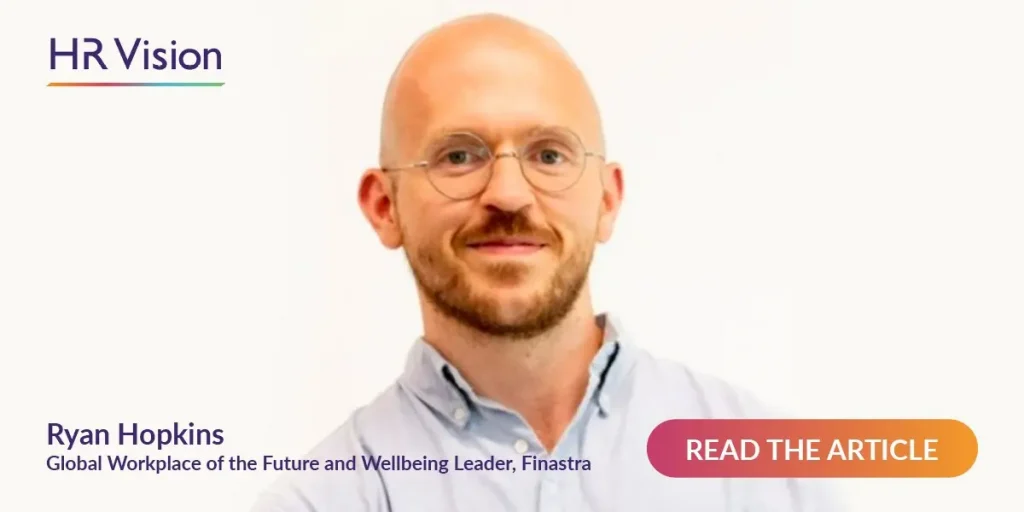
With the so called, ‘great resignation’, I read and hear that organisations are placing increased focus on colleague experience, future of work, cultures (insert buzzword here) in order to retain their best and attract the rest. Those that do not, can definitely expect to lose talent to the organisations that do – with attrition at an all time high. The ‘digital knowledge worker’ has taken stock over the past 2 years, knows what they want and will leave if they do not get it – maybe it should be called the great re-prioritisation.
At Finastra we intend to empower our people to work where, when and in a manner that best suits them. Our OPENworking program was created in December 2020 to focus on wellbeing and to support colleagues during the pandemic and has continued to evolve, from uncapped paid leave to flexible working etc. Here are a few of the biggest trends we anticipate in 2022 and beyond in the future of work:
Evolution of the hybrid work experience
– The physical office was previously where the ‘work’ took place; however, this has changed, and most of our work now takes place in the digital environment from home. We’ve seen the physical workplace become a place where people connect with one another and to the organization. Of course, the balance depends on the person/job/location etc. and requires a global approach with functional and geographic nuances; one size certainly does not fit all. Our cross functional approach (OPENworking), spanning People, Places & IT has enabled us to focus on trying to create a geographicaly agnostic colleague experience, as we transitioned to hybrid working and will be integral as we continue to transition to the asynchronous (geographical & temporal) future of work.
Building wellbeing into the DNA of the organization
– It is amazing to see so many Wellbeing Leaders popping up in organizations, but without a real mandate for change, wellbeing will continue to be seen as a ‘nice to have’. Organizations need to build wellbeing into the fabric of the organization, into the way in which we work. Moving from traditional/tertiary wellbeing initiatives, such as isolated events and employee assistance programmes to primary/future focused initiatives such as digital team charters, flexible working, and digital balance (see the next paragraph) ensuring that wellbeing is built into the way we work. Creating work that enables our people to thrive, not just survive.
Solving the hybrid paradox
– External research shows that 71% of digital workers are prepared to leave their employer if they don’t offer flexibility. On the other hand, we are hearing that our colleagues want/need in-person connection. This is the hybrid paradox. Organizations that can provide flexibility while creating connection will have a distinct competitive advantage regarding attrition and attraction. For example, coming together at the office for special curated events, which builds connection (encouraging collaboration, coaching, and community), while providing the flexible work options.
Switching off from tech
– External research shows that 67% of those working remotely feel pressured to be available at all hours of the day and 89% of remote workers report to be working outside of ‘work hours’. We heard this from our people and decided to do something about it. We created and rolled out ‘digital balance’ – practical tips and tricks to utilise technology to switch off from technology (we don’t have a choice but to use it, so it makes sense to configure it in our favour). Some examples include auto scheduling meetings to finish 5/10 minutes early, scheduling/protecting regular focus time, declining meetings without a clear purpose and setting your in office OOO – letting people know there will be a delay in your responses as you are seeing people face the face! The list goes on . . . . . We encourage our colleagues to use tech to switch off from tech, to move away from the screen, move, stretch, and breathe regularly.
Creating a compelling employee value proposition
– Beyond a competitive salary, organizations will not attract and keep top talent unless they provide flexible working, continuous development and training, growth opportunities, a meaningful employee experience, social connectivity, ESG, DE&I, wellbeing, and a modernized tech stack. At Finastra we have been agile in our approach since the pandemic started, listening carefully to employees, learning, and pivoting accordingly. We may not get it right all of the time, but we will continue to operate an agile approach, failing forward and embracing a growth mindset with everything we do.
If you’re looking for new ideas, fresh perspectives and insights on the future of work, then you’ll want to attend HR Vision Events. This is a two-day event with 3 streams running in parallel, enabling deep dive conversations focused on the future of work, digitization, leadership, L&D, culture and employee experience.


