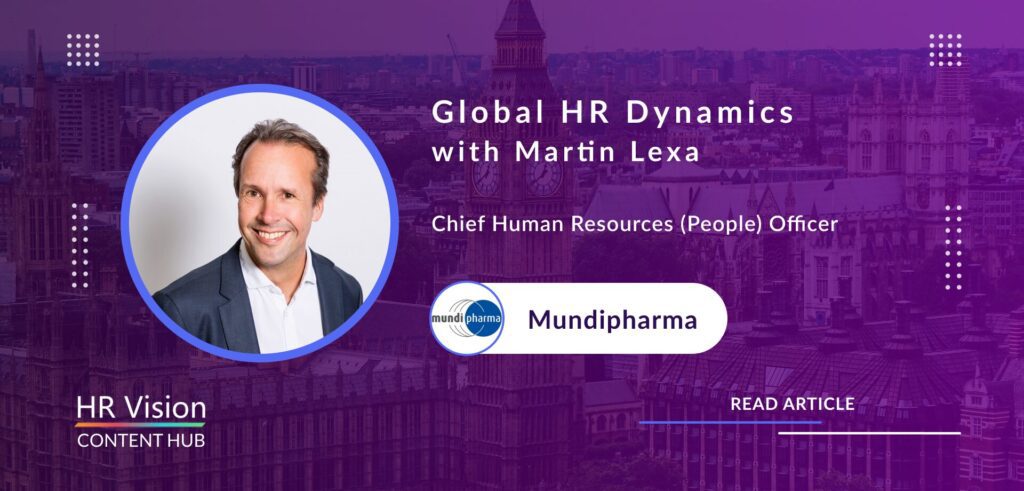
1. With over two decades in HR, how has your experience shaped your view on HR’s role in culture transformation and business strategy?
To be successful, we in HR must broaden our horizons ensuring a good understanding of the business. If we do that, we will be a credible partner in shaping the culture transformation in partnership with senior leaders.
2. Having worked in various European countries, how does your multicultural experience influence your approach to inclusivity in global HR practices?
Having lived in different countries made me sensitive and receptive to local cultures. While we have many things in common, there are also habits and beliefs which are different. What it taught me is that it’s critical to set a global framework but at the same time allow the countries to adapt programs and policies to their needs.
3. As Global Chief HR Officer, what challenges have you faced in managing HR across diverse functions, and how did you overcome them?
Although we work in one company with the same mission and values, there are significant differences across functions. These differences come from the special skills and capabilities we need in each function to perform their job. People in Finance are usually analytical and number-driven, while in Commercial people are more outgoing and less process-driven. These differences require that you have a dedicated HRBP supporting each function. For them to be successful requires that they are aware of these differences and can adapt their style and approach.
4. How do you adapt HR practices to diverse labor laws and cultural nuances globally, considering your experience in labor relations?
It´s important to be consistent and start with a global framework of policies and programs. However, it gives countries the flexibility to adapt to their cultural needs. Consider to build in time puffers in your roll-out plan, to accommodate local consultation processes. Ensure that project or global program leads are aware of these sensitivities.
5. With expertise in Change Leadership, share a key experience where effective change management played a crucial role.
One should never underestimate the importance of frequent communication, even if it is repetitive. I worked in a company, where the organization was changed from a regional to a business unit set-up. It was a major shift in roles and responsibilities for individuals. Explaining to them why we are changing and what’s in for them frequently was extremely critical. No need to have all answers on hand, but it´s critical to follow up once you know.
6. How do you foster a culture of continuous learning and what advice do you have for HR professionals prioritizing employee development?
A culture of continuous learning starts with each employee: they know best, what’s important to them and what they have to learn to be successful in their jobs. People managers play an important role in contributing to their learning agenda as well as putting learning in motion. We in HR foster a culture of continuous learning and provide platforms and tools to ensure seamless execution.
7. How do you maintain a human-centric approach in HR practices, especially with challenges like remote work and changing workplaces?
The pandemic made it obvious that a human-centric approach in a company and HR is needed. However, remote working, new technology, and service centers with ticketing systems make it harder for us to keep a human touch. I believe that technology and AI will enable us to free up time for employees, in moments that matter to them, for example when seeking career advice, or health issues. I am an advocate for renaming “HR” to “People” because this is at the heart of what we do.
8. With your background, what advice do you offer to aspiring HR professionals looking to make a positive impact on organizational culture?
First of all, it’s important that you work in a company with a purpose and culture that suits you. Second, if you are passionate about a culture initiative you want to drive, build a business case based on facts and ensure that senior management is endorsing it. With that in mind, nothing can go wrong.
9. Recently, Great Britain has introduced a pilot project of a 4-day working week. What’s your opinion about it? What advantages and disadvantages do you see both for employers and employees? Would you take part in the experiment, and why?
There are discussions taking place in many European countries. I am torn between: I understand the desire to work less for the same compensation on the one hand, on the other hand, employers are already struggling to fill vacancies with qualified staff. If we could increase productivity through enhanced technology, AI, robotics, etc., we could have shorter working hours. If we can’t, we lose competitiveness in a global economy.
Embrace the future of HR with HR Vision Events! Elevate your expertise alongside top HR leaders, as we delve into the dynamic world of work, HR trends, and the transformative impact of HR analytics and technology.