
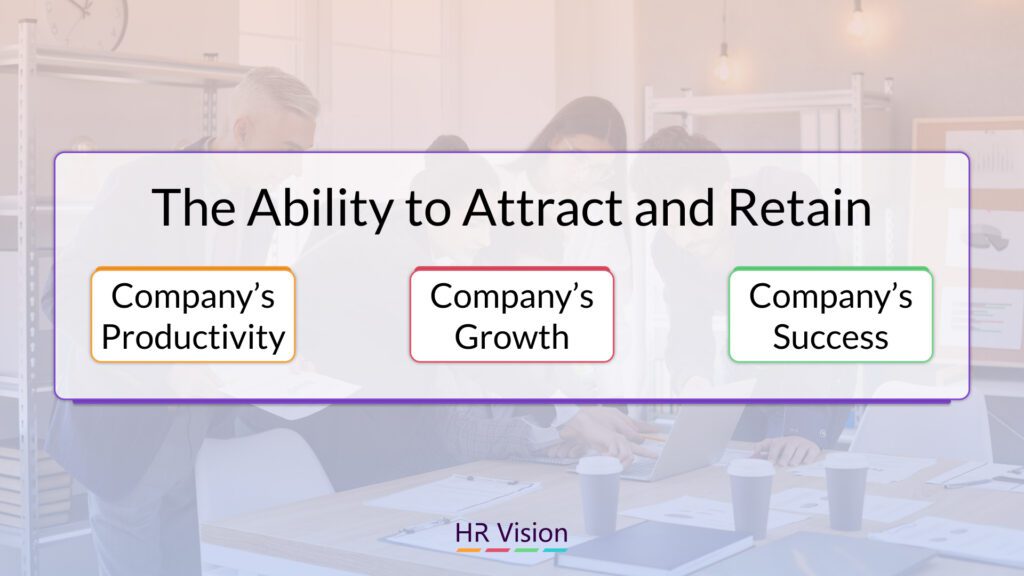
A strong and stable workforce is the backbone of any successful organization. The ability to attract and retain top talent directly impacts a company’s productivity, growth, and overall success. As organizations strive to build resilient and thriving teams, they must recognize the pivotal role played by the onboarding process in shaping employees’ long-term commitment to the company.
The onboarding process marks the beginning of an employee’s journey with an organization and sets the tone for their entire employment experience. It is during this crucial period that new hires form their initial impressions of the company’s culture, values, and working environment. A well-structured and comprehensive onboarding program can have a profound influence on how employees assimilate into the company, establish meaningful connections, and envision a fulfilling career path within the organization.
The Onboarding Process: Building the Foundation
The onboarding process, also known as employee orientation, refers to the systematic and intentional integration of new employees into an organization. It is a structured approach designed to familiarize new hires with the company’s culture, policies, procedures, and job responsibilities. The primary purpose of onboarding is to ensure a smooth transition for employees into their new roles, allowing them to become productive and engaged members of the team as quickly as possible.
A comprehensive onboarding program encompasses a series of well-planned activities and interactions that go beyond the initial orientation day. It includes various components such as:
- Orientation. A formal introduction to the company’s mission, vision, and values, as well as an overview of its organizational structure and key personnel.
- Company policies and procedures. Providing clear and concise information about company policies, work hours, dress code, and other essential rules helps new hires understand the organization’s expectations.
- Training and Skill Development. Providing necessary training and resources to equip employees with the knowledge and skills they need to perform their roles effectively.
- Mentoring and Support. Pairing new hires with experienced mentors or buddies who can offer guidance and support during the early stages of their employment.
- Team Integration. Encouraging opportunities for new employees to interact with their colleagues, fostering a sense of belonging and camaraderie.
- Goal Setting. Establishing clear performance expectations and objectives for employees to understand their role in contributing to the organization’s success.
The Impact of Onboarding on Employee Retention
A positive onboarding experience plays a pivotal role in influencing employee retention rates. When new hires are introduced to a well-structured onboarding process that makes them feel welcome, valued, and adequately equipped for their roles, they are more likely to develop a sense of loyalty and commitment to the organization. A thoughtful onboarding program can instill confidence in employees, reassuring them that they have made the right decision in joining the company. This positive initial experience contributes to a higher likelihood of employees choosing to stay with the organization for the long term.
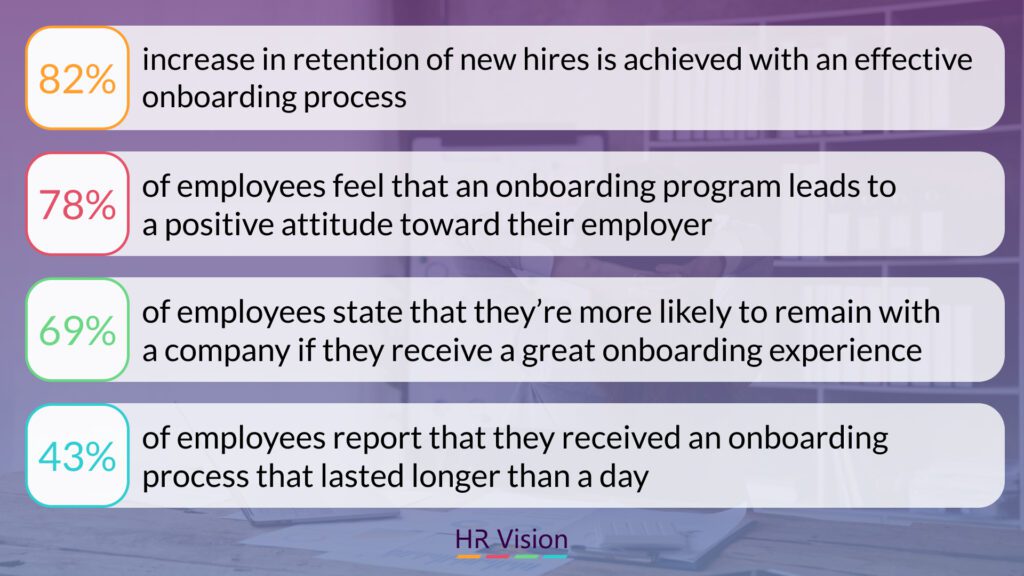
Statistics have shown that a well-executed onboarding process significantly influences employees’ initial experience and subsequent commitment to the organization:
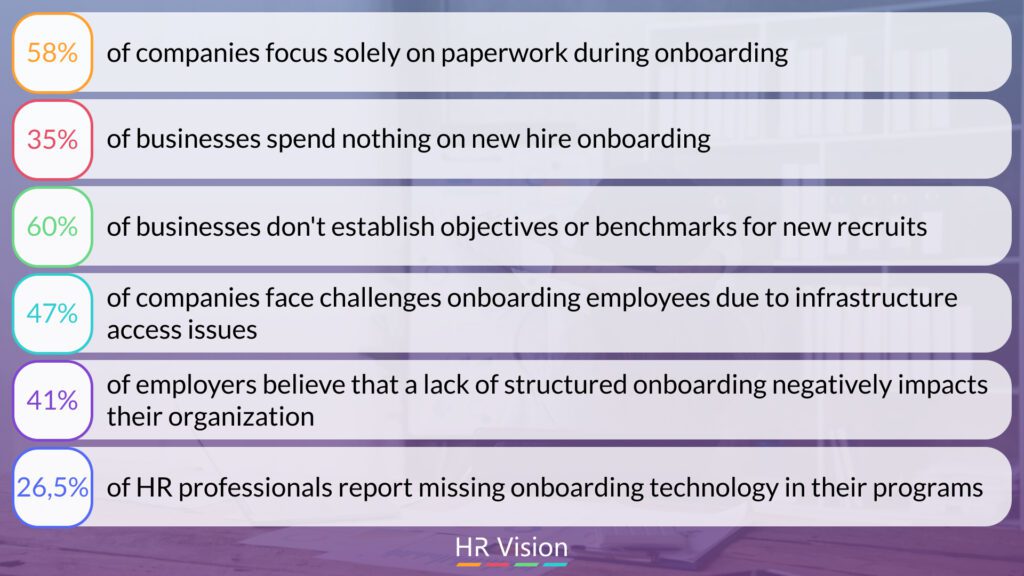
However, the data indicates that a considerable portion of companies face challenges in their onboarding practices. Focusing predominantly on paperwork, not allocating sufficient resources, lacking clear objectives, and encountering infrastructure issues are some of the key challenges hampering the onboarding process. Furthermore, the absence of a structured onboarding program and the lack of essential technology underscore the need for organizations to prioritize and invest in improving their onboarding practices.
A strong onboarding process can lead to improved employee engagement and job satisfaction. When new employees feel supported and well-prepared for their roles, they are more likely to feel connected to the organization’s mission and values. This sense of purpose and alignment fosters a deeper commitment to their work and the organization’s success. Moreover, a positive onboarding experience can help employees build meaningful relationships with their colleagues and supervisors, creating a sense of belonging and camaraderie within the workplace. As a result, employees are more motivated to invest in their roles, leading to higher job satisfaction and a reduced desire to seek opportunities elsewhere.
Elements of a Strong Onboarding Process
1. Preparing for the new hire’s arrival:
– Clear expectations and role information provided in advance
– Necessary paperwork and resources ready for the first day
– Pre-employment training and orientation materials shared
A successful onboarding process starts before the employee’s first day. HR professionals should ensure that all necessary paperwork, equipment, and resources are ready for the new hire’s arrival. This includes providing the employee with information about their role, the organization’s culture, and any pre-employment training required. Setting clear expectations from the outset and equipping new hires with the tools they need to excel in their roles helps them feel valued and confident as they start their journey with the company.
2. Welcoming and integrating new employees into the company culture:
– Organizing welcome sessions and introductions to key team members
– Providing opportunities for social interactions and team-building activities
– Assigning a mentor or buddy for guidance and support
The onboarding process should focus on helping new hires assimilate into the organization’s culture and values. This can be achieved by organizing welcome sessions, introducing them to key team members, and providing opportunities for social interactions. Assigning a mentor or buddy to guide new employees during their initial days can also help them feel supported and connected to the larger team. By immersing new hires into the company’s culture, they can quickly feel like an integral part of the organization, which contributes to a sense of belonging and commitment.
3. Providing ongoing support and feedback during the onboarding period
– Regular check-ins and feedback sessions to address concerns and provide guidance
– Opportunities for new hires to ask questions and seek clarification
– Demonstrating a commitment to the employee’s growth and development
A strong onboarding process doesn’t end after the first few days or weeks. HR professionals should continue to support new employees throughout their onboarding period and beyond. Regular check-ins, feedback sessions, and opportunities for questions and clarification help new hires feel valued and demonstrate that their growth and development are a priority for the organization. Timely feedback can address any concerns or challenges early on, helping to alleviate potential sources of stress and uncertainty. Ongoing support and communication also facilitate a smooth transition into the new role and foster a positive experience for the employee.
Creating a Personalized Onboarding Experience
One of the key factors in maximizing the impact of onboarding on employee retention is tailoring the process to meet individual needs and preferences. Each new hire brings unique skills, experiences, and aspirations to the organization, and a one-size-fits-all approach to onboarding may not effectively engage and retain diverse talent. HR professionals should take the time to understand the background and expectations of new employees and customize their onboarding journey accordingly. By doing so, organizations can demonstrate that they value each employee as an individual and are committed to supporting their success.
Recognizing the diverse backgrounds and experiences of new hires is crucial in creating a personalized onboarding experience. For instance, employees from different cultural backgrounds or with varying levels of prior experience in the industry may require different levels of support and guidance during the onboarding process. HR professionals should take into account these factors and design onboarding programs that are inclusive and respectful of individual differences. This approach fosters a sense of belonging and acceptance, which can significantly impact employee retention.
Leveraging technology and data can play a crucial role in personalizing the onboarding journey. HR teams can use data analytics to gain insights into the preferences and learning styles of new employees, enabling them to design onboarding materials and activities that resonate with each individual. Additionally, using technology, such as online platforms and mobile apps, can enhance the onboarding experience by providing easy access to resources and facilitating communication with mentors and colleagues. A tech-driven onboarding process not only adds convenience but also shows new hires that the organization is forward-thinking and invested in their success.
Measuring the Success of the Onboarding Process
Evaluating the effectiveness of the onboarding program is essential to gauge its impact on employee retention. HR professionals can gather feedback from new hires about their onboarding experience through surveys, focus groups, or one-on-one interviews. This direct feedback provides valuable insights into the strengths and weaknesses of the onboarding process from the perspective of the employees. Understanding what aspects of the onboarding journey were most helpful and what could be improved allows organizations to make data-driven decisions in refining their onboarding programs.
In addition to collecting feedback, organizations can use various metrics to assess the success of their onboarding efforts. Key performance indicators (KPIs) such as employee retention rates, time-to-productivity, and employee satisfaction scores can provide quantitative measures of the onboarding program’s impact on retention. Analyzing these metrics over time allows HR professionals to track the effectiveness of the onboarding process and make data-informed adjustments.
Identifying areas for improvement and continuous enhancement is an integral part of the onboarding process. As the organization evolves and the workforce dynamics change, the onboarding program should also adapt to meet the evolving needs of new hires. Regularly reviewing and updating the onboarding curriculum, materials, and resources helps ensure that the program remains relevant and impactful.
In conclusion, a strong onboarding process significantly impacts employee retention, making it a critical focus for HR professionals. As you strive to create a positive and engaging onboarding experience, consider joining us at HR Vision, where we bring together top HR leaders to discuss the best HR practices for navigating this transformative time.