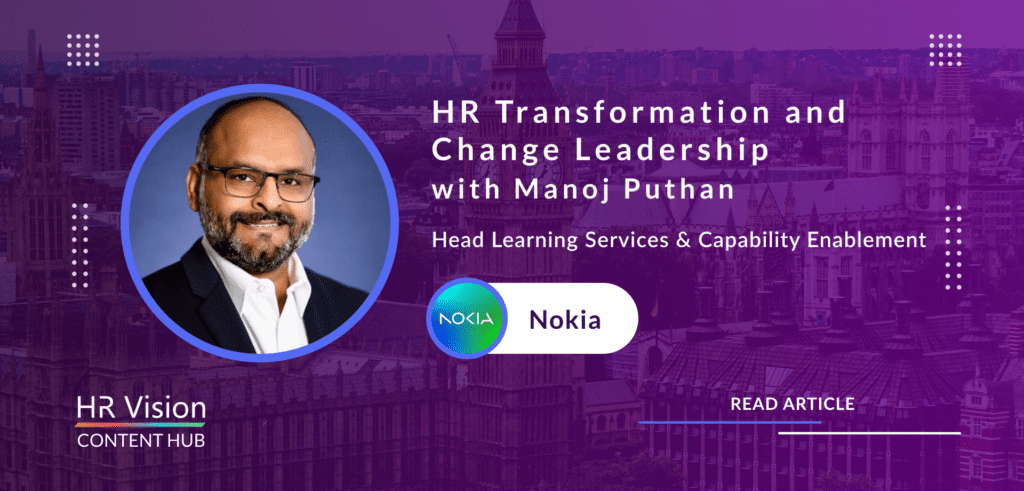
You’ve worked across diverse industry verticals, including IT, Telecom, Banking, and Healthcare. Could you share some key insights into how HR practices differ across these industries?
That’s indeed an interesting question. In my view, at a broader level, there isn’t much of a difference across these industries, as all of them deal with similar challenges and opportunities within the HR domain. There are aspects that come into play for specific areas, which may differ in terms of intensity/texture for some over others. For instance, the scale and scope of talent attraction activities in the IT industry were considerably larger than in banking or healthcare. Also, when you talk about talent retention and engagement, I could see the depth of investment and effort that was given to developing and retaining banking specialists and experts (given the amount of assets under management and personal relationships which the wealth managers operate with their High-Net-Worth clients) could seem more intense than what you would see elsewhere. But if you look at some of the practices that are adopted in some industries and try to draw a parallel and adapt them to others, there could be some interesting revelations to be had, which could also challenge the traditional ways of how things are done otherwise. However, one of the common threads I do see is that integrating the business context and aligning with the overall strategy to drive the people initiatives drives credibility, influence, and impact for the HR organization.
As a Change Leader, what advice would you give to HR professionals looking to spearhead transformative change within their organizations?
As clichéd as it sounds, I believe it’s about focusing on the fundamentals of change management and paying conscious attention across each of the stages of the transformation process. Do not lose sight of what was the actual reason and impact you wanted to generate when you embarked on this transformation (which should have been strongly aligned with the business strategy and stakeholder value). Also, don’t burden yourself as the lone ranger in the process, ensure that you build strong change multipliers across the organization in this journey that ensure a sustainable outcome.
Enough is also said about communication (and you can never have enough of this), but it’s the quality of communication that is the key – How you are able to articulate the vision, breaking it down into executable goals and ensuring that each of the stakeholders are engaged during the journey and kept engaged and invested along the journey. Showing progress during the whole transformation journey is quintessential, so try to break it down into smaller achievements that drive overall motivation and engagement but also bring more agility towards adapting the program as needed when you progress in the journey.
It’s also vital that there are feedback loops and closure of the feedback that are properly communicated and integrated within the overall transformation or change programs. The last thing you would want to have is a “change fatigue” bunch of employees who do not really believe in your vision are indifferent to the cause and not personally being invested in making it happen. The journey of the change and the overall experience it generates for all stakeholders involved is as (or perhaps more) important than achieving the end transformation target.

You are passionate about unlocking the potential of individuals. Could you share a success story where this passion translated into remarkable results for an organization?
Across all the roles that I have performed in my work experience, the human potential aspect has always been at the heart and center. There have been great learnings for me in the process as well which has helped me shape my own experience and leadership capabilities. As an example, in one of the instances where I was working for one of a large IT company where we were implementing a Virtual Learning environment, I was entrusted (in the midst of a rollout) as a project manager for overseeing the completion of the implementation. While we did still have a considerable way ahead of us to implement the system, for me it was personally a very interesting challenge to manage the cross-functional team (Technical, domain experts, etc.) which was relatively young and facilitated the execution with the team where we were collectively learning during the journey. With the right level of trust, empowerment (backed by strong leadership support), and strengthened collaboration with the team, they stepped up and invested themselves to realise the end outcomes. This was also demonstrated by the results we collectively were able to achieve, where our implementation was recognised as one of the best in the industry and we also managed to receive an award for it.
It’s amazing what you can achieve when you Clarify the vision, empower teams, foster collaboration, and facilitate an open and fearless culture. No matter what the content of my various roles (across Consulting, Business Development, Pre-sales, leading a business line, etc.), these fundamentals have always unlocked possibilities beyond what I could imagine.
Given your experience in Healthcare, how have HR strategies evolved in response to the unique challenges faced by this industry, especially in recent times?
Well, I may not have the latest insights to comment about the healthcare industry now as my engagement in this domain was right up front in my professional career. However, I do see the unique challenges in this industry to attract the right talent and keep them engaged during the entire product development lifecycle (which we know can be a long-drawn affair given the nature of the industry).
Also, given the level of research and investments that go into this field, fostering a culture of continuous innovation, inclusivity, and psychological safety should be crucial for any organization to succeed and for the employees in that organization to be able to give their best version of themselves. This is also true one would argue for any highly technology-driven organization like the one I work for today. In such an environment the aspects of learning and knowledge management form a strong foundation and bring strategic differentiation for the organization moving forward and with the possibilities of technology available today (AI et al) in these domains, it is going to be an exciting time ahead indeed.
Employee engagement is a top concern for HR professionals. What creative approaches have you used to enhance engagement and retention rates in your previous roles?
Well, this is a topic that will always be a challenge and an opportunity for organizations in the highly contested talent marketplace. While I don’t believe there is a sliver bullet solution to address this challenge, it is always contextual to the needs and objectives of an organization and related challenges. For me, it goes back to some of the basic tenets of the relationship between employees and the organization: a few of which are about transparency, authenticity, openness, inclusivity, etc.
Some of the approaches that have been very successful in my experience have been where we bring the hearts and minds of individuals and teams toward accomplishing a strategic business problem/ opportunity. Employees feel a lot more engaged when they see their contribution towards a concrete business outcome, and they are being given empowerment and visibility within the wider organization and the CXO community within the organization. Also, it’s important to expand the scope of engagement beyond an individual’s normal remit and engage individuals from different disciplines (Sales, R&D, supporting functions, etc.) and present an opportunity to learn engage, and appreciate the challenges and opportunities.
My own personal experience within Nokia over the last 15 years has been one of them where I have had the opportunity to engage across various challenges and roles thereby engaging with a sense of purpose and impact towards the organization. So the ability of an organization to facilitate a career path by way of the internal processes and systems that encourage and excite individuals to develop themselves and see a larger purpose and meaning in what they contribute towards is in my view one of the strongest levers.
In the context of high-performance cultures, how do you strike a balance between driving results and maintaining employee well-being and work-life balance?
This is an important question especially post the COVID era where we all have seen unprecedented increases in stress levels and well-being issues that have come to the forefront. In my personal view, it’s about how an organization drives its overall performance management orientation and how that is communicated, internalised, executed, and reinforced that determines how impactful it will turn out.
The ability to translate the business expectations and break them down into team and individual OKR’s (Objective and Key Results) sets a strong foundation to be able to engage in a meaningful way with the employees. Once that expectation is well understood across the teams it’s about the supportive working environment, we build around that to the teams and individuals that determines the success (which can also differ across individuals and their specific wellbeing issues).
The role of a leader here is of utmost significance to be able to create the needed psychological safety so that the team members can be their best version of themselves. It is important to have a continuous dialogue with the employees and ensure that needed actions can be taken along the journey and there is a very open and transparent engagement that is aligned to achieving the needed outcomes. I also do believe that HR teams have a critical role here in being the “well-being” guardians for the teams and organizations they are supporting. At the end of the day, it’s the overall congruence (across people, strategy, systems, processes, etc.) within the organization that will drive the success of individuals, teams, and the business overall.
What trends do you see emerging in workplace learning and development, and how should HR departments adapt to stay ahead?
I see a few trends that are going to continue or emerge as we progress forward. Clearly, there is now an increased emphasis on “skills” beyond the traditional competencies view of how L&D has been operating.
The key challenge would be how there is continued focus on future skills and capabilities without losing the momentum on the deliverables for the short to medium term without loss of productivity. So the key from a learning and development standpoint is not just around learning for learning sake but how that drives overall value creation across the ecosystem and supports the organization to differentiate in the marketplace with its unique capabilities.
L&D professionals will also have to focus on is to integrate learning within the flow of work and aligning that with enhancing the overall experience for an individual, team, and organization. This will play a more heightened role moving forward given the rapid Digitalization, Automation, and further integration of AI into our workplaces. The focus on performance-based learning is surely going to be further emphasised when one thinks about any investments or business cases for implementing a learning program or intervention. It is essential that L&D teams are stepping up their own capabilities and skills to be able to engage with leaders guide them through this process and help them achieve their business goals.
How do you think HR professionals can balance the need for automation and technology in HR processes while maintaining the human touch in employee relations?
I personally see this as a great opportunity for HR professionals to step up and pivot themselves towards being the “consultants” and “partners” which has always been the holy grail expectation from the last decades.
It is highly important that we look at the end-to-end process landscape and map out which are the set of areas within the system of activities that can be automated / Digitalized (no half measures here) and which are the points of engagement where the “human” touch can be further strengthened. All of this needs to be investigated from the lens of design thinking and value creation to the individuals, teams, and the organization overall.
When you look at today’s strategic organisational priorities with aspects such as Organization design, Well-being, leadership development, coaching, collaboration, and creating a high-performance culture, I believe the relevance of interventions and influence that the HR team can bring to create value to the stakeholders can be truly valuable. As I was referring to the aspect of the HR teams being the “well-being guardians”, just imagine that with digitalization and with AI-driven workforce analytics, the quality of engagement that HR business partners can have to nudge and improve the overall workplace effectiveness.
We have already seen many organizations who have taken quite a leap forward in automating their HR activities, so rather than resisting the Automation and digital transformation we need to embrace it and complement it with those unique value differentiators that will drive a more holistic and sustainable impact for the organization.
Join us at HR Vision to embrace the future of HR and explore transformative practices for growth and innovation with top HR leaders.