What Is A Results-Only Work Environment (ROWE)?
A Results-Only Work Environment (ROWE) is a contemporary work concept that is reshaping the way organizations approach employee productivity and work-life balance.
In a ROWE, the emphasis is shifted from measuring employees’ time spent at work to solely evaluating their outcomes and results. This means that employees have the autonomy to manage their own schedules and choose when and where they work, as long as they meet their assigned objectives and deliverables. ROWE is gaining traction in the modern workplace as it aligns with the evolving preferences of employees seeking greater flexibility and work-life integration.
In comparison to traditional work arrangements, where fixed working hours and office presence are emphasized, ROWE provides employees with the flexibility to design their work schedule based on their individual preferences and peak productivity times. Unlike Flexible Work Arrangements (FWAs) that may allow employees to adjust their working hours or work remotely on specific days, ROWE gives employees complete control over their work hours and location, as long as they deliver the expected outcomes.
Let’s compare the ROWE (Results-Only Work Environment) concept with two other work concepts: the traditional 9-to-5 office work model and the Flexible Work Arrangement (FWA) model.
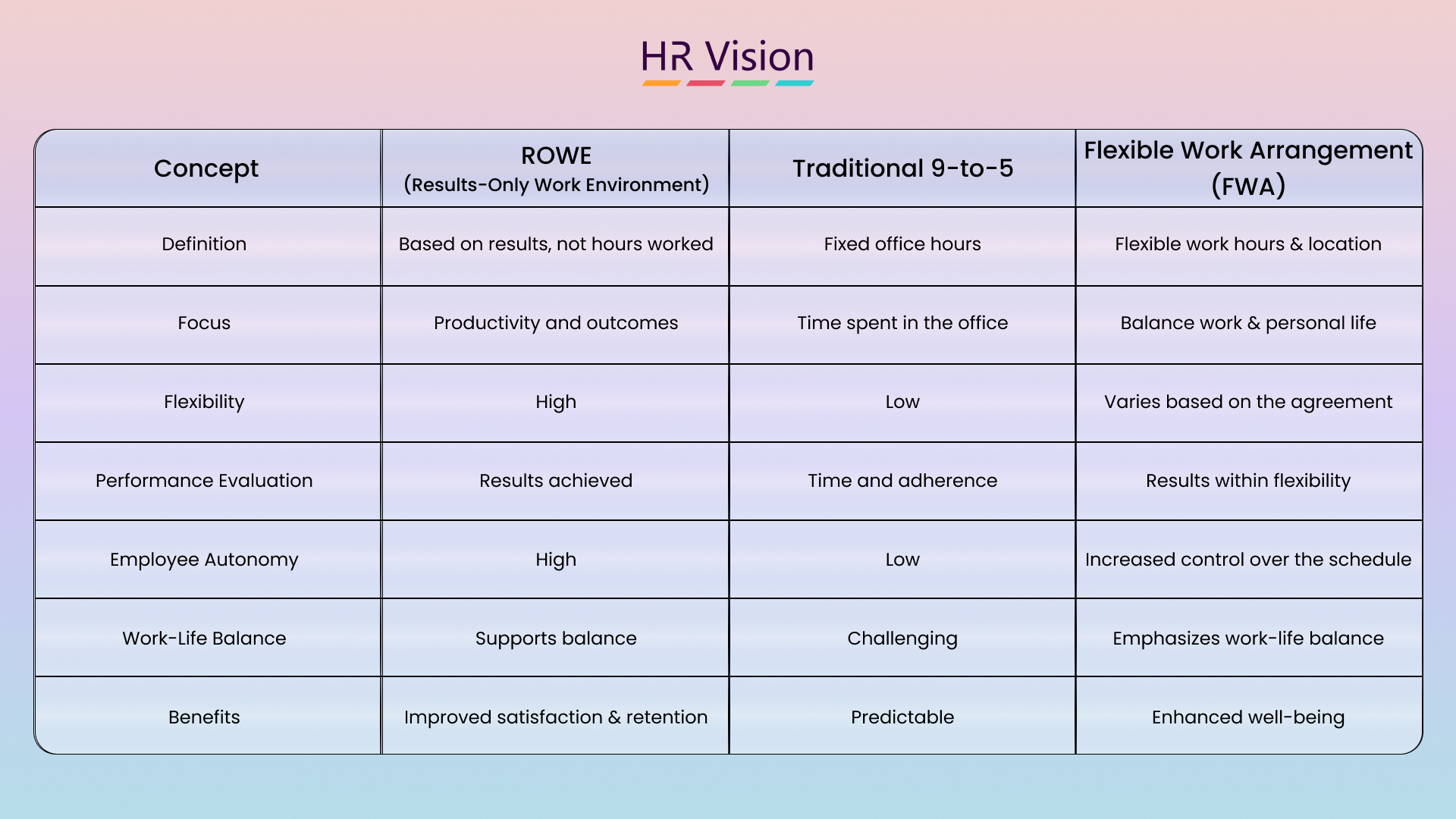
Implementing ROWE holds significant importance for both organizations and employees. For organizations, it boosts employee engagement, job satisfaction, and productivity by focusing on results instead of rigid schedules. Employees can optimize their productivity during their most motivated and creative times. ROWE also enables a better work-life balance, allowing employees to tailor their work hours around personal commitments. However, embracing ROWE comes with challenges. HR professionals must navigate cultural shifts and ensure managers support teams effectively in a results-driven environment.
Benefits Of Implementing ROWE
One of the primary benefits of implementing a Results-Only Work Environment (ROWE) is the increased level of employee autonomy and empowerment. By granting employees the freedom to design their work schedules and choose their work environment, organizations empower their workforce to take ownership of their tasks and responsibilities. This sense of autonomy fosters a greater sense of trust between employees and their employers, leading to higher levels of job satisfaction and commitment to achieving results.
ROWE also has a significant impact on work-life balance and employee well-being. Allowing employees to have control over their work hours enables them to better align their professional commitments with personal and family needs. This flexibility reduces stress and burnout, creating a healthier work environment and improving overall employee well-being. As employees experience a greater sense of balance between their work and personal lives, they are more likely to be motivated, energized, and focused in their roles.
Implementing ROWE can lead to a positive impact on employee engagement, productivity, and job satisfaction. When employees are trusted with the freedom to structure their workday according to their individual preferences and priorities, they tend to be more engaged in their tasks. This engagement, coupled with reduced distractions and increased focus, contributes to improved productivity levels. Additionally, as employees experience the benefits of ROWE, such as reduced commuting time and increased flexibility, their overall job satisfaction is likely to rise, leading to higher retention rates and a more motivated workforce.
Challenges And Considerations Of Adopting ROWE
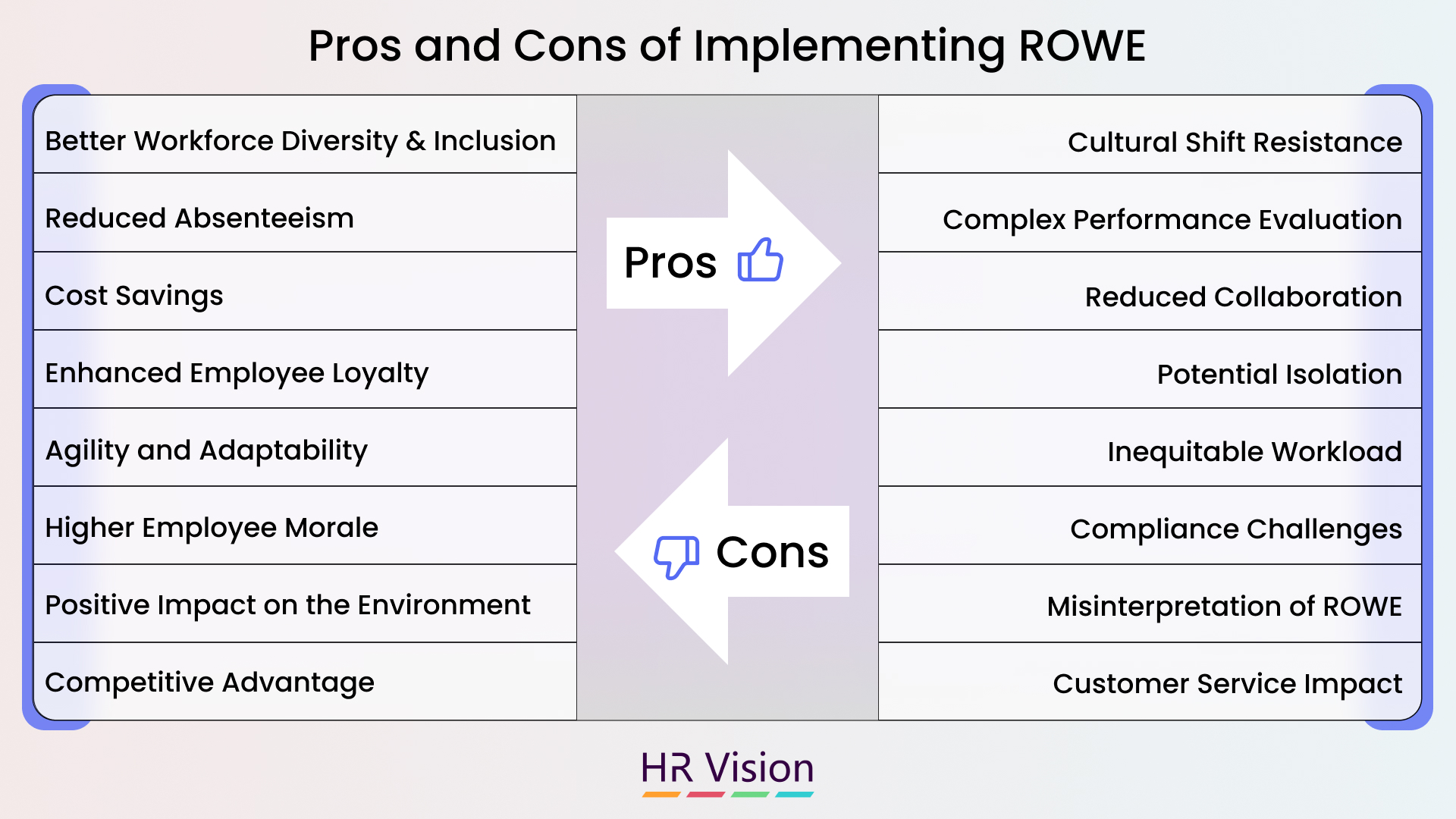
Implementing Results-Only Work Environments (ROWE) requires significant cultural shifts within organizations. Leaders and managers must assess their organization’s readiness for this transformational change. It is essential to foster a culture that values trust, accountability, and results over traditional notions of “face-time” and fixed work hours. Engaging employees in open dialogues about ROWE and addressing any concerns they may have is crucial to ensuring a smooth transition. Additionally, organizations should invest in training and support for managers to effectively lead in a ROWE setting and empower them to facilitate employee success in this new work environment.
As ROWE is centered around results-based evaluation, it is essential to establish clear performance metrics and key performance indicators (KPIs) to measure employee contributions accurately. Defining specific, measurable, achievable, relevant, and time-bound (SMART) objectives allows both employees and managers to align expectations and measure progress effectively. Implementing performance tracking systems that focus on outcomes rather than hours worked is crucial to fostering a results-driven culture and reinforcing the value of each individual’s contributions.
While ROWE can enhance individual autonomy, organizations must address potential challenges related to team collaboration and communication. Without a centralized, fixed office space, employees may face difficulties in coordinating projects and engaging in spontaneous discussions. To overcome this, leveraging technology, such as video conferencing tools and collaboration platforms, becomes essential to facilitate seamless communication and maintain a strong sense of teamwork. Encouraging regular team meetings, virtual check-ins, and opportunities for team-building activities can also help build camaraderie and ensure effective collaboration despite physical distances.
How To Implement ROWE?
Implementing ROWE: Strategies and Best Practices
Identifying roles that are suitable for Results-Only Work Environments (ROWE) is essential to ensure a successful implementation. Not all positions may align with the ROWE philosophy, and it is crucial for HR professionals and organizational leaders to carefully assess job responsibilities, functions, and outcomes. Roles that have clear and measurable deliverables, where success can be evaluated based on results rather than time spent, are well-suited for ROWE. Setting clear expectations with employees about their responsibilities, performance metrics, and the importance of meeting objectives is vital for fostering a results-driven culture.
- Identify Roles Suitable for ROWE. Not all positions may be well-suited for a Results-Only Work Environment (ROWE). Organizations should conduct a thorough analysis of job roles to determine which functions can effectively transition to ROWE. Roles that require regular on-site presence or have strict customer-facing requirements may not be ideal for remote work.
- Set Clear Expectations. Transparent communication is vital when implementing ROWE. Clearly define the expectations and goals for employees in a results-focused environment. Ensure that employees understand the performance metrics by which they will be evaluated and how their success contributes to overall organizational objectives.
- Train Managers and Leaders. Managers play a critical role in guiding employees through ROWE. Provide comprehensive training to managers to equip them with the necessary skills to support remote employees effectively. Training should cover aspects such as performance management, feedback techniques, and the cultivation of trust within virtual teams.
- Establish Remote Work Support. Offer remote employees the necessary tools and resources to excel in their roles. This includes providing access to the latest technologies, collaboration platforms, and cybersecurity measures to ensure a seamless and secure remote work experience.
- Build a Results-Driven Culture. Foster a culture that prioritizes outcomes and celebrates achievements. Recognize and reward employees based on their contributions to results, promoting a sense of purpose and motivation within the workforce.
- Develop Communication Guidelines. Establish clear communication guidelines for remote teams, ensuring effective and timely exchanges of information. Encourage regular check-ins, team meetings, and virtual collaborations to maintain strong connections among employees.
- Monitor and Evaluate Progress. Continuously track performance and progress towards established goals. Regularly evaluate the effectiveness of ROWE implementation and make data-driven adjustments as needed.
- Encourage Ongoing Feedback. Foster a culture of continuous improvement by encouraging employees to provide feedback on the ROWE experience. Use this feedback to fine-tune processes and address any challenges that may arise.
- Remain Flexible and Open. Embrace flexibility in the implementation of ROWE. Be open to accommodating individual needs and preferences while maintaining a focus on results and organizational success.
How To Measure The Success of ROWE Implementation?
To determine the success of ROWE implementation, organizations can employ various evaluation methods. Quantitative metrics, such as productivity levels, employee engagement scores, and turnover rates, can offer valuable insights into the effectiveness of the results-driven approach. Additionally, qualitative feedback from employees through surveys, focus groups, and one-on-one interviews can provide a deeper understanding of the employee experience within the ROWE framework.
Feedback from both employees and managers is essential to gauge the overall impact of ROWE on the workforce. Regular check-ins with remote employees can help identify any challenges they may face and uncover opportunities for improvement. Likewise, managers’ perspectives on team dynamics, communication, and employee performance within the results-focused environment are crucial in assessing the success of ROWE implementation.
Data-driven insights play a key role in shaping the ongoing success of ROWE. By analyzing performance metrics, feedback, and employee sentiments, HR professionals can identify areas that require refinement and optimization. This iterative process allows organizations to continuously evolve and tailor ROWE strategies to meet the ever-changing needs of employees and the business.Join HR Vision Conference, where we bring together the top HR leaders to explore the latest trends in HR, talent management, and leadership.