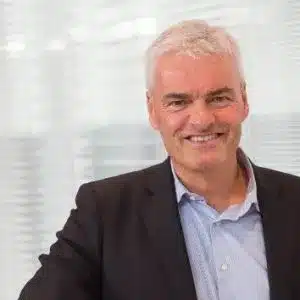
Gerard Penning
Executive Vice President Human Resources Downstream
Shell International
Before his presentation at the HR Vision London event, the Content Hub speak to Gerard Penning to find out more about his experiences as a HR leader for Shell’s Downstream Business.
You are the EVP of HR for Downstream. For those who don’t know, can you briefly summarise what the difference is between Shell and Downstream?
The Shell business (like that of many of our competitors) is traditionally divided into Upstream (exploring for and producing Oil and Gas) and Downstream which focuses on refining, trading and shipping of products made from Oil and Gas and increasingly more from other sources such as biofuels. Downstream in Shell includes a world-class Chemical business making the raw components from which most of the day to day products that surround us are made (from mobile phones to composites that make up most modern planes and cars). A large part of our Business is involved in selling products to our B2B customers (lubricants, jet fuel, bitumen and many more), and selling direct to about 30 million customers a day through our Retail network of over 45,000 sites in over 75 countries. In addition to Upstream and Downstream, Shell is also a world leader in gas. Our Integrated Gas business, which also include the rapidly growing segment of new energies, underpin our strategy to be the world leader in providing sustainable energy solutions.
As the EVP of a complex global organisation, what is the number one reoccurring concern that HR managers within Shell have identified?
Getting the right people, at the right place, at the right time, doing the right things to drive the success of our company in the short run, but also importantly able to look ahead at what the energy transition will bring and how we need to adapt our business – including what this means for developing new skills and capabilities.
What have been the benefits and advantages of your ‘Goal Zero’ commitment from your operations?
Goal Zero (nobody gets hurt in our operations and we keep our products in the pipes) has been and remains a fundamental part of our culture and philosophy…it runs deeply in our DNA and influences all we do and how we do it. It is our mission to ensure that nobody gets hurt in the performance of their duties.
AI has been a growing discussion amongst HR professionals and both advantages and disadvantages have been identified. What are your views on the future of particular HR practices which will be integrated with artificial intelligence?
We do have a firm grip on many components of AI that directly and indirectly influence our business now and in the future. From using virtual reality to train people in e.g. maintenance of complex sites to using AI to create patterns from big data sets, we see AI growing in many areas of our business. In the longer run AI will change the way we work and it will make some roles obsolete, but will also add new ones.
Looking at workplace diversity, what motivations can be put into place to increase the number of women being recruited into STEM focused industries?
Most important is to create a great place to work where people who bring diversity in whatever way can be the best they can be and thereby connect to an ever more diverse world and customer base. Building an inclusive culture and having female role models in e.g. engineering and other technical roles clearly help. We have made good progress through a diligent drive for diversity at all levels in our organisation over many years… with still more work to do.
How would you describe your performance measurement practices from the headquarters down to various subsidiaries and retail management? Are they overall measured in the same way or would you describe it to vary due to factors such as management styles (which still align with aim and objectives of the company)?
Performance management needs to have a situational component and does need to recognise the community you do it for. Retailers are wired differently to explorers for example, and you need to make sure that you allow enough flex to cater for this, whilst at the same time maintaining an overall common approach and avoiding too much complexity. The one thing we have learned is that performance management is more an art than a science…
What common leadership competencies have you identified within your company that have encouraged either employee performance, learning and development and career development within the company?
Growth, Performance, Authenticity and Collaboration and I will talk about these in more detail at the HR Vision London conference