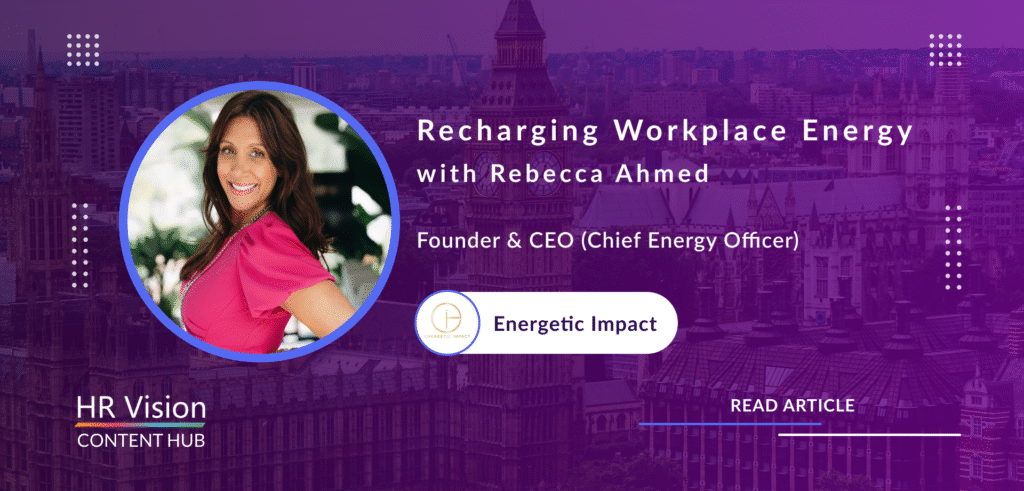
- As an Energy Leadership Index™ Master Practitioner, how do you define “energy” in the workplace—and why does it matter more than ever today?
Personal energy as the amount of vigor or capacity each person brings to a situation. Think of your personal energy like the battery on your phone: when it’s fully charged, it can do anything. When you are fully charged, you can too! But when your phone is running on low battery—apps don’t work, the light dims, and eventually, it shuts down. Sound familiar? The same happens to humans.
Personal energy isn’t just about mood; it’s about perception. The way you interpret events determines the energy you bring. If you’re wearing metaphorical rose-colored glasses, you’re likely to see opportunities and experience positive energy. But if your lens is tinted by stress or negativity, your view of the world will also be negative—and your energy will follow.
There are two types of energy at play: constructive and destructive. Constructive energy, like a charging phone, builds you up—fueling collaboration, creativity, and connection. Destructive energy, on the other hand, pulls from your reserves. It’s useful in short bursts (like responding to a crisis), but over time, it drains your battery.
In today’s fast-paced, ever-evolving workplaces, understanding and managing your personal energy is no longer a luxury—it’s essential. Energy is the modern-day currency. Leaders and teams need to actively recharge, choose their perspectives, and cultivate constructive energy to thrive—not just survive—in this new world of work.
- You’ve coached emerging leaders at Caesars Entertainment on shifting from survival to thriving. What’s your top advice for leaders feeling burnt out?
In 2021, I had the privilege of serving as the “Chief Energy Officer” for Caesars Entertainment. My mission was to help emerging leaders shift from surviving to thriving—starting with a deeper understanding of their personal energy.
Before our in-person sessions, each participant completed the Energy Leadership® Index Assessment, a powerful diagnostic tool that reveals how individuals energetically perceive and react to situations—both under normal and stressful conditions. This assessment helps leaders understand their default energetic patterns and their impact, not only on themselves but also on those around them.
One memorable example came from our summit at the Horseshoe Tunica Hotel and Casino. A front desk manager shared both the success and the strain his team was experiencing. He led with Level 4 energy, rooted in empathy and service. His team was exceptional at creating personalized guest experiences—but they were also absorbing guests’ negative energy, leading to emotional fatigue and, eventually, burnout.
This sparked a pivotal lesson in the room: Empathy is powerful—but it must be paired with the practice of release. Leaders explored how their go-to energy both serves and hinders them. Through the energetic success principle, The Principle of Detachment, they learned how to empathize, provide service, and then let go.
To reinforce this, I guided the group through exercises and a five-question reflection strategy leaders could use after any guest interaction or stressful moment:
- Did I fulfill my role and give my best?
- Is there anything else within my control to improve the outcome?
- How did I feel before and after the interaction?
- How much of this energy is truly mine to carry?
- How do I choose to feel moving forward?
Through repeated use of these questions, leaders began taking ownership of their energy—learning to detach from external negativity and reconnect with their purpose and passion.
So, for any leader feeling burnt out, my top advice is this: Take the ELI Assessment. Understand your energetic profile. And, most importantly—practice releasing what doesn’t belong to you or serve you.
- Your book The Energy of Success emphasizes joy at work. What’s one small daily habit that can boost energy and motivation across a team?
One of the most transformative daily habits a leader can adopt is cultivating curiosity—not just for themselves, but across their entire team. In The Energy of Success, I define “cultivate curiosity” as the energetic success principle that challenges assumptions, opens minds, and drives engagement. It’s about approaching each day, each conversation, and each challenge with a mindset of discovery rather than judgment.
A simple way to embed this principle into daily routines is by starting meetings with a curiosity prompt. Ask, “What’s one thing that surprised you today?” or “What’s a recent challenge that sparked a new idea?” Over time, this builds a culture rooted in a growth mindset.
When leaders make curiosity a daily practice—especially in moments of tension or fatigue—they model a constructive energetic shift that others naturally emulate. In this way, cultivating curiosity isn’t just a principle—it becomes a daily habit that energizes teams from the inside out.
- You played a crucial role in a $2.8B merger with Boyd Gaming and Penn National. What’s the HR leader’s biggest responsibility during M&A?
During mergers and acquisitions, HR leaders are pivotal in managing cultural integration. Their responsibilities include transparent communication, aligning organizational values, and ensuring employee engagement throughout the transition. One of the most powerful tools they can leverage during this process is constructive energy, the positive, forward-moving force that fuels collaboration, creativity, and resilience.
By intentionally cultivating constructive energy, HR leaders help teams approach change with curiosity rather than fear, fostering an environment where people feel empowered rather than threatened. This energy shows up in empathetic conversations, solution-oriented thinking, and a shared sense of purpose. When HR channels constructive energy into addressing concerns, facilitating collaboration between merging entities, and maintaining a people-centric strategy, they don’t just manage change—they lead transformation. The result is a smoother, more cohesive integration process where trust is built, morale stays high, and employees are energized to co-create the new culture.
- As a Professional Certified Coach, what’s the most powerful question you ask your clients to spark change?
The most powerful question I ask my clients to initiate transformation is:
“What is fact—and what is fiction?”
This deceptively simple question is rooted in the energetic principle of detachment, and it’s one of the foundational techniques I use to help clients shift from limiting beliefs into empowered action.
In The Energy of Success, I guide clients through a structured reflection exercise where they first identify the facts—the objective, verifiable events that occurred—and then name the stories or narratives they’ve attached to those facts. For instance, a client might say, “I failed the bar exam twice, so I must not be cut out to be a lawyer.” But through this coaching lens, we separate:
- • Fact: “I failed the bar exam twice.”
- • Fiction: “I’m a failure and can’t pursue my dream.”
This method highlights how clients often confuse circumstance with identity. When clients hold onto fiction as truth, they operate from low-level energy (fear, self-doubt). By detaching from the narrative and focusing on reality, they reclaim their power to design a new path that aligns with their vision, values, and goals.
This exercise is not just clarifying—it’s liberating. It opens space for clients to rewrite their inner scripts and consciously choose their energetic response, instead of unconsciously reacting to past wounds or societal expectations.
Whether I’m working with executives, emerging leaders, or individuals facing personal crossroads, this “fact versus fiction” approach consistently sparks deep insight and constructive momentum.
- What are the energy “red flags” that indicate a team or individual may be misaligned with their role or environment?
The presence of destructive energy is one of the most telling red flags. This type of energy is depleting and reactive, often stemming from misalignment, lack of purpose, or an unsupportive environment. Key indicators include consistently low morale, declining productivity, frequent interpersonal conflicts, and a pervasive sense of disengagement. Individuals may show signs of burnout, resistance to change, or emotional withdrawal—all of which suggest they are operating from lower energetic levels.
- Under your leadership, Allegiant Airlines won Glassdoor’s “Best Places to Interview.” What made the candidate experience so standout?
The standout candidate experience at Allegiant Airlines was the result of a deliberate and transformative shift—we brought the energy of hospitality into aviation hiring. Drawing on my background at The Cosmopolitan of Las Vegas (TCOLV), I infused hospitality-driven practices into every touchpoint of the candidate journey. We didn’t just interview candidates—we welcomed them like guests.
At TCOLV, our culture fostered an environment where we were encouraged to “make our mark”—in other words, we used every opportunity to make someone feel seen, valued, and excited about the possibility of joining a vibrant community. I brought that same mindset to Allegiant by coaching our hiring teams to lead with care, transparency, and inclusion. That meant:
- • Designing structured, respectful interviews that honored candidates’ time.
- • Offering timely, constructive feedback so candidates felt supported—even if they weren’t selected.
- • Training interviewers to engage with curiosity and care, not just assess qualifications.
The biggest shift? We stopped treating interviews like transactions and started treating them like experiences. This didn’t just elevate how candidates felt—it attracted top-tier talent aligned with our culture and values. Our hospitality mindset created an emotional connection from the very first handshake (or Zoom wave), and it showed—in our candidate follow-ups, in team morale, and yes, in our Glassdoor reviews.
Ultimately, we didn’t just fill jobs—we built relationships. That’s what made Allegiant one of the “Best Places to Interview.”
- What’s one future trend you believe will reshape how HR leaders think about energy, culture, and leadership in the next 5 years?
One of the most defining trends reshaping the future of HR, leadership, and culture is the rise of personalization in the workplace. As I write in The Energy of Success, “One size fits all didn’t work in retail, and it’s quite clear it doesn’t work in the workplace either.”
Over the next five years, the most progressive organizations will be those that curate personalized experiences for employees—from recruitment and onboarding to development and retention. This means understanding not just job titles and responsibilities, but how people feel, think, learn, and engage at work.
This shift will require HR leaders to move beyond standardized programs and embrace employee-led customization. Think: flexible work schedules that match people’s energy rhythms, wellness dollars used based on individual needs, and learning pathways aligned with personal goals. In my TEDx talk, I highlight how organizations have the opportunity to be innovative—designing programs where employees choose what energizes them, directly boosting engagement, productivity, and satisfaction.
Just as we personalize customer experiences to build loyalty, we must do the same internally to build a motivational workplace culture. By aligning organizational energy with personal energy, we don’t just improve morale—we unlock sustainable performance.
Personalization isn’t a perk—it’s the future of leadership. And the organizations that embrace this will build cultures that aren’t just high performing, but deeply human and energetically aligned.
Ready to stay ahead in the ever-changing world of HR? Join us at HR Vision, where top HR leaders gather to explore the future of work, HR trends, and the power of HR analytics and technology.