1. Eva, many people describe you as a geek, part artist, and part scientist. How do these unique qualities contribute to your work?
My unique blend of skills and experiences allows me to approach employer branding from multiple angles. As a geek, I’m passionate about data-driven approaches and leveraging technology to create engaging experiences for candidates. As an artist, I create visual content and messaging that resonates with people. And as a scientist, I analyze data and evaluate the effectiveness of our employer branding efforts to continuously improve our strategies.
2. How has your background in working with startups shaped your approach to working with bigger brands?
Working with startups has taught me to be flexible and adaptive, which will be useful when working with bigger brands. Startups often want to grow quickly and need to make decisions quickly. Larger brands may have more layers of process and take longer to make decisions. I’ve learnt to be patient and persistent when working with bigger brands, while also advocating for new and unique ideas and approaches that can help them stay competitive.
3. As the Global Employer Branding Lead at Danfoss, can you tell us more about the company’s core values and culture, and how they are reflected in your employer branding strategy?
Our Danfoss DNA determines who we are, what we do, and where we want to go. It is the foundation of our values: trust and integrity, innovation, responsibility, and respect. Our culture is collaborative and encourages teamwork and open communication. In our employer branding strategy, we focus on showcasing these values and culture to potential candidates. We try to make the workplace a place where everyone feels welcome and where people can grow and advance in their jobs while also making a good difference in the world.
4. How do you ensure that Danfoss’s employer brand is consistent and resonates with potential candidates across various geographical locations and cultural backgrounds?
It’s crucial to “glocalize” the global brand to local markets while keeping brand identity and values.
Glocalization helps organizations express their brand message and value offer to local audiences, increasing brand awareness, engagement, and loyalty. By knowing and respecting local cultural subtleties, companies may prevent cultural faux pas and develop trust with candidates and employees.
However, global consistency and local relevance must be balanced. A strong global brand identity and values can create a sense of unity and alignment across different markets, while local customization can help companies connect with candidates and employees on a more personal level.
It’s a delicate balance that requires careful planning and research. You want to work with local talent acquisition teams to tailor our messaging and approach to each market. This is definitely a tough cookie to crack. And we are still on this finding out the best ways.
5. As someone skilled in both copywriting and content marketing, what are your key tips for crafting engaging and authentic employer brand messaging?
When crafting employer brand messaging, it’s important to be authentic and transparent. I focus on highlighting the unique aspects and experiences of our company culture and values and how these translate into meaningful work and career development opportunities for employees.
First tip – the true difference is based on playing to one’s strengths.
I also emphasize the impact that our employees can have on society and the environment through their work at Danfoss. So, the second tip is – commit to a big vision.
Third, and very important, maybe the most important – be extremely human. Why? Because being over the top, exaggerated or using vague fluff is not impressive. Your brand should be writing, speaking and acting like a person that people would love to invite over for dinner – someone they genuinely enjoy being around.

6. How do you keep up with the latest trends and best practices in your proficiency areas, and how do you incorporate these insights into your work at Danfoss?
To stay up to date with the latest trends and best practices, I read books, relevant publications and articles. I follow and network with other TA, HR and branding professionals. And last but not least, I regularly attend industry events.
At Danfoss, we host community events, webinars, and presentations. Our niche groups share news and articles. We also encourage our team to share their insights and learnings with each other to foster a culture of continuous improvement.
7. How do you approach candidate experience design to ensure a positive and memorable experience for potential employees throughout the recruitment process?
Candidate experience is an emotion, sensation, or memory. It is the long-lasting impression a candidate gathers after being in touch with us and our brand in any environment or at any stage of their candidate journey. Because of this, we put a lot of emphasis on how candidates feel about the process. We try to be helpful, appealing, convincing, and effective at every touchpoint of the potential journey by using brand experience design. To keep people aware and interested, we focus on clear communication, transparency, and feedback that comes at the right time. We also ask candidates and internal stakeholders for feedback so that we can keep making our processes better and deal with any problems.
8. Can you share some success stories from your experience training talent acquisition teams and providing career coaching? What are some of the most valuable lessons you’ve learned from these experiences?
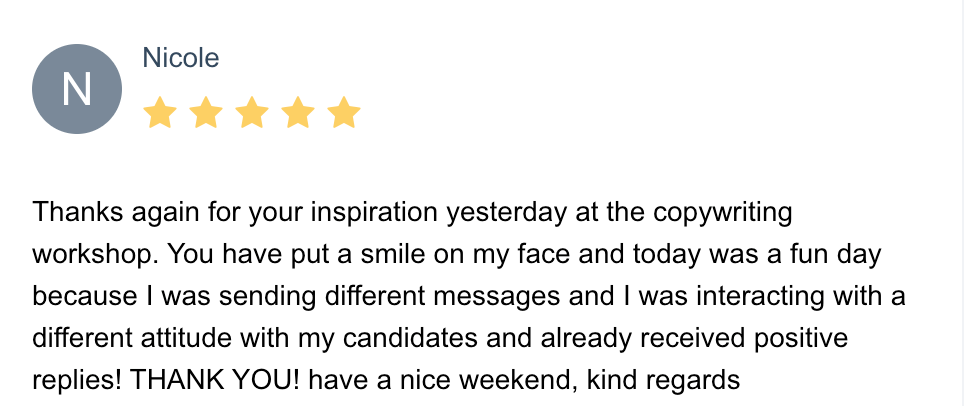
All of my success stories are based on what my mentees and trainees tell me after my training and coaching sessions. Comments are like:
Many trainers make the mistake of creating training where ideas are so far from what people actually understand. They use big words and ideas that are hard to understand, and they talk for hours about why something is important or what it is. But they don’t spend enough time showing people how to do it.
From my own experience, and I learned it the hard way too, I learned that teaching needs to be practical. You want to teach people skills, make them feel like they can do things, and give them tools they can use right away. The most important thing to learn is that training isn’t meant to make the teacher look smarter, but to help people do their jobs better.
9. As a high-sensitive (HSP) social introvert, how have you navigated the challenges and opportunities of your career in employer branding? What advice do you have for other HSPs and introverts in the industry?
I’ve been in the talent acquisition business for more than 12 years, and this was the hardest thing I’ve ever had to go through. And a lot of learning by making mistakes.
As an HSP introvert, I’ve learned to embrace my strengths. Strong listening skills and empathy helped me understand and connect with possible candidates on a deeper level. This helped me build trust in the business and keep people loyal to it. Being highly detail-oriented and thoughtful was very helpful when coming up with messaging and branding that connects with people. A strong sense of intuition and being able to read people well, helped me figure out what candidates look for in a job and adjust the message to meet those needs.
I’ve learnt to manage my energy levels to perform at my best. I prioritize self-care and downtime to recharge and stay focused. My advice to other HSPs and introverts in the industry is to be true to yourself and communicate your needs to others. Don’t be afraid to take breaks or set boundaries when needed.

10. The rise of AI – how do you comment on it as an HR Leader? How will it change the HR landscape?
I believe that AI has a lot of potential to make our tasks more efficient and enhance the experience of candidates. People need to get used to AI, as it’s not going away. AI can help handle repetitive jobs and give insights based on data that can help us make decisions. However, it’s essential to strike the right balance between AI and human interaction and empathy to ensure candidates receive a personalized and engaging experience.
11. Recently, Great Britain has introduced a pilot project of a 4 day work week. What’s your opinion about it? What advantages and disadvantages do you see both for employers and employees? Would you take part in the experiment, and why?
In terms of the pilot project of a 4 day work week, I think it’s an interesting and great idea that could improve employee well-being and work-life balance. It is something I would love to have myself, immediately. 100% for implementing it.
But it might not work for all industries or jobs. It is also a suggested answer to a complicated problem, so many things need to be thought about before it is put into place. Things like adjusting the pay, the number of hours worked, the ability to work from home, the ability to choose when to work, adjusting the number of vacation days, efficiency and business operation needs, training and technology investments, etc.
If you’re looking for new ideas, fresh perspectives and insights on the future of work, then you’ll want to attend HR Vision Events.