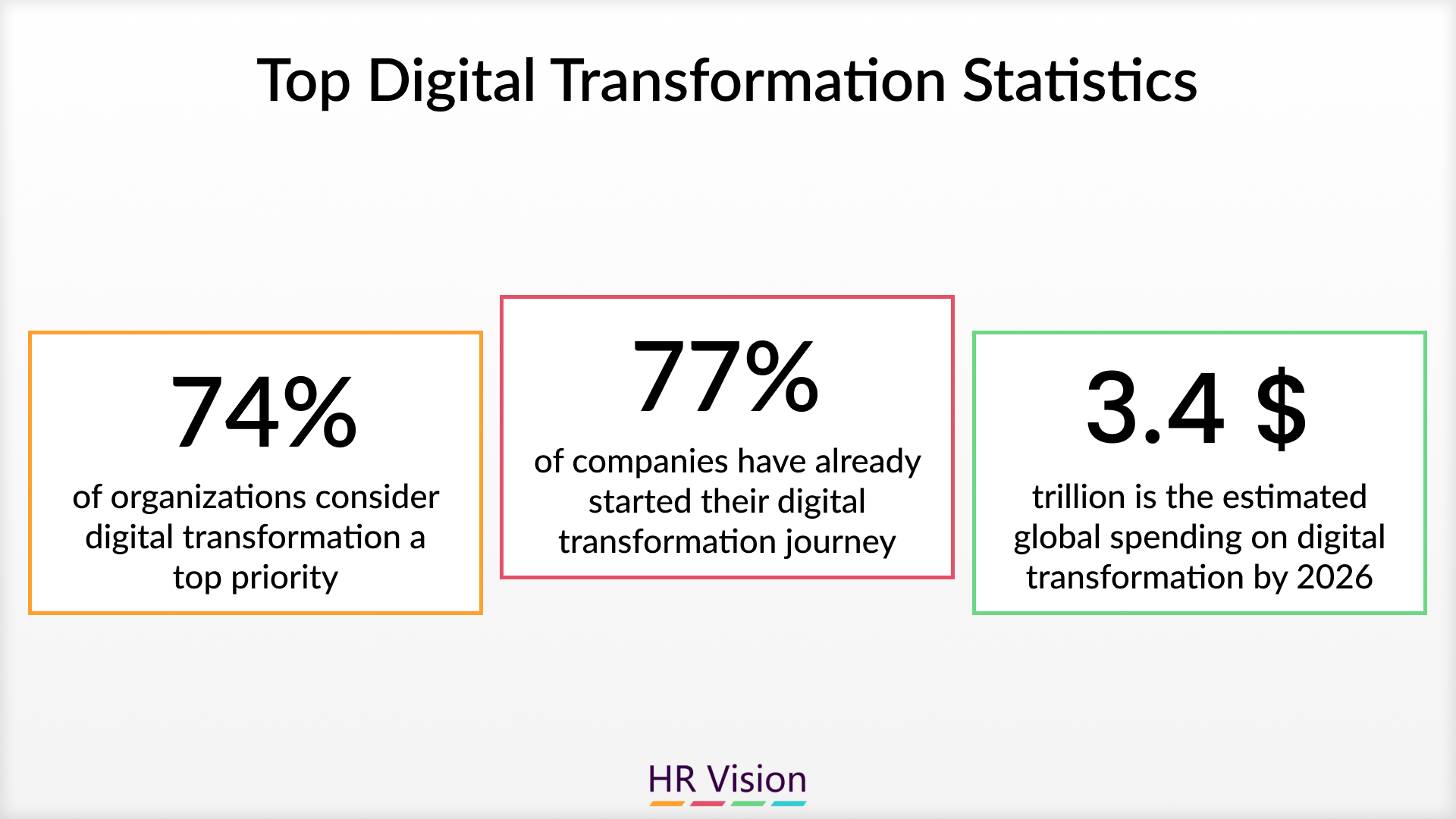
Digital transformation in the workplace is a strategic blend of digital technologies, process improvements, and cultural shifts aimed at fundamentally reshaping organizational operations and value delivery. As organizations navigate the complexities of the modern business environment, numerous digitalization initiatives have been initiated to streamline operations and leverage the benefits of technological advancements. 97% of companies recognize that the COVID-19 pandemic has sped up their digital transformation efforts, underscoring the urgency and necessity of adapting swiftly to rapidly changing circumstances.
What Is Digital Transformation?
The definition of digital transformation is the comprehensive integration of digital technologies into all facets of a business’s operations, fundamentally altering the way it operates and delivers value. Digital transformation involves reimagining existing processes, embracing innovative technologies, fostering a culture of continuous improvement, and aligning digital initiatives with overarching business objectives.
Why go through this transformation? Well, the business world is changing fast, and companies need to keep up. Digital transformation helps them stay competitive, adapt to new trends, and meet the expectations of customers. However, it’s important to know that digital transformation isn’t the same for every business. The tools and strategies used depend on what each organization needs.
Crafting a successful digital transformation strategy involves more than just adopting new technologies. It means looking at how things currently work, what skills employees have, and what customers want. A good digital transformation strategy considers long-term goals, spots where improvements are needed, and plans for change. It needs everyone to work together, encouraging a culture that’s open to new ideas and learning. Security and privacy are also top priorities to make sure new tech fits in smoothly.
Key Trends Shaping the Future of Workplace Digital Transformation
The future of workplace digital transformation is closely tied to the evolution of work models, with remote work and hybrid arrangements emerging as pivotal trends. The traditional boundaries of a physical office have been redefined as organizations increasingly recognize the viability and benefits of remote work. Leveraging digital technologies, teams now collaborate seamlessly from different locations, fostering flexibility and work-life balance.
According to Microsoft’s Work Trend Index, 66% of global employers are actively designing workplaces tailored for hybrid arrangements, emphasizing the lasting impact of remote and flexible work structures. Additionally, TECLA reports that 85% of managers believe teams with some remote workers will become the standard, further solidifying the shift towards hybrid work models. Technologies such as video conferencing, cloud collaboration tools, and project management platforms play integral roles in facilitating effective communication and collaboration within these evolving work structures.
Moreover, Artificial Intelligence and automation are leading the way in shaping the future workplace, revolutionizing how organizations operate and make decisions. The integration of AI-driven technologies boosts efficiency by automating routine tasks, enabling employees to focus on higher-value, strategic initiatives. Machine learning algorithms analyze vast datasets, providing valuable insights for informed decision-making.
Current Trends in Workplace Digital Transformation
One prevalent trend in workplace digital transformation is the widespread adoption of digital tools in Human Resources (HR) processes. Organizations are increasingly using technology to streamline HR functions, covering recruitment, onboarding, performance management, and employee training. With nearly three-quarters of IT leaders prioritizing digital transformation, HR processes have become a focal point for technological innovation.
Digital Transformation for Future Competitiveness
- 64% of organizations acknowledge the necessity to develop new digital businesses to remain competitive in 2024 and beyond.
- 21% of organizations plan to integrate digital technologies into their existing business models.
- 4% currently have digital technology fully implemented.
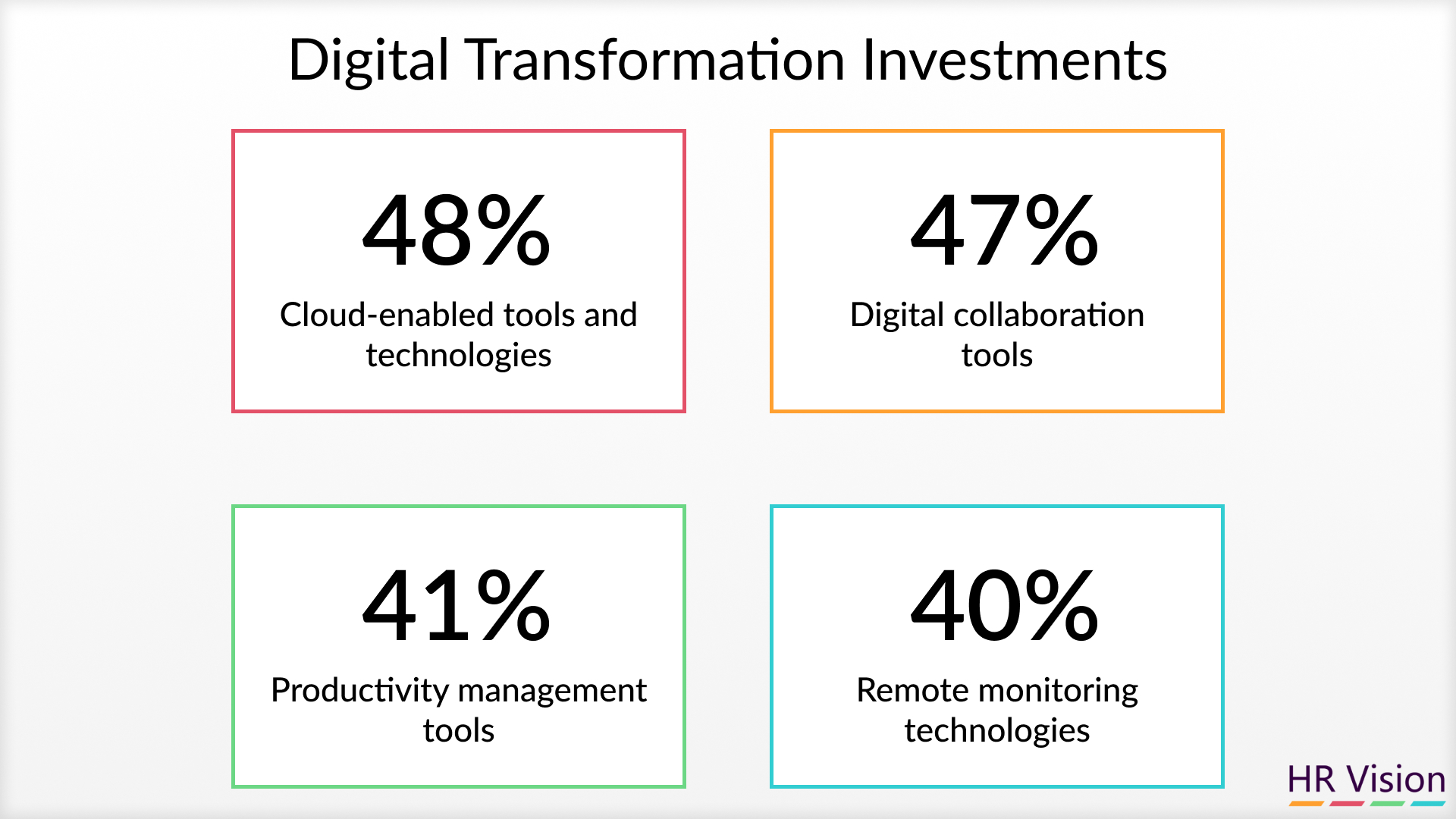
This shift not only enhances the efficiency of HR operations but also enables a more seamless and engaging experience for employees throughout their lifecycles within the organization. Cloud-enabled tools and technologies are key components of workplace transformation initiatives. As organizations aim to build flexible and collaborative environments, cloud-based solutions play a crucial role in providing accessibility and scalability. According to Accenture, cloud-enabled tools are the most common investment in workplace transformation initiatives, with 48% of organizations opting for this strategic choice. This shift to cloud technology isn’t just an IT decision but a strategic move to enable remote teams, improve collaboration, and ensure seamless access to critical data and applications.
Workplace transformation, including support for hybrid or remote teams, has become a priority for organizations seeking to empower their workforce with communication, collaboration, and data access tools. This belief is substantiated by the fact that 84% of organizations view workplace transformation as a catalyst for higher productivity and improved customer experiences. This trend not only reflects a response to external circumstances but also a strategic recognition of the long-term benefits of fostering a flexible and empowered workforce.
Future Technologies Shaping Workplace Digital Transformation
As the trajectory of workplace digital transformation continues to evolve, the future promises a dynamic interplay of technologies that will redefine how organizations operate, collaborate, and innovate. The increasing emphasis on flexible, hybrid working models and the rise of online markets replacing traditional storefronts are steering investments toward digital transformation.
Digital transformation solutions are leading the way in reshaping how businesses operate. They encompass a wide array of technologies like data analytics, artificial intelligence, and the Internet of Things (IoT). These tools are helping organizations become more innovative and efficient. They’re not just optimizing existing processes but also creating new business models. Digital transformation solutions are driving continuous improvement and adaptability, ensuring that businesses can meet the ever-changing demands of the modern marketplace.The convergence of Artificial Intelligence (AI) and Machine Learning (ML) is set to revolutionize workplace dynamics significantly. The integration of AI-driven technologies aims to streamline decision-making processes, automate mundane tasks, and provide advanced analytics for strategic planning. As machine learning algorithms progress, they will offer increasingly sophisticated predictive insights into various aspects, including employee behavior, customer trends, and overall business outcomes. This synergy is expected not only to enhance operational efficiency but also to empower organizations to make informed, real-time decisions based on data.
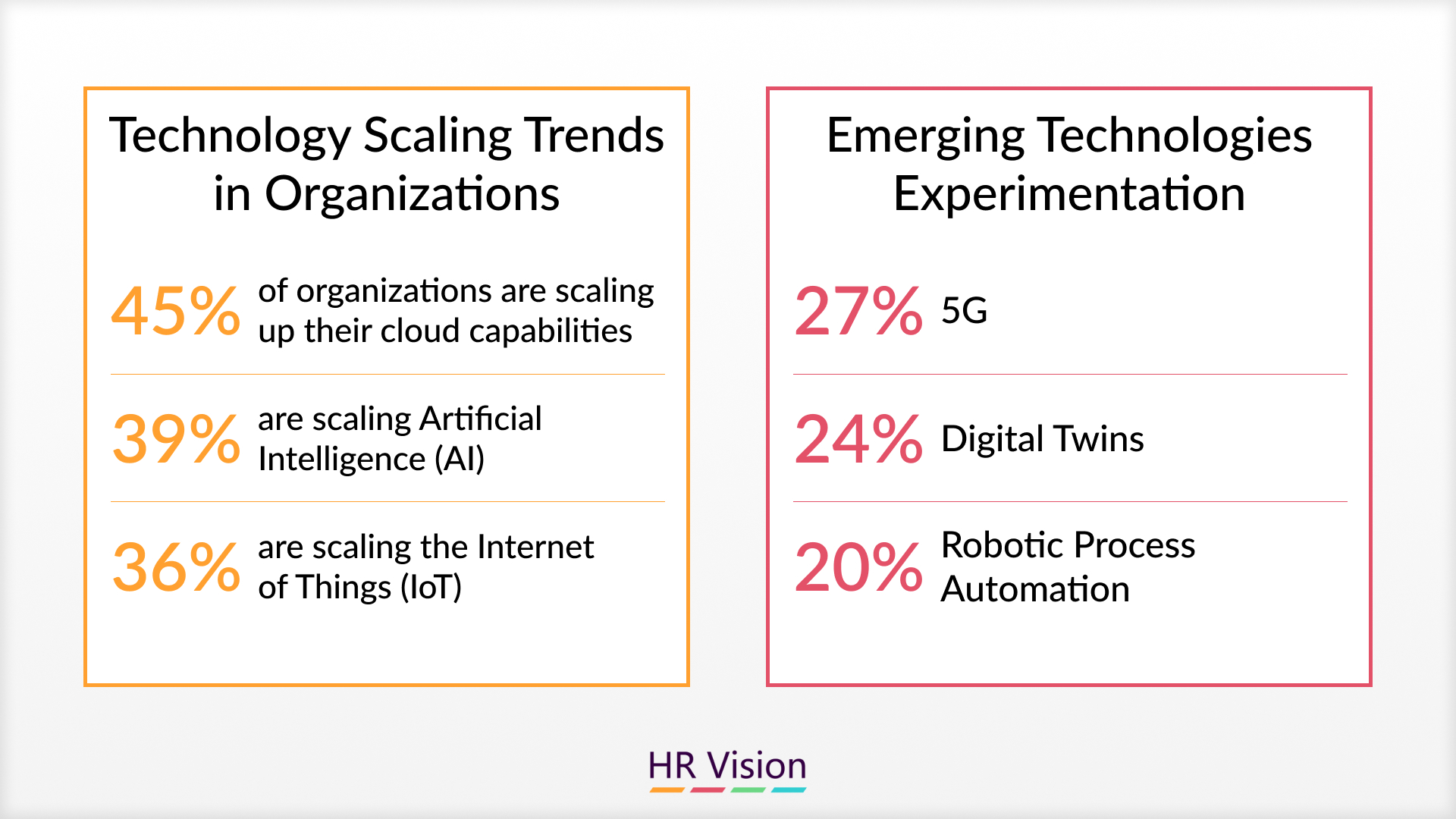
At the same time, the ongoing digitalisation strategy in workplaces leverages the transformative power of technologies like IoT and 5G. The Internet of Things (IoT) is expanding its influence by creating a network of interconnected devices that exchange data. In the workplace, IoT devices are expected to play a pivotal role in optimizing office spaces, monitoring employee well-being, and improving operational efficiency. Smart sensors, beacons, and wearable devices will collectively contribute to the creation of intelligent, data-driven workplaces, enabling organizations to dynamically adapt to the evolving needs and preferences of their workforce.
The widespread deployment of 5G connectivity is poised to revolutionize communication and connectivity in the workplace. Offering significantly faster data transfer speeds and lower latency, 5G will facilitate seamless collaboration, video conferencing, and the adoption of bandwidth-intensive applications. This technology will act as a catalyst for improved remote work experiences, ensuring that employees can access and collaborate on data-intensive tasks with unprecedented speed and reliability.
Conclusion
The way workplaces are changing digitally is going through a big transformation. This change is happening because of new technologies, different ways of working, and the need for organizations to be resilient. The trends we’re seeing include using digital tools in HR, using AI and automation, using tools in the cloud, and the big impact of remote work. All of these show that the way we work is always changing. Looking ahead, several technologies will play a crucial role in transforming the workplace. These include AI and ML, AR and VR, IoT and 5G. Together, they bring about a time of exceptional connectivity, efficiency, and innovation.
As more companies invest in digital transformation due to flexible work models and online markets, there’s a chance for organizations to lead in innovation by developing a robust digitalisation strategy. The path forward includes using new technologies, promoting a digital-first culture, and adapting to changes in how work is done. The goal is not just to be adaptable but to truly transform workplaces.
Dive into the future of workplace digital transformation at HR Vision. Join HR leaders for insights on HR analytics, HR Tech, and creating a people-centered future of work.