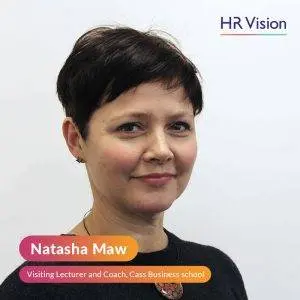
Q Being a leadership trainer, executive coach and facilitator with fifteen years of experience at the BBC, teaching leadership development on the executive masters in medical leadership at Cass Business School means you encourage and educate others on a daily basis. Where do you draw inspiration from?
I work with the people in the room that I am coaching or training at any given time and quite often they are pretty inspiring. If you really listen and ask challenging questions, there are plenty of people around who have inspiring ideas and stories to tell. The trick is in the listening and the kind of questions you ask.
Q How do you think, what are the biggest challenges that leaders are facing in the modern working environment?
Where do I begin? Political and financial uncertainty, climate change, growing inequality and rapid technological change. However, that means that there are also great opportunities for good leadership.
Q What is the one mistake that you see leaders making more frequently than others?
The further the organization rises up, the more removed leaders become from the ’shop floor’ but without realizing it. There is evidence to show that the more senior the leader, the greater is their belief in their capacity to listen to others who are below them. The evidence refutes this.
Q Is there any difference between female and male leaders? What are they?
There is no getting away from the fact that women carry a greater burden of caring and domestic responsibilities and this is shown in the latest Organization for Economic Cooperation and Development report that shows women spend almost twice the time on domestic work as men do. It is harder for women to get into leadership positions in the professions and that is due to unconscious bias, the old boy network, the competing demands of work and family and long hours culture. This does mean that they will have different cultural and organizational awareness once they get into leadership positions.
I once asked a female leader what she had learned from her male bosses and she told me that male leaders were concerned with legacy and female leaders were preoccupied with the here and now and teams functioning well together. She said that she had learned a lot from the male ‘future focussed’ approach but that as a leader you needed to balance the two viewpoints.
Q What advice would you give to someone taking up a managerial position for the first time?
I would advise them to get a coach and/or a trusted mentor, to stay true to their beliefs and values and align them to their work and how they lead others.
Q What are your secret effective tips on developing the skills needed for effective leadership?
There is an infinite amount of wisdom in an organization and much to be learned from the people within it.
- Be interested and curious about others and the world around you.
- Do a lot of active listening and model the skills you admire in others.
- Ask for feedback consistently.
- Be self-aware and reflective and work on your personal development.
- Build networks and strategic alliances.
- Draw connections between your work/passions and the bigger picture, whether that is making the world a better place, developing others, or innovating.
This will keep you motivated and will bring others with you. Be humble and don’t be afraid to admit mistakes.
Meet Natasha Maw, Visiting Lecturer and Coach, Cass Business School among other senior HR practitioners, talent acquisition experts, global executives, from large complex organizations with their valuable insights on HR trends and the future of work to learn how to manage human resources, at the TOP HR event of the year – Attend our upcoming HR Vision event – register now!