


The success of a business is intricately linked to the performance of its employees. Employee performance directly impacts productivity, customer satisfaction, innovation, and ultimately, the bottom line. High-performing employees not only complete tasks efficiently but also bring creativity, adaptability, and problem-solving skills to the table. On the other hand, underperforming employees can lead to missed opportunities, increased operational costs, and a negative work environment. This investment is not only about attracting and retaining top talent but also about nurturing their growth and potential. This is where Learning and Development (L&D) comes into play, serving as a crucial component of HR strategies.
Definition of Learning and Development
Learning and Development encompasses the deliberate efforts by organizations to enhance the knowledge, skills, competencies, and overall performance of their employees. It goes beyond the initial onboarding phase and extends throughout an employee’s journey within the organization. The ultimate goal of L&D is to foster a continuous learning culture that empowers employees to adapt, grow, and contribute effectively in an ever-changing work environment.
Various Delivery Methods and Learning Formats
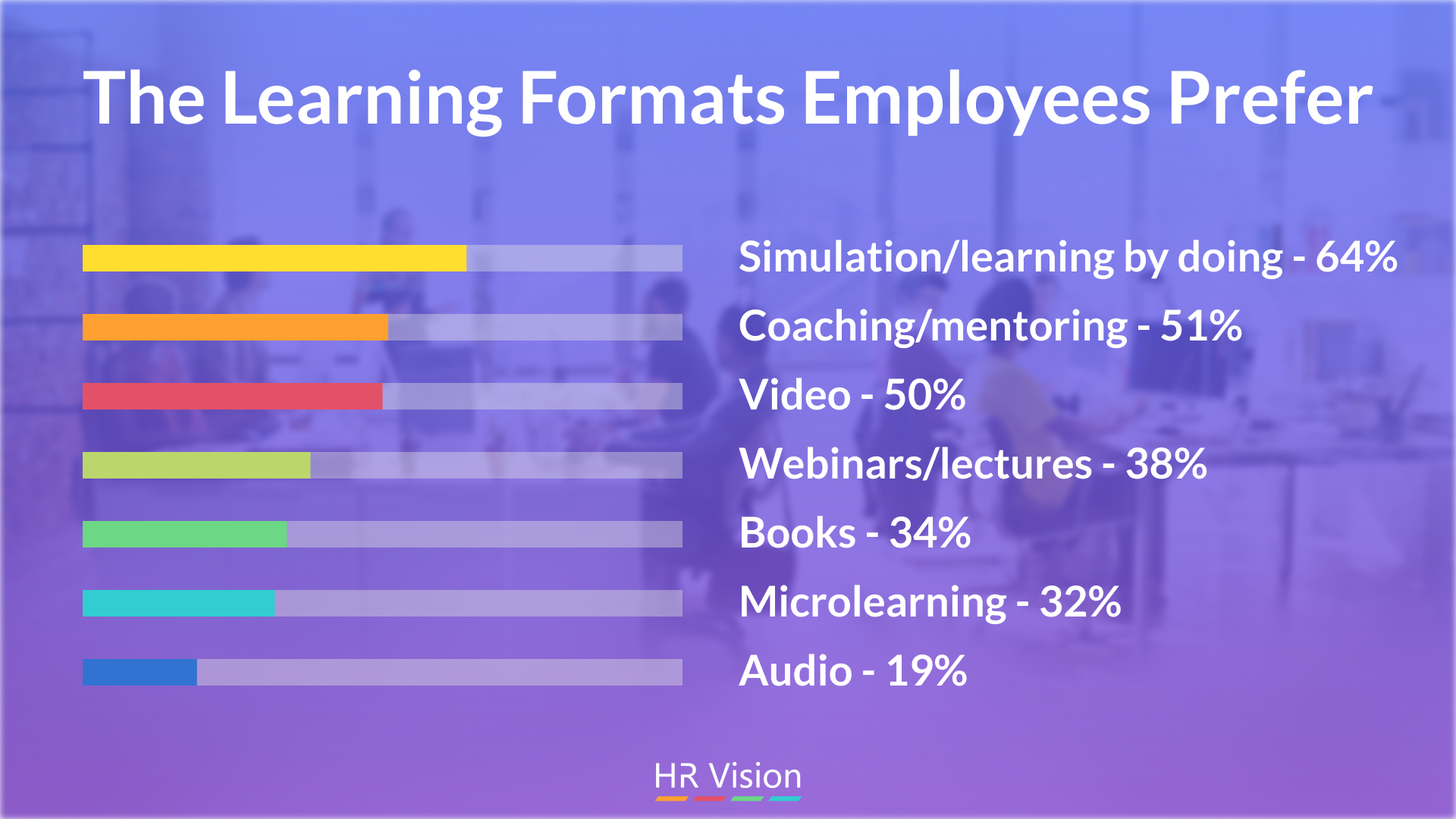
Traditional classroom settings are no longer the sole avenue for learning; instead, an array of innovative delivery methods and learning formats have emerged, catering to different learning styles and environments. As the wise adage goes, “Tell me, and I forget. Teach me, and I remember. Involve me, and I learn.” In the realm of favored training delivery formats, a significant majority of employees have chosen simulation and learning by doing as their top preference. This inclination underscores the notion that a substantial portion of individuals thrive when engaged in hands-on practice within an environment that mirrors their real-world job scenarios. Coaching and mentoring come in second place, with 51% of employees favoring this method. Traditional books remain a respectable choice among employees, with over one-third preferring this format. The popularity of microlearning is noteworthy, with a sizable portion of employees expressing a preference for bite-sized, focused learning content.
What budgets are spent by companies for L&D?
According to Findcourses, 50% of the U.K. L&D professionals interviewed spend too little annual budget per employee on training. The data shows how much money UK companies set aside for training their employees each year. Many professionals are worried that these budgets might not be enough.

The diversity in budget distribution reveals the varying degrees of emphasis placed on professional development across different organizations. While concerns about limited budgets are prevalent among L&D professionals, the statistics also indicate that a considerable portion of companies are willing to invest significantly in enhancing their employees’ skills and knowledge.
As organizations strive to remain competitive and adapt to changing markets, technologies, and workforce expectations, allocating a dedicated budget for learning and development initiatives has become not just advisable, but imperative.
Impact of Learning and Development on Employee Performance
Learning and Development is a strategic investment that empowers employees, drives innovation, enhances productivity, and nurtures a culture of continuous improvement. Allocating a dedicated budget for L&D initiatives demonstrates an organization’s commitment to its employees’ growth and skill development.
The statistics showcase the importance of investing in employee learning, development, and engagement:
- 59% of employees believe that more training improves their performance.
- 45% of employees would stay at a company longer if it invested in their learning and development
- 92% of employees say employee training programs have a positive effect on their engagement when well-planned.
- 76% of employees are looking for opportunities to expand their careers.
- 58% of employees say professional development contributes to their job satisfaction.
- 68% of employees say training and development are the most important company policy
Companies that offer well-planned training programs and avenues for career growth are more likely to attract and retain talent, enhance job satisfaction, and create a positive work environment.
Improving skills is at the center of efforts to help employees grow. In today’s knowledge-based economy, the saying “knowledge is power” is indeed accurate. However, knowing alone isn’t enough. It’s when we use that knowledge in real situations, by building skills, that we build a workforce able to take on tough problems and come up with new ideas.
Learning programs that are tailored to address specific skill gaps enable employees to master new techniques, tools, and methodologies. This, in turn, enhances their ability to perform tasks efficiently and confidently. For instance, a software development team participating in coding workshops can improve their programming skills, leading to faster and more reliable software development. Sales professionals exposed to advanced negotiation techniques can close deals more effectively, positively impacting the bottom line.
How Development Programs Influence Work Habits and Attitudes
The impact of learning and development extends beyond technical skills, delving into the realm of behavioral change. Development initiatives have the power to reshape work habits, attitudes, and even the corporate culture.
Behavioral change is often observed when learning programs emphasize soft skills such as communication, teamwork, and adaptability. For instance, workshops on effective communication can lead to improved collaboration among team members, resulting in streamlined workflows and reduced misunderstandings. Likewise, training sessions that foster a growth mindset can inspire employees to embrace challenges, view failures as learning opportunities, and be more receptive to feedback.
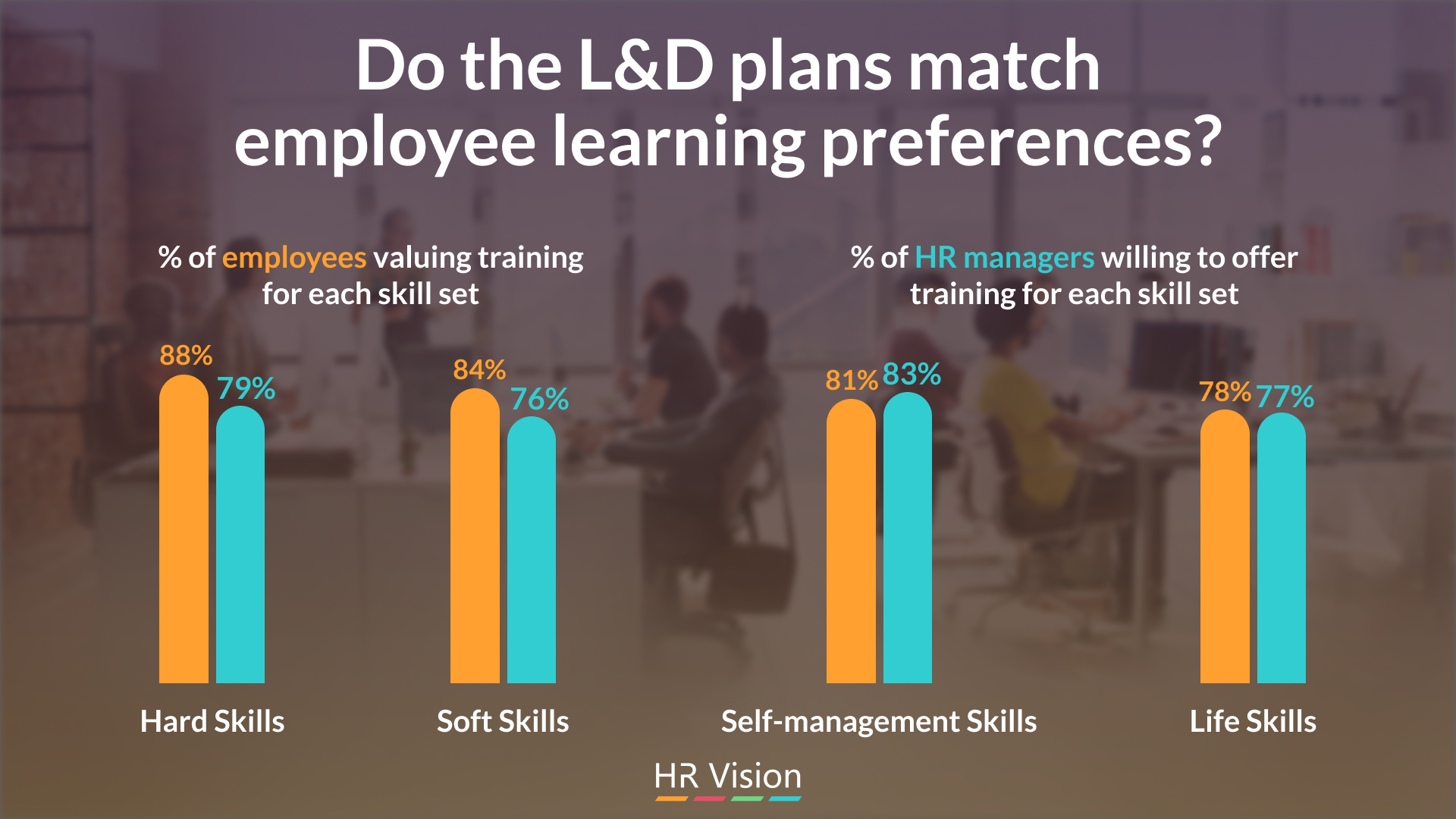
The data suggests that a larger percentage of employees value hard skills training in comparison to HR managers. Similar to hard skills, employees express a stronger interest in soft skills training than HR managers are inclined to provide:
Development programs can influence employee attitudes toward continuous learning and change. As employees witness the benefits of their newfound skills and knowledge, they become more open to adopting innovative approaches and embracing change within the organization. This is particularly crucial in today’s business landscape, where agility and adaptability are key to survival.
Benefits of Learning and Development
This is the feedback provided by HR leaders regarding the benefits of training for their organization:

In general, HR leaders strongly believe that training is really important for making their organization better. They think it helps a lot with things like making employees better at their jobs, keeping employees around, creating a good company vibe, helping the company grow, and getting new talented people to join.
Link Between Learning Opportunities and Job Satisfaction
Job satisfaction is a cornerstone of employee engagement and retention. Studies consistently show that employees who are satisfied with their jobs are more committed, motivated, and likely to stay with their current employers. Learning and development programs play a crucial role in bolstering job satisfaction by demonstrating a company’s investment in its employees’ growth.
When employees perceive that their organization values their development and actively supports their learning journeys, they experience a sense of fulfillment and purpose. Learning opportunities give employees a chance to expand their horizons, contribute more meaningfully to their teams, and advance in their careers. This sense of progress and accomplishment enhances their overall job satisfaction, leading to a positive impact on individual and collective performance.
Correlation Between Development Programs and Employee Loyalty
Employee turnover can be a costly challenge for organizations. High turnover rates not only disrupt productivity but also incur recruitment and training expenses. Learning and development initiatives play a pivotal role in mitigating this issue by fostering employee loyalty and commitment to the company.
When employees feel that their growth is nurtured through L&D programs, they are more likely to develop a sense of attachment to the organization. They understand that their career progression is aligned with the company’s success, which strengthens their commitment and reduces the likelihood of seeking opportunities elsewhere. Development opportunities, therefore, act as a powerful retention tool, creating a win-win scenario for both employees and employers.
Challenges in the Integration of Learning and Development
We illuminate the benefits of integrating learning and development programs within an organization. However, the path to effective learning and development is not always smooth, and various obstacles can arise along the way.
33% of HR managers find it challenging to allocate sufficient funds
One of the most significant obstacles to effective learning and development initiatives is budget constraints. Organizations, particularly smaller ones, might struggle to allocate sufficient funds to training and development programs. This limitation can lead to reduced access to quality learning resources, limited participation in relevant workshops, and outdated training materials. Showcasing the potential return on investment (ROI) of well-trained employees can help organizations recognize the long-term benefits of allocating adequate funds to learning and development initiatives.
33% struggle to balance work responsibilities with learning
Employees often find it challenging to balance their daily tasks with dedicated learning and development activities. This struggle can result in rushed or incomplete learning experiences, diminishing the overall effectiveness of training programs.
To address time constraints, organizations can adopt a flexible approach to learning. This could involve providing employees with the option to engage in self-paced online courses, microlearning modules, or incorporating learning into their daily routines.
32% face the challenge of keeping learning materials current
Outdated content not only hinders the acquisition of current knowledge but also erodes the credibility of the learning and development programs.
To tackle the issue of outdated content, regular content reviews and updates are crucial. Organizations should establish a process for ongoing assessment of training materials and resources to ensure they align with the latest industry trends and developments. Engaging subject matter experts and encouraging learner feedback can also contribute to the continuous improvement of learning materials.
While obstacles like budget constraints, time limitations, and content updates can pose challenges, proactive strategies can be employed to mitigate their impact. Embracing innovative solutions, fostering a culture of learning, and recognizing the long-term benefits of investing in training and development can help individuals and organizations overcome these obstacles and thrive in a dynamic and competitive landscape.
Are you intrigued by the incredible impact of training on productivity, employee development, retention, and more? Discover how you can harness the power of training to elevate your organization’s success at the upcoming HR Vision Conference!


