
Employee satisfaction goes beyond the simple notion of a content workforce. It encompasses the overall well-being, engagement, and motivation of employees within an organization. A satisfied employee is one who not only finds their job fulfilling but also believes that their contributions are valued and acknowledged. When employees are satisfied, they are more likely to be committed to their roles, perform at their best, and contribute to a positive organizational culture.
Employee satisfaction is not merely a buzzword; it is a fundamental driver of organizational success. In the quest to cultivate employee satisfaction, HR professionals emerge as key players. Their multifaceted responsibilities span from recruiting and onboarding to performance management and employee development. However, the crucial task of managing and enhancing employee satisfaction remains central to their mandate.
What are the Key Factors That Influence Job Satisfaction?
Employee satisfaction isn’t a one-size-fits-all concept; it’s a complex interplay of various elements that collectively influence how content and fulfilled employees feel within their roles. As HR professionals, understanding these influences is paramount to creating a workplace that fosters contentment and engagement. Let’s delve into the pivotal factors that significantly impact employee job satisfaction.

Employee satisfaction isn’t a one-size-fits-all concept; it’s a complex interplay of various elements that collectively influence how content and fulfilled employees feel within their roles. As HR professionals, understanding these influences is paramount to creating a workplace that fosters contentment and engagement. Let’s delve into the pivotal factors that significantly impact employee job satisfaction.
Compensation and Benefits. Fair and competitive compensation, along with comprehensive benefits packages, are vital components in determining employee satisfaction. Adequate pay and comprehensive benefits packages encompassing health insurance, retirement plans, and other perks are critical to addressing employees’ basic needs and ensuring they feel adequately rewarded for their efforts. When employees feel that their efforts are equitably rewarded, it not only enhances their financial well-being but also underscores their value within the organization.
Work Environment. A positive and supportive work environment is a cornerstone of job satisfaction. A positive atmosphere that promotes collaboration, open communication, and respect among colleagues fosters a sense of belonging and engagement. Conversely, a toxic or stressful work environment can lead to dissatisfaction, affecting mental well-being and overall job performance.
Opportunities for Career Growth and Development. Employees seek more than just a job; they aspire to meaningful careers that offer growth and advancement opportunities. Organizations that invest in professional development, training, and clear career paths not only empower employees to reach their potential but also demonstrate a commitment to their long-term success. The possibility of ascending the corporate ladder and broadening skill sets greatly contributes to job satisfaction.
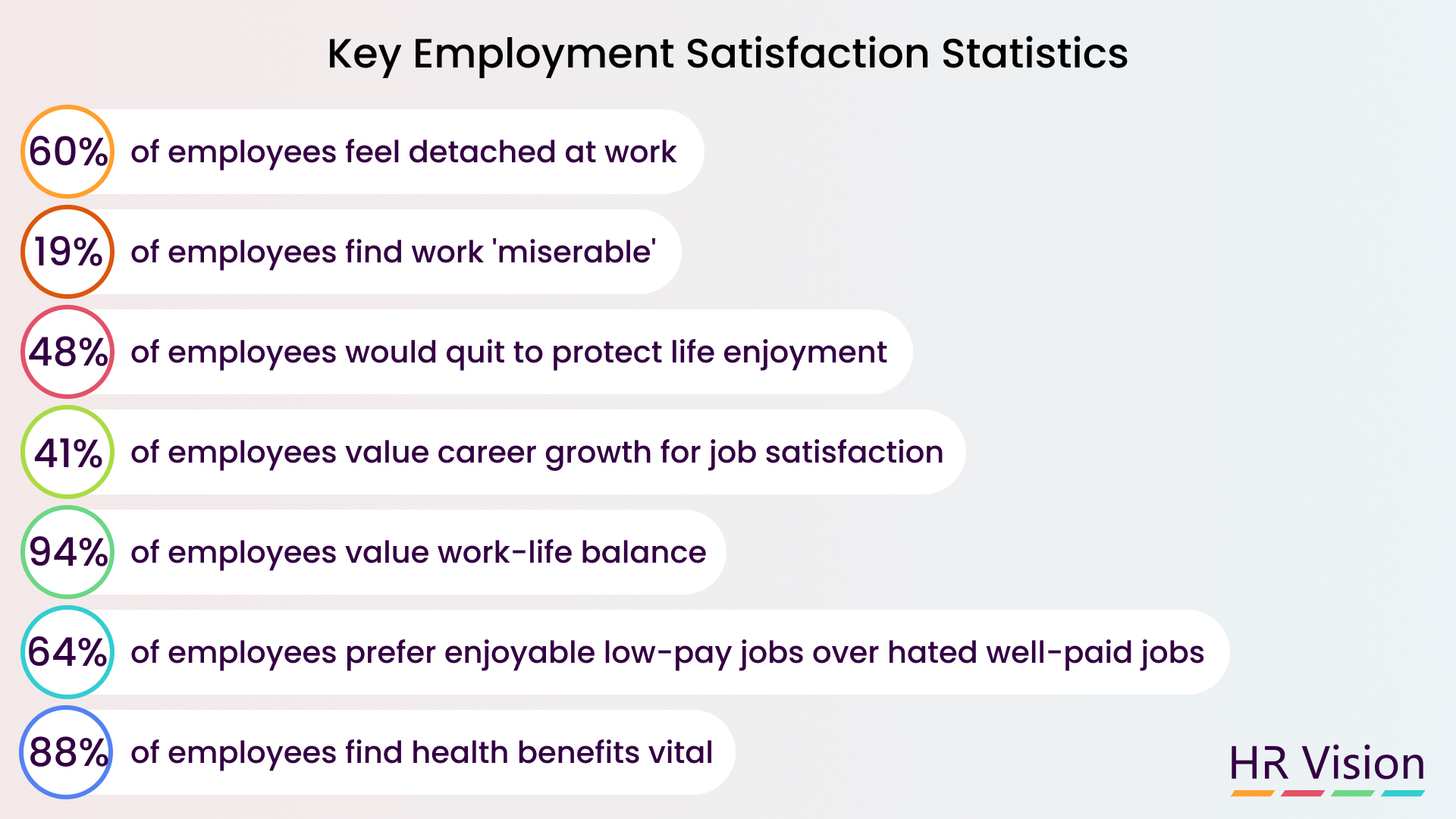
Work-Life Balance and Well-Being. Maintaining a healthy work-life balance is crucial for employee well-being. Organizations that offer flexible work arrangements, remote work options, and support for personal well-being initiatives recognize the importance of nurturing a holistic and fulfilling life outside of work. Employees who can effectively balance their professional and personal responsibilities are more likely to experience job satisfaction.Employee Voice. Feeling heard and valued is a fundamental human need, and the workplace is no exception. Organizations that encourage and act upon employee feedback and input foster a sense of ownership and engagement. Employees who have a voice in decision-making processes and believe their opinions matter are more likely to feel invested in their roles and, subsequently, satisfied with their jobs.
Why is Employee Satisfaction Important?
A harmonious blend of various factors shapes how employees perceive their roles, the workplace, and their overall work experience. Delving into these factors unveils the intricate interplay that underlies job satisfaction. The ramifications of a satisfied workforce ripple through every facet of an organization, creating a positive, productive, and sustainable work environment. Let’s explore why employee satisfaction holds such paramount importance:
- Impact on Productivity and Performance. Satisfied employees are more likely to be engaged and motivated, translating into higher levels of productivity. They take pride in their work, go the extra mile, and consistently contribute their best efforts. As a result, overall performance improves, and the organization becomes more competitive and successful.
- Influence on Employee Retention and Turnover Rates. Employee satisfaction is intrinsically linked to retention. Satisfied employees are more likely to stay loyal to the organization, reducing turnover rates and the associated costs of recruitment, training, and lost productivity. This stability fosters a skilled and experienced workforce, benefiting the organization in the long term.
- Happy employees create happy customers. When employees are content and engaged, they are more likely to provide exceptional customer service, leading to increased customer satisfaction and loyalty. Satisfied employees act as brand ambassadors, promoting positive interactions with clients and stakeholders.
- Boosting Innovation and Creativity. Job satisfaction encourages employees to contribute ideas, take risks, and innovate. A supportive work environment that values employee input and perspectives fosters a culture of innovation, driving the organization forward and ensuring it remains adaptable and responsive to changes.
- Enhancing Organizational Culture. Employee satisfaction contributes to a positive organizational culture. A culture that values employee well-being, growth, and engagement creates a sense of belonging and shared purpose. This, in turn, attracts top talent and cultivates a collaborative and inspiring workplace.
- Higher Employee Engagement. Engaged employees are emotionally invested in their work and aligned with the organization’s goals. Employee satisfaction is a foundational element of engagement, leading to a committed workforce that willingly invests effort and creativity to achieve collective success.
5 Strategies for HR Professionals to Enhance Employee Satisfaction
HR professionals play a pivotal role in creating an environment where employees feel valued, engaged, and motivated. Here are five practical strategies to enhance employee satisfaction within your organization:
1. Implement Effective Communication Channels
Clear and transparent communication is the cornerstone of a healthy work environment. Establishing effective communication channels between employees and management fosters trust and engagement. Regularly update your team about company news, goals, and changes. Encourage an open-door policy where employees can voice their concerns, suggestions, and feedback without fear of retribution. Consider utilizing tools like intranet platforms, town hall meetings, and anonymous suggestion boxes to facilitate communication and ensure everyone’s voice is heard.
2. Offer Competitive Compensation and Benefits Packages
Compensation plays a significant role in employee satisfaction. Ensure your organization offers competitive salaries aligned with industry standards and job responsibilities. However, it’s not just about the paycheck; comprehensive benefits packages can greatly enhance job satisfaction. Include health insurance, retirement plans, paid time off, and flexible work arrangements in your benefits offerings. Conduct regular benchmarking to ensure your compensation and benefits packages remain attractive and competitive.
3. Foster a Positive and Inclusive Work Culture
A positive work culture is a powerful driver of employee satisfaction. Create an environment where employees feel valued, respected, and included regardless of their background, beliefs, or identities. Establish clear values and behaviors that reflect your commitment to diversity and inclusion. Encourage teamwork, recognize and celebrate achievements, and discourage negative behaviors like bullying and discrimination. By fostering a positive culture, you can boost employee morale and create a sense of belonging.
4. Provide Opportunities for Skill Development and Growth
Employees are more likely to stay engaged and satisfied when they see opportunities for personal and professional growth. Implement training and development programs that align with both individual and organizational goals. Offer mentorship, coaching, and workshops to help employees enhance their skills and advance their careers within the company. Clearly outline paths for career progression and provide regular performance feedback to guide their development journey.
5. Support Work-Life Balance Initiatives
Maintaining a healthy work-life balance is essential for employee well-being and satisfaction. Encourage employees to disconnect after work hours and use their vacation days. Consider flexible work arrangements such as remote work, compressed workweeks, or flexible hours to accommodate different needs. Additionally, promote stress-reduction strategies like mindfulness workshops, wellness programs, and access to counseling services. When employees feel that their well-being is a priority, they are more likely to remain engaged and satisfied in their roles.
In this era where talent retention and engagement are paramount, it’s essential for HR professionals to be proactive in implementing these strategies. As the link between employees and management, HR teams have the unique opportunity to shape the organization’s culture and trajectory. By investing in employee satisfaction, HR professionals are laying the groundwork for a thriving, motivated workforce that contributes not only to the bottom line but also to the overall positive image and reputation of the company.
A satisfied employee is not only more engaged and productive but also becomes a valuable advocate for the organization. By fostering an environment that prioritizes employee satisfaction, companies create a solid foundation for achieving their strategic goals and navigating the challenges of a rapidly evolving world. To unlock the true potential of their workforce, HR professionals are urged to take proactive steps in enhancing employee satisfaction. Join us at HR Vision, where we gather the leading minds in HR to explore the most effective practices for navigating the ever-evolving world of work.