Social media, in the modern world, serves as a ubiquitous and dynamic force that has fundamentally reshaped how people communicate, access information, and interact with the world around them. Platforms such as Facebook, LinkedIn, Twitter, Instagram, and many others have become an integral part of daily life for billions of people. Whether it’s sharing personal experiences, seeking entertainment, or building professional connections, social media platforms have become central to our contemporary existence.
These platforms have created a virtual environment where individuals and organizations can engage, share, and collaborate on a global scale. The power of social media lies in its ability to break down geographical barriers, enabling instant, real-time communication and access to a vast network of individuals and resources.
The Emergence of Social Media as a Recruitment Tool
Social media platforms have redefined the recruitment landscape by overcoming many of the limitations associated with traditional methods. They have introduced a level of connectivity and immediacy that was previously unimaginable.
Global Reach: Social media enables employers to reach a worldwide audience with job postings, breaking down geographical barriers. Job seekers can explore opportunities across borders with ease.
Efficiency and Speed: Digital platforms facilitate rapid communication, allowing employers to streamline the hiring process, conduct virtual interviews, and make quicker decisions. Job seekers can receive instant updates on job openings and application statuses.
Real-Time Updates: Job seekers can maintain up-to-date online profiles, including their work history, skills, and endorsements. This real-time information empowers employers to identify and contact candidates with current qualifications.
Networking Opportunities: Social media provides a fertile ground for professional networking, enabling job seekers to connect with peers, industry leaders, and potential employers. Employers can use their online presence to build strong employer brands and engage with top talent.
According to a survey by the Society for Human Resource Management (SHRM), 84% of organizations use social media for recruitment in some capacity, recognizing its potential for sourcing and engaging candidates. Moreover, job seekers increasingly prefer online job searching. According to Glassdoor, 79% of job applicants use social media in their job search, demonstrating the importance of a strong digital presence for employers.
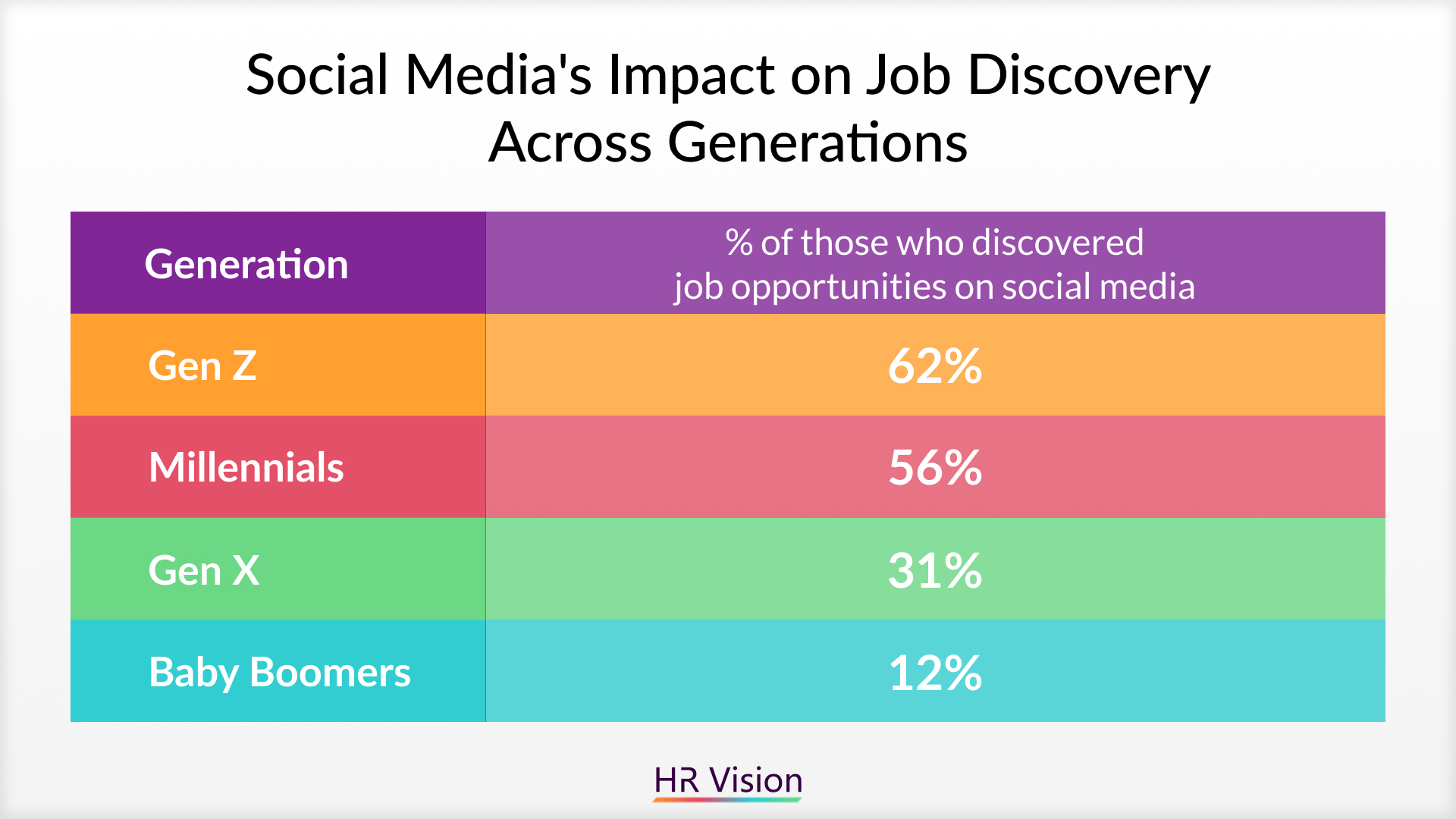
The data clearly illustrates the increasing reliance on social media as a job discovery tool among younger generations, with Gen Z and Millennials leading the way. These findings highlight the need for companies and recruiters to adapt their hiring strategies to meet the preferences and habits of different generations. Employers may need to consider diverse recruitment channels to reach candidates from different age groups effectively.
Benefits of Using Social Media in Recruitment
In the modern era of recruitment, the integration of social media platforms offers a plethora of advantages for both employers and job seekers. These benefits not only streamline the recruitment process but also enhance the quality of matches between companies and potential employees.
- Wider Talent Pool and Increased Visibility
Incorporating social media in recruitment broadens the talent pool, connecting employers with diverse candidates globally, increasing the chances of finding qualified individuals. Job seekers also discover more opportunities from various organizations.
- Cost-Effectiveness
According to data from the Society for Human Resource Management (SHRM), the average cost of hiring a new employee stands at approximately $4,683. However, the integration of social media into recruitment significantly mitigates these expenses due to its extensive reach. Through the power of social sharing, employees and individuals within your network can effortlessly amplify the reach of job postings.
- Improved Employer Branding and Company Culture Representation
In the digital age, a company’s online presence shapes its ability to attract top talent. Social media helps build employer branding by showcasing culture, values, and vision, aiding job seekers in making informed career choices.
- Real-Time Engagement with Candidates
Social media enables real-time communication and engagement, enhancing the candidate experience. Employers can interact, provide updates, and build relationships with candidates, while job seekers get quicker responses and feel more connected to the hiring process.
- Enhanced Diversity and Inclusion Efforts
Social media promotes diversity and inclusion by providing an inclusive platform for job seekers. Companies can reach out to underrepresented groups and demonstrate their commitment, leading to a diverse candidate pool and an inclusive workplace.

The benefits of using social media in recruitment extend beyond the convenience of digital platforms; they contribute to a more dynamic, responsive, and inclusive recruitment process.
Popular Social Media Platforms for Recruitment
In the realm of modern recruitment, social media platforms have become instrumental in connecting job seekers with prospective employers. While several platforms cater to different aspects of the recruitment process, LinkedIn stands out as the most popular social media site for recruiters, followed by Facebook and Twitter.

LinkedIn: The Premier Professional Networking Platform
LinkedIn serves as the go-to platform for professional networking and job postings, with an extensive user base comprising both job seekers and recruiters. Notably, more than 90% of recruiters actively use LinkedIn to search for suitable candidates to fill their company’s job openings. With over 50 million companies having a presence on the platform, LinkedIn has evolved into a thriving ecosystem for professional interactions and career development. Moreover, LinkedIn’s data reveals that 46 million students and recent graduates are active on the platform, underscoring its significance in catering to the evolving needs of the emerging workforce. Additionally, with 40 million people per week actively seeking job opportunities on the platform, LinkedIn remains a cornerstone for job hunters and recruiters alike.
Twitter: Real-Time Recruitment and Engagement
While Twitter serves as a real-time update and engagement platform, it has also garnered attention as a space where job seekers and recruiters can connect. Statistics indicate that Twitter is particularly active among marketing and public relations professionals looking for employment. Furthermore, it’s noteworthy that male recruiters tend to utilize social media, including Twitter, more frequently than their female counterparts. Approximately 55% of male recruiters actively use Twitter, compared to only 28% of female recruiters, showcasing a gender disparity in the adoption of social media for recruitment purposes.
Facebook: Connecting Job Seekers and Employers
Facebook, with its wide user base and diverse functionalities, offers a multifaceted approach to recruitment. With 83% of job candidates being active on the platform, it presents a valuable opportunity for companies to engage with potential employees through company pages and job groups. Notably, 81% of job seekers express an interest in seeing career-related posts on Facebook, indicating the platform’s potential for effective talent acquisition. Industries such as hospitality and retail find significant representation among job seekers on Facebook. With 44.8 million users in the UK, Facebook remains a prominent hub for recruitment activities, with the added benefit of allowing free job postings for employers.
Other Platforms (Instagram, YouTube, TikTok, Snapchat)
While LinkedIn, Twitter, and Facebook remain dominant players in the realm of social media recruitment, other platforms are gaining traction and proving to be valuable resources for reaching a wider audience and engaging potential candidates. Instagram, YouTube, TikTok, and Snapchat offer distinct features, catering to specific demographics and enabling innovative strategies to attract a diverse pool of candidates.
Instagram: Instagram’s visual appeal and storytelling capabilities make it ideal for showcasing company culture and values. Through engaging visual content, companies can offer insights into their workplace environment, making it particularly effective for attracting creative professionals.
YouTube: YouTube enables recruiters to create in-depth, engaging content that goes beyond traditional job postings. Video testimonials, office tours, and industry insights can provide valuable information and enhance an organization’s employer brand.
TikTok: TikTok’s short-form video format is perfect for creating fun and engaging content around workplace culture. Recruiters can leverage trending challenges and user-generated content to connect with a younger demographic.
Snapchat: Snapchat’s ephemeral nature and interactive features allow recruiters to create personalized and time-sensitive content. Real-time updates, behind-the-scenes glimpses, and Q&A sessions can help establish a dynamic connection with potential candidates.
Best Practices for Social Media Recruitment
Effectively harnessing the power of social media for recruitment requires a strategic approach that goes beyond simply posting job vacancies. Employers must understand the nuances of each platform and implement best practices to ensure maximum engagement and successful talent acquisition.
Creating Engaging Job Postings
Crafting compelling and engaging job postings is essential to capture the attention of potential candidates. Use visually appealing content, including videos, images, and infographics, to make your posts stand out. Clearly outline the job responsibilities, requirements, and benefits, and highlight what makes your company an attractive place to work. Incorporate relevant keywords to enhance the visibility of your posts in search results, ensuring they reach the right audience.
Building and Maintaining an Employer Brand
Your employer brand serves as a powerful tool for attracting top talent. Use social media to showcase your company’s culture, values, and mission. Share stories of employee experiences, achievements, and career growth within the organization. Encourage current employees to share their perspectives and insights, as this can humanize your brand and create a sense of authenticity that resonates with potential candidates.
Leveraging Employee Advocacy
Encourage your employees to become brand advocates by sharing job openings and positive experiences within the company. Employee advocacy can significantly expand the reach of your recruitment efforts, as people are more likely to trust the recommendations and experiences of current employees. Implement employee referral programs to incentivize employees to actively participate in the recruitment process and refer qualified candidates from their networks.
Monitoring and Responding to Online Feedback
Active monitoring of social media channels is crucial for understanding how your brand is perceived by the public and potential candidates. Regularly monitor comments, reviews, and messages to stay informed about any issues or concerns raised by users. Promptly respond to feedback, whether positive or negative, demonstrating your commitment to transparency and open communication. Addressing concerns in a timely and respectful manner can help build trust and credibility within the online community.
The benefits of incorporating social media into recruitment extend far beyond the immediate convenience of digital platforms. The wider talent pool, increased visibility, and cost-effectiveness make for compelling short-term advantages. However, it’s crucial to recognize the enduring, long-term benefits and opportunities that arise from a robust social media recruitment strategy. Employers can foster a positive employer brand, attract top talent, and maintain a diverse and inclusive workplace, all of which contribute to sustained success and growth.Are you ready to explore the future of work and discover how the evolving trends in HR are shaping the recruitment landscape? Join us at HR Vision, where the top HR leaders come together to discuss the transformative time we’re in.