The landscape of work has undergone a dramatic shift in recent years. Fueled by the global pandemic, a significant portion of the workforce has transitioned to a hybrid work model. A staggering 65% of global workplaces adopted this approach by 2023, a sharp increase from just 50% in 2020. This rapid rise begs the question: how does hybrid work impact company performance?
What Is the Definition of Hybrid Work?
Before diving into the impact of hybrid work, let’s establish a clear understanding of what it entails. Hybrid work arrangements combine on-site work in a physical office with remote work from a home office or another suitable location. This flexibility empowers employees to choose where they perform their duties based on their needs and tasks.
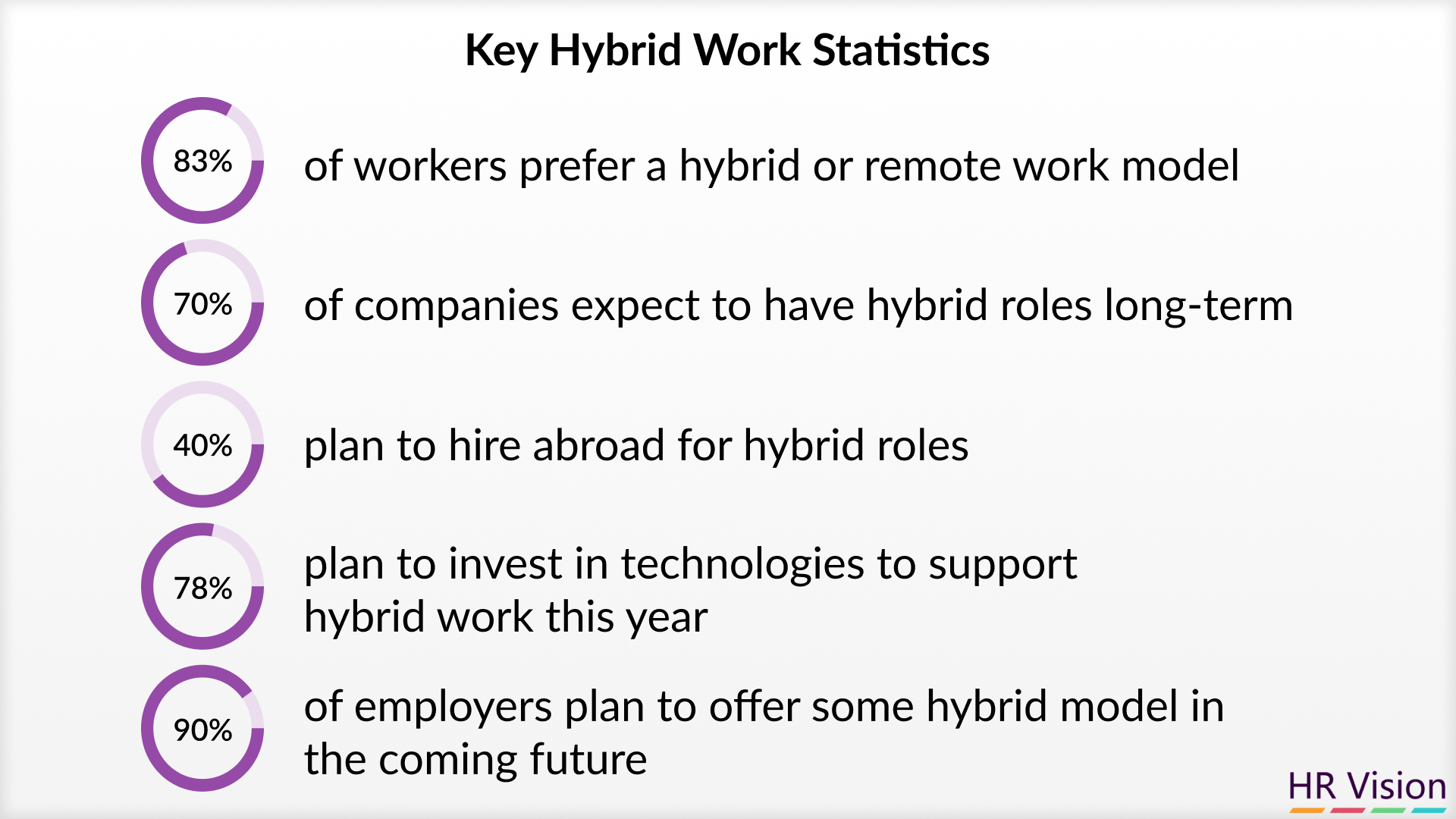
The pandemic served as a catalyst for the rapid adoption of this model. With many businesses successfully transitioning to remote work, a significant portion have embraced a hybrid approach. Looking ahead, experts like Gartner predict a continued rise in hybrid and remote workforces, with 26% of companies anticipating over 70% of their employees working remotely or in a hybrid setting by 2025.
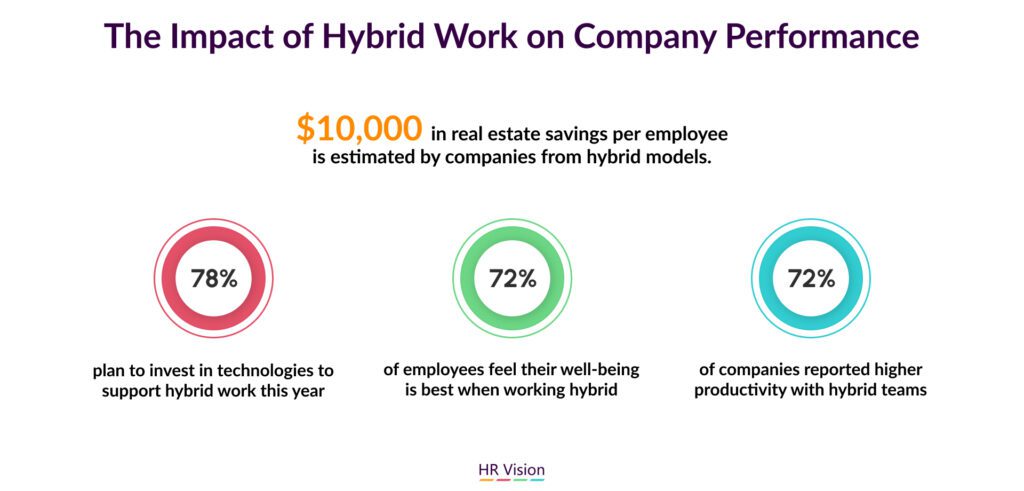
72% of employees feel their well-being is best when working hybrid
The rise of hybrid work models extends beyond mere location flexibility. A recent study revealed that a significant 72% of respondents reported feeling their well-being is best served in a hybrid environment. This translates into tangible benefits for companies in two key areas:
- Improved Retention Through Well-being: A happy and healthy workforce is a loyal workforce. Hybrid work arrangements offer employees greater control over their work schedules, fostering a better work-life balance and ultimately reducing stress. This translates to increased employee satisfaction and a reduced likelihood of turnover.
- Expanding the Talent Pool: Hybrid models break down geographical barriers, allowing companies to tap into a wider talent pool. This opens the door to recruiting highly skilled individuals who may have yet to be considered due to location constraints.
72% of companies reported higher productivity with hybrid teams
Beyond the well-being benefits, hybrid work also holds the potential to unlock significant productivity gains. The flexibility offered by this model allows employees to structure their workday around their individual peak productivity hours. Early birds can tackle demanding tasks first thing in the morning from the quiet of their home office, while those who thrive in the afternoon can leverage focused work time after the morning rush. This autonomy empowers employees to work when they’re most effective, potentially leading to a boost in overall output.
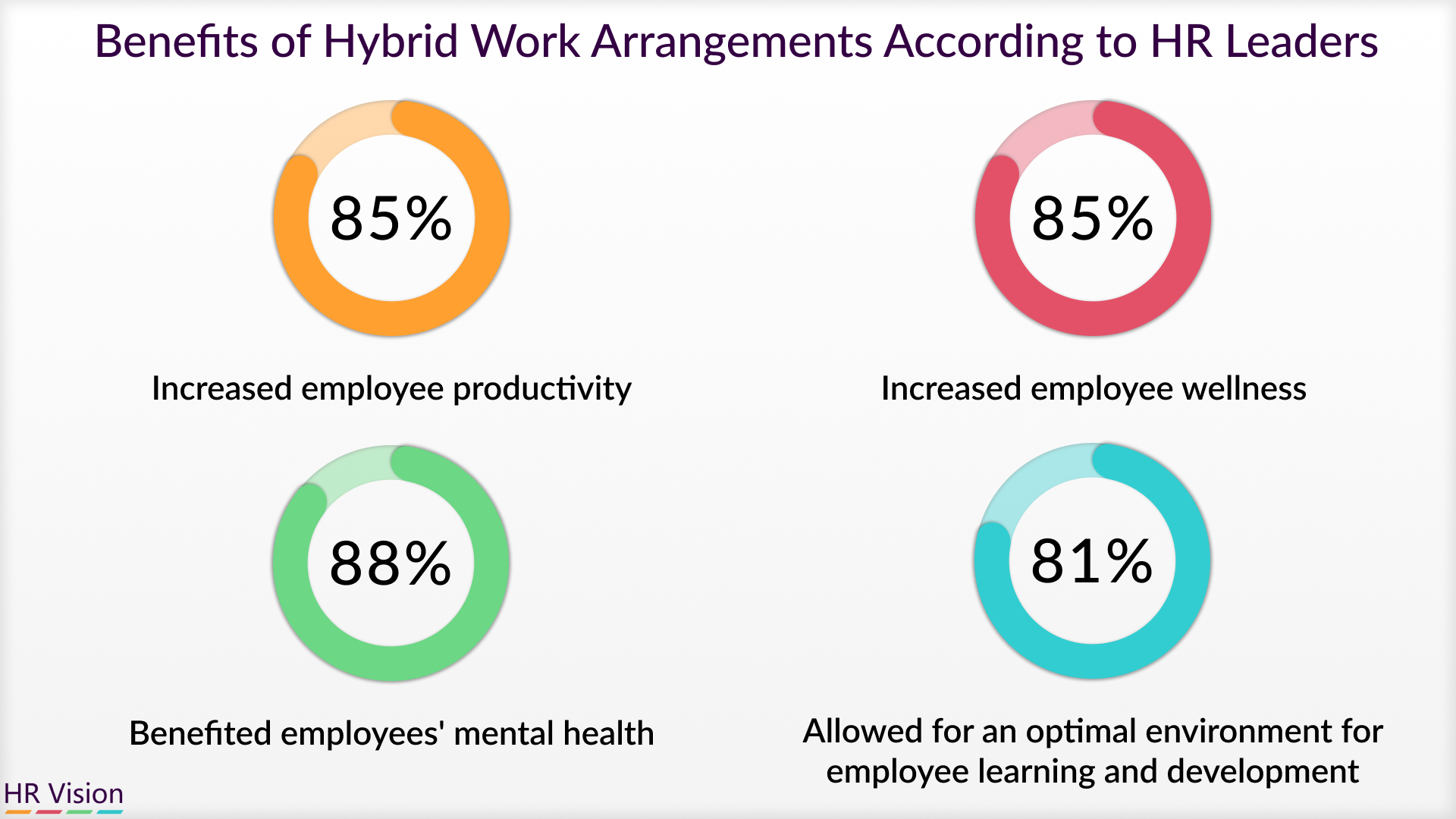
Furthermore, a hybrid environment can minimize distractions often encountered in a traditional office setting. Whether it’s impromptu conversations or background noise, office environments can disrupt focus and hinder productivity. Research from Eagle Hill Consulting revealed that 90% of managers report that hybrid worker productivity is the same or even higher than pre-pandemic levels. While the ideal work environment will vary by individual, the flexibility and focus offered by hybrid work models have the potential to unlock significant productivity gains for many employees.
Companies estimate $10,000 in real estate savings per employee from hybrid models
The potential benefits of hybrid work extend beyond employee well-being and productivity. For companies, hybrid models can offer significant financial advantages. A study by Deel found that hybrid companies experience a 25% increase in revenue per employee compared to fully remote or in-office counterparts. This suggests that the unique blend of flexibility and collaboration fostered by hybrid work environments can lead to improved employee performance and ultimately, higher revenue generation.
There are also clear cost-saving benefits to consider. While there are some initial expenses associated with equipping home offices (average cost of $713 per employee for furniture and equipment according to GWA), these are likely outweighed by the long-term savings on real estate. Companies can save an impressive $10,000 per employee on real estate costs by adopting a hybrid model. This is due in part to the ability to reduce the physical office footprint. Knight Frank reports that 27% of companies have already downsized their office space due to hybrid work adoption. The combination of increased revenue per employee and reduced overhead costs can lead to a significant improvement in a company’s bottom line.
The Flip Side: Navigating Challenges in Hybrid Work
While hybrid work offers numerous advantages, it’s not without its challenges. Communication and collaboration can be particularly impacted, with a recent survey revealing that 58% of respondents cite communication as a major hurdle in hybrid work environments. Spontaneous brainstorming sessions and informal knowledge sharing, which often flourish in a traditional office setting, can be more difficult to replicate virtually. Additionally, ensuring equitable access to information and participation for both remote and in-office employees is crucial to maintaining a level playing field.
Another potential challenge lies in maintaining a strong company culture and employee engagement. Remote employees can often feel isolated and disconnected from management, with a study showing that they feel less connected, and only 16% feel included in goal-setting exercises. Fostering a sense of belonging and connection for all employees, regardless of location, is essential in a hybrid environment.
Performance management can also be trickier in hybrid models. Evaluating employee output can become more complex when in-office visibility is reduced. Establishing clear performance metrics that go beyond physical presence is crucial for ensuring fair and objective evaluation of all employees.
82% have increased spending on collaboration tools for hybrid work
Effective communication and collaboration are essential for any successful team. In a hybrid environment, maintaining these connections requires a strategic approach.
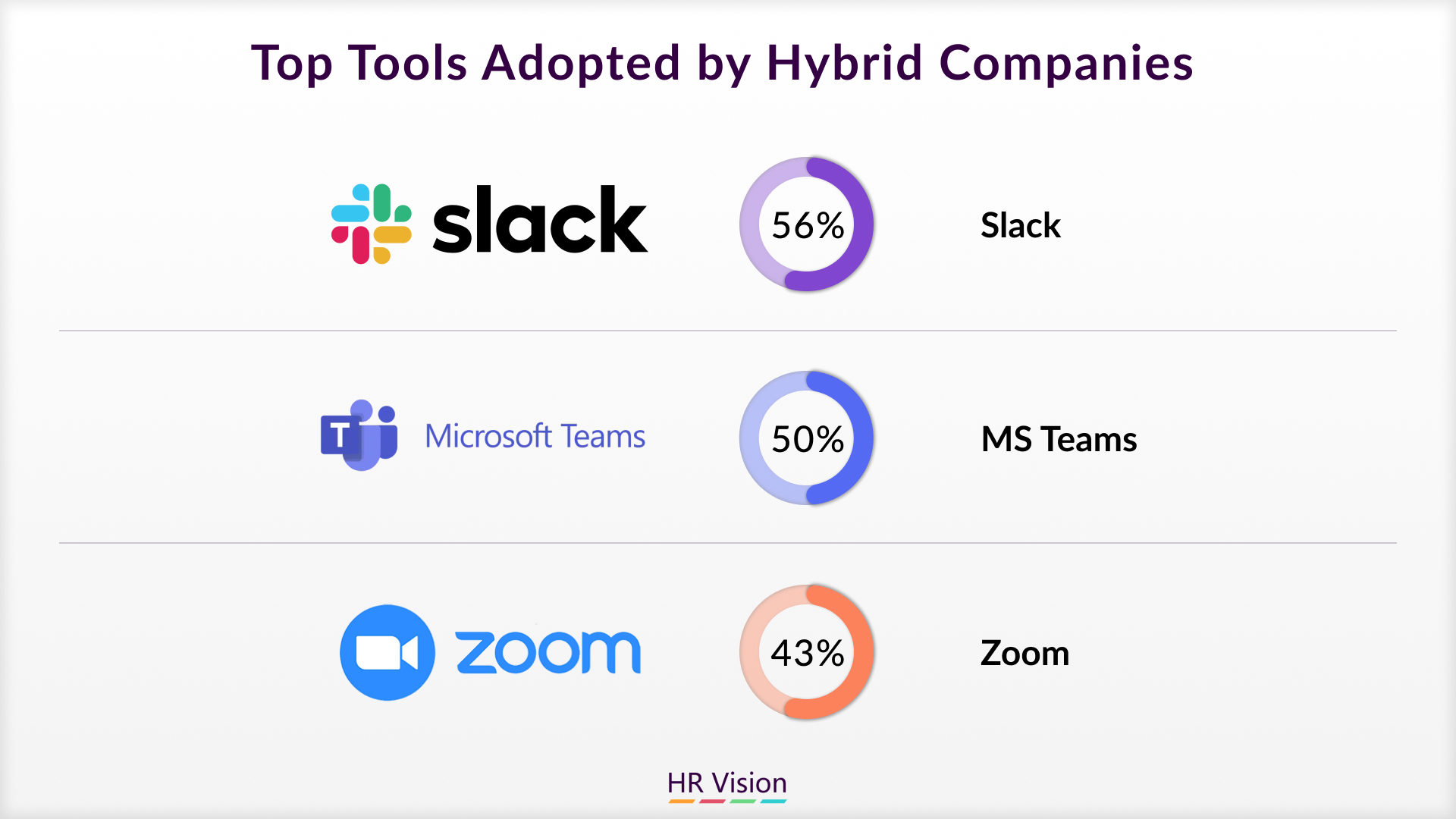
Technology plays a crucial role in overcoming communication and collaboration hurdles. Utilizing video conferencing platforms allows for face-to-face interaction, fostering a sense of connection and facilitating more natural brainstorming sessions. Additionally, project management and collaboration software can streamline communication, information sharing, and task delegation, ensuring everyone is on the same page regardless of location.
Maintaining a strong company culture in a hybrid environment requires intentionality. Regular team-building activities, both virtual and in-person, can help build rapport and a sense of community. Implementing recognition and appreciation programs that acknowledge and celebrate the contributions of all employees, regardless of location, further promotes a sense of belonging and connection.
Conclusion
The rise of hybrid work models presents a unique opportunity for businesses. This approach offers the potential to enhance employee well-being, boost productivity, and even lead to financial gains. However, it’s not without its challenges. Communication, collaboration, maintaining company culture, and performance management require careful consideration and proactive strategies.
The key to success in a hybrid work environment lies in adaptation and planning. By implementing effective communication tools, fostering a strong company culture, and establishing clear performance metrics, HR professionals can empower companies to navigate the complexities of hybrid work and unlock its full potential.
Ready to take a deep dive into the future of work and explore best practices for navigating the hybrid work revolution? Join us at HR Vision for two days of thought-provoking discussions with top HR leaders.