

Our work world is changing fast. Forget the daily grind at the office – remote work is here to stay. Companies are fighting for the best talent, but many workers are burned out. The answer? Flexibility.
It’s the key to a happy workforce and a successful company in the future. Let’s see how flexibility will reshape everything from work hours and places to employee well-being and the entire company vibe.
The Rise of Flexibility
The traditional office grind is fading faster than ever. The rise of remote work, fueled by technological advancements, has transformed where and how we get things done. This shift has created a double-edged sword for businesses. On one hand, they face a fierce war for talent, with skilled workers having more options than ever before. According to a FlexJobs survey, 57% of employees are willing to look for a new job if their current company doesn’t offer remote work options.
On the other hand, the traditional office model can lead to employee burnout. A recent study found that 65% of workers report feeling burned out at least sometimes.
The answer lies in flexibility. The pandemic served as a major catalyst, forcing many companies to embrace remote work arrangements. Now, a significant portion of the workforce is demanding flexibility.
The Employer’s Case for Flexibility
We’ve established that flexibility is a major selling point for employees, but the advantages extend far beyond keeping your workforce content.
Here’s how embracing flexible work arrangements can benefit employers:
1. Reduced Overhead Costs
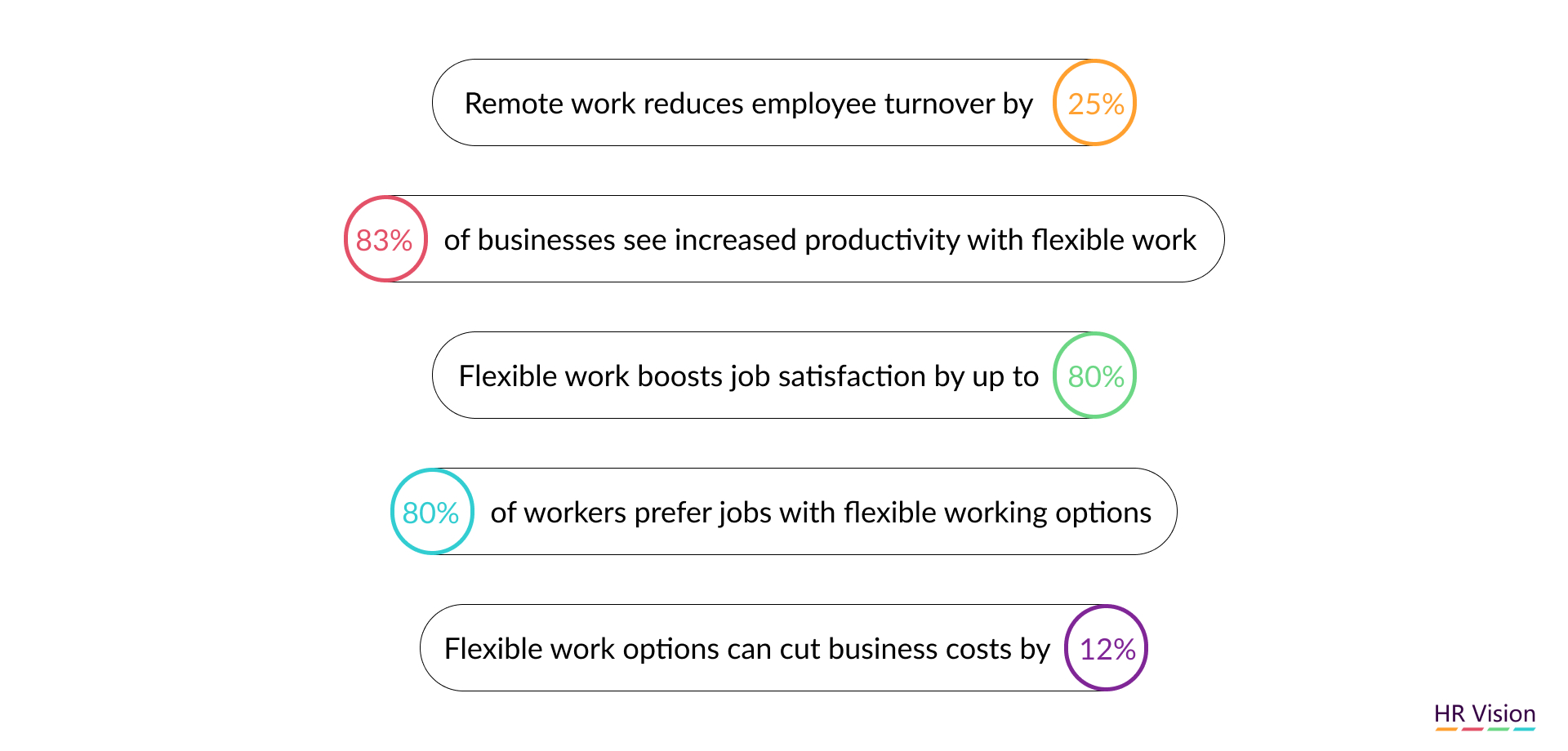
This is a big one. Traditional office spaces require significant investment in rent, utilities, furniture, and maintenance. By allowing employees to work remotely at least some of the time, companies can downsize their physical footprint, leading to substantial cost savings. A study by Global Workplace Analytics estimates that organizations with a strong remote work policy can save an average of $11,000 per employee annually.
2. Talent Acquisition and Retention
The competition for skilled workers is fierce. By offering flexible work options, you become a more attractive employer to a wider pool of talent, not limited by geographic location. This can be especially helpful for attracting top performers who might not be willing to relocate for a job. Furthermore, happy and well-rested employees are less likely to leave for greener pastures, leading to increased retention rates.
3. Improved Productivity and Engagement
Contrary to the belief that remote workers are less productive, several studies have shown the opposite. Employees who have more control over their schedules and work environment often report feeling more focused and engaged. A study by FlexJobs found that 77% of remote workers report being more productive when working remotely. This can translate to better quality work and improved overall business outcomes.
4. Enhanced Employer Brand
Companies that embrace flexible work arrangements are seen as progressive and employee-centric. This positive reputation can attract top talent and improve your employer’s brand.
Why Flexibility is the New Work Standard
The pandemic may have accelerated the trend, but flexible work is here to stay. 74% of workers now view flexible work as the standard.
While flexible work arrangements offer clear benefits for employers, the real game-changer is the impact it has on employees. The daily grind can take a toll on mental and physical health. Studies show that 91% of workers believe flexible work arrangements positively affect their mental health. Allowing employees more control over their schedules, they can manage personal commitments, reduce stress from lengthy commutes, and achieve a better work-life balance.
Feeling valued and trusted by your employer can do wonders for morale. Flexible work arrangements demonstrate that you trust your employees to get the job done, regardless of location. This can lead to a 73% increase in job satisfaction, fostering a more engaged and productive workforce.
Today’s workplace is a blend of generations, each with unique work styles and needs. Flexibility caters to these diverse preferences. Millennials, for example, highly value flexibility, with 42% citing it as a key factor when considering job opportunities. Flexible arrangements allow working parents to manage childcare responsibilities, while older workers can prioritize health appointments without sacrificing work hours.
Implementing Flexibility in the Workplace
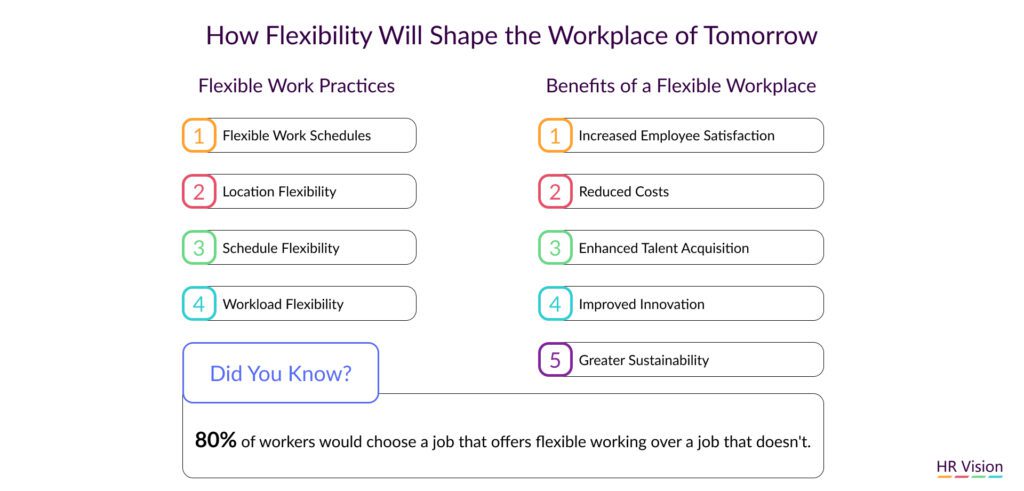
So, you’re convinced that flexibility is the future of work. But how do you actually put it into action? There’s no one-size-fits-all approach to flexibility. The key is to offer a variety of options to cater to your diverse workforce:
• Flexible Work Schedules: This can include compressed workweeks (fewer days with longer hours), flex hours (allowing employees to adjust start and end times within a set framework), or remote work options (working from a location other than the traditional office).
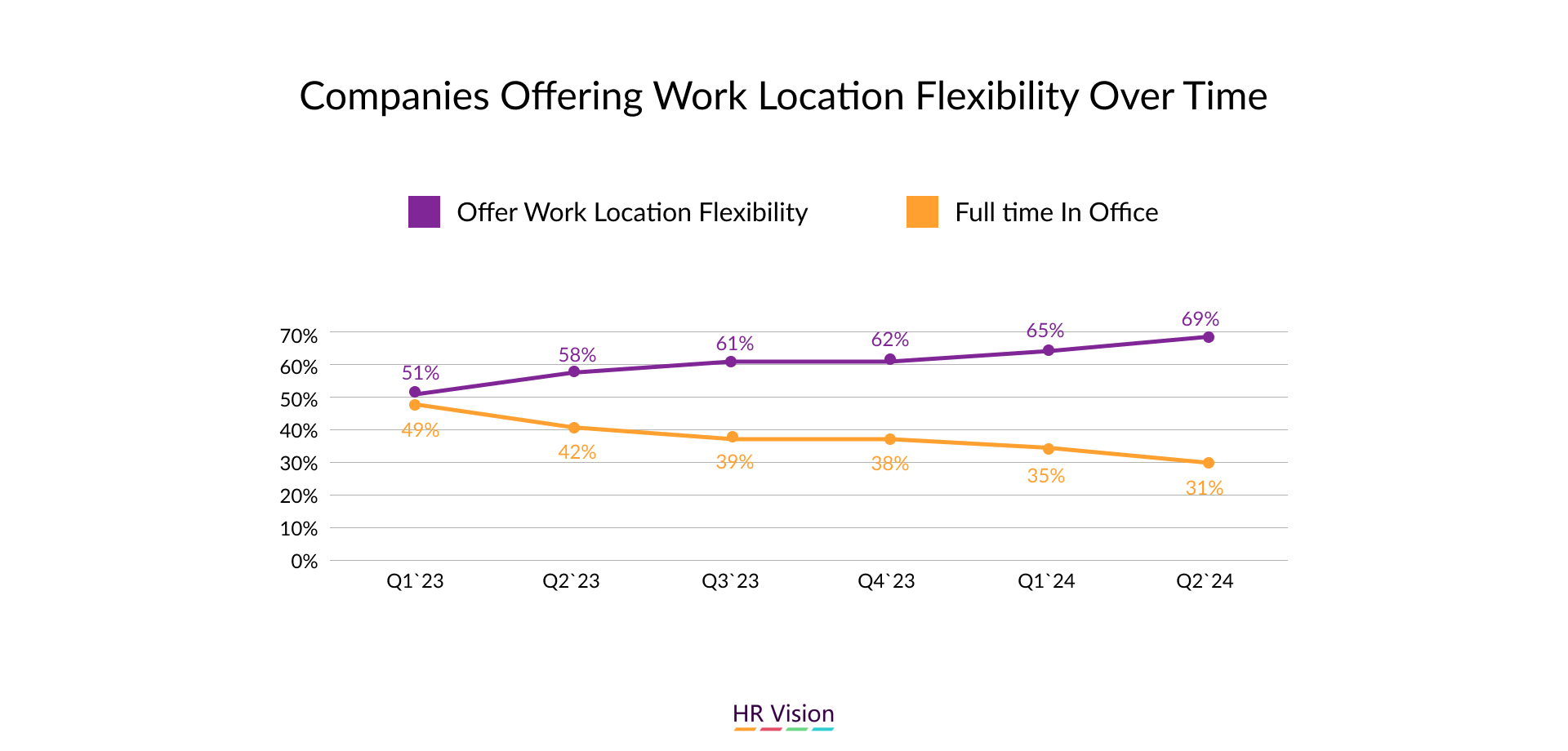
• Location Flexibility: Technology has made it easier than ever to work from anywhere. This includes offering full-time remote work, co-working spaces (shared work environments with amenities), or a hybrid model that combines office and remote work.
• Schedule Flexibility: This could involve asynchronous work (where communication and collaboration occur outside of set working hours) or autonomy over work hours (allowing employees to structure their workday around their peak productivity times).
• Workload Flexibility: For some roles, job-sharing (splitting one full-time position between two people) or project-based work (focusing on specific projects with defined deadlines) can be effective ways to offer flexibility.
Challenges of a Flexible Workplace
While flexibility offers a lot of benefits, implementing it successfully requires navigating certain challenges. One potential hurdle is ensuring clear and consistent communication across a potentially dispersed workforce. Remote team members may miss out on informal conversations and spontaneous brainstorming sessions that often spark innovation in a traditional office setting. Here, fostering a culture of open communication through video conferencing, project management tools, and well-defined communication protocols becomes crucial.
Another challenge lies in maintaining team cohesion and collaboration when team members are physically separated. Building strong relationships and a sense of camaraderie can be more difficult in a virtual environment. Scheduling regular team-building activities, fostering virtual social interactions, and creating opportunities for collaboration on projects can help bridge this gap.
Flexibility can also blur the lines between work and personal life. Employees working remotely may struggle to “switch off” at the end of the workday, leading to burnout. Companies can help by encouraging employees to establish clear boundaries and set specific working hours. Additionally, promoting a healthy respect for personal time and acknowledging the importance of unplugging is essential.
Finally, ensuring fairness and equity in a flexible work environment is paramount. There’s a risk that remote workers may feel out of sight, out of mind, potentially missing out on opportunities or recognition compared to their office-based colleagues. Standardized performance management practices, transparent communication about career development opportunities, and fostering a culture of inclusion regardless of location are all crucial steps to address this challenge.
The Flexible Future of Work
The future of work is all about adaptability and embracing change. While traditional work schedules and office environments aren’t disappearing entirely, flexibility is rapidly becoming the norm. We’re already seeing trends emerge, such as the four-day workweek gaining traction in some industries, with promising results in terms of employee well-being and productivity. Hybrid models, combining remote work with dedicated office time for collaboration, are also likely to become a mainstay, offering employees the best of both worlds.
Companies that embrace flexibility won’t just be catering to employee needs; they’ll be gaining a distinct competitive advantage. In a talent-driven market, offering flexible work arrangements will be a powerful tool for attracting and retaining top performers. It broadens the talent pool geographically, allowing you to recruit from a wider range of skilled individuals. Additionally, a flexible work environment fosters a happier, healthier, and more engaged workforce, ultimately leading to increased productivity, innovation, and business success.
However, the road to a truly flexible future requires continuous adaptation and innovation. As technology evolves and work styles continue to change, companies will need to be agile and willing to experiment with new models and approaches. Regularly evaluating the effectiveness of your policies, soliciting feedback from employees, and staying informed about emerging trends will be crucial for staying ahead of the curve.
Want to delve deeper into the future of work? Join us at HR Vision. Learn from top HR leaders about the latest trends, best practices, and innovative strategies for navigating the changing landscape of work.


