

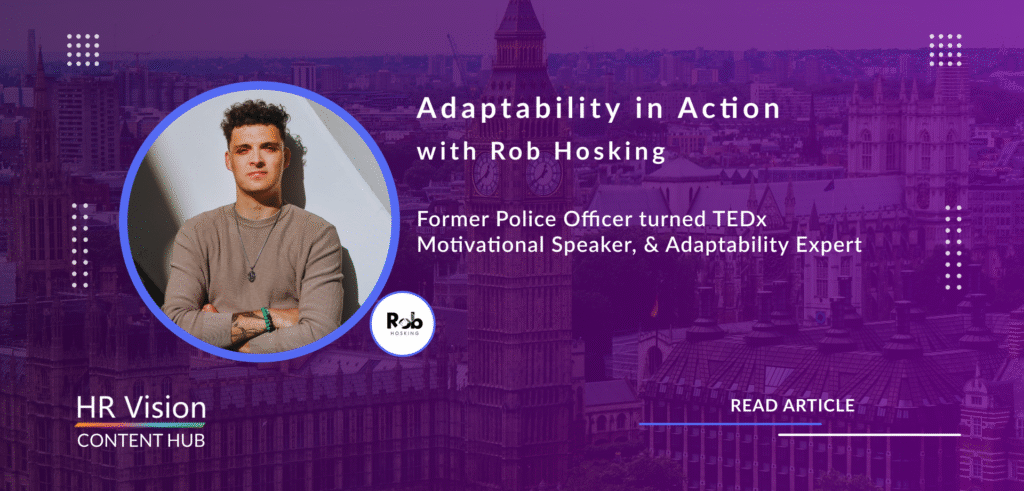
- Your background as a front-line police officer meant dealing with unpredictable situations daily. How can corporate employees develop the same adaptability to thrive in uncertain environments?
One of the key tools I teach is something UK police forces use when making decisions. It’s called the National Decision Model. It’s a framework that ensures officers make well-rounded, adaptable decisions in high-pressure situations. The beauty of it is that it applies to any industry. By using a structured approach to decision-making, employees can navigate uncertainty with more confidence and clarity rather than reacting purely on instinct or emotion.
- In your talks, you emphasise the importance of staying calm under pressure. What strategies do you recommend for professionals facing high-stress situations at work?
The biggest mistake people make in stressful situations is looking too far ahead. The pressure often comes from focusing on the end goal rather than the next step. My advice is to stay present. Break things down into small, manageable steps. That way, you stop yourself from feeling overwhelmed and can focus on what’s in your control at that moment.
- How can leaders cultivate a workplace culture that values adaptability?
By leading by example. If leaders are open to change, embrace uncertainty, and show a willingness to adapt, their teams will follow. It’s about demonstrating the behaviours you want to see in others.
- Many employees resist change, whether it’s new leadership, company restructuring, or technological advancements. How can HR professionals help their teams embrace change rather than fear it?
Involving employees in the process is key. Change feels threatening when it’s something being done to people rather than with them. Bring staff along for the ride, communicate openly, take on their feedback, and make them feel like part of the decision-making process. When people feel heard, they’re far more likely to embrace change rather than resist it.
- What role does mindset play in successfully navigating workplace transformations, and how can organisations support employees in shifting their perspective?
A huge role. One of the biggest barriers to embracing change is the fear of getting it wrong. That fear is shaped by workplace culture, if a company treats mistakes as failures rather than learning opportunities, employees will naturally resist change. Leaders need to create an environment where mistakes aren’t punished but seen as part of growth. If you remove the fear of failure, you remove a major roadblock to adaptability.
- How can organisations foster an open culture where employees feel safe discussing mental health?
This comes up in my talks all the time, and my answer is always the same, it starts with a simple question: How are you? But the real shift happens when we change how we respond to that question. Instead of the automatic I’m good or I’m fine, we need to be more open. When we start giving honest answers, we create space for others to do the same. If leaders model this, it sets the tone for the whole organisation.
- What are some practical ways HR teams can integrate mental resilience training into their leadership development programmes?
HR teams can embed resilience into leadership training by integrating practical tools like stress management techniques, decision-making frameworks, and self-awareness exercises. Creating peer support networks and fostering a growth mindset also help leaders navigate challenges with confidence.
- What common mistakes do leaders make when trying to build resilience in their teams, and how can they avoid them?
The biggest mistake is thinking resilience is just one thing. It’s not, it’s built on multiple factors. For me, there are four key elements: Mindset, Connections, Self-Belief, and Celebrating Small Wins. Too many organisations focus on one or two of these and think they’re building resilience, but you need all four for it to be truly effective.
- What’s one of the most powerful lessons from your time as a police officer that you wish every business leader understood?
Adapting to change isn’t the same as doing it well. Just because you and your team are getting through change doesn’t mean you’re thriving in it. True adaptability isn’t about simply reacting to what’s happening, it’s about being proactive, intentional, and resilient in the face of uncertainty.
Ready to stay ahead in the ever-changing world of HR? Join us at HR Vision, where top HR leaders gather to explore the future of work, HR trends, and the power of HR analytics and technology.


