

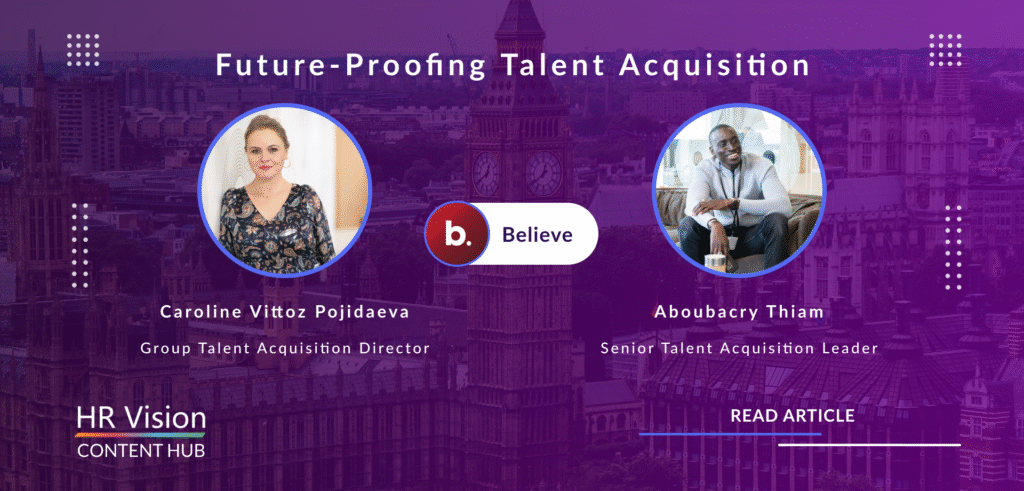
Exploring strategies, challenges, and the human side of hiring in a changing world
- With over 15 years of experience in talent acquisition across industries like music, healthcare, and biopharma, how do you adapt your recruitment strategies to suit the culture and pace of such diverse sectors?
Caroline Vittoz Pojidaeva: Adapting recruitment strategies across industries starts with understanding each business’s vision, pace, and culture. We align TA efforts to both current and future needs by shaping the team, tools, and processes accordingly. Staying close to stakeholders and using market insights allows us to build flexible, locally relevant strategies that scale globally.
- Having started your role at Believe in 2020, how has your recruitment approach evolved to meet the post-pandemic expectations of candidates, particularly in the IT space?
Aboubacry Thiam: Since joining Believe in 2020, I’ve seen a fundamental shift in what candidates expect from employers particularly in tech. The pandemic accelerated remote work, and with it, a demand for flexibility, meaningful work, and well-being. Our recruitment strategy has evolved to emphasize remote-first adaptability, digital interviewing tools, and personalized candidate journeys. We’ve also included wellness initiatives and DE&I considerations at every stage to reflect the new reality of work.
- What are the key components of a successful employer branding strategy in today’s hyper-competitive job market?
Caroline Vittoz Pojidaeva: Each employer brand strategy is unique, but there are a few essential pillars for success: building brand awareness, being transparent, and staying aligned with the company’s core values.
At Believe, we bring daily life at the company to light through authentic content that reflects who we are. We clearly communicate our CSR initiatives and the real impact they have, helping to engage and inspire our audience. These actions are promoted consistently across all our communication channels. We also let our company culture shine through genuine, relatable success stories, while sharing employee experiences and behind-the-scenes moments that showcase the people behind our brand.
- What are some recurring challenges in hiring tech talent, and how do you overcome the high competition for top developers and engineers?
Aboubacry Thiam: One of the recurring challenges is the scarcity of senior-level tech talent who not only bring technical depth but also align with our values and culture. The competition is intense as startups, scaleups, and global tech giants are all after the same profiles.
An even more critical challenge is the underrepresentation of women in tech roles, especially in backend, infrastructure, and leadership positions. The pipeline issue is real, but so is the drop-off in mid-career stages. To tackle this, we’ve made a conscious effort to build gender-balanced shortlists, invest in partnerships with women-in-tech communities, and ensure our job descriptions and interview processes are inclusive and bias-aware.
To stand out in such a competitive market, we highlight our mission-driven culture, flexible work environment, and long-term growth paths. We’ve also strengthened our employee referral programs and nurtured warm talent communities—building trust with candidates over time, especially those from underrepresented groups.
- What’s your advice for aligning local recruitment efforts with global business objectives without losing regional nuance?
Caroline Vittoz Pojidaeva: At Believe, we align on global talent strategy while giving local teams the flexibility to adapt execution to their market. Shared frameworks guide us, but regional customization is key. Ongoing two-way communication ensures global strategy stays rooted in local insight and relevance.
- In your view, how important is the candidate experience, and what small improvements can make a big difference?
Aboubacry Thiam: Candidate experience is everything—it’s your employer brand in action. A great experience increases offer acceptance rates and reduces dropouts. Even small changes, like clearer communication, feedback loops, or a personalized recruiter touchpoint, can transform how a candidate views the company. We’ve focused on simplifying processes and ensuring every step adds value to both sides.
s. Even small changes, like clearer communication, feedback loops, or a personalized recruiter touchpoint, can transform how a candidate views the company. We’ve focused on simplifying processes and ensuring every step adds value to both sides.
- What are the most impactful practices you’ve implemented to make D&I initiatives more than just a checkbox?
Caroline Vittoz Pojidaeva: D&I is a core commitment, not a checkbox. We train all hiring stakeholders on inclusive practices, prioritize diverse shortlists, and take the time to ensure equitable consideration. Our broader CSR efforts reinforce a culture where diversity is actively promoted and genuinely lived – and this includes clear CSR targets set for Exco members to ensure accountability at every level.
- What skills or traits do you prioritize when assessing talent, especially in high-growth and fast-changing industries?
Aboubacry Thiam: In fast-paced environments, adaptability, problem-solving, and collaboration are just as vital as technical expertise. We prioritize candidates who are learning agile, value-driven, and can thrive in ambiguity. Technical skills evolve but mindset and curiosity are foundational. We use Competency Based Interviews to assess not just what people know, but how they think and grow.
- With experience in deploying advanced recruitment tools, what role does AI and automation play in your current talent acquisition strategy, and how do you ensure a human touch is preserved?
Caroline Vittoz Pojidaeva: At Believe, we use AI to remove repetitive tasks so recruiters can focus on what matters—assessing talent and advising hiring managers. It’s a strategic tool to elevate, not replace, the human touch in recruitment.
- What advice would you offer to companies looking to streamline their recruitment process without sacrificing quality?
Aboubacry Thiam: Start by mapping the candidate journey and removing redundant steps. Use automation where it makes sense—like CV screening or scheduling—but keep the human element in key moments. Train hiring managers on interview and selection processes (decision-making frameworks to reduce bias and delays). Most importantly, the hiring team is all aligned on the expectations to ensure success.
- What’s your approach to building trust and collaboration in large, geographically dispersed recruitment teams?
Caroline Vittoz Pojidaeva: My approach is to build trust across global teams by involving them in shared projects, fostering regular connections, and recognizing local expertise. Empowerment, transparency, and aligned goals help drive cohesion, accountability, and collaboration across markets.
- How do you balance the urgency of filling a role quickly with the long-term impact of hiring the right person?
Aboubacry Thiam: To hire fast without compromising on quality, it’s crucial to separate the must-have skills from the nice-to-have. Overly long wish-lists slow things down and risk missing great candidates who can grow quickly in the role.
We work closely with hiring managers to define clear priorities and avoid chasing unicorns.
At the same time, we maintain a community of strong profiles we’ve met before—people we trust and can reach out to quickly. Having this warm pipeline makes a huge difference when speed matters.
- What would be your top three pieces of advice for TA leaders aiming to position their company as an “employer of choice” in 2025?
Caroline Vittoz Pojidaeva: Empower your TA team with the tools and growth they need to thrive. Understand your business deeply to align talent strategy with real needs. And build a people-first brand by leading with authenticity, purpose, and inclusive storytelling.
- From your perspective, what trends in talent acquisition should HR leaders be watching closely over the next two to three years?
Aboubacry Thiam: The next few years will bring even more emphasis on AI in sourcing and screening, and internal mobility. There’s also growing attention on ethical recruitment practices, particularly with data usage. HR leaders should stay agile and adapt to the new trends in the market.
Instead of reproducing the same patterns in the recruitment processes, companies should also be more open to hiring and adapting to candidates from different backgrounds. This will help create a more diverse environment where innovation can thrive.
Ready to stay ahead in the ever-changing world of HR? Join us at HR Vision, where top HR leaders gather to explore the future of work, HR trends, and the power of HR analytics and technology.


