

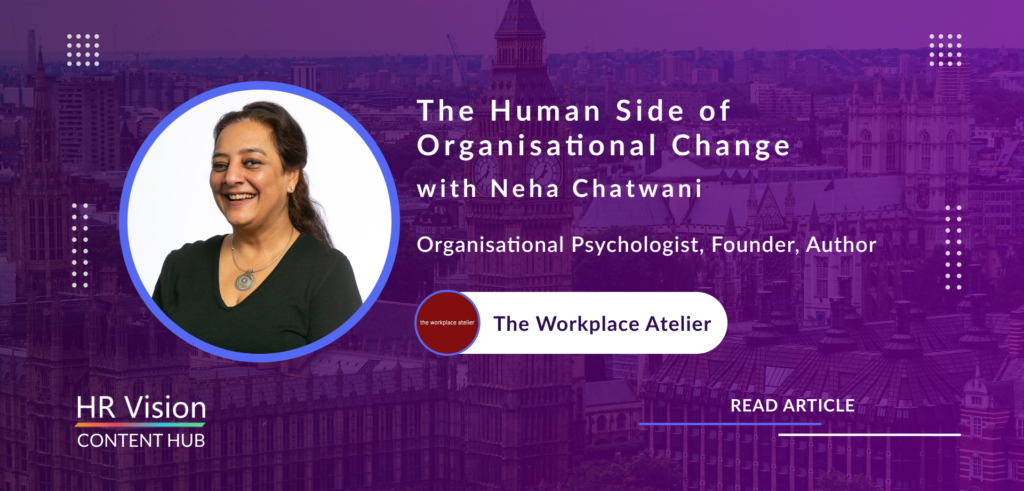
- You work with leaders through big changes. What’s something they often don’t notice about how people actually react to change?
Traditional leaders are taught to present a vision for change and convince others to follow. Change is innate to humans who are intelligent learning beings, so this approach is quite alienating for many. People need to be involved in a change process and co-own it. Change can be equally exciting and scary. Resistance to change is often written off as a negative reaction, although it is a simple emotional expression of grief vis-à-vis excitement for change. Resistance to change can provide important insights about the change itself. It is a good idea to genuinely engage with people in a change process to effectively manage outcomes and expectations. This is what is often missed.
- When a team says they want to “be more agile,” what’s the first thing you look for to see if they really mean it?
I first enquire what they mean by being more agile. Then I ask them to describe to me how they will know when they are ‘more agile’. What will be different then from what it is now?
- When an organization feels stuck, where do you usually begin the conversation?
This is a very challenging question! I think we need to explore what being stuck means in this organization. So, questions like: How do you know you are stuck? What’s making you feel stuck right now? Has anything happened recently that brings about this feeling? What would be different if you were ‘unstuck’?
- You coach leaders regularly. What’s one question you always ask to get underneath the surface?
‘What would you do differently if you could?’ This question helps understand what hinders them to take the action they wish to take. It uncovers emotional fears and tangible challenges as well as underlying assumptions. These can be all addressed one by one.
- You support people with career design. What’s one small action anyone can take to feel less “lost” in their career?
Feeling lost is usually a cacophony of emotions and thoughts. Therefore, I encourage my clients to identify clearly and specifically what makes them feel lost. It actually helps to write this down or say it out loud because it makes the feeling less confusing and scary and much more tangible. Consequently, it is easier to take action on.
- In your workshops, what’s an exercise that consistently helps teams open up or see each other differently?
I like to use a very short brainstorming exercise to demonstrate the importance of working in teams. I might even work this exercise into my workshop session at HR Vision in March 2026 when we talk about collective leadership.
- Looking ahead, what leadership behaviour do you think will matter most in the next few years?
The ability to listen.
Ready to stay ahead in the ever-changing world of HR? Join us at HR Vision, where top HR leaders gather to explore the future of work, HR trends, and the power of HR analytics and technology.


