When an employee leaves a company, it’s not just about paperwork anymore. Offboarding, the process of guiding them out, is becoming more strategic. Instead of just checking boxes, companies are realizing a well-planned offboarding benefits, everyone. It helps the departing employee leave on a good note, and it protects the company’s knowledge and reputation. In short, a strategic offboarding approach strengthens ties even as they’re cut.
Onboarding vs. Offboarding
In HR, every employee’s journey involves two key phases: onboarding and offboarding. Onboarding, often highlighted as the welcoming phase, ensures new hires are equipped for success within the company. It’s about integrating them into the culture, providing resources, and aligning their goals with the organization’s.
On the other hand, offboarding, meaning the process of transitioning employees out smoothly and respectfully, includes tasks like conducting exit interviews, transferring knowledge, and handling administrative matters.
Why Employee Offboarding Matters
Far beyond simply collecting company property and processing final paychecks, a strategic offboarding process fosters a positive and lasting relationship between the departing employee and the organization. This can lead to improved employee relations and morale overall. When employees see the company treating departing colleagues with respect and appreciation, it shows a commitment to people, not just positions. This fosters trust and loyalty among the remaining employees. Furthermore, a well-designed employee offboarding process acts as a valuable feedback loop. Through exit interviews and knowledge transfer sessions, departing employees can offer honest insights into their experiences.
There’s a strong connection between a positive offboarding experience and employer brand. In today’s digital age, online reviews hold significant weight. A study from Software Advice found that more than 50 percent of job seekers checked a company’s job reviews on Glassdoor before applying for a job. A strategic employee offboarding process that prioritizes a positive experience for departing employees can lead to more favorable online reviews, enhancing the company’s employer brand and attracting top talent. Additionally, positive offboarding experiences can increase the likelihood of “boomerang employees” – former employees who return to the company after leaving.
Impact of a Poor Offboarding Process
Overlooking the importance of a strategic offboarding process can have significant negative consequences for companies. Here’s why a poorly managed goodbye can be detrimental:
- Legal Issues and Security Risks
A rushed or impersonal offboarding process can lead to disgruntled employees feeling mistreated. This can increase the risk of lawsuits, particularly discrimination claims if the departing employee feels they were not treated fairly compared to others.
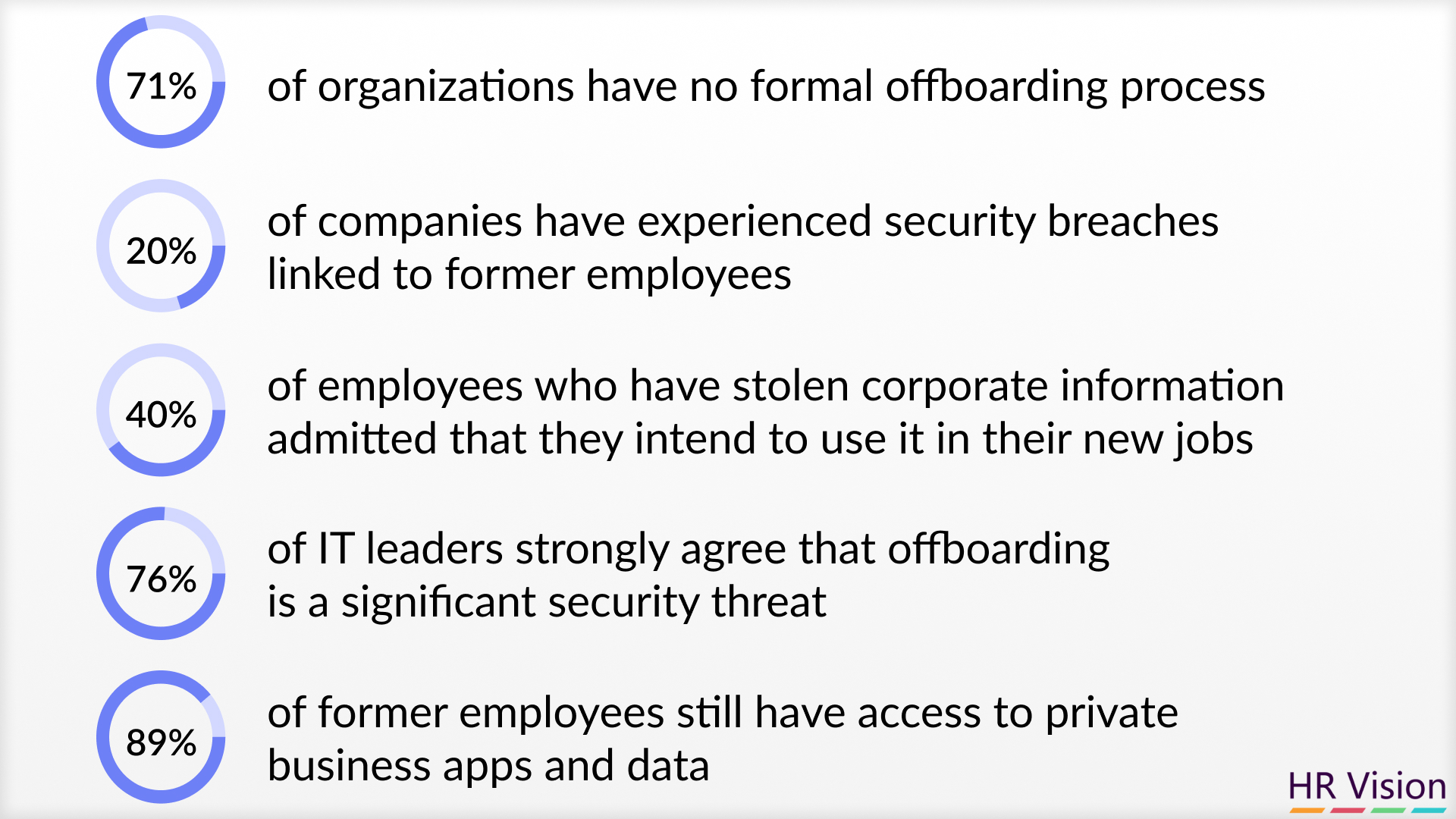
Additionally, a lack of proper data security protocols during offboarding can leave companies vulnerable. According to a study, a staggering 70% of intellectual property theft occurs within 90 days before an employee’s resignation announcement. Disgruntled employees with easy access to sensitive information pose a significant security threat. Furthermore, 20% of companies have experienced security breaches linked to former employees, highlighting the importance of secure offboarding procedures.
- Knowledge Loss and Project Disruption
When knowledge transfer isn’t prioritized during offboarding, valuable institutional knowledge walks out the door with the departing employee. This can lead to project delays, confusion within teams, and a loss of productivity. Companies that fail to capture departing employees’ expertise risk stalling projects and hindering their overall efficiency.
- Negative Employer Branding
In today’s digital age, a company’s reputation can be easily tarnished by negative online reviews. A bitter departing employee with a bad offboarding experience can damage the company’s employer brand by sharing negative experiences on platforms like Glassdoor. This can deter potential top talent from applying and make it harder to attract qualified candidates in the future.
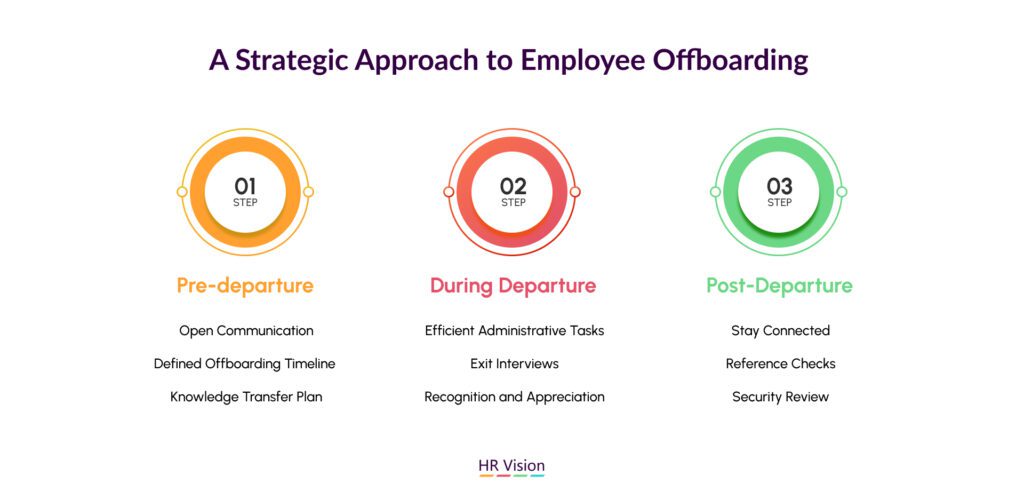
Pre-departure: Setting the Stage for a Smooth Transition
A well-designed employee offboarding process starts well before the employee’s last day. Here are some key steps to take during the pre-departure phase:
1. Open Communication Upon Resignation
When an employee submits their resignation, initiate open and honest communication. Thank them for their contributions and express well wishes for their future endeavors. Clearly outline the next steps in the offboarding process, including timelines and who they should contact with any questions.
2. Defined Offboarding Timeline with Clear Expectations
Create a clear timeline for the entire employee offboarding process, outlining key milestones and deadlines. This timeline should be communicated to the departing employee along with their responsibilities during each stage. Additionally, set clear expectations regarding the return of company property, completion of outstanding tasks, and knowledge transfer.
3. Knowledge Transfer Plan
Identify critical knowledge and skills possessed by the departing employee. Develop a plan for transferring this knowledge to remaining colleagues. This may involve documentation, knowledge-sharing sessions, or assigning mentors who can provide ongoing support.
During Departure: Saying Goodbye with Purpose
The employee’s last day doesn’t mark the end of the offboarding process. Here are some key actions to take during this phase.
1. Efficient Administrative Tasks
Ensure a smooth and stress-free departure by handling administrative tasks efficiently. This includes collecting company property (laptops, badges, etc.), finalizing payroll details, and processing any outstanding reimbursements.
2. Exit Interviews
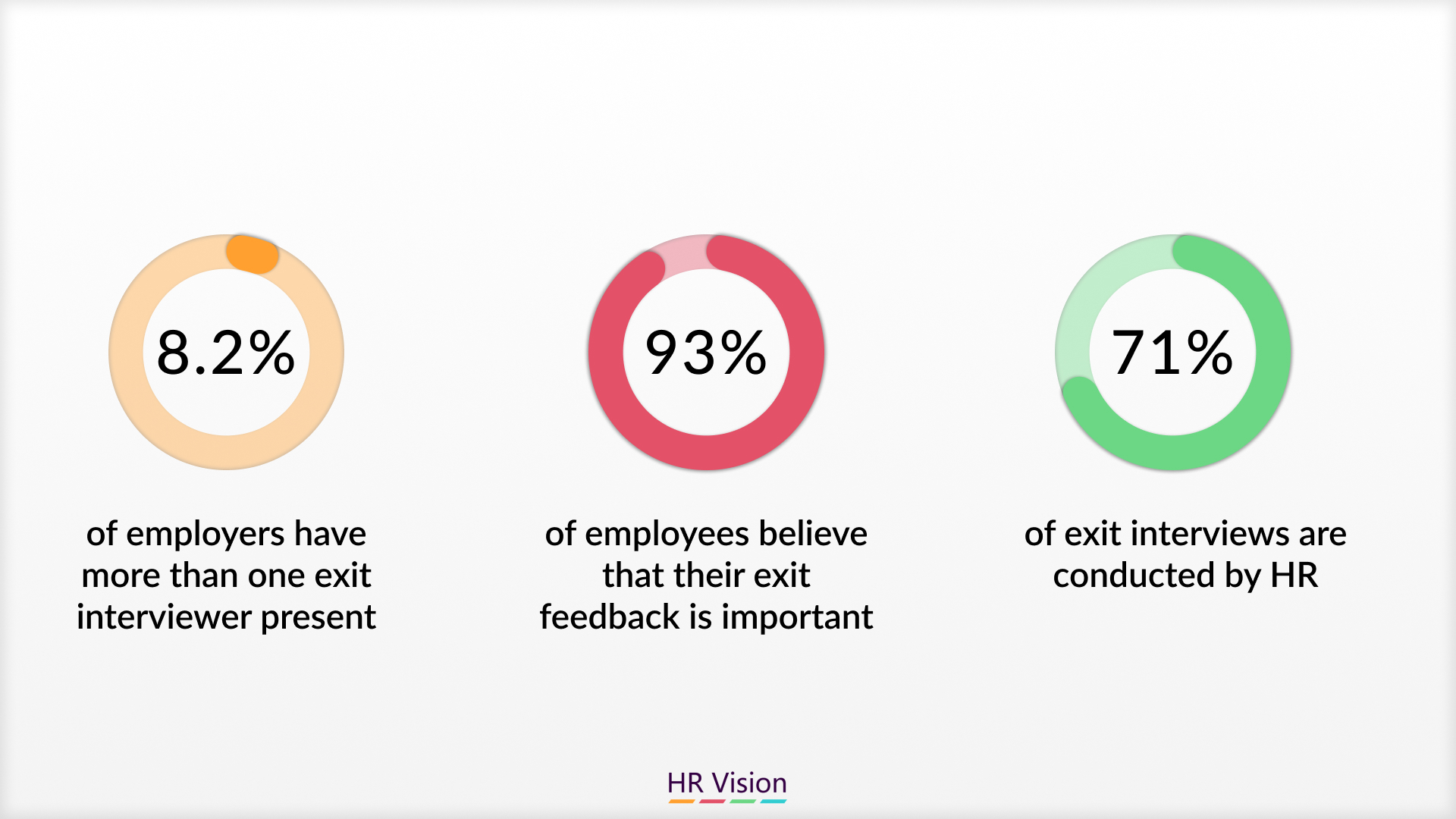
Exit interviews are a valuable opportunity to gather candid feedback on the employee’s experience. Conduct these interviews in a confidential and respectful manner, encouraging honest feedback. Consider offering anonymous surveys in addition to face-to-face interviews to capture a wider range of perspectives. The insights gained from exit interviews can be instrumental in identifying areas for improvement within the organization.
Traditionally, 71% of exit interviews are conducted by HR but consider involving managers as well, as they may have a closer working relationship with the departing employee and gain valuable insights specific to their team.
3. Recognition and Appreciation
Take the time to acknowledge the departing employee’s contributions to the company. A sincere expression of gratitude, along with a farewell message or small token of appreciation, goes a long way in fostering a positive and lasting impression.
Post-Departure: Maintaining Positive Connections
While the formal employee offboarding process concludes after the employee’s last day, the company can still benefit from maintaining positive connections with departing employees.
Let departing employees know the door remains open for future opportunities. This could involve keeping them informed about relevant job openings within the company. According to a recent study, a surprising 15% of employees have boomeranged back to a former employer. By fostering positive relationships during offboarding, the company increases the likelihood of these “boomerang employees” returning with valuable experience and a renewed perspective.
Furthermore, a recent survey revealed that 76% of HR professionals say they are more accepting of hiring boomerang employees today than in the past. This highlights the growing recognition of the value these returning employees bring with their prior experience and company knowledge.
Implementing a Strategic Offboarding Program
While the benefits of a strategic offboarding process are clear, translating those benefits into reality requires a well-defined framework.
Formal Offboarding Policy
Develop a comprehensive employee offboarding policy that outlines the key steps, timelines, and responsibilities for both HR and managers. This policy should clearly define the offboarding process for different scenarios, such as resignations, retirements, or layoffs. It should also specify who is responsible for various tasks, like exit interviews, knowledge transfer, and equipment collection. A clear and standardized policy ensures consistency and minimizes confusion throughout the offboarding process.
Equipping Managers
Effective offboarding requires skilled execution, and managers play a critical role. Invest in training for managers to equip them with the necessary communication and exit interview skills. This training can help them deliver difficult messages with empathy, conduct meaningful exit interviews that gather valuable feedback, and foster a positive atmosphere during the offboarding process.
Leveraging Technology
Technology can be a powerful tool to streamline and enhance the employee offboarding process. Consider utilizing online platforms for conducting exit interviews. These platforms can offer anonymity for employees and allow for easier data collection and analysis. Additionally, knowledge management tools can facilitate the documentation and transfer of critical knowledge from departing employees to their colleagues, ensuring a smooth handover and minimal disruption to ongoing projects.
Employee Offboarding Checklist
An employee offboarding checklist can be a valuable tool to ensure a smooth and efficient offboarding process. This checklist can outline all the key steps involved, from the initial resignation to the final goodbye.

Conclusion
The offboarding process, traditionally a matter of paperwork and goodbyes, is undergoing a significant shift. While only 32% of organizations have a partially automated offboarding process, and a mere 5% have a fully automated one, companies are increasingly recognizing the strategic value of a well-designed approach.
Following best practices for employee offboarding ensures a positive experience for departing employees, leading to better employer branding and potentially even “boomerang employees” returning to the company in the future.
Furthermore, it minimizes knowledge loss and project disruption, protects intellectual property, and mitigates legal risks. However, building a successful offboarding program is an ongoing process. Regularly evaluate the effectiveness of your offboarding procedures and gather feedback from departing employees and managers alike. Continuously refine and improve your approach to ensure you’re maximizing the benefits of a strategic offboarding program.
Want to delve deeper into building a best-in-class offboarding program and explore the latest trends in HR practices? Join us at HR Vision, the premier conference bringing together top HR leaders to navigate the ever-evolving world of work.