We recently delivered a team even for approximately 50 people. It needed to be fun, helpful and informative. So, we decided to use it as an experiment to conduct raw research. This means using simple tools to collect sufficient scientific data, robust enough to inform decisions. Think of minimum viable product in the context of conducting research. The focus of the event was resilience and performance.
At the start everyone individually completed 3 performance tasks; visual memory recall, find a word & snake. These were selected to be easily administered, fun, somewhat representative of job performance and with minimal test re-test performance impact.
We then split the total group into 3 smaller groups, each with a different experimental condition (for 15 mins).
○ Group 1 had a state management session, basically laying down with a meditative and hypnotic positive guided visualisation experience.
○ Group 2 had neurofeedback, providing them with a live visual indication of their cognitive focus and mediative state, whilst listening to music, crafted to induce a focussed and relaxed mental state.
○ Group 3 were put into a negative mindset by being given a task that required them to recall events that had gone wrong the previous week and to discuss how it made them and others feel.
We then brought the groups back together and repeated the performance tests
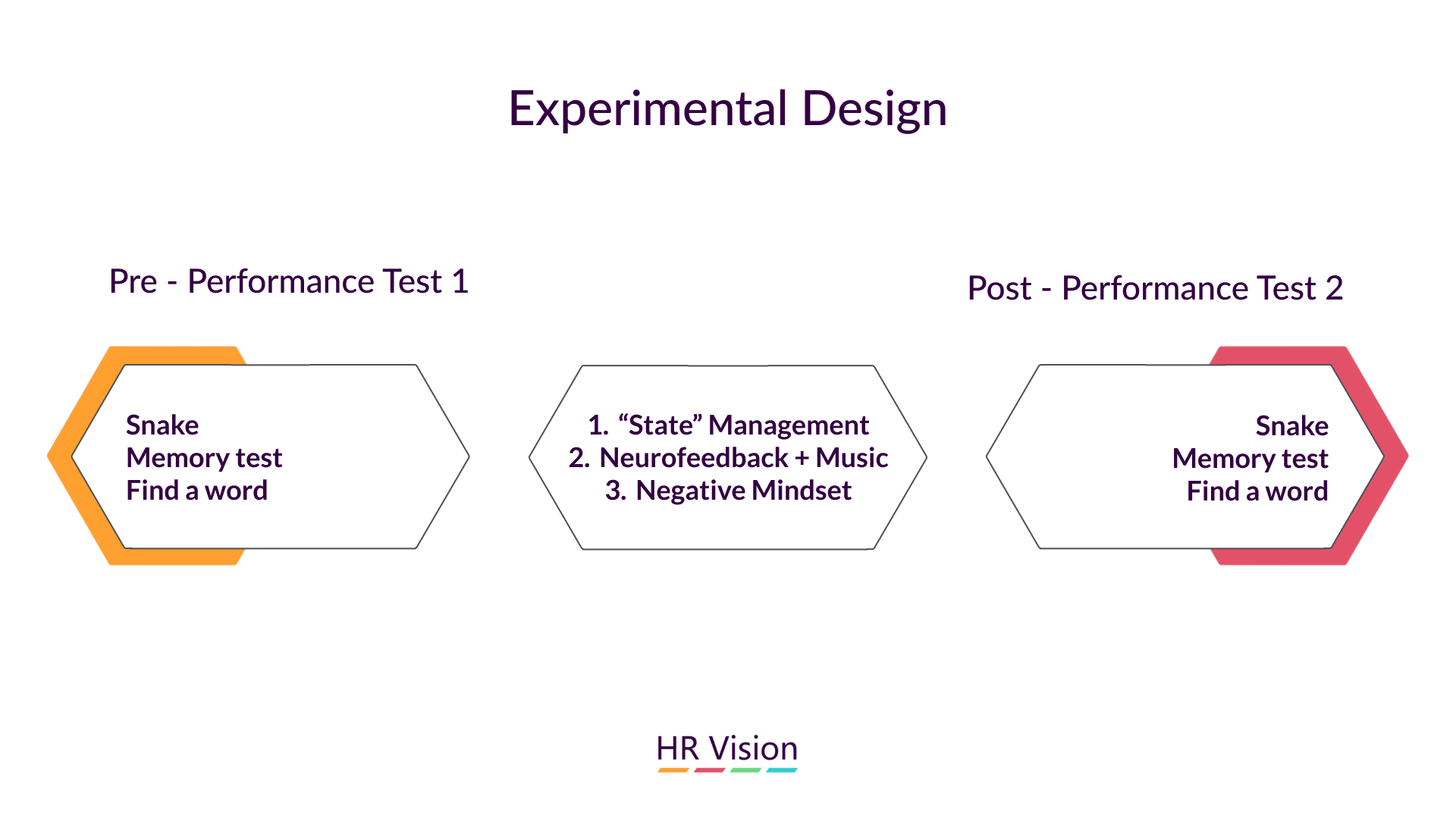
The hypothesis was that the performance impact of Neurofeedback (+ music) would be positive and greater than that of the State Management, which in turn would be better than the Negative Mindset condition.
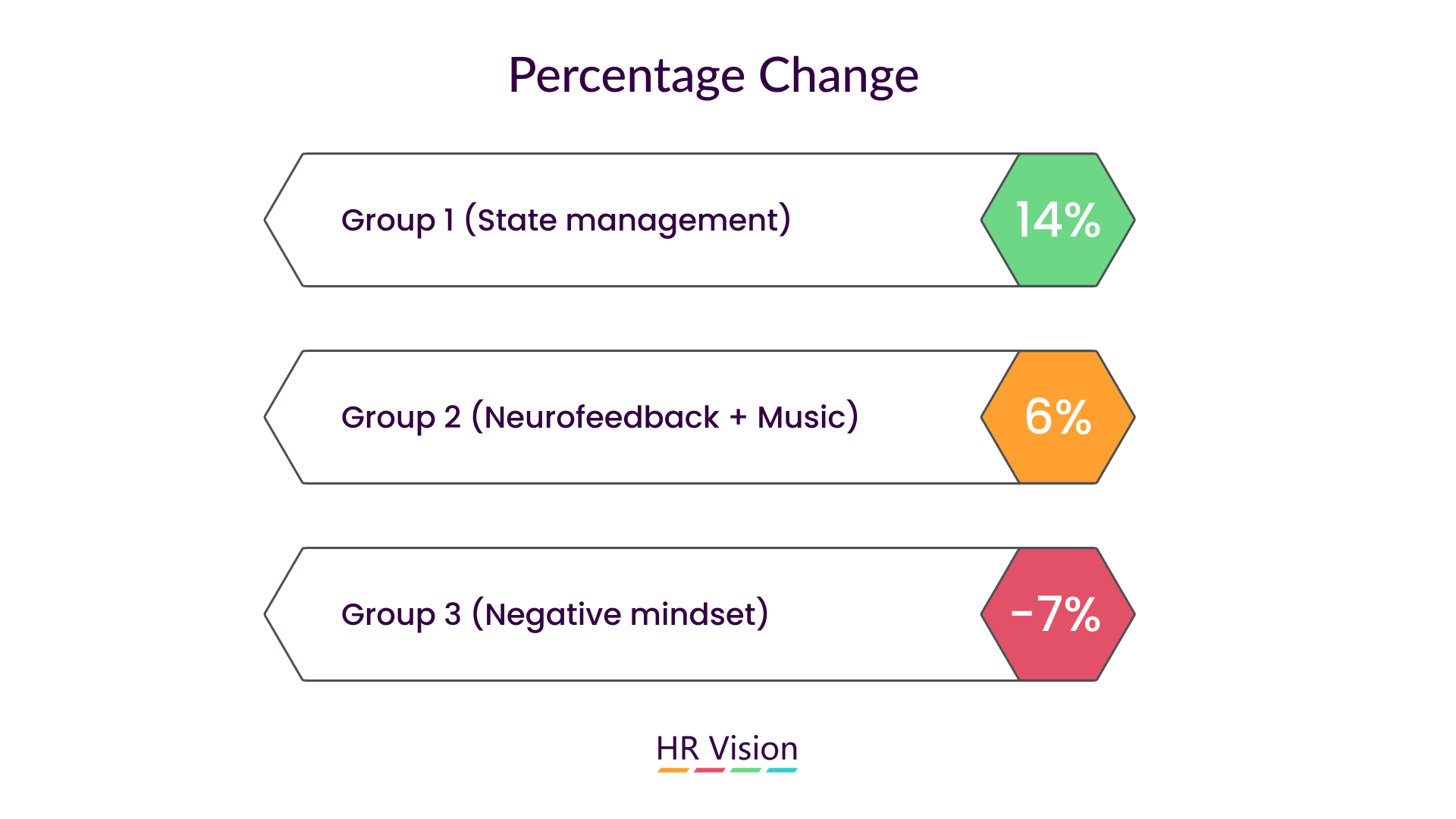
The result were slightly surprising, with the State Management group improving their performance the most (14%), followed by the Neurofeedback (8%) and perhaps not surprisingly, the Negative mindset coming in last with a reduction in performance (-7%).
What Is This Telling Us?
The results show us the impact that these interventions can have on the performance of people. OK, its not enough evidence to show a sustained definitive impact on job performance but a 22% performance differential should be enough to raise a few eyebrows.
I share this as a case study of how HR, (L&OD in this instance) can be encouraged to innovate and experiment to evolve our practice.
Ready to stay ahead in the ever-changing world of HR? Join us at HR Vision, where top HR leaders gather to explore the future of work, HR trends, and the power of HR analytics and technology.