- Your work emphasizes the importance of effective conversation frameworks. What are the most common mistakes managers make during workplace conversations, and how can they avoid them?
I’ve worked in over 40 countries, and in each one, the most common mistake managers make is the same one. Managers don’t ask enough questions.
They get trapped into ‘leading’ too much, telling rather than asking. Instead, managers who ask more questions create greater buy-in. This approach also helps people to think things through for themselves, to develop their own insights. This isn’t just important for the team member. It can also be useful for the manager who may learn something new.
Gen Z is also demanding it. They want a greater say, and where better to have this than in their own performance conversations.
A great approach can be to remember that, as the manager, you can always offer your own opinions, just not too early. Set yourself a target of talking less than 50% of the time. Put a large question mark on your desk if necessary. My free conversation guides are free to download and packed with questions.
- In your book, NOW You’re Talking! you provide practical examples for managers. What is one example of a tough conversation managers often avoid, and how can they approach it effectively?
Hands down, developmental feedback is the conversation managers dread most. I once came across an employee who had been doing something wrong for 13 years, yet no one had ever let them know.
Although developmental feedback is never an easy conversation, it IS possible to feel more confident given two essential tools. First, it’s important to have a constructive framework, one that helps managers feel confident in navigating the discussion. Second, it can be extremely helpful to have tried-and-tested examples of the words that work, to give the manager a great starting place they can then adapt to their own style.
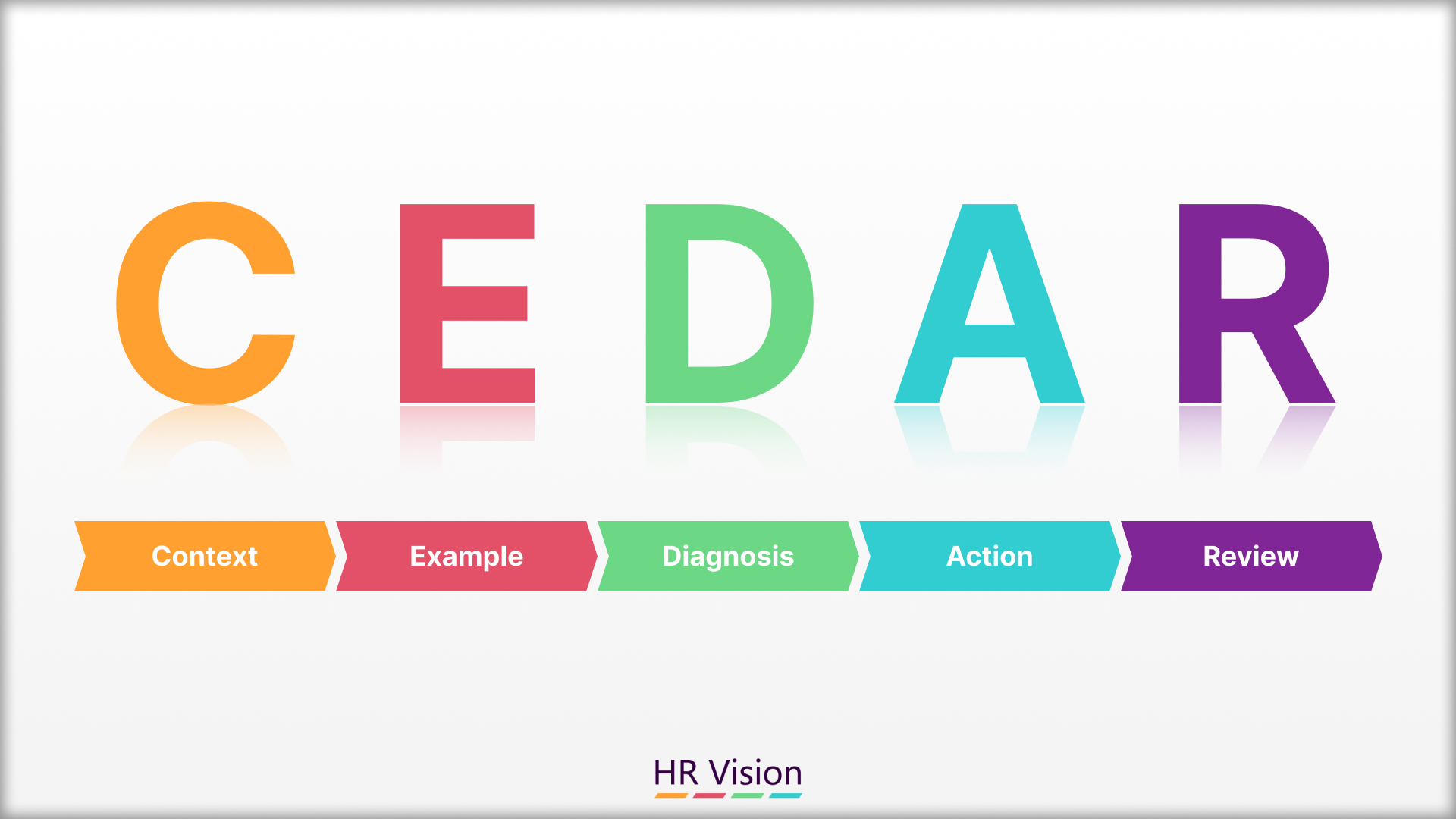
To help with both the framework and the words, I developed the CEDAR™ feedback steps. CEDAR stands for Context or how important it is, illustrated by helpful Examples. Next is Diagnosis, an analysis of the causes or why they are where they are. The conversation then moves forward to Actions and finally a Review or follow-up. These steps are also fully collaborative. This is essential if the team member is to ‘own’ any part of the conversation. There’s a more detailed guide to CEDAR on my website, www.oilintheengine.com.
- Why do you think real-life examples work better for building conversation skills?
Real-life examples are simply far easier to relate to. Any L&D professional reading this will know that roleplays tend to be discounted by participants as too removed from their own experiences.
- In your experience, how can organizations encourage managers to prioritize one-on-one conversations in their busy schedules?
Without a doubt, the best possible way to encourage managers to do anything is to role model it from the top. If leaders do it, so will everyone else.
It can also help to make one-on-one conversations part of the routine. For example, a former head of Google’s innovation lab Area 120 explained to me that even though he led a large team of 20 people, every week he would sit down with each of them for ten minutes. They would focus on two aspects, the priorities for that week and any support needed. Doing this each week meant team members soon started coming along ready-prepared, speeding up the whole process.
- What advice would you give to leaders who feel uncomfortable initiating performance-related conversations with their team members?
You are not alone! But if you can work through that initial discomfort and practice the skills, they will benefit you throughout your career. Use a helpful framework that you know works for each type of conversation. CEDAR for feedback, GROW for coaching, SMART for goal setting, and so on. Then, encourage your team member to play a full part in the discussion so that it’s collaborative.
- With the rise of remote and hybrid work, how have workplace conversations evolved, and what adjustments should leaders make to communicate effectively in these settings?
Remote and hybrid working has had a huge impact on managers. It’s far less easy to catch up impromptu with people. Even seeing people across an office created a visual link that’s gone.
To communicate effectively with remote team members, it’s important to be more deliberate about connecting since it won’t happen naturally. And create opportunities for a face-to-face catchup where you can.
- What role does empathy play in conversations that drive both performance and engagement and how can leaders cultivate this skill?
Stuff goes wrong for all of us. When it does, the conversations we then have and our responses to them determine just how fast we recover. When managers are empathetic by showing a team member that they understand their challenges and then helping them perspective, it drives connection. That helps to repair a situation far more quickly.
At the same time, it’s vital that we don’t feel that empathy requires us to go beyond our own boundaries, what we think is fair or appropriate. Not all situations are the same. When leaders know how to put parameters around what’s OK and what’s not OK, they can be far more empathetic and generous in their response.
- Finally, what advice would you give to HR professionals who are looking to support their managers in becoming better communicators and conversational leaders?
A great starting place for HR professionals is to help their managers identify the ‘what’s-in-it-for-me’, why these skills matter. That buy-in is critical given how many demands there are on a manager’s attention.
Once managers are motivated, the next step is to provide easy, just-in-time tools to give managers the skills they need to feel confident. This then acts as a spiral. Confidence leads to more conversations, which leads to more skill and confidence.
Ready to stay ahead in the ever-changing world of HR? Join us at HR Vision, where top HR leaders gather to explore the future of work, HR trends, and the power of HR analytics and technology.