
Conflict resolution is an important part of keeping a healthy workplace. These conflicts have the potential to disrupt workflows and hinder collaboration. As studies show, 85% of employees at all levels experience workplace conflict, and 25% of employees reported that conflicts led to a decrease in productivity. However, when managed effectively, conflicts can be channeled into opportunities for innovation, improved communication, and enhanced problem-solving.
While conflict resolution techniques can vary, one constant remains essential: empathy. Empathy involves the ability to comprehend and share the feelings of others. When it comes to conflict resolution, empathy acts as a powerful catalyst, allowing individuals to perceive conflicts from various viewpoints and emotions.
The advantages of integrating empathetic conflict resolution into an organization’s ethos extend far beyond the immediate resolution of disputes. When empathy becomes a guiding principle, the workplace transforms into a space where differences are valued, and conflicts are seen as pathways to growth. This transformation yields a range of benefits:

Enhanced communication via empathetic conflict resolution fosters open dialogue and team members’ freedom of expression. This builds trust, strengthens relationships, and boosts camaraderie. Swift conflict resolution enhances productivity by preventing prolonged disputes.
What are the different types of conflicts?
The ability to comprehend the different forms and sources of conflicts is crucial for effectively addressing and resolving them.
Common Causes of Conflicts in the Workplace
- Miscommunication: Lack of clarity in communication, differing interpretations, and misaligned expectations can easily lead to conflicts.
- Competing Goals: When individuals or teams pursue conflicting objectives, tensions can arise.
- Scarce Resources: Competition for limited resources, such as budget, time, or equipment, can spark conflicts.
- Personality Differences: Diverse personalities may clash, causing misunderstandings and friction.
- Change and Uncertainty: Transitions or changes within the organization can create uncertainties that lead to conflicts.
- Power Dynamics: Hierarchical imbalances and power struggles can contribute to conflicts among team members.
There are three primary categories of conflicts: interpersonal conflicts, task-related conflicts, and organizational conflicts. Each category encompasses a unique set of triggers, dynamics, and consequences, shedding light on the intricate nature of human interactions.
- Interpersonal Conflicts. These conflicts arise from differences in personality, values, or communication styles between individuals. They can involve personal clashes, misunderstandings, or even unresolved grievances. Interpersonal conflicts can affect the overall team dynamic and hamper collaboration.
- Task-Related Conflicts. Conflicts can also stem from disagreements over work-related tasks, goals, or responsibilities. When team members have varying opinions on how to approach a project or differing expectations for outcomes, task-related conflicts can emerge.
- Organizational Conflicts. At a broader level, conflicts might arise due to issues related to resource allocation, power struggles, or structural changes within the organization. These conflicts can impact departments, teams, or even the entire company.
Strategies for Navigating Difficult Conversations
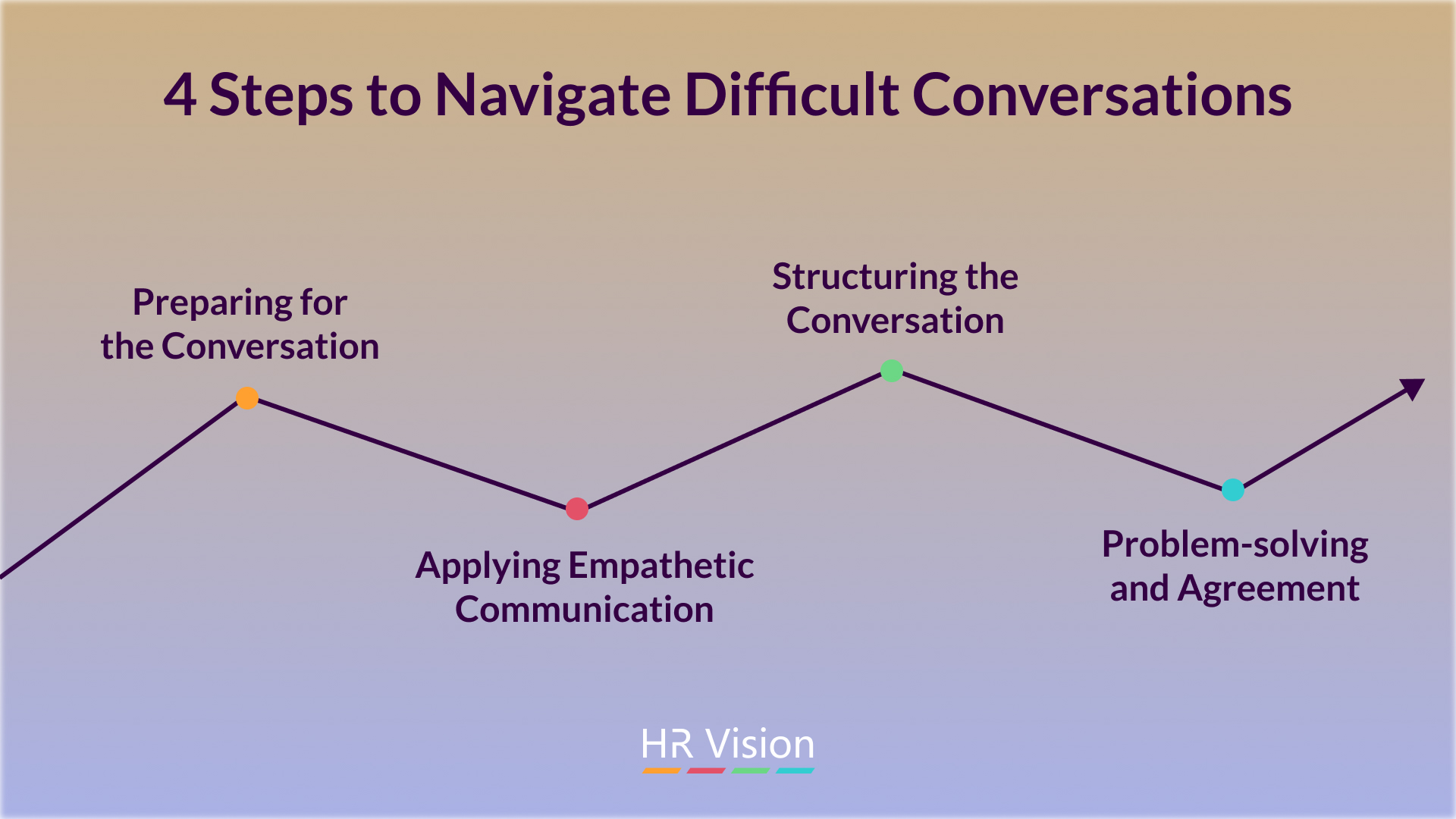
Preparing for the Conversation
Before entering into a difficult conversation, it’s essential to lay the groundwork for a productive dialogue. This involves self-assessment, gathering information, and selecting the appropriate time and setting.
#1 Self-assessment.
We all carry biases and emotions that can influence our perceptions and reactions. Taking the time to recognize these biases and emotions within ourselves is the first step towards maintaining objectivity during the conversation. Reflect on your feelings, assumptions, and potential triggers. This self-awareness can prevent you from reacting defensively or dismissively.
#2 Gathering Information.
Thoroughly understanding the situation from all angles is crucial. Collect relevant information, data, and background context to present a comprehensive understanding of the issue at hand. This not only helps you articulate your points more effectively but also demonstrates your commitment to a well-informed conversation
#3 Choosing the Right Time and Setting.
Selecting an appropriate time and setting can significantly impact the outcome of a difficult conversation. Ensure that both parties have enough time and privacy to engage without distractions. Avoid initiating the conversation when either party is stressed, rushed, or preoccupied. A comfortable environment encourages open dialogue and fosters a sense of safety.
Applying Empathetic Communication
Empathy forms the foundation of successful communication, especially in challenging discussions. Empathetic communication involves active listening, displaying appropriate verbal and nonverbal cues, and validating emotions.
# 1 Active Listening.
Active listening goes beyond merely hearing words. It involves demonstrating genuine interest in the other person’s perspective and making an effort to comprehend their feelings and viewpoints. Ask clarifying questions and avoid interrupting. This shows respect for their thoughts and encourages a more meaningful exchange.
# 2 Verbal and Nonverbal Cues.
Your body language and tone of voice play a significant role in conveying your attitude and intentions. Maintain an open posture, maintain eye contact, and use a calm and respectful tone. Avoid crossing arms, frowning, or using aggressive gestures, as these can create barriers to effective communication.
#3 Validating Emotions.
People often want to feel understood and acknowledged, even if they don’t expect a complete agreement. Acknowledge their emotions without passing judgment or offering solutions right away. Phrases like “I can see why you might feel that way” or “Your perspective is important” can go a long way in building rapport and trust.
Structuring the Conversation
Structuring the conversation ensures that both parties have an opportunity to express themselves and that the discussion remains focused and respectful.
#1 Setting the Tone.
Start the conversation by setting a positive tone. Express your intention to work together to find a solution or better understand each other’s viewpoints. Emphasize that the goal is not to assign blame but to find common ground.
#2 Presenting Concerns.
When presenting your concerns, be clear, concise, and objective. Avoid using accusatory language and focus on specific actions, behaviors, or situations that have led to the need for the conversation. Stick to the facts and avoid making assumptions.
#3 Encouraging Participation.
After presenting your concerns, create an environment that encourages the other party to share their viewpoint. Ask open-ended questions and listen actively to their responses. This demonstrates your commitment to understanding their perspective and promotes a balanced exchange.
Problem-solving and Agreement
Ultimately, the purpose of a difficult conversation is to find a resolution or agreement that benefits both parties.
#1 Brainstorming Solutions.
Shift the conversation towards problem-solving by brainstorming potential solutions together. Encourage both parties to contribute ideas without judgment. This collaborative approach empowers everyone involved and increases the likelihood of finding a satisfactory outcome.
#2 Evaluating Options.
Thoroughly evaluate each proposed solution by discussing the pros and cons. This analytical approach helps ensure that the chosen resolution addresses the core issues and is feasible for both parties.
#3 Mutual Agreement.
Strive for a mutual agreement that respects both parties’ needs and concerns. Once an agreement is reached, summarize the key points and outline the next steps. This could involve specific actions, timelines, or further discussions to ensure accountability and follow-through.

How to Manage Strong Emotions During Conversations?
Emotions often run high in difficult conversations, making it challenging to maintain a rational and empathetic discourse. Here’s how to manage strong emotions:
- Take Breaks. If emotions become overwhelming, it’s okay to take a short break. This can help both parties regain composure and approach the conversation with a clearer mindset.
- Practice Emotional Regulation. Learn techniques to manage your own emotions, such as deep breathing or mindfulness exercises. When you remain composed, it can positively influence the emotional climate of the conversation.
- Empathy Acknowledgment. Show empathy towards the other person’s emotions. Acknowledge their feelings by saying, “I can see that this topic is causing strong emotions,” which can help defuse tension.
The strategies outlined in this article provide a comprehensive framework to navigate difficult conversations with empathy and respect. As we conclude, it’s worth emphasizing that mastering empathetic conflict resolution is an ongoing journey. It requires continuous self-awareness, practice, and a genuine commitment to fostering positive connections. Remember, the way we communicate and address conflicts not only shapes our workplaces but also reflects the values we uphold as a society.
If you’re passionate about creating a harmonious work environment and want to delve deeper into the realm of HR practices, we invite you to join us at the HR Vision Conference.