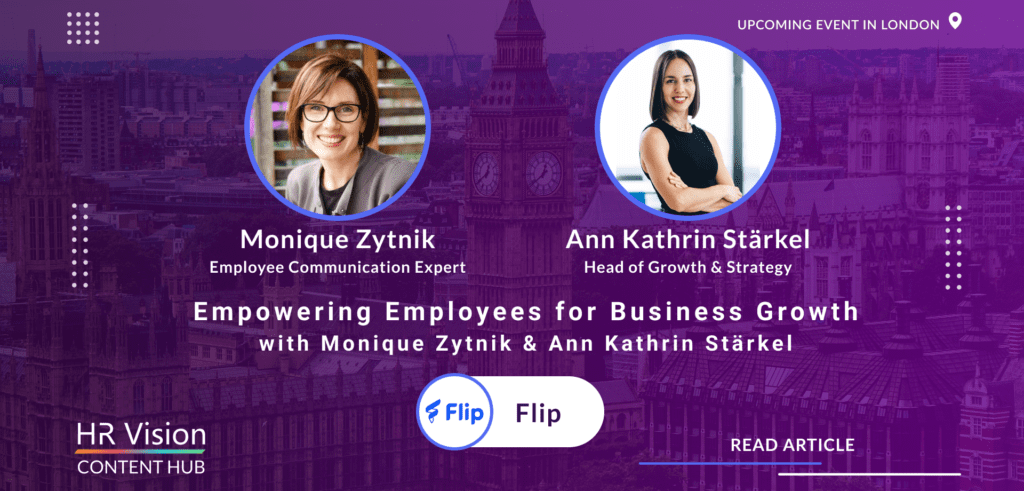
Monique, your background as a physiotherapist seems quite different from your current role in internal communications. Could you share how your experience in physiotherapy influenced your approach to persuasion and engagement in your current field?
When I first started studying physiotherapy, it seemed to be all about science, but in the end, it was about people. It is about understanding people and what motivates them, what fears they have, and what inspires them to change.
What I have taken from physiotherapy into internal communication is the appreciation of a strategic process, starting with finding out what the real problem is instead of just treating the symptoms. The value of measurement in actually knowing if what you are doing is working is also a core part of both physiotherapy and internal communication. There are plenty of interventions that you can choose and your experience will guide you to the right ones, however, unless you measure the right things right from the start, how will you ever know if what you’re doing is effective and worth the time and money in doing them?
Ann Kathrin, as the Head of Growth & Strategy at Flip, you’ve been part of its rapid growth. Can you provide insights into how you’ve fostered innovation to achieve the growth?
I am a strong believer of Kim Scott’s radical candor philosophy. Candor and compassion at work are more important (and more difficult to cultivate) than ever. But if you manage to establish an environment where open feedback is valued, the best idea wins – no matter if it comes from the Intern or the CEO – that is where the magic happens. Every challenge and every failure is an opportunity to grow and learn. With the right growth mindset and the ability to challenge the status quo and step out of your comfort zone, you can truly foster innovation within a growth company. It all comes down to trying out new things, failing fast, iterating, and then of course learning from it – that is the very base layer for innovation.
Monique, your career journey has taken you from smaller in-house teams to consulting for companies with hundreds of thousands of employees. How do you adapt your communication strategies and leadership style in such diverse environments?
The smallest company I have worked in had three people. The largest would be over 600 thousand. They are all people. People are individual. Organisations are also individual. It is about asking the right questions and bringing the right people together.
From a communication perspective, I always try to keep the strategies as simple as possible and focus on creating the right conversations. From a leadership perspective, I see my role as helping my team get their jobs done. That means supporting them, encouraging them, going into battle for them, and giving them visibility when needed. Again, it is about people and understanding what they need to shine. Striving for mutual respect. I try to skip the authenticity part and go for consistency and reliability as a leader.
Ann Kathrin, in the realm of B2B SaaS, strategies for growth and empowerment are paramount. Could you elaborate on how you empower employees at Flip to contribute to the company’s growth trajectory?
At Flip, our employees are the biggest asset we have. They play a crucial role in promoting our purpose and mission! After all, our company’s mission is to empower EVERY employee. This starts of course with our own employees and this is why we have set up a big employee advocacy program for our employees to speak on behalf of Flip. As a result, you will find that on LinkedIn, a lot of our employees are extremely active when it comes to engaging in Thought Leadership debates around frontline digitalization and HR Tech. It’s about giving ownership and knowledge to them to drive the public debates on our behalf and so far, this has proven to be a great growth engine for us!
Monique, what advice would you give to professionals aiming to excel in both internal communications and leadership roles simultaneously?
Try to get rid of barriers for your team. Bring in the reputational and stakeholder management skills to position your team both upwards and outwards. Spend time on fostering the skills that your team needs to grow. Care for the well-being of your people.
Ann Kathrin, being a modern leader often involves steering teams through uncertainty. Drawing from your experiences, how do you guide your teams at Flip to navigate challenges and seize new opportunities?
I always like to repeat one core message when it comes to navigating challenges: The only constant we have at Flip is Change! Without change, we stand still. This change can be uncomfortable at times but it is there to help us grow and push us towards our goals. At Flip and at this company stage as a Start-Up, we need to constantly adapt and do things differently than we might have done yesterday. We are basically building the rocketship while flying it. For this, we need people with a certain mindset who are happy to embrace change, challenges, and obstacles!
Monique, your work spans various sectors, from health to banking, broadcasting to technology. How has this diverse exposure influenced your perspective on the role of internal communications in different industries?
We have a backpack of tools that we can use. Wherever you are, you can slide your backpack off and set up your swag. And you’re ready to go. For those not from Australia, a swag is an all-in-one tent and sleeping bag. Everything you need to survive the elements.
Invest in a solid understanding of models, tools, and tactics for your backpack.
Ann Kathrin, with your experience in driving growth and strategy, could you discuss a time when you effectively managed limited resources while still fostering innovation and achieving substantial business expansion?
As a seed-stage company, you are constantly facing limited resources: money, time, people, just to name a few. You have to become very smart in the way you use your resources and this requires a lot of focus and prioritization. An environment like this only works with flat hierarchies and ownership and people need to be empowered to make decisions on their own. This can even apply to an intern. It takes people that are willing to get their hands dirty. Only with a “just do it”-mentality, lean processes, and clear focus can one drive innovation with limited resources!

Monique, as someone deeply interested in the future of technology, how do you foresee these advancements shaping the landscape of internal communications and employee engagement?
Technology is technology and is only as good as the task it is created for. We all acknowledge that AI is changing the way we work. Our role as internal communicators is to 1) stay ahead of the game and be curious 2) Be friends with IT and HR so that we can work together to create the best experience for our people 3) Be ready to support adoption campaigns and make sure we support our people in our organisations on the journey.
Ann Kathrin, your belief in stepping out of comfort zones for long-term success is intriguing. Can you provide a specific example from your career at Flip where embracing discomfort led to a breakthrough moment for your team and the company?
As I said before: What got us here, won’t get us there. This by definition is the opposite of getting comfortable. I myself notice it with my work – the moment I feel like I know exactly what to do or I feel like I have done a certain task over and over again, I start to worry. Why? Because getting comfortable, and not challenging the status quo is an indication of standing still. You need to constantly develop and evolve and this can sometimes also mean to hand tasks or teams over to people who might push things to the next level. Knowing when to build things up and when to hand them over is extremely crucial for long-term success. This requires a low ego mentality and a lot of personal strength to put the best interest of the company above everything else!
Join us at HR Vision to embrace the future of HR and explore transformative practices for growth and innovation with top HR leaders.