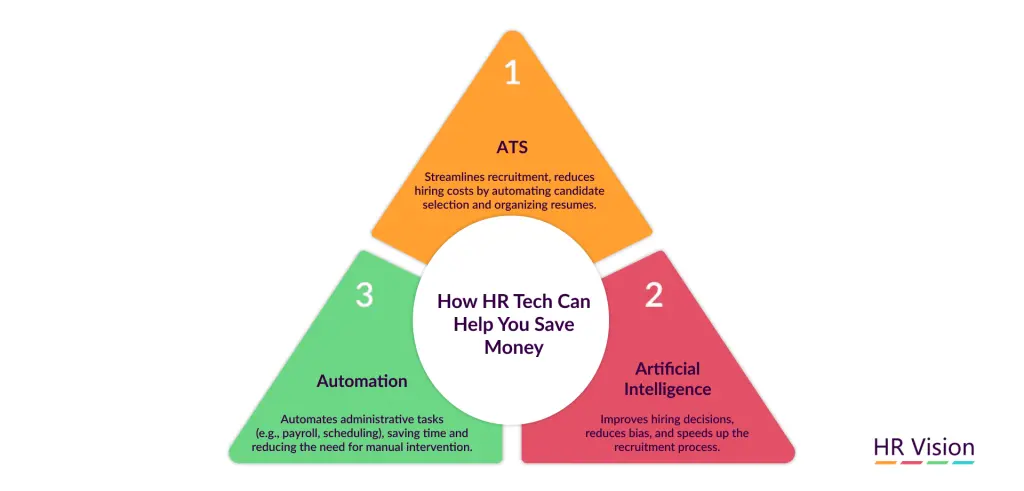
Did you know that inefficiency can drain 20 to 30% of an organization’s revenue annually? These losses often stem from outdated processes, manual errors, and missed opportunities—all of which are especially prevalent in HR operations. Thankfully, the rise of HR technology is reshaping how companies manage their human resources.
The Cost Challenges in HR Management
- Administrative Burdens
Inefficient HR processes often rely on manual methods, such as spreadsheets and paper-based systems. These approaches lead to hidden costs that accumulate over time, including excessive paperwork, duplication of efforts, and time wasted on routine tasks. For example, HR staff may spend countless hours updating records or manually processing payroll, leaving less time for strategic initiatives.
- Errors and Compliance Risks
Human error in HR processes can have expensive consequences. Mistakes in payroll calculations or benefits administration can result in financial losses and employee dissatisfaction. Moreover, failing to comply with labor laws or regulations can lead to penalties, lawsuits, or damaged reputation. For instance, a missed update on wage laws could result in hefty fines, draining company resources.
- Recruitment and Retention Costs
High employee turnover and inefficient hiring processes are costly challenges. Replacing an employee can cost up to 1.5 to 2 times their annual salary, factoring in recruitment, onboarding, and lost productivity. Additionally, delays in filling vacancies due to unoptimized hiring workflows can disrupt operations and impact team performance.
Reducing Recruitment Costs with ATS (Applicant Tracking System)
An Applicant Tracking System (ATS) is a software solution used by companies to manage the recruitment and hiring process. It helps HR teams streamline the steps of attracting, screening, interviewing, and hiring candidates. Core functionalities typically include:
- • Job posting: Distributes job listings to multiple platforms automatically.
- • Resume screening: Uses algorithms to match resumes with job descriptions based on keywords, skills, and experience.
- • Candidate tracking: Organizes candidates’ applications, interviews, and evaluations in one place.
- • Communication tools: Automates emails, interview scheduling, and candidate updates.
- • Reporting: Provides insights into the recruitment process, helping to refine strategies.
How ATS Saves Money
With an ATS, companies can automate routine tasks like resume sorting and interview scheduling, which reduces administrative overhead. This not only speeds up the recruitment process but also frees up HR staff to focus on more strategic tasks. By centralizing candidate information, HR professionals can work more efficiently, saving valuable time and resources.
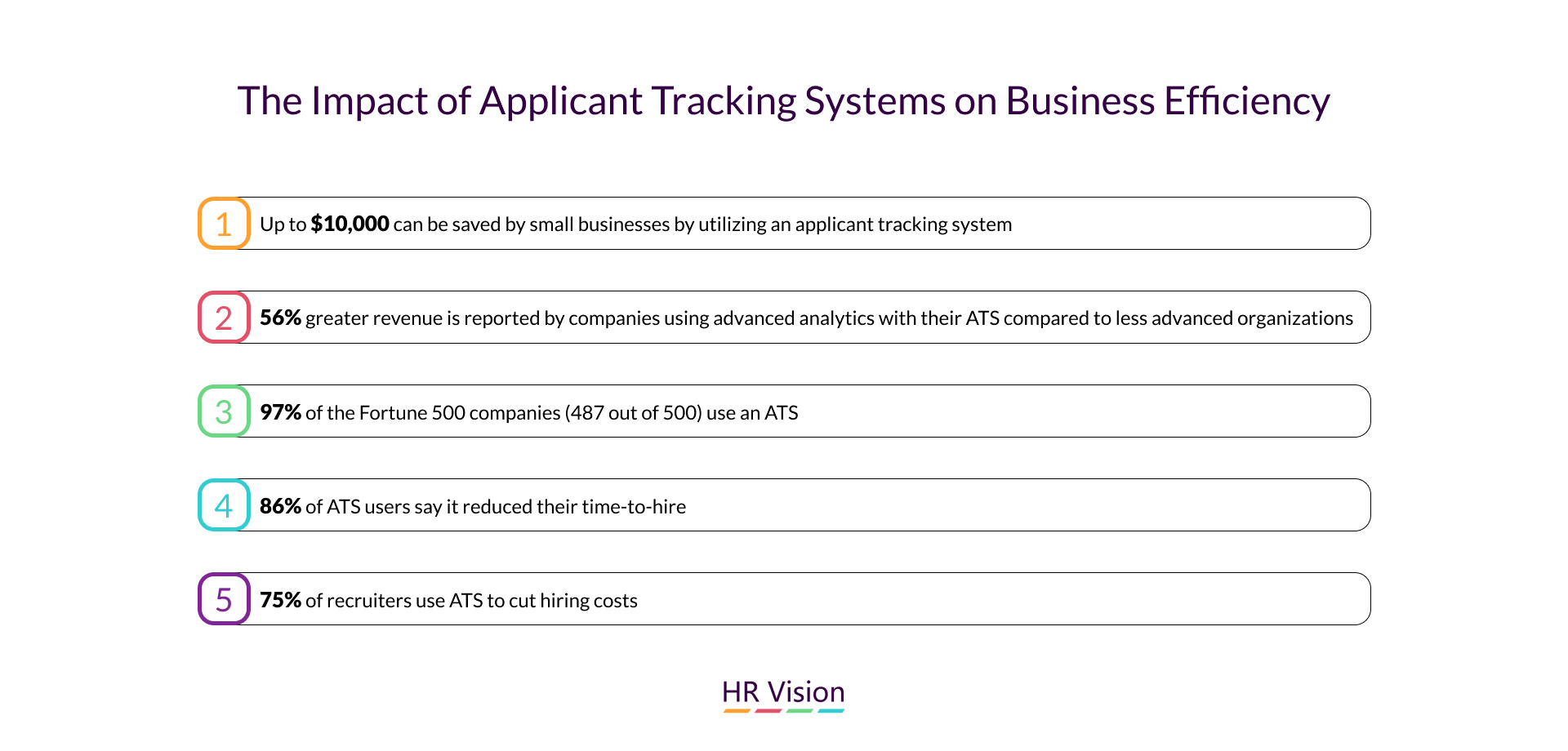
Traditionally, companies rely on external recruitment agencies, which charge a percentage of the hired candidate’s salary. By using an ATS, businesses can reduce their dependence on these agencies. ATS systems allow businesses to build their own candidate pipelines and manage recruitment in-house, cutting out the middleman and the associated costs.
An ATS accelerates the recruitment process by automating steps like resume screening, job posting, and interview scheduling. This reduces the time it takes to fill vacancies, meaning companies don’t lose out on productivity. The quicker the hire, the less revenue is lost due to unfilled positions. Reducing time-to-hire can also cut down on the costs of temporary workers or overtime pay.
Leveraging AI to Improve Hiring Decisions and Efficiency
Artificial Intelligence (AI) is transforming the recruitment landscape by automating repetitive tasks and enhancing decision-making processes. AI-powered tools analyze resumes at scale, identifying top candidates by matching keywords, skills, experience, and qualifications to job descriptions. This automation not only speeds up the hiring process but also ensures greater accuracy in identifying high-potential candidates.
Additionally, AI-driven chatbots are revolutionizing candidate interactions by answering frequently asked questions, gathering preliminary information, and even scheduling interviews. This creates a seamless and responsive recruitment experience while significantly reducing the manual workload for HR teams. The growing confidence in AI’s potential is reflected in the fact that 66% of CEOs believe AI can significantly boost HR performance, underscoring its ability to streamline processes and improve decision-making at all levels.
How AI Cuts Costs
Traditional HR processes, such as screening resumes, responding to candidate inquiries, and scheduling interviews, are often time-consuming and labor-intensive. AI drastically reduces this workload, enabling HR teams to dedicate more time to strategic activities like workforce planning, diversity initiatives, and employee engagement. This is especially important considering that 45% of businesses spend nearly a day a week on administrative HR issues, a burden that AI can largely eliminate.
Moreover, AI enhances employee-job alignment by matching candidates more effectively to roles. This improved accuracy not only leads to better hires but also reduces turnover rates. Lower turnover directly translates to cost savings by minimizing expenses related to rehiring, retraining, and the loss of productivity that comes with frequent staff changes. AI’s ability to predict candidate success and retention further amplifies its value, helping organizations secure long-term cost-efficiency in their HR operations.
Automating Administrative HR Tasks to Save Time and Money
HR departments often manage a variety of repetitive tasks that can be automated for increased efficiency and cost savings.
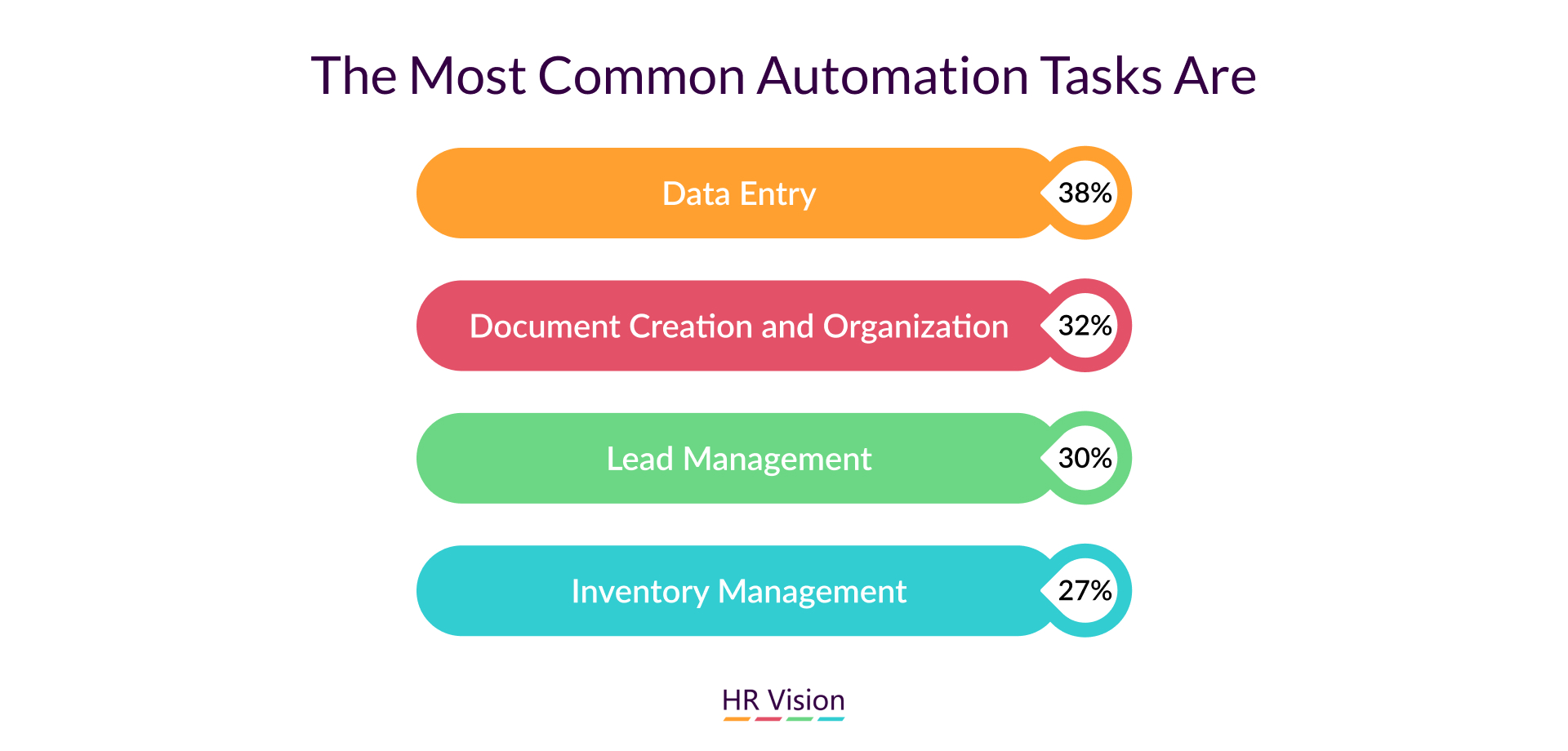
The most commonly automated tasks include:
- • Data entry (38%): Managing employee information, benefits enrollment, and payroll details.
- • Document creation and organization (32%): Automating the generation and storage of contracts, onboarding documents, and compliance forms.
- • Lead management (30%): Streamlining candidate tracking and communication during the recruitment process.
- • Inventory management (27%): For companies with physical assets or equipment issued to employees, automating tracking ensures better control and accountability.
Cost-Saving Opportunities and Efficiency Gains
Automating administrative HR tasks can significantly reduce labor costs by eliminating the need for HR staff to perform repetitive and time-consuming duties. Tasks like payroll processing, benefits administration, and employee record management can be handled by automated systems, freeing up HR professionals to focus on more strategic activities. Automation also minimizes human errors, lowering the risk of costly mistakes such as miscalculations in payroll or benefits, which could otherwise result in legal issues or employee dissatisfaction.
Efficiency gains from automation are profound. Companies that integrate automation into their HR functions are 6 times more likely to achieve revenue growth exceeding 15% compared to those with less automation. As HR automation and AI integration increase by 40%, the time spent on administrative tasks is expected to be cut by half. This reduction in manual work not only increases overall efficiency but also enables HR teams to focus on higher-value tasks such as talent development, employee engagement, and organizational planning. Time saved through automation can be reinvested in strategic HR functions, ultimately improving the bottom line and contributing to a more effective HR department.
Conclusion
The integration of HR technology, including ATS, AI, and automation tools, is no longer a luxury but a necessity for businesses looking to optimize costs and enhance efficiency. These technologies streamline recruitment, automate repetitive administrative tasks, and provide data-driven insights to support better decision-making. From reducing time-to-hire with ATS to leveraging AI for smarter hiring and improving employee retention, HR tech offers tangible cost-saving opportunities across the board.
Companies that embrace automation and AI are not only cutting operational costs but also empowering their HR teams to focus on strategic initiatives that drive growth and employee satisfaction. With highly automated organizations being significantly more likely to achieve revenue growth, adopting HR technology is an investment in both immediate savings and long-term success.
Want to explore how HR technology can transform your organization’s efficiency and cost-effectiveness? Join us at HR Vision, where top HR leaders will share insights into the latest HR tech trends, including AI, automation, and analytics.