The landscape of work is constantly evolving. New technologies emerge, skill requirements shift, and businesses need to adapt to stay competitive. In recognition of this, U.S. corporations invest heavily in employee development, spending nearly $180 billion annually on formal training and talent development, with a significant portion ($28 billion) specifically allocated for tuition reimbursement. This focus on continuous learning reflects a crucial understanding: in today’s dynamic environment, a skilled and adaptable workforce is a company’s most valuable asset.
What Is the Skill Development Program?
A skill development program is a strategic initiative designed to equip employees with the knowledge, abilities, and competencies needed to succeed in their current roles and prepare them for future opportunities within the organization. It’s a continuous process that adapts to changing industry demands and individual employee needs.
Out-of-Hours Learning Loses Favor
While the traditional model often places the burden of skill development on employees’ personal time, the tide is turning. Research shows that employees increasingly value work-life balance, and expecting them to dedicate significant personal hours to learning can lead to burnout and resentment.
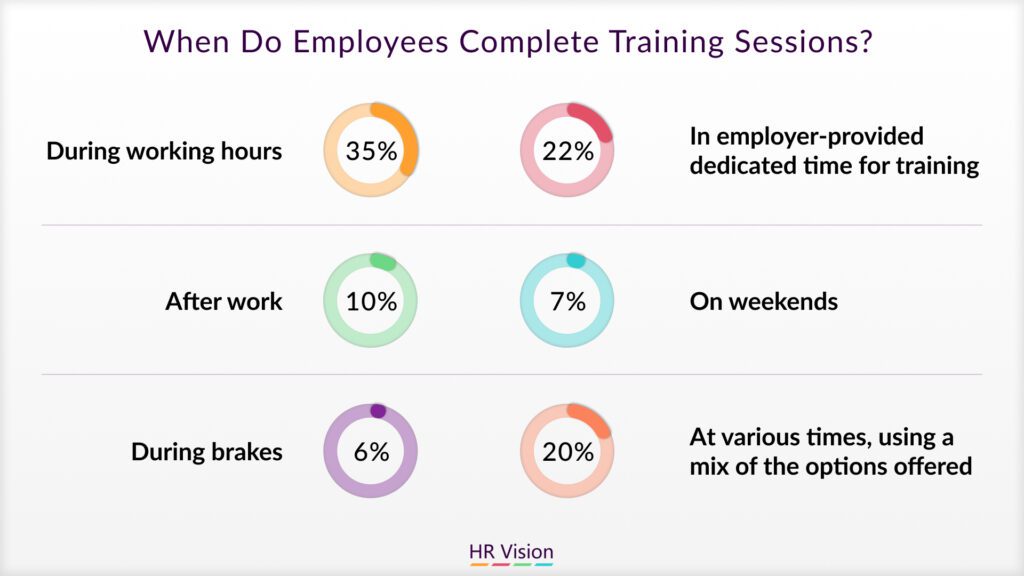
The most common time for employees to complete training sessions is actually during working hours. A recent study by TalentLMS x Workable found that 22% of employees have dedicated slots set aside by their employers specifically for skill development programs. This shift towards in-work learning reflects a growing understanding from companies that investing in employee development during work hours ultimately benefits everyone.
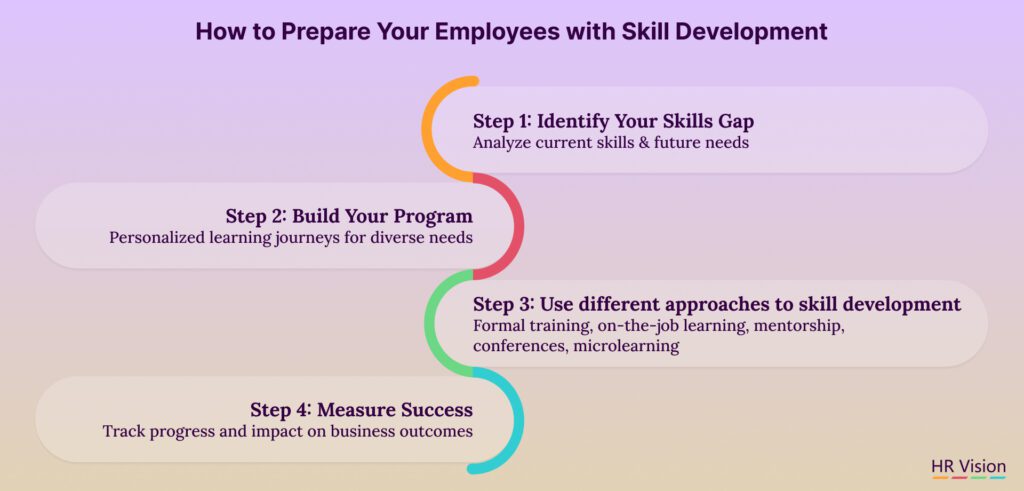
Step 1: Why is a Skills Gap Analysis Important?
Building a strong skill development program hinges on understanding the current skillset of your workforce and the skills your organization will need in the future. This is where conducting a skills gap analysis becomes crucial.
A skills gap analysis is a systematic process that identifies the difference between the skills employees currently possess and the skills they need to perform their jobs effectively and achieve organizational goals. By identifying and addressing skill gaps, you can equip employees with the tools they need to succeed, leading to increased job satisfaction and reduced turnover. A skilled workforce allows your organization to adapt to changing market demands and stay ahead of the competition.
A McKinsey Global Survey revealed that a staggering 87% of respondents agree they are already experiencing skills gaps now or expect them within a few years. Moreover, for 64% of L&D professionals, filling the skills gap through reskilling the current workforce is a priority, highlighting the importance of understanding your existing talent pool.
Methods for Identifying Skills Needs
There are several methods for identifying current employee skills and future organizational needs:
- Skills Assessments: Formal assessments can gauge employee proficiency in specific areas. This could involve written tests, simulations, or hands-on exercises.
- Performance Reviews: Regular performance reviews provide an opportunity to discuss skill development needs with employees and identify areas for improvement.
- Employee Surveys: Conducting surveys allows employees to self-report their skills and interests, providing valuable insights into their development aspirations.
- Job Descriptions: Review and update job descriptions to reflect the current skills required for each role. This helps identify any gaps between existing skills and required skills.
Step 2: Building a Skill Development Program
Effective skill development programs go beyond a one-size-fits-all approach. Instead, they function as personalized learning journeys designed to address the unique needs of your workforce.
Develop a Learning Plan
The foundation of any successful program is a well-defined learning plan. This plan should be tailored to the identified skills gaps and individual employee aspirations.
- Set SMART Objectives: Clearly define Specific, Measurable, Attainable, Relevant, and Time-bound objectives for both the program and individual learning paths.
Here’s an Example: “Increase the proficiency of all marketing team members in social media marketing by 20% within the next quarter, as measured by industry-standard social media certification exams.”
- Personalized Learning Paths: Employees come with diverse backgrounds, learning styles, and career aspirations. Develop individualized learning paths that leverage a variety of learning methods to cater to these differences.
For instance: An employee who prefers hands-on learning might benefit from on-the-job mentorship, while someone who thrives on self-paced learning might excel with online courses.
This initial planning stage sets the stage for a program that is engaging, effective, and addresses the specific needs of your workforce.
Step 3: Components of a Skill Development Program
Effective skill development leverages a variety of learning methods to cater to diverse needs and preferences. A blended learning approach strategically combines:
- Formal Training: This includes instructor-led workshops, online courses, and certificate programs that provide in-depth knowledge and skills in specific areas.
Online learning offers a flexible and accessible option for employees to learn at their own pace and convenience. Platforms like Learning Management Systems (LMS) and Massive Open Online Courses (MOOCs) provide a vast library of courses on various topics.
- On-the-Job Learning: This involves learning by doing, where employees acquire new skills through mentorship from experienced colleagues, job shadowing, and participation in real-world projects.
- Mentorship: Matching employees with experienced mentors can provide valuable guidance, and support, and accelerate skill development.
- Conferences and Events: Industry conferences, workshops, and webinars offer opportunities for professional development, networking, and staying updated on industry trends.
- Microlearning: Short, bite-sized learning modules allow employees to learn new skills efficiently and conveniently throughout the workday.
Step 4: Track Progress and Measure Impact
Monitoring progress and measuring the program’s impact is essential for ensuring its effectiveness. Here are some strategies to consider:
- Utilize Learning Management Systems (LMS): Implement an LMS to track employee progress, manage learning materials, and facilitate communication. This allows you to monitor completion rates and identify areas where additional support may be needed.
- Pre- and Post-Assessments: Conducting assessments before and after training programs helps gauge the effectiveness of the program in improving employee skills and knowledge.
- Performance Reviews and Feedback: Integrate skill development goals and progress into performance reviews and feedback discussions. Employee feedback can further inform and refine the program over time.
Conclusion
Investing in a well-designed skill development program is not just an expense, it’s a strategic investment in your organization’s future success.
Effective skill development programs go beyond generic training modules. They are personalized learning journeys that cater to individual needs, leverage a variety of learning methods, and foster a culture of continuous learning. By implementing the strategies outlined in this article, you can create a program that equips your employees with the knowledge, abilities, and competencies needed to excel in their roles today and prepare them for the challenges and opportunities of tomorrow.
The benefits of a robust skill development program extend beyond individual employees. Improved employee skills translate to enhanced productivity, increased innovation, and a competitive edge in the marketplace.