
Introduction
Effective performance management is a key to organizational success. It offers a structured approach to maximize employee potential, boost productivity, and align individual goals with the company’s objectives. In the competitive business environment, the skill to manage and optimize employee performance is essential for achieving sustainable growth and maintaining a competitive edge. Performance management isn’t just about evaluation, it’s an ongoing process that empowers employees, encourages continuous improvement, and plays a vital role in the overall success of the organization. Explore good management practices to enhance your organization’s performance and foster a culture of continuous improvement.
What Is Performance Management?
Performance management is a thorough and systematic approach that includes various strategies, processes, and tools to maximize individual and organizational performance. It continuously aligns employee activities with organizational goals, creating an environment of continuous improvement, development, and accountability. Unlike the traditional once-a-year performance review, modern performance management is an ongoing, dynamic process. It engages employees in goal-setting, offers regular feedback, and facilitates professional development.
Despite the intention to boost organizational performance, the reality of performance management systems looks different. A 2014 Deloitte report reveals that a significant 58% of companies find these systems ineffective and a waste of time. Managers share this sentiment, with a 2016 study by Willis Towers Watson showing that 45% don’t see value in the review systems they use.
The problem goes further, as these systems often fail to recognize high performers. A 2015 study by the Society for Human Resource Management (SHRM) found that two-thirds of performance management systems struggle to identify and acknowledge employees who excel. These stats highlight that the traditional approach to performance management, focusing on annual reviews, is under criticism and skepticism. There’s a clear need for a more dynamic and engaging process, involving continuous goal-setting, regular feedback, and professional development opportunities for employees. In today’s rapidly evolving workplace, effective management practices are crucial for fostering employee growth and improving overall organizational performance.
Key Elements and Components of an Effective Performance Management System
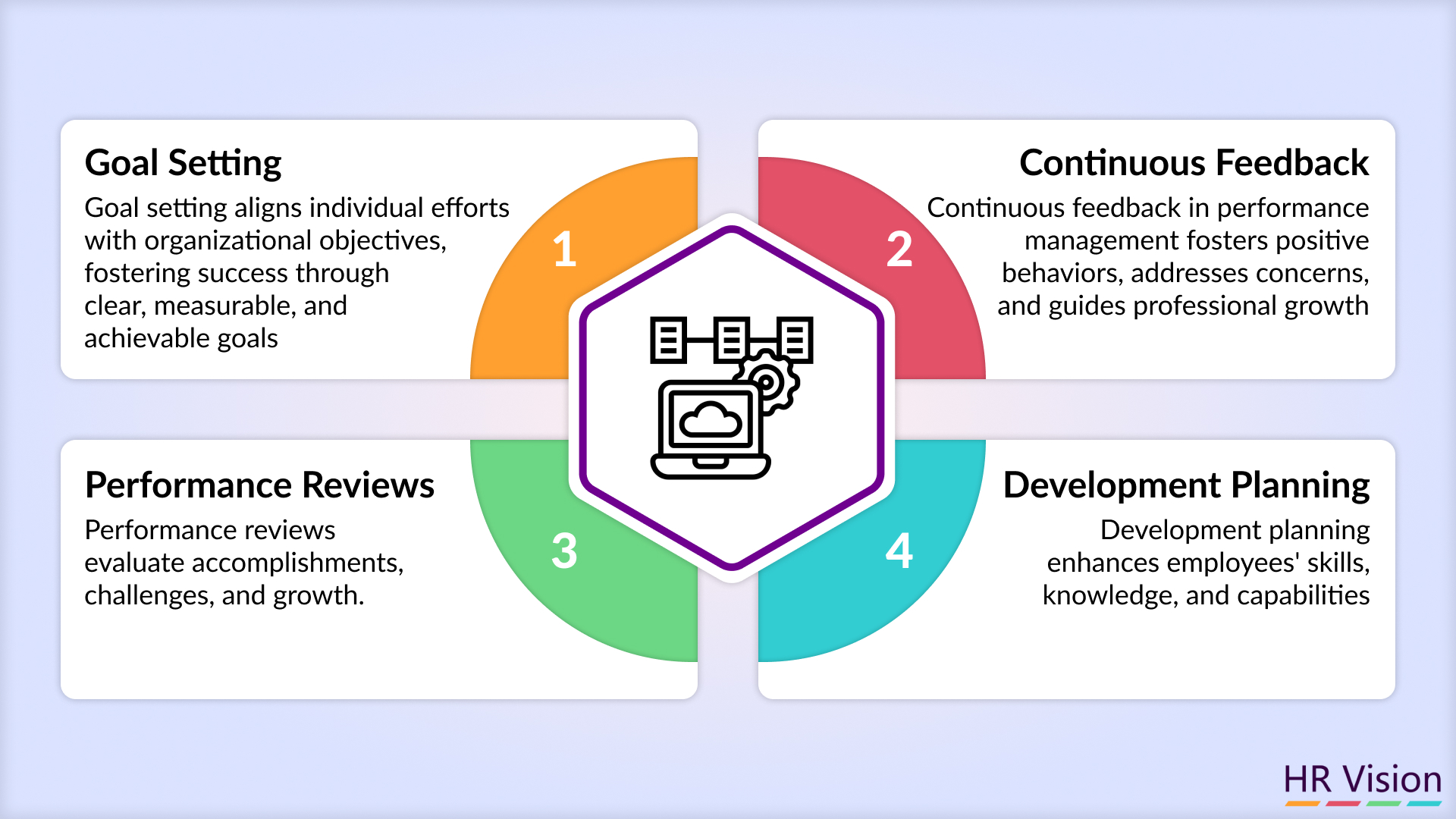
1. Goal Setting
Goal setting is a key part of performance management, setting the stage for aligning individual efforts with organizational objectives. Clear, measurable, and achievable goals give employees a roadmap for success. HR professionals play a vital role in guiding the goal-setting process, ensuring that objectives adhere to SMART criteria (Specific, Measurable, Achievable, Relevant, and Time-bound), and contributing to the overall success of the organization through effective management practices.
2. Continuous Feedback
Effective performance management relies on continuous feedback. Providing regular and timely input on an employee’s performance reinforces positive behaviors, addresses concerns promptly, and guides professional growth. HR strategies should aim to create a culture where feedback is constructive and specific and encourages a two-way communication channel between managers and employees.
3. Performance Reviews
Continuous feedback is crucial, but periodic performance reviews offer a structured chance for a thorough evaluation of an employee’s accomplishments, challenges, and growth. HR professionals should create performance review processes that go beyond a simple checklist, promoting meaningful conversations about achievements, areas for improvement, and future goals.
4. Development Planning
Development planning is a proactive performance management approach that aims to improve employees’ skills, knowledge, and capabilities. Effective HR strategies for development planning, a crucial aspect of the performance management process, include identifying training opportunities, mentorship programs, and career pathways.
The Role of HR in Performance Management
HR plays an important role as a strategic partner in linking performance management with organizational goals. Working closely with leadership, HR professionals ensure that performance management strategies, rooted in effective management practices, are seamlessly integrated into the broader business objectives. This strategic alignment creates a unified workforce with a shared commitment to achieving the organization’s mission, fostering a culture where individual performance significantly contributes to collective success.
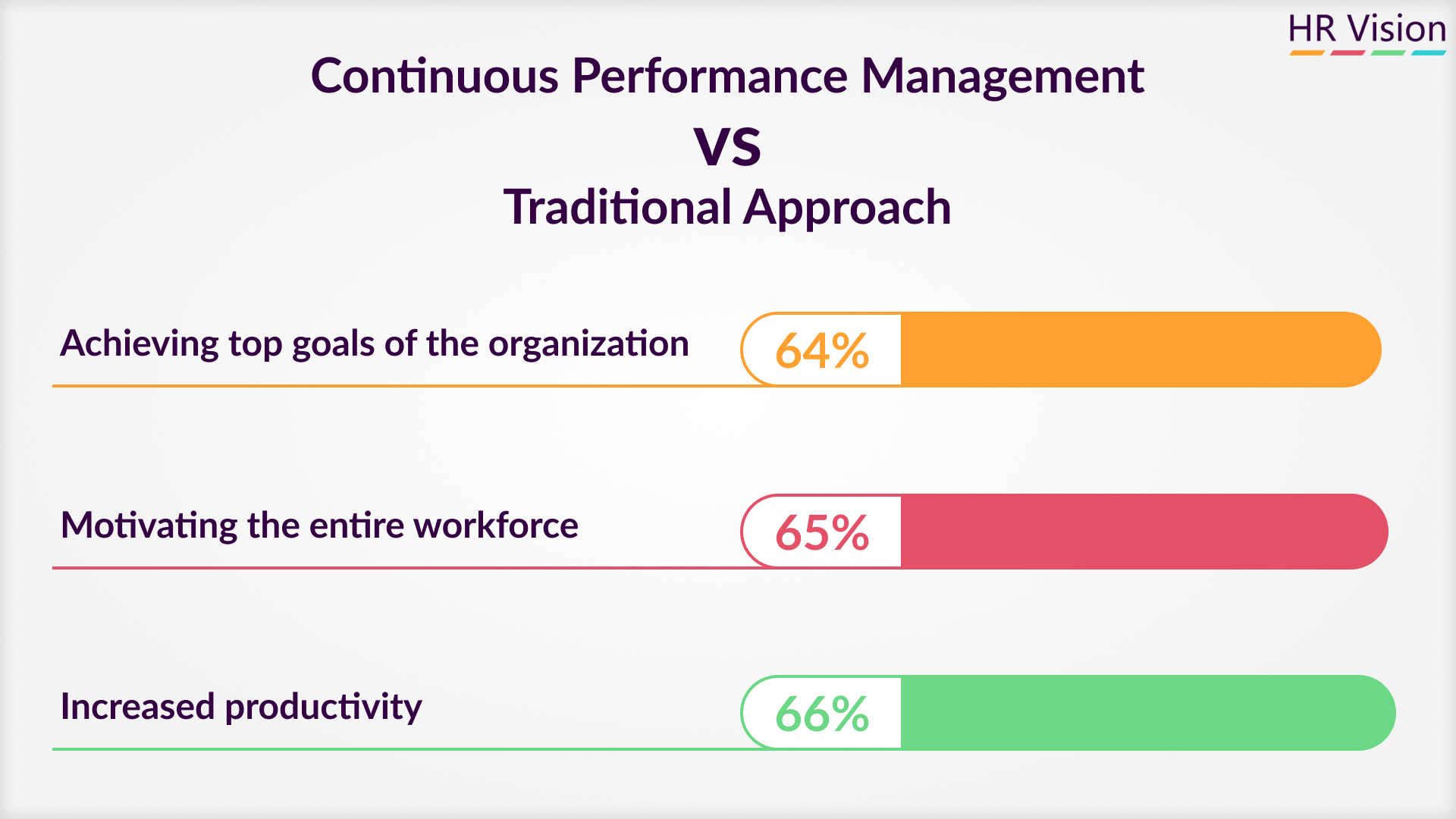
Recent studies show that organizations embracing Continuous Performance Management, instead of a traditional approach, report a substantial increase in productivity, emphasizing the strategic advantage of aligning HR practices with organizational goals.
When it comes to designing and implementing performance management strategies, HR has several crucial responsibilities. HR professionals are responsible for developing and updating policies that guide performance management practices, making sure they align with industry best practices and the organization’s unique needs. Additionally, HR plays a pivotal role in equipping managers with necessary skills through training programs, emphasizing goal-setting, constructive feedback, and development planning.
Performance Management Framework
A Performance Management Framework is a complete system that includes different processes, tools, and methods to monitor, measure, and improve individual and collective performance within an organization. It strives to establish an ongoing dialogue between employees and management, promoting growth, development, and alignment with overarching business objectives. Implementing an effective performance management process is crucial for achieving organizational success and employee satisfaction.
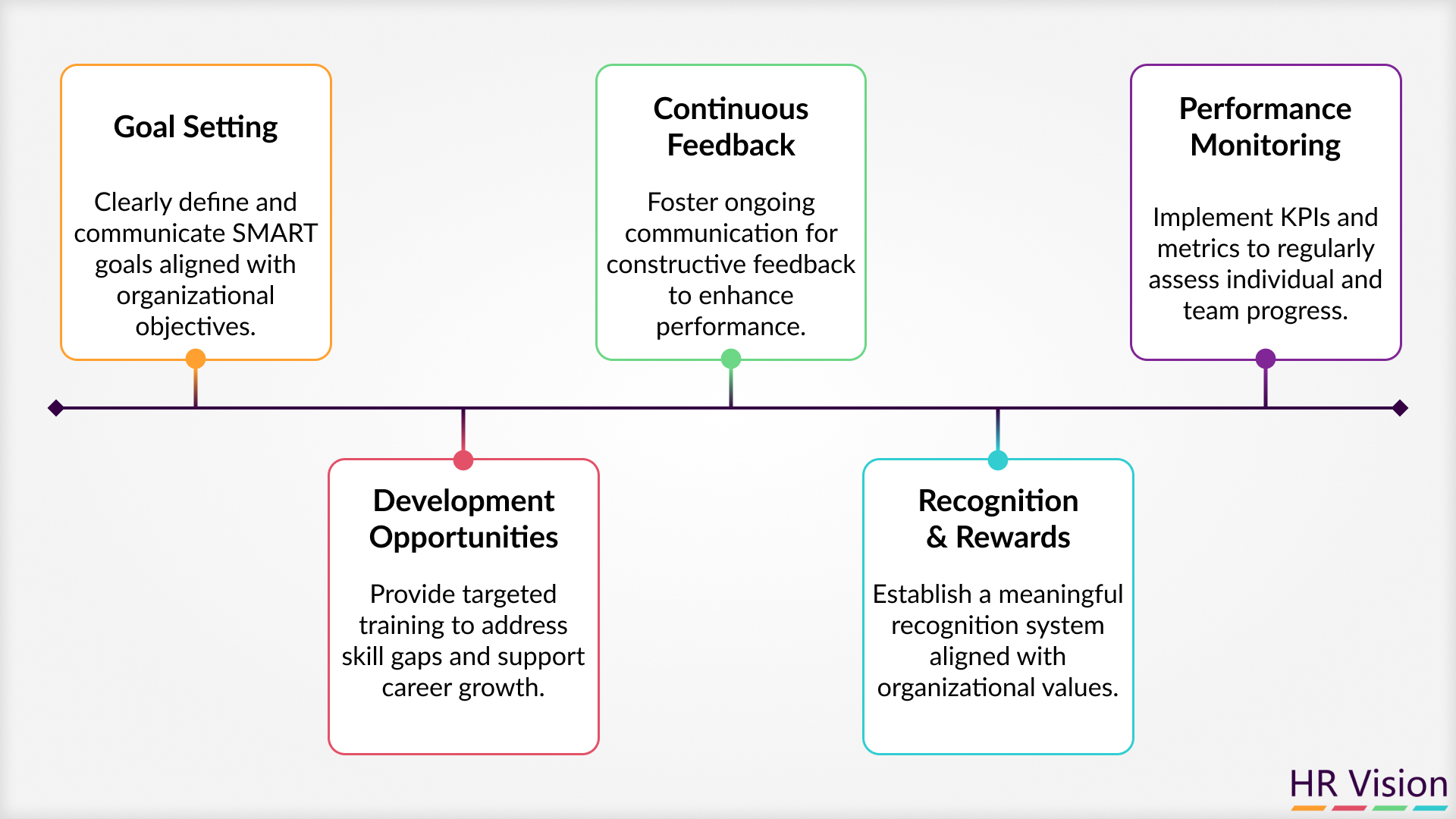
A strong Performance Management Framework (PMF) consists of key components that enhance the effectiveness of an organization’s performance management system. The first critical element is Goal Setting and Alignment, emphasizing the importance of establishing clear, measurable, and attainable goals for employees. Ensuring these goals align with broader organizational objectives is crucial, fostering meaningful contributions from every employee. Regularly revisiting and updating these goals helps adapt to evolving business landscapes, maintaining their relevance over time.
The second component centers around creating a Continuous Feedback Mechanism within the performance management process. Moving away from traditional annual reviews, modern PMFs emphasize frequent, informal check-ins. This real-time feedback loop facilitates prompt recognition of achievements, identifies areas for improvement, and allows for agile and timely course corrections. This promotes a more responsive workforce and an open communication culture.
The third element involves the use of Performance Metrics and Key Performance Indicators (KPIs). By employing these quantifiable measures, organizations can objectively evaluate individual and team performance, identify strengths and weaknesses, and make informed decisions on resource allocation and skill development. Furthermore, a forward-thinking PMF places a strong emphasis on employee Development and Training Opportunities, identifying skill gaps and providing relevant training to enhance individual and organizational competencies. Lastly, Recognition and Rewards form a crucial aspect of any PMF, acknowledging exceptional performance through various programs, which serves as a powerful motivator, reinforcing positive behaviors, and fostering a culture of appreciation and loyalty among employees.
The Importance of Transparent Communication
Clear communication is crucial in performance management, acting as a catalyst for employee engagement and organizational success. According to Clearcompany, a staggering 86% of employees and executives attribute workplace failures to poor collaboration and inefficient communication. Implementing effective performance management practices can significantly enhance communication, fostering a more productive and successful work environment.
Companies and organizations that make transparent communication a priority in their performance management practices reap tangible benefits. Hiredna’s (2020) research reveals that entities with higher-than-average levels of employee engagement report 27% higher earnings and 38% higher productivity. These statistics underline the direct connection between effective communication, employee engagement, and the overall financial success of an organization. Prioritizing transparent communication channels allows HR professionals to play a significant role in creating a workplace culture where employees are engaged, motivated, and actively contribute to the organization’s bottom line.
Conclusion
As workplaces change, HR strategies need to be flexible and adaptable. Performance management is always changing, so HR should always try to improve. HR professionals should check if their strategies work, get feedback from employees, and be ready to change as the organization needs. This makes HR a key part of the organization’s success, helping the workforce do better, grow, and stay successful.
Good performance management practices is not a one-time thing but an ongoing effort to do well. With HR leading the way, organizations can handle the challenges of the modern workplace. This creates a culture where employees do well, contribute, and help the organization stay successful.
Ready to revolutionize your HR strategies for effective performance management? Join us at HR Vision and explore innovative solutions for talent and recruitment to stay ahead in today’s competitive landscape.