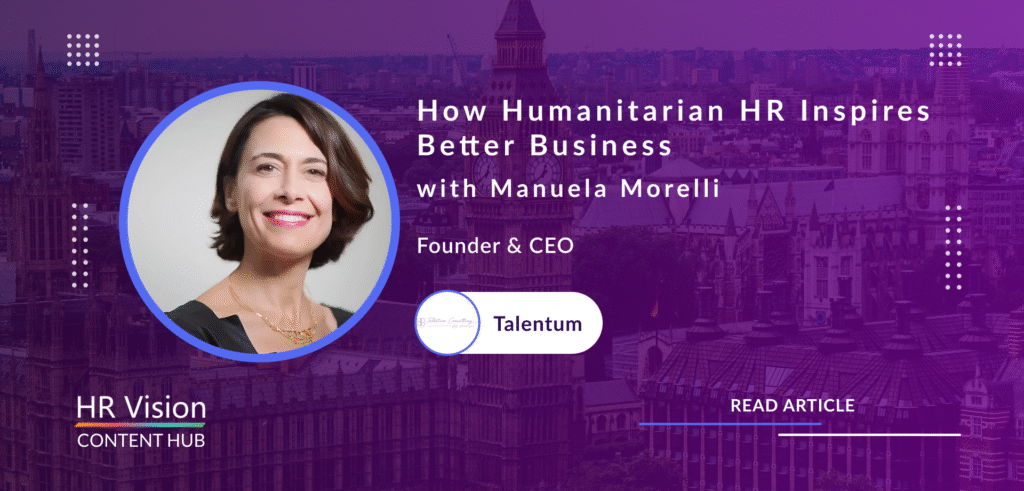
- What are the most transferable lessons from humanitarian HR that for-profit organizations should urgently adopt?
Humanitarian HR has a unique ability to operate in uncertainty while staying deeply anchored in values. For-profit organizations can learn to prioritize people-centered leadership, resilience in volatile environments, and mission-driven recruitment. The humanitarian sector also models how to make ethically grounded decisions under pressure—something every sector can benefit from.
- You’ve led HR functions across three continents and in multiple languages. How do you build culturally inclusive talent strategies that work both globally and locally?
It’s about creating a unifying framework that embraces local voices. I start by listening: understanding cultural nuances, leadership expectations, and how people experience inclusion. Then I co-design strategies that balance global standards with local ownership—ensuring relevance and buy-in at every level.
- You’ve described talent development as the core of HR management. What practical advice would you offer HR leaders looking to better align learning and performance with their business goals?
Begin by defining the critical capabilities your organization needs to thrive. Then design learning that is embedded in work—experiential, measurable, and tightly linked to performance expectations. Ensure that performance conversations go beyond metrics and support continuous development. Growth should be a daily part of how people work.
- As a certified coach and career counsellor, working especially with youth and mid-career professionals, what’s one thing organizations get wrong about supporting career transitions—and how can they fix it?
Too often, organizations wait until employees are disengaged before offering support. Career development should be integrated into the employee journey from the start. The solution? Normalize career conversations, offer coaching proactively, and make internal mobility real—not just aspirational.
- How do you integrate disciplines like pedagogy, neuroscience, or NLP into HR practice in ways that make a tangible impact on individual growth?
These disciplines help us understand how people truly learn and change. For instance, neuroscience teaches us that feedback must be psychologically safe to be effective. Pedagogy helps us design learning journeys that are progressive and sticky. NLP provides tools to reframe limiting beliefs. The result: HR practices that are human-centered, not just process-driven.
- You’ve said that “people are at the center of everything we do.” How can HR leaders ensure their processes don’t just serve the business—but truly serve the people within it?
By designing with empathy. Every HR policy or process should be tested by asking: How will this feel to the person experiencing it? Serving people means simplifying systems, ensuring fairness, listening to feedback, and holding ourselves accountable to values—not just KPIs.
- You’re passionate about guiding young people and professionals through career changes. What emerging generational trends are reshaping how HR should approach career development and retention?
Younger professionals prioritize purpose, flexibility, and growth. They are less loyal to hierarchy and more invested in meaningful impact. HR must respond by offering agile career paths, mentoring communities, and values-driven leadership. Career development today is about continuous evolution, not climbing a static ladder.
- What would be your single most important piece of advice to the next generation of HR leaders hoping to drive both business and social change?
Lead with integrity. The most impactful HR leaders use their role to challenge the status quo, center people in every decision, and push for systemic change. You can—and should—be a strategic partner and a human advocate. That’s how real impact happens.
Ready to stay ahead in the ever-changing world of HR? Join us at HR Vision, where top HR leaders gather to explore the future of work, HR trends, and the power of HR analytics and technology.