What Is Corporate Social Responsibility (CSR)?
Corporate Social Responsibility (CSR) is a business concept that emphasizes a company’s responsibility to society and the environment. As defined by the United Nations Industrial Development Organization (UNIDO), CSR focuses on integrating social and environmental considerations into a company’s operations and interactions with stakeholders. This includes balancing economic success with social responsibility and environmental stewardship, often referred to as the “Triple Bottom Line Approach.”
It’s important to distinguish CSR from simple charity or philanthropy. While charitable giving has value, CSR is a more strategic approach that considers a company’s entire impact and integrates social responsibility throughout its operations.
Why Integrate CSR into HR?
Enhancing Employee Engagement and Motivation Through CSR
Corporate Social Responsibility (CSR) initiatives are no longer solely focused on external impact. Forward-thinking companies are recognizing the significant internal benefits of integrating CSR principles into their HR practices. This strategic approach fosters a work environment that cultivates a more engaged and motivated workforce.
Studies have shown a 13% increase in employee engagement at companies with high levels of CSR. This translates to attracting individuals who not only possess the necessary skills but also deeply connect with the company’s values and mission. These purpose-driven employees are more likely to be highly engaged, contributing to a stronger team dynamic and reduced turnover rates.
Employees who perceive their work as contributing to a cause beyond mere profit generation experience heightened job satisfaction and increased motivation. For instance, research indicates that 88% of Millennials report a greater sense of fulfillment when presented with opportunities to participate in CSR initiatives offered by their employers. This sense of purpose translates to a more positive and productive work environment, ultimately leading to reduced employee turnover and a more engaged overall workforce.
Building a Strong Employer Brand Through Corporate Social Responsibility
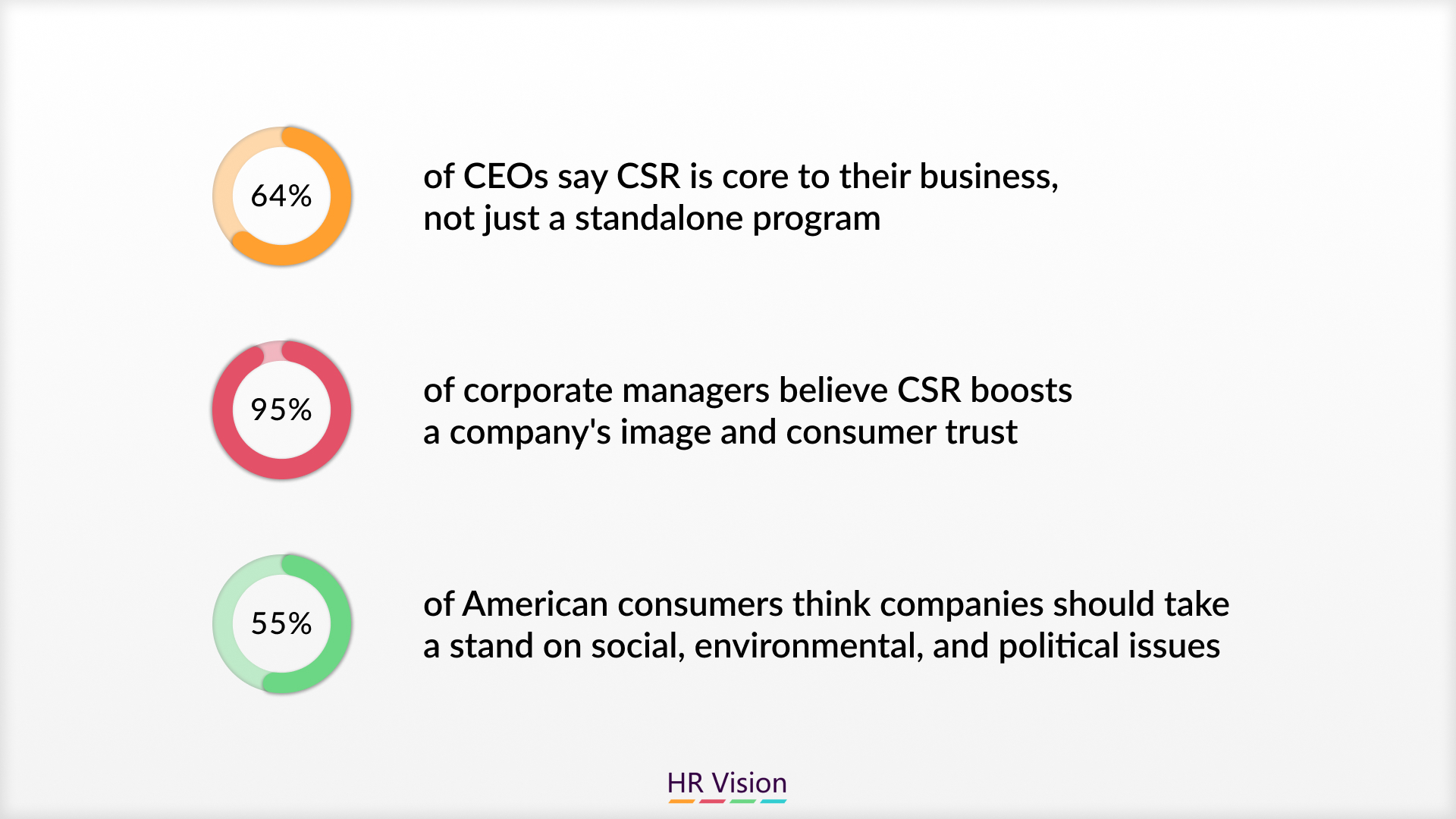
Integrating CSR into HR practices directly contributes to building a positive employer brand by appealing to both potential employees and consumers. Candidates increasingly seek out companies whose values align with their own. Implementing CSR initiatives demonstrates a company’s commitment to social and environmental responsibility, making it a more desirable employer in the eyes of socially conscious job seekers. Over 1,200 companies had publicly committed to science-based climate initiatives by the end of 2020, reflecting a growing trend towards sustainable practices. This commitment not only showcases a company’s dedication to environmental stewardship but also resonates with potential employees looking for meaningful work that aligns with their personal values.Consumers today are increasingly making purchasing decisions based on a company’s social and environmental impact. According to recent surveys, 95% of corporate managers believe that CSR activities create a positive image and boost consumer trust. This trust translates into consumer loyalty, which is crucial for long-term business success. A strong employer brand, built upon a foundation of CSR, attracts not only top talent but also strengthens customer loyalty, creating a win-win situation for the organization.
Driving Business Performance
Beyond the benefits for employees and employer branding, integrating CSR into HR practices offers significant advantages for a company’s overall performance.
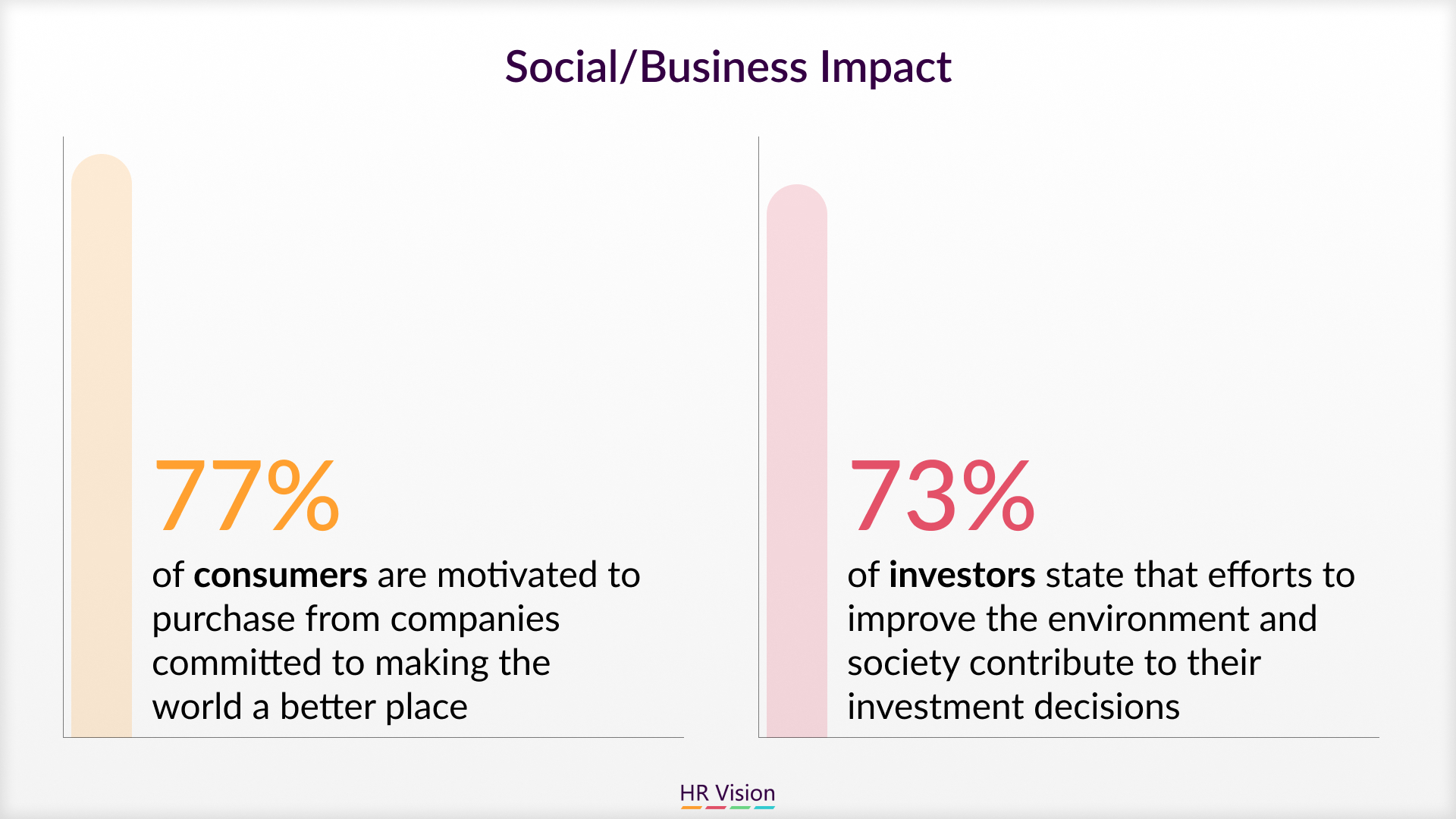
Consumers today are more likely to be loyal to brands that champion social and environmental responsibility. By demonstrating your commitment to ethical practices, you can cultivate trust and loyalty from customers who value sustainability and social good. Studies show that CSR programs can lead to a 4 to 6% increase in market value. This translates to increased profitability as consumers make purchasing decisions based on a company’s values and commitment to positive change.
Strong CSR practices go beyond reputation building; they minimize potential risks associated with unethical labor practices or environmental damage. By fostering ethical and sustainable operations, a company proactively avoids costly legal issues and reputational crises. Additionally, research indicates that 58% of organizations with a strong sense of purpose experienced significant growth (10% or more) in the past three years. This demonstrates a clear link between CSR, employee motivation, and overall business success. Integrating CSR into HR practices allows a company to cultivate a purpose-driven workforce that contributes to sustainable growth and profitability.
How HR Can Integrate CSR into Practices
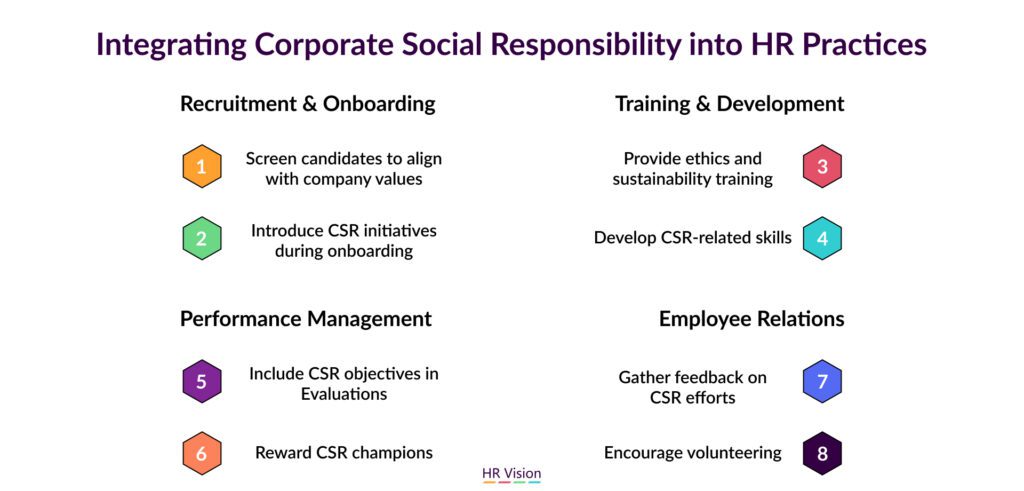
Having established the compelling benefits of integrating CSR into HR practices, let’s now explore specific ways HR departments can achieve this:
Fostering Alignment from the Start
The recruitment and onboarding process offers a prime opportunity to attract and retain talent who resonate with your company’s CSR values.
During the interview process, incorporate questions that assess a candidate’s alignment with your company’s CSR values. This can involve asking about past experiences with volunteering or their understanding of your company’s social and environmental initiatives. Hiring individuals who share your commitment to CSR fosters a more cohesive and purpose-driven team culture from the outset.
The onboarding process provides an excellent platform to introduce new hires to your company’s CSR initiatives. This can include presenting case studies of past projects, outlining volunteer opportunities, and explaining how their role contributes to the company’s overall social and environmental goals.
Empowering Employees as Changemakers
HR plays a crucial role in fostering a culture of continuous learning and development. Integrating CSR principles into training programs empowers employees to become active changemakers within the organization.
Offer training programs that equip employees with the knowledge and skills necessary to contribute to your company’s CSR goals. This could encompass training on ethical decision-making, environmental sustainability practices, or diversity and inclusion initiatives.
When identifying development opportunities for your workforce, consider how these skills can contribute to the company’s CSR objectives. For example, training employees in energy conservation practices can contribute to your sustainability goals, while offering communication workshops can enhance employee engagement with CSR initiatives.
Aligning Individual Goals with Collective Impact
Performance management plays a vital role in driving employee behavior and engagement. By integrating CSR into performance management practices, HR can ensure individual goals contribute to the company’s broader social responsibility objectives.
When setting performance evaluations and objectives, consider incorporating relevant CSR goals for each employee. This may involve setting targets for reducing energy consumption, participating in volunteer activities, or contributing to diversity and inclusion initiatives.
Recognizing and rewarding employees who actively champion CSR initiatives fosters a culture of social responsibility. This can include creating awards for outstanding contributions, offering additional paid time off for volunteering, or providing public recognition for employees who go above and beyond in their CSR efforts.
Building a Collaborative CSR Culture
Creating a strong and sustainable CSR program requires active employee participation. Maintaining open lines of communication allows employees to provide feedback on existing CSR initiatives and suggest new ideas. HR can facilitate regular discussions, surveys, and suggestion boxes to gather valuable employee input. This collaborative approach not only improves existing programs but also fosters a sense of ownership and engagement among employees.
Employees are more likely to be invested in CSR initiatives they can actively participate in. HR can offer volunteer opportunities, organize fundraising events, or create employee-led committees dedicated to specific social or environmental causes. By providing avenues for participation, HR empowers employees to become agents of change within the company and contribute directly to its CSR goals. This not only strengthens the impact of your program but also fosters a sense of purpose and belonging within the workforce.
Conclusion
A strong CSR focus fosters a more engaged and motivated workforce, attracts top talent, and builds a positive employer brand. Furthermore, integrating CSR strengthens the company’s public image and attracts socially conscious consumers, ultimately contributing to increased profitability and sustainable growth.
The role of HR is no longer confined solely to recruitment and payroll. In today’s evolving business landscape, HR professionals play a pivotal role in shaping a company’s culture and driving its social responsibility efforts.
Want to learn from industry leaders and explore cutting-edge strategies for integrating CSR into your HR practices? Join us at HR Vision, the premier conference for HR professionals navigating the future of work.