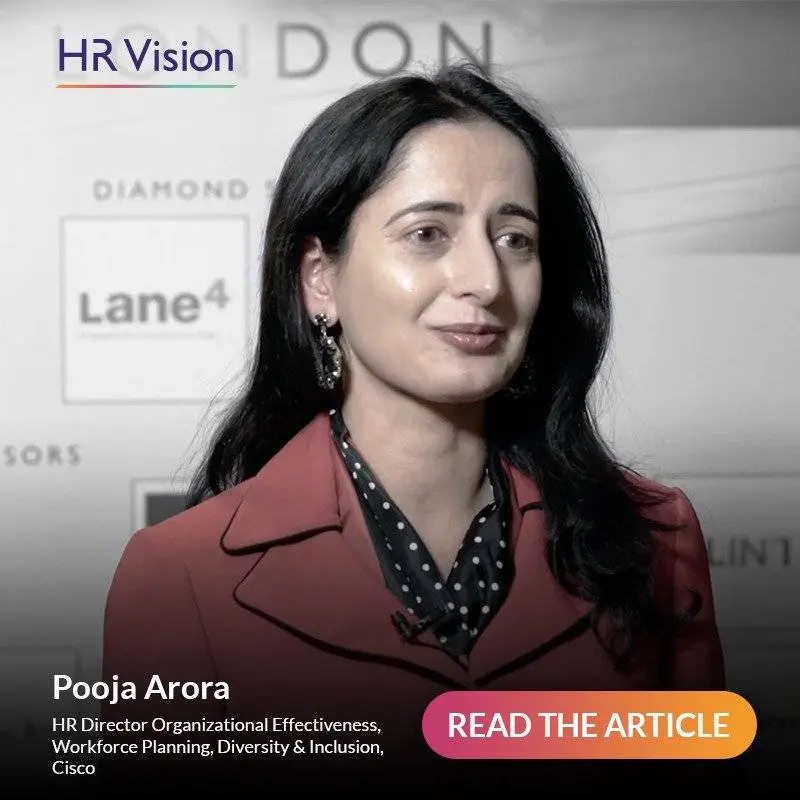
Strategic HR partnership has been the cornerstone of your professional journey in the last 18 years. With your partner-level experience in launching new practices and entering new markets, what is your secret for the designing right strategies and how do you stay up-to-date with new trends?
I wish there were a secret to designing the right strategies. I would say we all try and get it right most of the time, but we should be prepared for getting it wrong every now and then. The ability to fail fast and pivot quickly and re-pivot and be agile is core to developing the right strategy. Intently understanding what the customers need, not what they “say”, but going deeper into the way they feel, experience and do things is key to designing solutions that work. Understanding the problem, framing the right problem to go-after, rapid prototyping, iterative co-design, testing, retesting, are steps that lead to a successful outcome but more important than all of this is quick decision-making with calculated risks in a rapidly evolving market.
A lifelong love for learning is the way to stay up-to-date on trends. Reading, learning, watching TED talks, going to conferences, speaking to experts, trying out things that are not in my core space, meeting and engaging with people different from myself, volunteering at non-profits, all are ways in which I like to expand my skillset and stay up to date on trends.
Q Could you share with us, how far in advance do you typically plan activities for yourself and your employees?
It depends on what type of activity, the outcome we are trying to drive and the audience. Activities such as learning and development, offsites, projects, solutions development all follow different timelines. More formal events require a few months of planning, solution development efforts can take longer, and team building / development efforts can be done in a more agile timeframe. If it’s an activity for the internal team that isn’t high stakes, the planning could be a few weeks in advance, if it’s for other audiences, it’s longer.
Q What is your advice when estimating priorities and assigning them to the right professionals?
When assigning priorities, there has to be a match between skills needed, interest and what’s expected of the role. I try to play people to their strengths or to their areas of interest as I know that’s when they show up at their best. However, there are times when work just needs to get done and most people realize the importance of that. Besides, if your team really has your back and you can create enriching experiences for them, they will follow you and stand by you when the going is fun and when it gets tough.
Q What are some of the challenges that you face most often when it comes to the Organizational Effectiveness, Workforce Planning, Diversity & Inclusion?
Workforce Planning
o The biggest challenge with workforce planning is making the plans “real”, making plans “stick” and making plans “outcome-focused vs. process driven”. Workforce planning must go beyond traditional headcount planning and really focus in on areas, which are likely to move the needle.
o “Real” plans are based on “intelligence”. We use the framework of right people, right locations, right shape and right cost. However, the act of figuring out what is “right”, requires strategic planning, consensus-building and market intelligence. It’s important to provide intelligence on skills, locations, costs and metrics to the business so that decision-making can be based on data and scenario modelling.
o To make the plans “stick”, the business must be held accountable, not for completing the process but driving real change in the people metrics whether it’s right skilling the workforce, investing in targeted locations or improving diverse talent representation.
o “Outcome focused” plans home in on areas where critical workforce or skill transitions are needed. They go much deeper on not just “the what” but “the how” so that we have a plan and a path to get to the desired outcome.
o And lastly, workforce planning needs to be both internal and external. Companies need to invest in developing their internal workforce but also in shaping the external workforce through corporate social responsibility efforts.
Diversity & Inclusion
o Some of the biggest challenges in the D&I space are getting teams to:
▪️ Think bigger and broader about diversity and inclusion, to go beyond just diversity & inclusion and focus on collaboration using digital solutions to scale.
▪️ Focus on full-spectrum diversity, i.e., look at every dimension of diversity- gender, race, ethnicity, orientation, veterans, differently-abled, cultural, socio-economic backgrounds and beyond. Too many organizations look at diversity very narrowly.
▪️ Drive a shift in the “mindset” of leaders and teams so that they can empathize with the lived experience of people different than themselves and take action to increase diverse representation and inclusion.
▪️ Build a conscious culture which is inclusive, where everyone feels, valued and respected. This must be done at all levels of leadership until it gets ingrained at a grassroots level.
Organization Effectiveness
o Organization effectiveness is about getting organizations and teams unstuck so that they can get out of their own way and deliver on uplifting the company’s performance and enriching the employee experience. It’s about crystallizing the brilliance that is already there on the teams, but it’s trapped because the teams are not collaborating effectively. It’s as much about process, design, culture and change as it is about influencing human behavior. Design thinking, lean start-up, business model innovation, agile and other methodologies are key to the organization effectiveness discipline.
o The work involves getting teams to agree on a common vision, a plan to execute the vision and operating norms on how the teams will collaborate and make decisions while fostering the right culture. It gets tricky when teams must work across boundaries, where incentive systems and metrics don’t align to drive collaborative behaviors, in situations where not all parties are convinced that the proposed change is truly needed. It’s in situations like this where the work is most challenging and most rewarding.
Q What’s your approach to the development of the people you manage?
I develop people by 1) Playing them to their strengths, 2) Giving them the space to stretch so that they can truly experience what they are capable of, 3) Empowering them so that they can experience both autonomy and mastery, 4) Channeling them to developmental experiences that can help them grow, such as learning, stretch assignments, shadowing assignments, strategic projects.
I truly believe in focusing and leveraging people’s strengths. As a leader, it’s my job to figure out what each person in uniquely good at, what they are energized by and then let them play to their strengths so that we can operate as one of the best teams. Diversity of thought, opinions, transparency, safety and trust, work-life balance, experimentation, agility and delivering exceptional results are very important to me and I ensure that those are values that we inculcate as a team.
Meet Pooja Arora in person and learn so much more first-hand from her and other senior HR practitioners, talent acquisition experts, and global executives at the TOP HR event of the year – Attend our upcoming HR Vision event – register now!