Now, diversity isn’t just about gender, race, or culture—it also includes age. Organizations are now more multigenerational than ever before, with employees spanning four distinct age groups: Baby Boomers, Generation X, Millennials, and Generation Z. This diversity brings a wide range of skills, experiences, and perspectives, which can significantly benefit organizations if managed effectively.
Generational differences in communication styles, work expectations, and values can also present challenges. Understanding these differences is essential for creating a cohesive and productive work environment. Effective management of a multigenerational workforce ensures that each generation’s strengths are utilized, while potential conflicts are minimized, leading to better collaboration and innovation.
Understanding Generational Differences
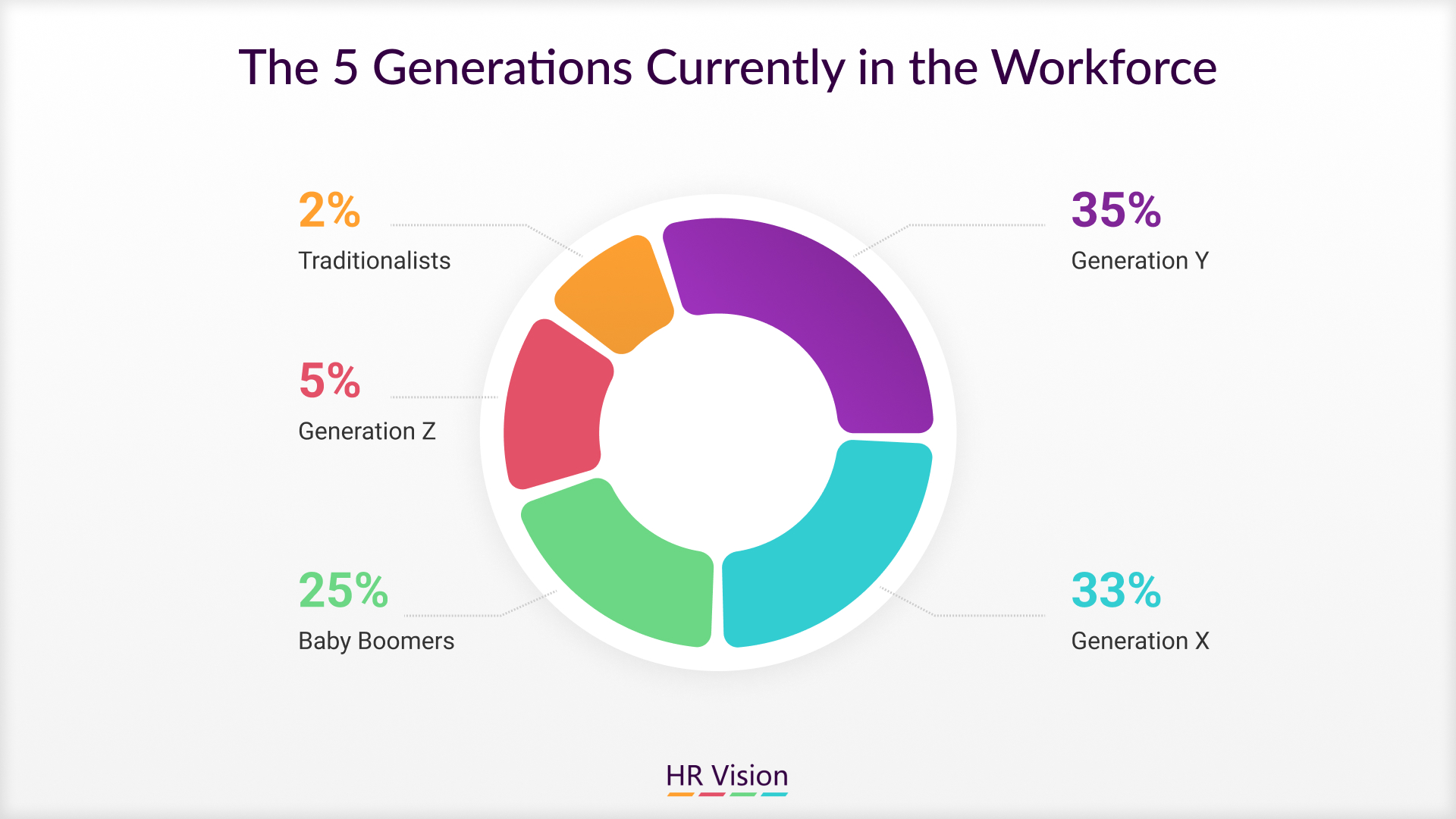
In today’s organizations, five generations coexist, each bringing its own unique set of values, experiences, and working styles. Understanding these generations is essential for managing a diverse and dynamic workforce
- Baby Boomers (1946-1964)
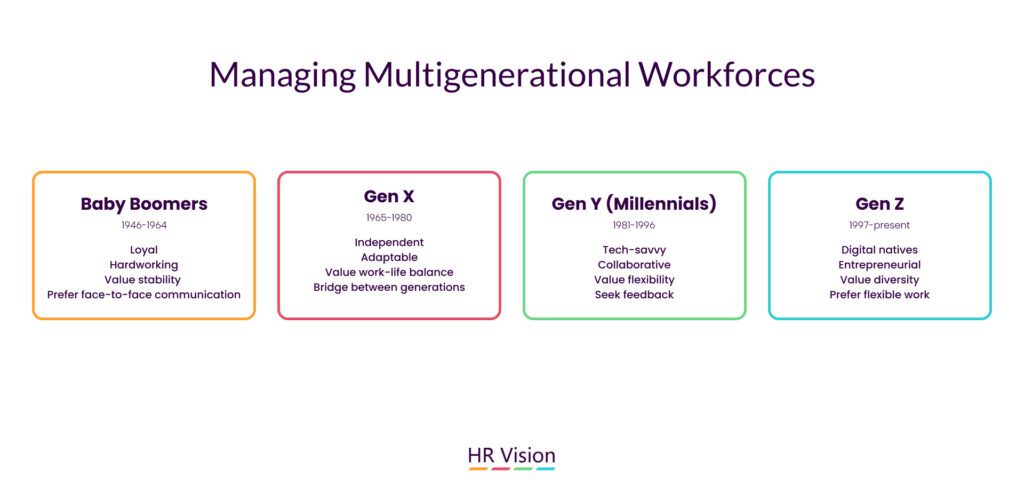
Baby Boomers are often seen as hardworking and loyal, having built their careers in more traditional, hierarchical workplace settings. They value job stability, tend to prefer face-to-face communication, and are known for their strong work ethic. Many Baby Boomers are now in leadership roles and focus on achieving long-term goals.
- Generation X (1965-1980)
Known as the “middle child” of the generations, Generation X is characterized by its adaptability and independence. They entered the workforce during times of economic uncertainty, which shaped their pragmatic approach to work. Gen Xers value work-life balance, and self-sufficiency, and are often seen as the bridge between older and younger generations. They tend to be comfortable with technology but may still appreciate some traditional work processes.
- Millennials (1981-1996)
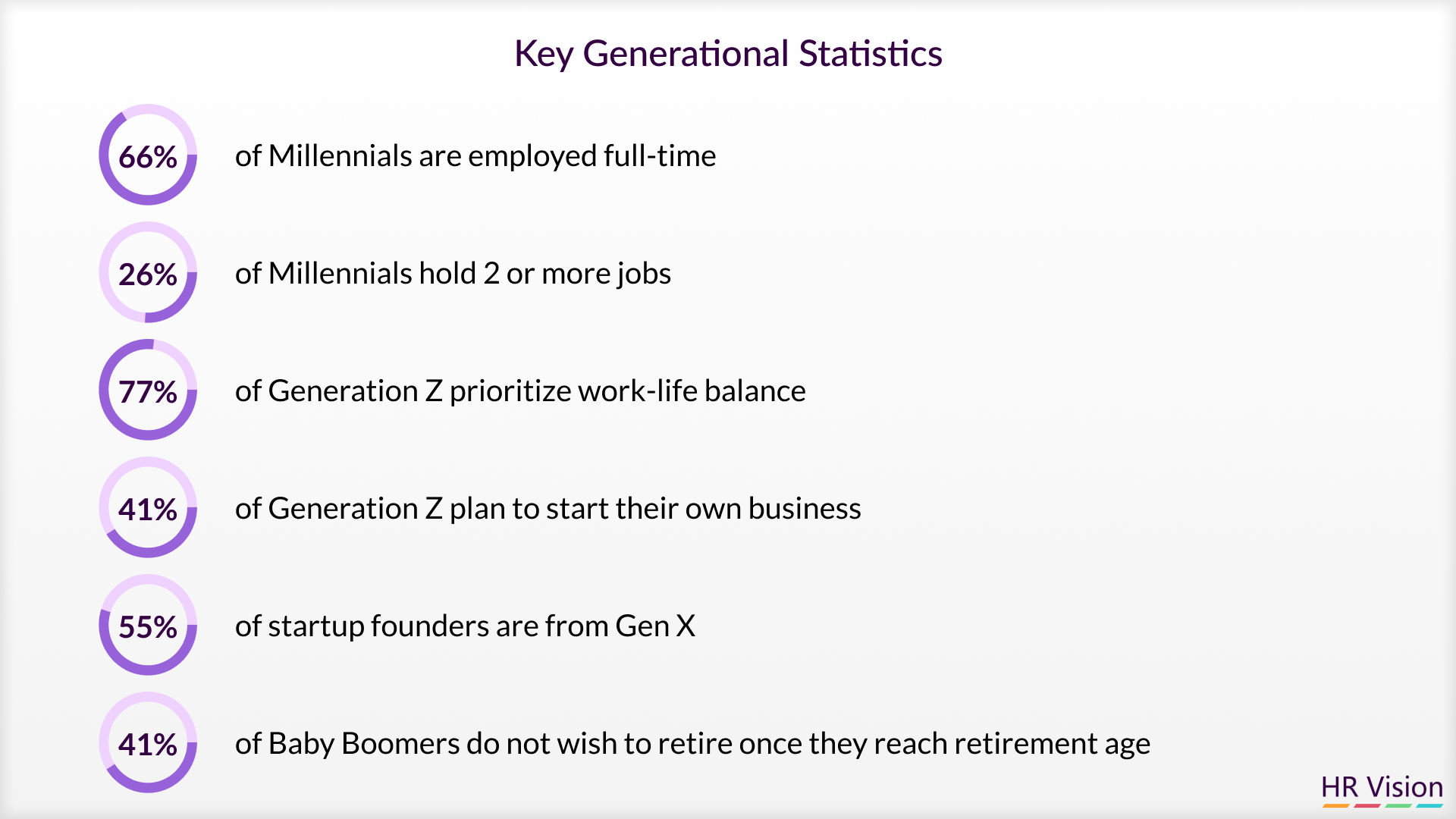
Millennials are the first generation to grow up with technology as a central part of their lives, making them tech-savvy and adaptable. They value flexibility, purpose-driven work, and continuous feedback. Millennials are highly collaborative, enjoy teamwork, and expect a more inclusive and transparent work culture. They often prioritize work-life integration over traditional job security.
- Generation Z (1997-present)
As the youngest group in the workforce, Generation Z is characterized by its digital fluency, having never known a world without the internet. They are entrepreneurial and innovative, and value diversity and social responsibility. Gen Z prefers flexible work arrangements and is motivated by opportunities for growth and personal development. They thrive in environments that prioritize mental health and well-being and expect organizations to be socially conscious.
Each generation brings a unique set of strengths to the workforce. Organizations can better manage generational dynamics and foster a more inclusive and harmonious work environment by understanding their distinct characteristics.
Challenges of Managing a Multigenerational Workforce
Managing a multigenerational workforce comes with its set of challenges. Understanding these challenges is crucial for HR professionals and organizational leaders to foster a harmonious and productive work environment. Here are some key challenges faced:
Communication Style Differences
Different generations often have distinct communication preferences. For instance, Baby Boomers may prefer face-to-face interactions, while Millennials and Generation Z often lean towards digital communication, such as emails and instant messaging. These differing styles can lead to misunderstandings and misinterpretations, impacting collaboration and teamwork.
Varying Expectations Regarding Work-Life Balance
Generational attitudes towards work-life balance vary significantly. Baby Boomers might prioritize job stability and long hours, while Millennials and Generation Z often seek flexibility and a balance between their professional and personal lives. These differing expectations can create tension, as younger employees may perceive older colleagues as resistant to change, while older employees may view younger ones as lacking commitment.
Diverse Views on Technology and Innovation
Each generation has a unique relationship with technology. Baby Boomers may be more cautious and skeptical about adopting new tools, while Millennials and Generation Z are typically more tech-savvy and embrace innovation. This gap can result in friction over the adoption of new systems and processes, leading to challenges in collaboration and productivity.
Conflicting Leadership Styles and Preferences
Leadership preferences can also differ across generations. While Baby Boomers may value a more hierarchical and directive leadership style, Millennials and Generation Z often prefer collaborative and inclusive approaches. This divergence can lead to conflicts in management strategies, making it essential for leaders to adapt their styles to accommodate the diverse expectations of their teams.
Strategies for Managing a Multigenerational Workforce
To effectively manage a multigenerational workforce, organizations can implement several strategies that foster collaboration, understanding, and inclusivity. Here are some key approaches:
- Fostering Open Communication
Encouraging open dialogue between generations is essential for building trust and understanding. Organizations can facilitate regular meetings, focus groups, or informal gatherings where employees from different age groups can share their perspectives and experiences. Implementing feedback mechanisms, such as anonymous surveys, allows employees to voice their concerns and suggestions, creating a more inclusive atmosphere.
- Creating a Flexible Work Environment
Tailoring work policies to accommodate the diverse needs of employees can significantly enhance job satisfaction and retention. Offering flexible work arrangements—such as remote work options, adjustable hours, or compressed workweeks—can help meet the varying expectations of different generations. This flexibility not only promotes a better work-life balance but also demonstrates the organization’s commitment to supporting its workforce.
- Leadership Training
Educating managers on how to lead a diverse workforce effectively is crucial. Training programs can focus on understanding generational differences, developing adaptive leadership styles, and promoting inclusive practices. Equipping leaders with the skills to navigate generational dynamics will foster a more cohesive team environment and improve overall employee engagement.
- Promoting Cross-Generational Mentorship
Encouraging mentorship opportunities between generations can facilitate knowledge sharing and foster collaboration. Pairing younger employees with seasoned professionals allows for the exchange of ideas and skills, benefiting both parties. This initiative not only enhances professional development but also helps bridge generational gaps and promotes a culture of learning within the organization.
- Offering Professional Development
Providing tailored development programs that cater to the unique aspirations of different generations can motivate employees and enhance their skills. For example, younger employees may seek training in emerging technologies, while older employees might appreciate opportunities to develop leadership or coaching skills. By aligning professional development with generational needs, organizations can nurture talent and boost employee satisfaction.
Embracing Technology in the Multigenerational Workplace
In a multigenerational workplace, embracing technology is crucial for fostering effective communication and collaboration among employees of all ages. Digital tools can help bridge communication gaps, ensuring that everyone is connected, regardless of their preferred communication style. For example, utilizing platforms like Slack or Microsoft Teams allows for instant messaging and video calls, accommodating both those who prefer face-to-face interaction and those who thrive in digital environments.
However, simply providing digital tools is not enough; organizations must also offer training programs to help employees adapt to new technologies. This is especially important in a multigenerational workforce, where varying levels of technological proficiency can create challenges. Providing comprehensive training sessions tailored to different learning styles ensures that all employees, regardless of age, feel confident using the tools available to them. Mentorship programs can also be beneficial, pairing tech-savvy younger employees with older colleagues who may need additional support.
Embracing technology in this way not only helps bridge generational divides but also positions organizations for future success. As the workplace continues to evolve, staying ahead of technological trends will be essential for maintaining a competitive edge.
Conclusion
Managing generational diversity in the workplace is not just a trend; it is a necessity in today’s dynamic environment. As organizations increasingly find themselves with a workforce that spans multiple generations, understanding and addressing the unique needs, values, and communication styles of each group becomes critical. Effectively managing these differences fosters a culture of inclusion, enhances teamwork, and drives productivity, ultimately leading to improved organizational performance.