Workplace efficiency is a crucial factor in achieving the goals and objectives of any business, regardless of its size or industry. Efficiency not only impacts an organization’s bottom line but also its ability to innovate, adapt to change, and maintain a positive work environment. It’s the driving force behind meeting deadlines, delivering exceptional customer service, and ultimately staying competitive in a global marketplace. But what is the key to unlocking this elusive quality known as efficiency? The answer lies in the way we communicate within the workplace. In the fast-paced modern workplace, effective communication strategies are essential. They help employees improve communication skills and enable organizations to establish a robust workplace communication strategy.
Efficient communication strategies prevent misunderstandings, promote teamwork, and foster unity among colleagues. They also ensure that employees understand their roles in achieving the company’s goals, boosting motivation and job satisfaction.
Moreover, these strategies facilitate problem-solving and conflict resolution, saving time and resources. In summary, the importance of workplace communication strategies cannot be overstated. They not only enhance the employee experience but also lay the foundation for success and growth in today’s competitive business landscape.
The Role of Communication in Workplace Efficiency
At the heart of workplace efficiency lies the often-underestimated power of effective communication. Communication in the workplace serves as the invisible thread that weaves together the various components of an organization, aligning goals, clarifying expectations, and fostering a culture of collaboration. Recognizing and harnessing this connection can be the pivotal factor that propels businesses toward unparalleled levels of productivity and success.
Clear, open, and effective communication is the lifeblood of a well-functioning organization. It serves as the medium through which tasks are delegated, feedback is given, and objectives are clarified. When communication is lacking or ineffective, it can result in confusion, misunderstandings, and even conflicts, ultimately impeding progress and derailing efficiency. On the other hand, robust communication fosters transparency, builds trust, and encourages a sense of shared purpose among team members. It empowers employees to work cohesively toward common goals, leveraging their collective strengths and expertise.
Effective communication strategies are essential to cultivate this vital aspect of workplace efficiency. Incorporating workplace communication strategies can help organizations improve the communication skills of their employees, create an environment where clarity and collaboration flourish, and ultimately lead to increased workplace efficiency and success.
Incorporating workplace communication strategies can help organizations improve the communication skills of their employees, create an environment where clarity and collaboration flourish, and ultimately lead to an enhanced employee experience as well as increased workplace efficiency and success.
The Costs Of Poor Communication
The costs of poor business communication can be substantial and far-reaching. According to Project.co’s Communication Statistics 2023 report, several key aspects highlight the adverse effects of ineffective communication. These statistics emphasize the significant toll that subpar communication practices can take on an organization:
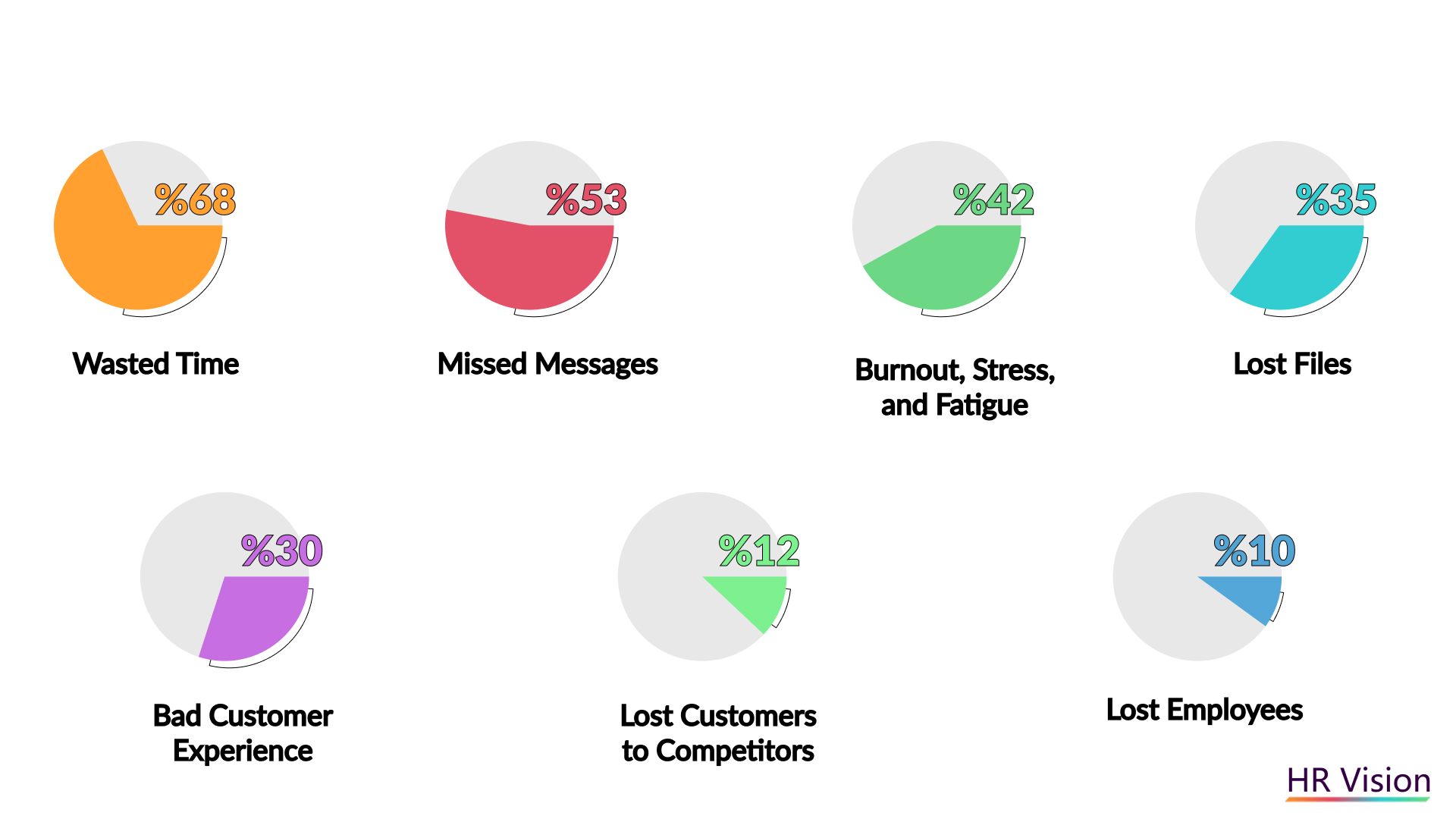
The costs associated with inadequate business communication are multifaceted and encompass not only financial losses but also the toll on employee well-being and customer relationships. Organizations that neglect to address these issues risk undermining their efficiency, profitability, and overall success. Therefore, investing in effective communication strategies is crucial to mitigate these costly consequences and foster a healthy, productive work environment.
The Power of Effective Communication in Numbers
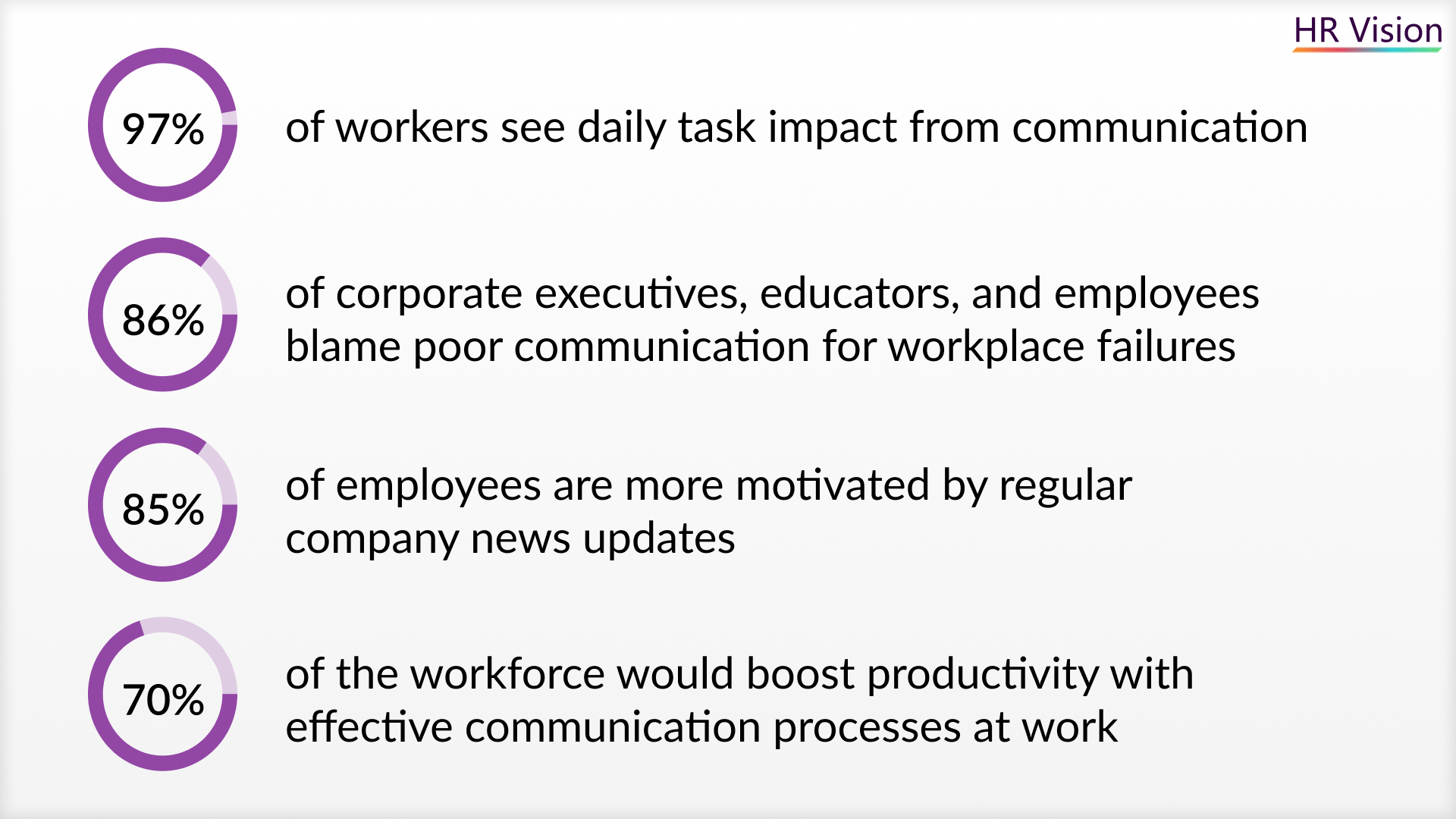
- Effective Collaboration and Communication: 86% of employees pinpoint the lack of effective collaboration and communication as the primary culprit behind workplace failures.
- Internal Communication Boosts Productivity: The enhancement of internal communication has the potential to elevate organizational productivity by a substantial 25%.
- Daily Impact of Communication: 97% of employees acknowledge that communication significantly influences their daily task efficacy.
- Cost of Communication Barriers: Communication barriers could be exacting a hefty annual toll on businesses, estimated at approximately $37 billion.
- Trust Erosion: Poor communication erodes trust for nearly half of the workforce, with 45% of employees citing it as a significant issue.
- Productivity Surge with Enhanced Communication: Offering employees improved communication technology and skills can result in a remarkable 30% surge in productivity.
- Impact on Timely Deliveries: A substantial 28% of employees point to poor communication as the chief reason behind their inability to deliver work on time.
Ineffective communication is a pervasive issue within the workplace, and its repercussions extend far beyond mere miscommunication. It has the potential to significantly impact the overall work environment, often in detrimental ways.
How Ineffective Communication Affects Trust
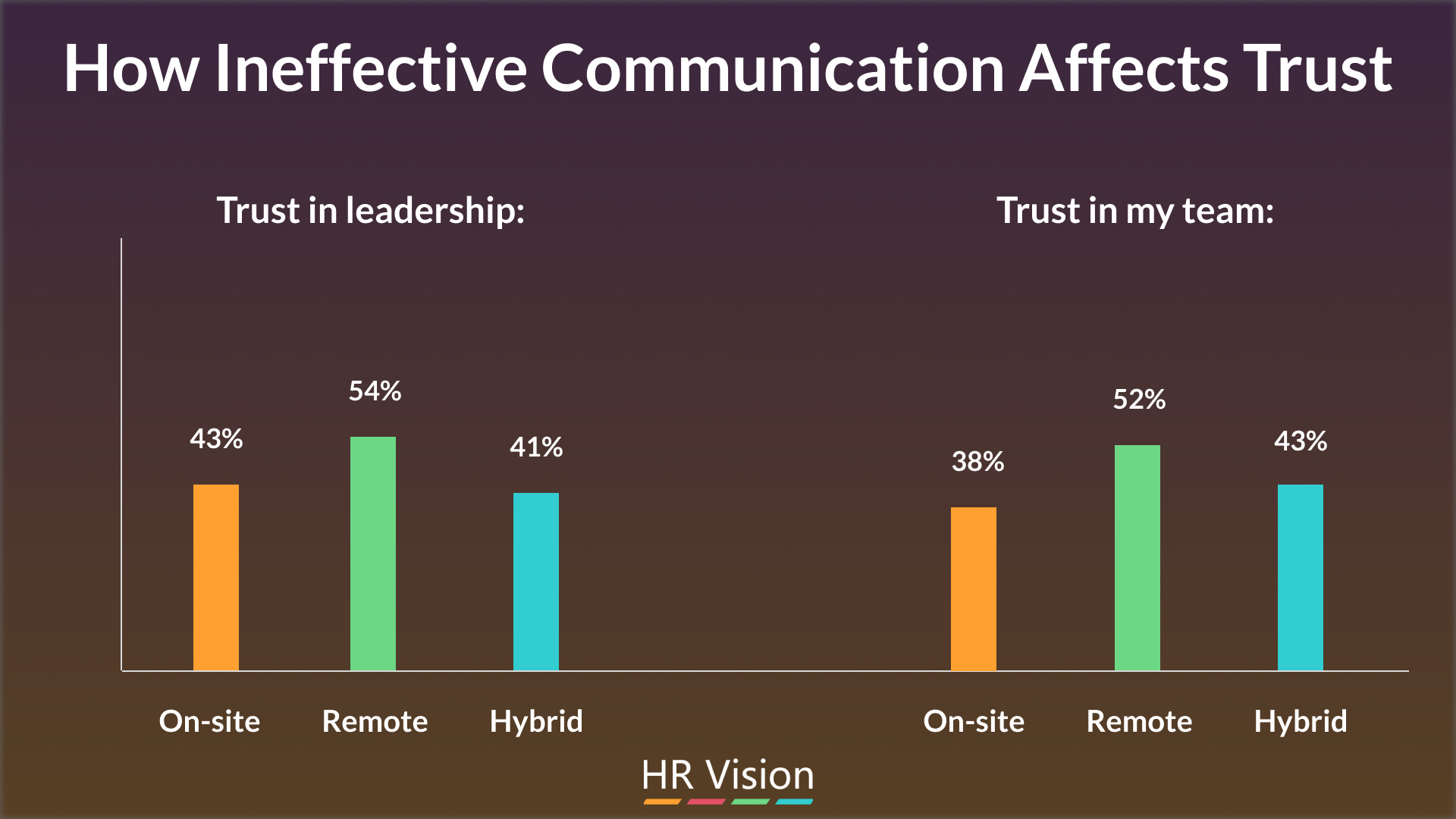
Trust is the bedrock of any successful organization. Ineffective communication, characterized by misunderstandings, misinterpretations, and a lack of transparency, can erode trust within the workplace. When employees perceive a lack of honesty or openness, it can lead to skepticism and suspicion, ultimately damaging the relationships between colleagues and between employees and management. In such an environment, collaboration becomes strained, and the overall work atmosphere is marked by apprehension and uncertainty.The data suggests that poor communication has a substantial negative impact on trust in both leadership and teams. For the entire workforce, over 40% of workers report that their trust is affected when communication is lacking. In addition, remote work may require more intentional and effective communication strategies to maintain trust compared to on-site work.
The Impact of Poor Communication on Workplace Productivity
Inefficient communication can be a significant hindrance to productivity and have a detrimental impact on employee experience, leading to decreased job satisfaction and potentially higher turnover rates. When communication is unclear or information is not readily accessible, it can lead to misunderstandings, errors, and delays in project completion. Additionally, meetings that lack a clear agenda or purpose can consume valuable time without producing tangible results. Incorporating effective communication strategies is essential to mitigate these inefficiencies. Inefficiencies in communication often translate to wasted resources and a decrease in overall productivity, impacting an organization’s ability to achieve its goals and meet deadlines.
Digital Communication
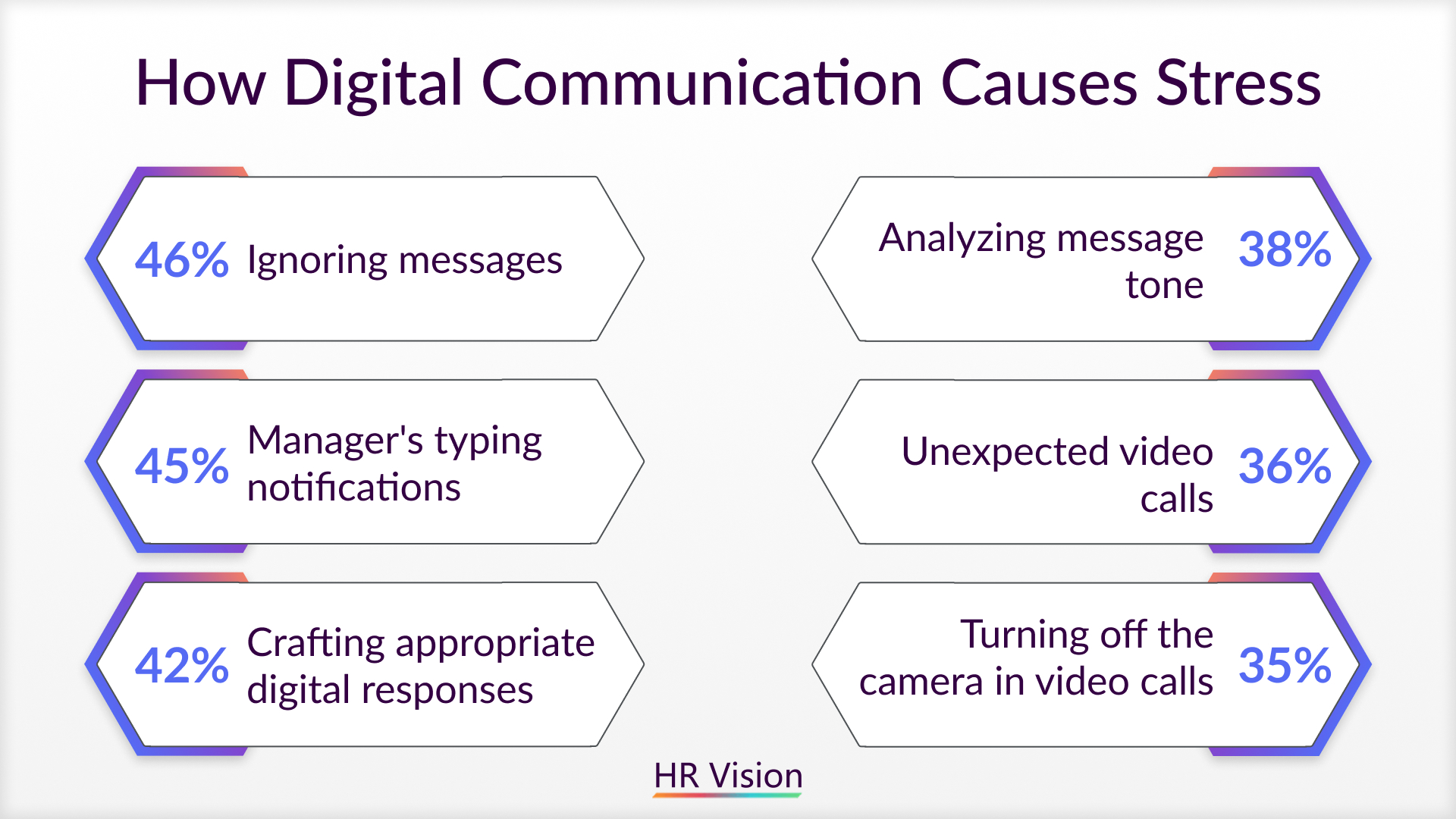
In today’s digital age, communication extends beyond face-to-face interactions and includes a significant reliance on digital channels such as email, messaging apps, and video conferencing. While these technologies have undoubtedly transformed the way we work, they can also be a double-edged sword. Ineffective digital communication can lead to misunderstandings, missed messages, and a sense of detachment among team members. The constant influx of digital messages can create a culture of constant availability, leading to employee burnout and a blurring of work-life boundaries, ultimately contributing to higher levels of workplace stress.
Practical Tips to Enhance Communication Skills
These strategies and techniques can help you enhance communication skills, allowing you to convey your thoughts, ideas, and emotions with greater clarity.
- Active Listening: Encourage active listening among team members. This involves giving full attention to the speaker, asking clarifying questions, and providing feedback. It ensures that everyone feels heard and understood.
- Clear and Concise Messaging: Foster a culture of clarity by using straightforward and concise language. Avoid jargon or vague terms that may lead to misunderstandings.
- Regular Feedback: Implement a system of regular feedback, both from supervisors to employees and vice versa. Constructive feedback helps identify areas for improvement and celebrates successes.
- Establish Clear Communication Channels: Define and communicate the channels to be used for various types of communication. For example, use email for formal documentation and instant messaging for quick queries.
- Empathy and Emotional Intelligence: Promote empathy and emotional intelligence among team members. Understand and consider the emotions of others during communication, and tailor your message accordingly.
Interested in discovering how effective communication can transform your workplace? Join us at HR Vision, where top HR leaders gather to explore the future of work, including the latest trends in HR, talent management, and leadership.