
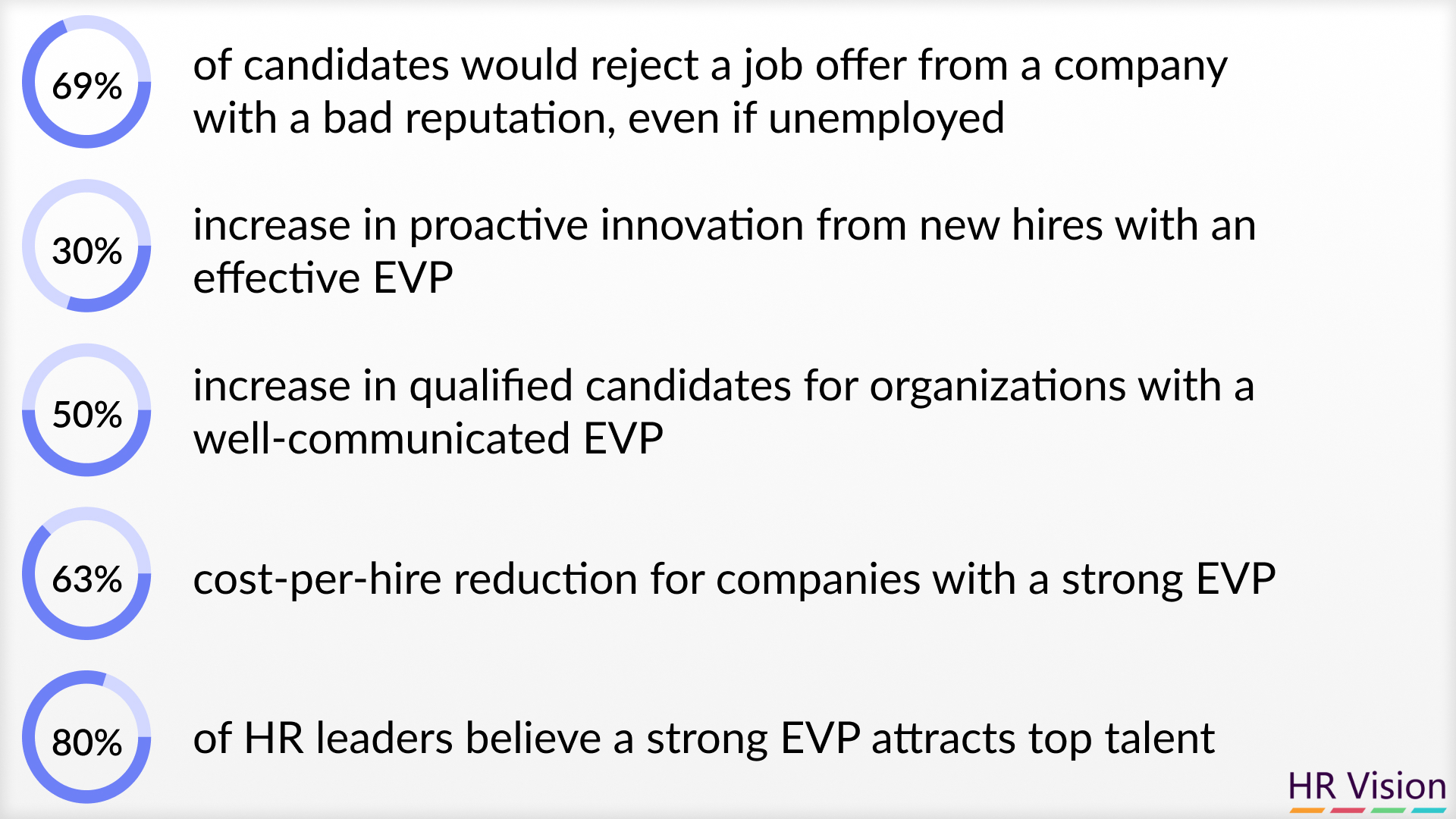
According to Gartner, organizations that effectively deliver on their Employee Value Proposition can experience a significant decrease in annual employee turnover by 69%. In a highly competitive job market, having a strong Employee Value Proposition (EVP) is crucial. It is not just about filling job positions; organizations aim to create an environment that attracts top talent and keeps them committed for the long term. The EVP is a powerful tool for standing out from competitors and establishing a unique identity that resonates with potential employees. The modern workforce values more than just salary, they look for workplaces aligned with their values, providing a sense of purpose, and opportunities for continuous learning.
What is an Employee Value Proposition (EVP)?
Employee Value Proposition (EVP) refers to the unique set of benefits and rewards an organization offers its employees in exchange for their skills, capabilities, and experience. It encompasses the overall value and advantages employees can expect from working for a particular company. An effective EVP serves as the magnetic force that draws skilled professionals to an organization and, once within its ranks, fosters a sense of belonging and commitment.
Key components of an Employee Value Proposition typically include:
- Compensation and Benefits: This encompasses salary, bonuses, stock options, and other financial rewards. It also includes benefits such as health insurance, retirement plans, and other perks.
- Well-being: Focuses on the physical and mental well-being of employees. This may include health and wellness programs, flexible work arrangements, and a supportive work environment.
- Career Development: Emphasizes opportunities for professional growth and advancement within the organization. This includes training programs, mentorship, and clear career paths.
- Purpose: Reflects the organization’s mission, values, and broader societal impact. Employees often seek a sense of purpose in their work, and an EVP that aligns with personal values can be a powerful motivator.

The Employee Value Proposition model is a key concept that outlines the real and intangible advantages that employees get for their hard work and dedication. Basically, the EVP model includes the special perks an organization offers, like pay, chances for career growth, work environment, and the overall experience for employees.
The Impact on Recruitment
Recruitment is, in essence, a form of marketing. Organizations can strategically utilize their EVP in recruitment marketing efforts to stand out in a crowded job market. Studies show that when organizations effectively communicate their EVP, they see a significant 50% increase in qualified candidates. Highlighting the company culture, benefits, and growth opportunities in marketing materials, such as career websites, social media posts, and recruitment events, serves as a powerful magnet for prospective employees. The EVP becomes a central narrative that captures the attention and interest of potential candidates, inviting them to envision a future within the organization.
A strong Employee Value Proposition not only attracts more candidates but also brings cost benefits. Companies with a robust EVP experience a significant 60% reduction in cost-per-hire. This is because a clear EVP leads to a more efficient recruitment process – candidates who connect with the organization’s values are likely to stay longer, reducing turnover and associated hiring expenses.
For example, Salesforce places a strong emphasis on its core values, which include trust, customer success, innovation, and equality. This values-driven approach is embedded in the company’s EVP, attracting candidates who align with these principles. Salesforce’s commitment to social responsibility and philanthropy also contributes to a positive employer brand, making it an appealing choice for those seeking purpose in their work.
Employee Retention and Engagement
Investing in a unique Employee Value Proposition (EVP) pays off – organizations that do so are three times more likely to have highly engaged employees. This shows a clear link between a well-crafted EVP and the commitment and enthusiasm of the workforce. When employees see their organization as having a special and attractive EVP, they are more likely to actively contribute to their roles, creating a positive and dynamic workplace culture.
An engaging Employee Value Proposition (EVP) not only boosts engagement but also strongly impacts job satisfaction. Companies with a compelling EVP are twice as likely to report high job satisfaction among employees. When employees see their expectations and values reflected in the EVP, job satisfaction naturally follows. A content workforce is not just likely to stay with the organization but is also more inclined to invest their energy and skills for the collective success of the company.
In a changing work landscape, the flexibility of an Employee Value Proposition (EVP) is crucial. Companies that embrace a remote-friendly EVP experience an impressive 35% increase in employee engagement. A remote-friendly EVP not only meets the evolving preferences of the workforce but also shows an organization’s dedication to providing a work environment that caters to diverse needs. This, in turn, leads to higher employee engagement and productivity. Exploring the various impacts of an EVP, it’s clear that its adaptability to current trends is a key factor in its success in cultivating a thriving and engaged workforce.
Employee Productivity and Performance
A strong Employee Value Proposition does more than attract and keep talent—it’s a motivational force. Companies with compelling EVPs have seen a significant 40% boost in remote work productivity. This shows that an EVP’s motivational impact goes beyond traditional offices to the changing landscape of remote work. When employees feel a sense of purpose, align with company values, and are confident in their professional growth, they naturally strive to excel. A robust EVP acts as a driving force, inspiring individuals to give their best, and leading to improved overall productivity.
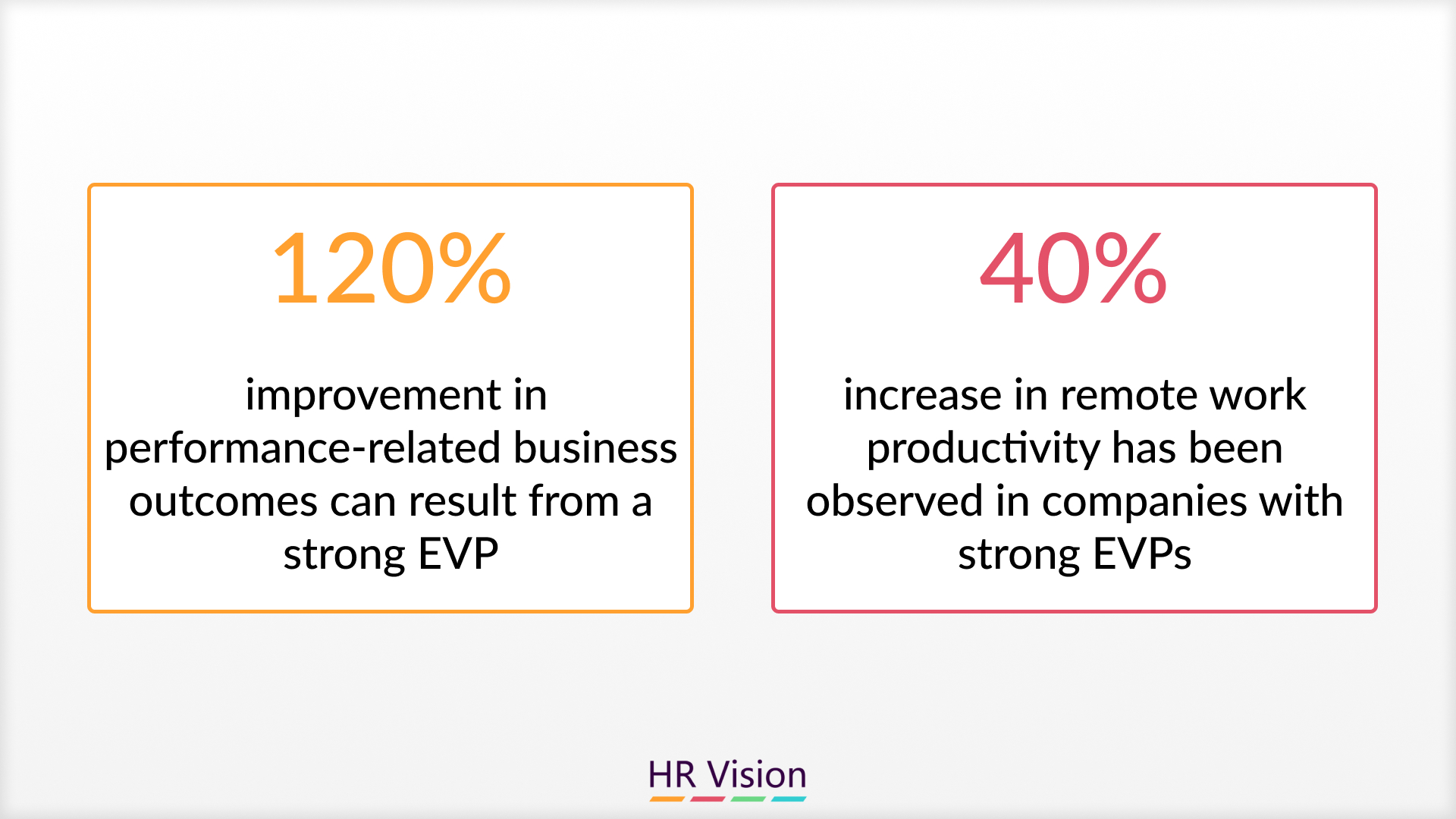
A strong Employee Value Proposition (EVP) is clearly linked to higher productivity and performance in organizations. A well-crafted EVP acts as a catalyst, unlocking employees’ full potential. When individual goals align with organizational objectives through the EVP, it creates a synergy that boosts overall productivity. Employees who see a direct connection between their contributions and the organization’s success are motivated to perform at their best. This intrinsic link fosters a sense of responsibility and accountability, cultivating a high-performance culture in the workplace.
Employee Value Proposition Examples
Companies are working hard to attract and keep top talent by showcasing their unique EVPs. Take Google, for instance. They’re known for their cool work environment and love for innovation. Google’s EVP offers employees not just exciting projects, but also flexible schedules and awesome on-site perks. Their focus on employee well-being, including health and wellness programs, makes the overall package more appealing than just a paycheck.
Zoom, renowned for its exceptional video conferencing platform, experienced remarkable growth during the pandemic. Zoom’s EVP reflects its core value of Care, which is central to its culture and operations. Zoom’s careers page vividly portrays how the company values its customers, employees (whom they fondly call Zoomies), the organization itself, and the broader community.
These Employee Value Proposition examples show how companies can make their EVPs stand out, catering to the varied needs and dreams of today’s workforce.
Conclusion
In the dynamic and competitive landscape of today’s workforce, the Employee Value Proposition (EVP) stands as a critical instrument in shaping organizational success. Through the exploration of its various facets, from attracting and retaining talent to fostering engagement and productivity, it becomes evident that an effective EVP is more than a recruitment strategy.
The impact of an EVP extends beyond statistics and metrics. It is woven into the fabric of an organization’s identity, influencing how employees perceive their roles, the pride they take in their work, and the commitment they bring to the company. , the journey through understanding, implementing, and measuring the impact of an Employee Value Proposition reveals its profound influence on organizational culture, talent acquisition, retention, and overall performance. As organizations strive to become employers of choice in a competitive market, the strategic investment in a compelling EVP emerges as a cornerstone for fostering a workplace where employees not only thrive but actively contribute to the shared success of the organization.
Ready to unlock the potential of your workforce? Join us at HR Vision and discover how an effective Employee Value Proposition can drive productivity and performance