Embarking on a career is akin to setting sail on an uncharted sea, with each professional journey weaving a unique narrative of challenges, triumphs, and unforeseen turns. In the contemporary workplace, characterized by technological disruptions, changing job landscapes, and a growing emphasis on individualized career goals, nonlinear paths have gained unprecedented significance. As individuals navigate this dynamic environment, the pursuit of personal and professional growth in job opportunities becomes paramount.
Professionals no longer view a linear ascent as the sole marker of success; instead, they recognize the value of lateral shifts, skill pivots, and the pursuit of passion projects, all contributing to holistic career growth and development. The significance lies not only in personal satisfaction but also in the tangible benefits these diverse experiences bring to organizations, fostering innovation, adaptability, and a more resilient workforce.
What Is Nonlinear Career Paths?
Nonlinear career paths deviate from the conventional climb up the corporate ladder, embracing a multidirectional approach to professional growth. Unlike the predictable steps of a linear career, nonlinear paths encompass lateral moves, skill diversification, entrepreneurship, and even periods of sabbatical or retraining. It’s a paradigm shift that acknowledges the value of varied experiences and challenges the notion that success follows a predetermined, linear sequence of roles within an organization.
The Traditional Career Path vs. Nonlinear Paths
Traditionally, career progression followed a well-defined trajectory characterized by hierarchical advancement within a specific industry or organization. Employees typically started at an entry-level position, gradually climbing the ranks through promotions, with success measured by titles, salary increases, and longevity in a single career track. This linear approach provided a sense of stability and predictability, forming the cornerstone of conventional career wisdom.While the traditional career path served as a reliable model for decades, it has inherent limitations that are increasingly apparent in today’s dynamic work environment. Some of the challenges include a lack of flexibility in responding to industry shifts, limited exposure to diverse skill sets, and the potential for professional stagnation. However, embracing career growth goals can provide individuals with the necessary direction and motivation to navigate these challenges effectively.
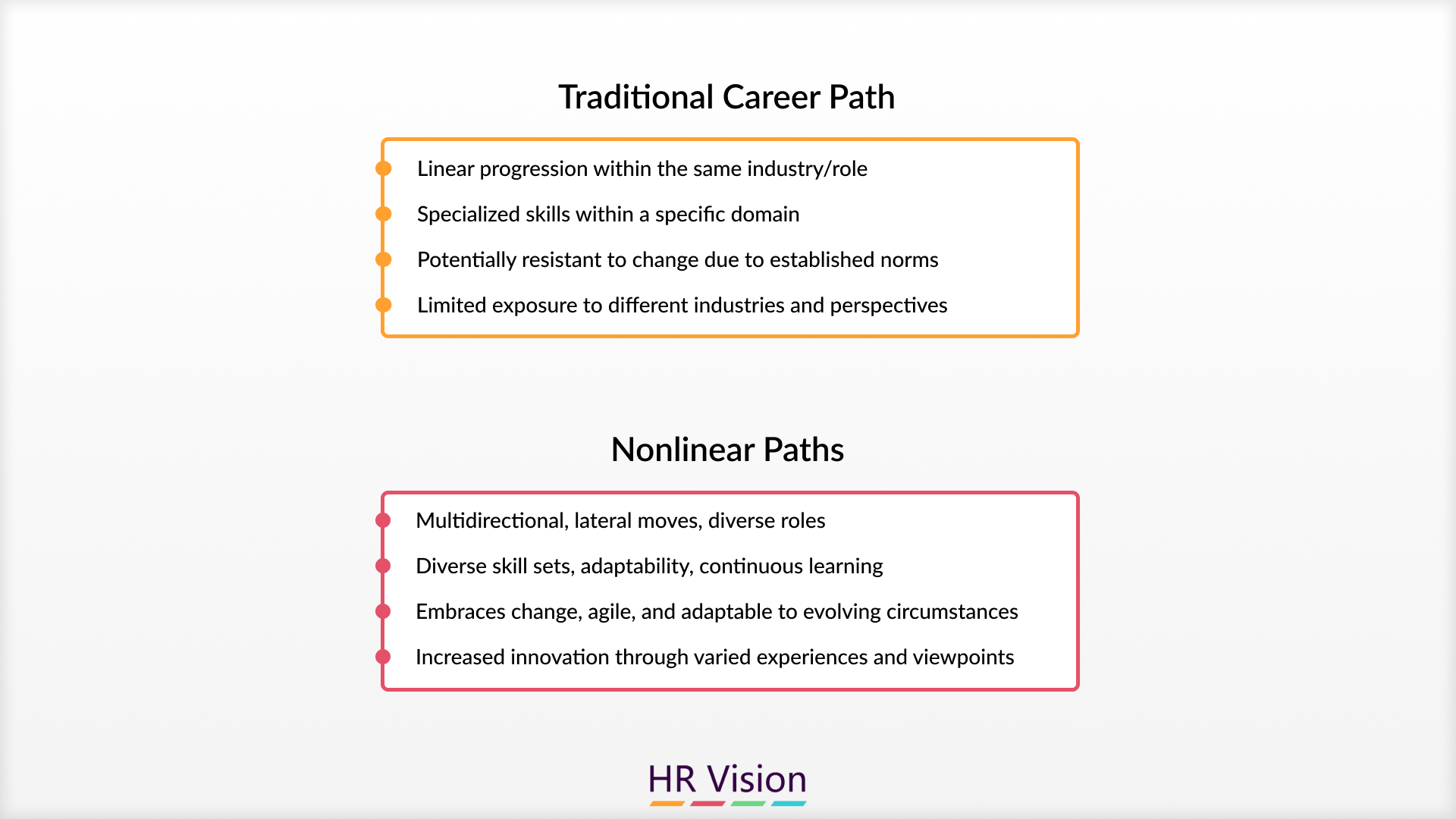
In contrast to the linear model, nonlinear career paths offer a refreshing alternative that acknowledges the multifaceted nature of success. Nonlinear paths encompass a variety of experiences, such as lateral transitions between industries, entrepreneurship, freelancing, and periods of deliberate skill development. This alternative approach prioritizes personal growth, skill diversification, adaptability, and the implementation of a robust career growth plan, recognizing that success is not confined to a predetermined sequence of promotions within a single organization.
Factors Influencing Nonlinear Career Growth
In today’s evolving workplace, influenced by globalization and technology, traditional career structures are giving way to more flexible models. Nonlinear career growth opportunities are becoming essential, driven by the need to adapt to technological changes and the emergence of new job opportunities. As technology reshapes work, professionals must continually upskill, making nonlinear paths a strategic response to stay relevant. This approach enables individuals to pivot into emerging fields, develop soft skills, and navigate ambiguity.
The demand for adaptability and interpersonal skills has risen alongside technical expertise. Nonlinear career growth fosters these qualities, as individuals often navigate diverse roles and embrace change. Continuous skill development is a key aspect of nonlinear paths, with professionals actively seeking opportunities for learning through various channels. This commitment not only enhances individual capabilities but also contributes to organizational adaptability and innovation.
Recognizing and leveraging these factors positions professionals strategically in the modern workplace, allowing them to thrive amid uncertainty. Nonlinear career growth is increasingly seen as a means to navigate the dynamic landscape and succeed in the face of ongoing change.
How to Implement Nonlinear Career Growth and Development Programs in an Organization?
In response to the shifting dynamics of the modern workplace and the recognition of the value of nonlinear career paths, organizations are increasingly adopting strategic initiatives to facilitate and encourage diverse career trajectories.
1. Designing Flexible Career Paths
To effectively incorporate nonlinear career growth and development within organizations, a fundamental shift in mindset is required. This begins with the design of flexible career paths that allow employees to navigate through various roles, departments, and even industries. Companies can establish frameworks that promote lateral moves, sabbaticals, and skill-focused transitions, creating a culture where employees are encouraged to explore diverse opportunities while still contributing to the overall success of the organization.
2. Training and Development Initiatives
Supporting nonlinear career growth demands a robust commitment to training and development. Organizations should invest in programs that empower employees with the skills necessary for their current roles and equip them for future transitions. This includes both technical skills relevant to their field and soft skills that enhance adaptability, communication, and leadership. Providing access to continuous learning platforms, mentorship programs, and skill-building workshops creates an environment conducive to nonlinear career development.
3. Employee Engagement and Communication Strategies
Effective communication is essential in fostering an organizational culture that embraces nonlinear career paths. Companies need to communicate the value they place on diverse career trajectories and highlight the success stories of employees who have thrived through nonlinear journeys. Engaging employees in conversations about their career grow goals, aspirations, and potential paths helps build a supportive and understanding environment. Clear and transparent communication about the organization’s commitment to flexibility and growth contributes to employee satisfaction and loyalty.
Conclusion
In envisioning the future of career growth opportunities, one thing is certain: the era of rigid career structures is waning. The future belongs to those who embrace change, cultivate adaptability, and view nonlinear paths as opportunities rather than deviations. The dynamic nature of the modern workplace demands a workforce that is not only technically proficient but also agile, creative, and resilient.
As individuals navigate their unique paths, organizations must play a pivotal role in fostering an environment that supports, celebrates, and thrives on the diversity of career journeys. Embracing a dynamic and multifaceted approach to the future of career growth, organizations can provide a comprehensive career growth plan that is filled with opportunities for those who dare to redefine success.
Ready to take your understanding of nonlinear career paths to the next level? Join us at HR Vision, where top HR leaders will gather for two days of thought-provoking discussions on the future of work.