1. With nearly 30 years in HR, what key changes have you seen in the field?
The world of HR today is almost unrecognisable from when I started my professional career in the 1990s. We talked about personnel, equal opportunities, training, industrial relations – I started my career in manufacturing – pay and rations. We were Officers, not Business Partners, the ‘hirers and firers,’ always with a handy box of tissues following a difficult conversation. We essentially did what the business needed us to do and reacted and adapted to those demands. Fast forward to today and in many organisations, HR is no longer simply responding to business strategy it is shaping and directing it. HR is more likely to be a member of the C-Suite or Executive Team, the portfolio of the Chief People Officer (CPO) can include Business Transformation, Equity, Diversity and Inclusion, Internal Communications and Environmental, Social, Governance (ESG) activities. The CPO is often the CEO’s closest adviser and confidante – at least in my personal experience – and People Business Partners are now strategic talent leaders and people problems solvers (or at least they should be!).
2. What are the essential elements for creating an inclusive workplace?
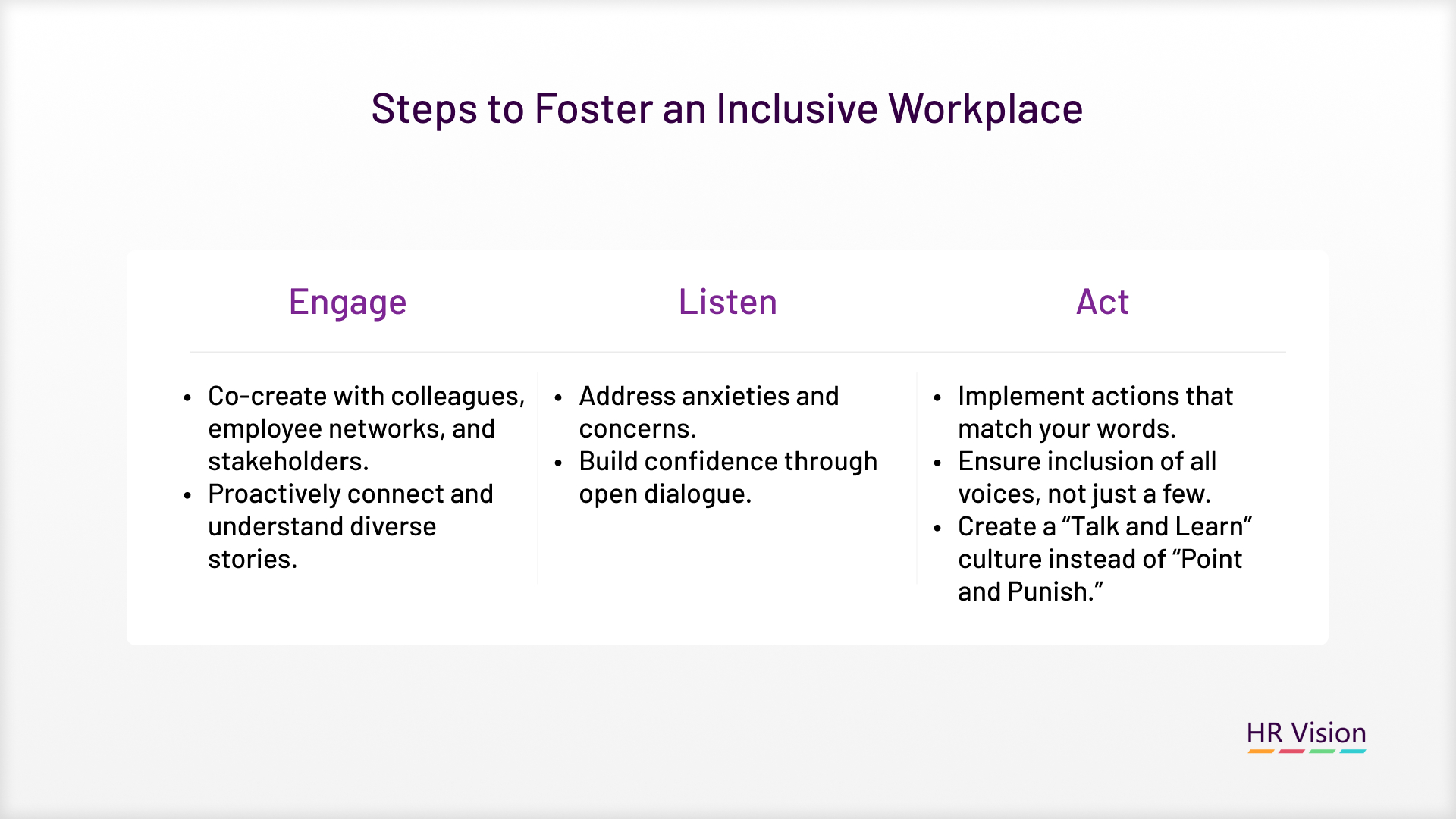
I think you have to start by doing three things: engage, listen, and act. An inclusive workplace should be co-created with your colleagues, your employee network groups, your customers and stakeholders. You need to pro-actively engage; belonging and inclusion are all achieved by engaging with others and their stories. You need to listen to their anxieties and concerns, answer them and build confidence. You need to act – the most important step – you can say all these things but unless you do them, your words will not build trust. You need to ensure that inclusion means the inclusion of all voices, not the exclusion of some and create a culture of Talk and Learn, not Point and Punish, by developing processes that seek resolution within teams. You should actively encourage the expression of views that help to offer alternative perspectives on organisational challenges and that counter groupthink. An inclusive workplace is where everyone can succeed in achieving their personal and professional goals, balance their work and home lives, feel that they truly belong and see themselves represented at all levels in the organisation: you can’t be what you can’t see!
3. What advice would you give to HR professionals looking to enhance their leadership coaching skills?
Increasingly, HR and L&D professionals working as Business Partners are expected to demonstrate coaching capability. This particularly relates to the ability to coach business leaders to help them identify and solve business challenges. So, my advice is firstly to really know your business: you need to understand the challenges your leaders face every day in order to support them. Secondly, talk to other coaches, join coaching forums, undertake a professional qualification in coaching, build a coaching community within your own organisation so you can learn from each other.
4. As a founding member of Nexus, an exclusive community of chief people officers, what emerging trends and challenges are HR leaders currently discussing?
Navigating the multifaceted challenges of today’s socio-political and economic climates requires a keen focus, strategic collaboration, and unwavering commitment and so at Nexus we select topics that resonate with today’s challenges – the pressing matters that are defining how we work and engage with each other. This currently includes ESG (Environmental, Social, and Governance) and comprehending HR’s instrumental role in ensuring that sustainability isn’t just a buzzword but how that translates into tangible profitability. Resourcing today and for the future – I have joined the Parliamentary Steering Committee of the Better Hiring Institute through Nexus – with an aim to shape UK government policy thinking in this space and finally developing the next generation of Chief People Officers to fill our shoes in the future.
5. How can organizations improve employee engagement and retention throughout the employee lifecycle?
During my decade at the Financial Services Compensation Scheme (FSCS), we won over 50 National Awards for our work including regularly being recognised for our focus on employee engagement and experience. We focussed on a number of key questions: were colleagues excited about where the organisation was going, would colleagues describe the culture as a healthy and happy one, did colleagues feel that they could be themselves and belong and perhaps most importantly of all did colleagues understand how they personally contributed to the organisation’s success? Daniel H. Pink’s seminal work Drive tells us that we’re intrinsically motivated by three things: autonomy, mastery, and purpose. In simple terms we want to be given the space to stand on our own two feet, we want to develop our skills and get really good at something, and we want our work to make a difference. At the FSCS we always said: this is an organisation that makes a difference and in which you can make a difference, so connect your people directly to your purpose and you will improve engagement. 9 out of 10 colleagues said they knew how they contributed to our success.
6. Efficiency, profitability, and competitive positioning are crucial to organizational success. How can HR contribute to these areas in meaningful ways?
Ulrich’s HR model changed HR almost overnight and his contribution is profound but while incredibly effective at delivering HR expertise to the business, the model is now decades old and, in some ways, now misaligned with the reality of work today. The 2022 Gartner State of HR Transformation Execution Survey identified that HR leaders are implementing new approaches to become more agile, improving the connection between HR and the business, and separating transactional and strategic work. HR Shared Servies today should own data, people analytics and technology – including I believe being the custodians of an organisation’s approach to AI – capabilities which all drive efficiency, profitability, and competitiveness.
7. As a chartered companion of the CIPD and CMI, what value do you believe professional credentials bring to HR professionals and their career development?
Human Resources and People Management is a profession just like being an Accountant or a Lawyer and they would not even think about not being a member of their professional body! So firstly developing your professional membership demonstrates that you’re committed to your career, your personal development and are professionally qualified. Once you’re a member this gives you access to huge online resources, local branches, networking opportunities, training and conferences but don’t stop there. Join other networks like I have: Chartered Management Institute (CMI), Institute of Leadership and Management (ILM), Institute of Directors (IOD), the Royal Society of Arts, Manufactures and Commerce (RSA) to give you a broader horizon on a wider range of issues impacting society and the future of work.
8. What should HR leaders consider in supporting both remote and in-office employees post-pandemic?
Consider and reflect on your organisation’s approach to hybrid working and your organisational culture. Do your employees believe that you care about them? Do your employees believe that your flexible working environment is mutually beneficial? Do your employees feel that you are working collaboratively and inclusively for the benefit of everyone? Flexibility is here to stay – The Employment Relations (Flexible Working) Bill received Royal Assent last year, meaning millions of UK workers will have more flexibility over where and when they work in 2024 – so clearly articulate what you are trying to achieve. Some guiding principles should include fairness and trust – flexible working is not a reward but rooted in the trust of employees, and trade-offs require everyone to compromise and be accountable; human connection – the redesign of work strengthens rather than depletes human connections, intentional and purposeful communication patterns build a sense of inclusion and finally experimentation – employees are encouraged to engage in courageous experimentation and to take risks so that the model is tailored to different parts of their business – one size does not fit all. And for me that is the key point: one size does not fit all. Too often we are trying to apply binary solutions to a multi-faceted opportunity: home versus office, when in fact the best organisations connect their people to the culture wherever they work, establishing an emotional connection and equipping teams to create vibrant and healthy hybrid environments.
9. What innovative practices do you recommend for enhancing customer and employee experiences?
My career experience has taught me that in many ways the best solutions are often the simplest ones. So simply asking people what they want, what are their frustrations, what are the pain points in the customer or employee journey? Using that data to shape your approach and focussing on a small number of key targets that will make a difference: what gets measured gets done! For example, using Net Promoter Score (NPS), for customers and colleagues – would your colleagues recommend your organisation as a great place to work? I always challenge the HR Teams that I lead to make it easier for people to give their best everyday and to identify and remove the barriers that make it difficult.
10. What advice would you provide to HR leaders embarking on a skills hiring journey in their organization?
Depending on the context, skills can mean different things to your stakeholders so firstly you need to have one definition of skills. Secondly, the business needs to be clear on the benefits they hope to gain by becoming a skills-based organisation. HR needs to help the business define the value-add of this approach by answering a few simple questions: why do we believe a skills-based approach is the right direction for us, what business problem is the skills-based approach aiming to solve, how will we know if we are successful and how is this different from what we are doing today? Chances are, skills data is already scattered across your organisation’s job profiles, resumes, talent & learning profiles, career frameworks, and productivity systems, actively utilised by employees, leaders, and HR – but in an un-managed, incoherent way. You probably have the constituent parts for a skills-linked job architecture (list of skills required to perform jobs) and employee skill inventory (list of skills acquired by employees), and you can unleash some powerful AI on these constituent parts to take the pain out of bringing the data under control and start to build your skills framework – you have to start with the data!
11. What benefits have you found from the use of talent data and analytics in supporting your HR decision making?
Talent data and analytics or people analytics is a game changer, and we are already seeing this become embedded in organisations around the world. The principal benefits is that it shifts focus away from what happened in the past to predicting what will happen in the future and how you can be prepared for that. So, what skills do we have today and what do we need in the future, who can we re-skill and upskill, how will this help us to retain our best people and how do we align personal career objectives with organisational demands? Who is in your leadership pipeline and who has the potential to do different roles in your organisation, how does this help you to deploy your resources more effectively? Talent data allows you to not only answer these questions but to find solutions and target your investment accordingly which in these financially challenging times is ever more important for all businesses.
12. As a leader yourself, which skills do you see have value for people managers in 2024?
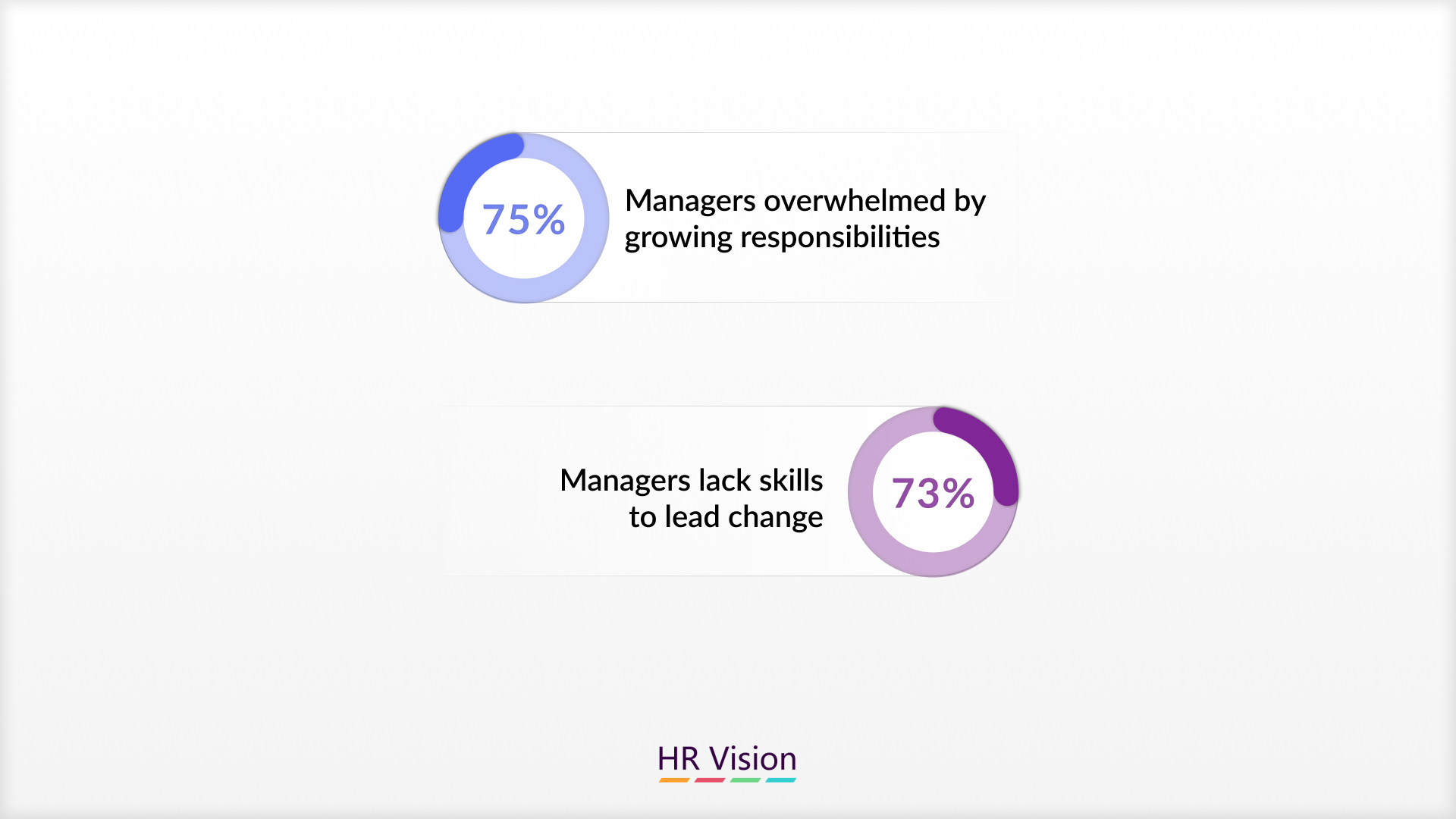
Gartner surveyed more than 500 HR leaders across 40 countries and all major industries to identify their priorities and challenges for 2024. The largest share of respondents put leader and manager development at the top of their list. 75% of respondents said that their managers are overwhelmed by the growth of their job responsibilities and 73% confirmed that their organisation’s managers are not equipped to lead change.
So, I think people managers today need to have business acumen, an understanding of technology especially the emergence of AI and what this means for their teams and their organisation, emotional intelligence which allows them to engage with their colleagues authentically, they need to work inclusively, they should have professional courage and influence and they should be equipped to drive change and support their colleagues and teams through that transformation. The role of people managers is bigger and more demanding than ever which is why most importantly we need to be developing these skills.
Ready to stay ahead in the ever-changing world of HR? Join us at HR Vision, where top HR leaders gather to explore the future of work, HR trends, and the power of HR analytics and technology.