Trust is crucial for any successful team. It creates a solid foundation where individuals feel safe, valued, and empowered to contribute their best work. In a workplace culture built on trust, team members are more willing to collaborate openly, share ideas freely, and support each other in achieving shared goals. Without trust, even the most talented teams can struggle to reach their full potential, hindered by miscommunication, conflicts, and disengagement.
Without trust, even the best teams can struggle. On the flip side, a lack of trust can lead to low morale, high turnover, and a toxic work environment that stifles growth. Building trust is key for long-term success.
Impact of Trust on the Workspace
In high-trust environments, the benefits are profound and far-reaching. Trust lays the groundwork for effective teamwork and collaboration, creating a space where team members feel comfortable sharing their ideas and opinions without fear of judgment. This openness fosters a culture of continuous improvement and innovation, as team members are more likely to contribute creative solutions and tackle challenges collectively.
Teams operating in a high-trust atmosphere perform more efficiently. When individuals trust one another, they can rely on each other’s expertise and capabilities, leading to smoother workflows and faster problem-solving. Trust also makes teams more adaptable to change, as members are willing to support one another through transitions and uncertainties, leveraging their collective strengths to navigate new challenges.
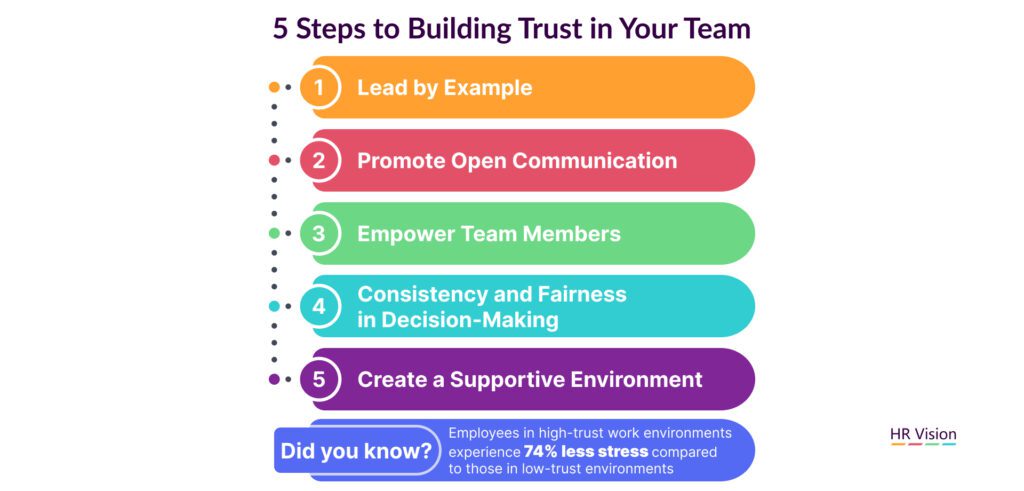
Compared with employees at low-trust companies, those at high-trust companies report 74% less stress, 106% more energy at work, and 50% higher productivity. This means that a high-trust environment not only improves employees’ well-being but also enhances their overall performance and efficiency.

When employees trust their colleagues and leaders, they are more likely to feel valued and motivated. This positive work environment not only improves morale but also contributes to higher retention rates, as employees are more inclined to stay with a company where they feel respected and supported.
Reasons Why Employees Do Not Trust Their Companies
Trust can be easily eroded when employees perceive that their company is not acting in their best interests. One significant factor is when companies allow toxic behavior to go unchecked. When management fails to address issues such as bullying, favoritism, or harassment, it creates an environment where employees feel unsafe and undervalued.
Another major reason for a breakdown in trust is when companies do not tell the truth. Whether it involves misleading communication about company performance, the extent of challenges faced, or changes in policies, employees feel betrayed when they discover that they have been misled.
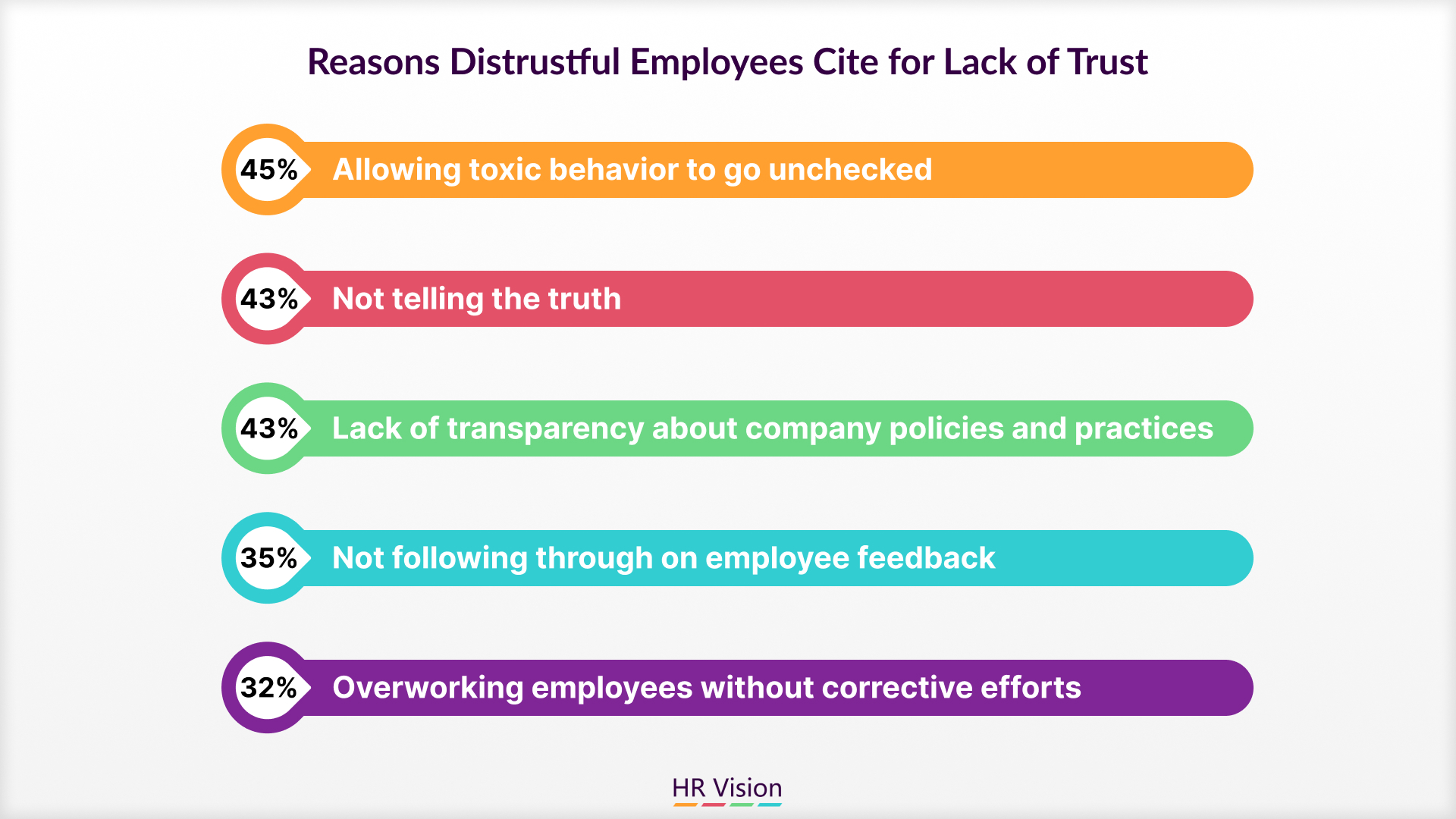
A lack of transparency about company policies and decisions contributes significantly to distrust. When employees are kept in the dark about important aspects of their work environment—such as changes in company strategy, performance expectations, or disciplinary actions—they may feel excluded and marginalized.
Also, when companies fail to provide regular and honest updates, employees are left in the dark about important developments or changes. This lack of communication can breed uncertainty and mistrust, as employees may perceive that information is being withheld or that they are not valued as stakeholders in the company’s journey.
5 Steps to Building Trust in Your Team
1. Lead by Example
Trust begins at the top. Leaders have the crucial role of modeling the behaviors they wish to see in their team. By demonstrating integrity—keeping promises, admitting mistakes, and owning up to their own errors—leaders set a powerful example for their team. Transparency in decision-making and communication is equally important. When leaders are open about the reasons behind decisions and communicate honestly, they foster an environment of trust and reliability. Additionally, creating opportunities for open, honest feedback helps to build a culture where team members feel their voices are heard and valued. Leaders who exemplify these behaviors help to establish a solid foundation of trust within the team.
2. Promote Open Communication
Trust flourishes when team members feel safe to express their ideas, concerns, and feedback without fear of retribution. Encourage regular check-ins and open dialogue to maintain ongoing communication. Establishing both formal and informal communication channels ensures that team members have multiple ways to share their thoughts and feedback. Actively listening to employees’ ideas and concerns shows that their input is valued and taken seriously.
3. Empower Team Members
Trust thrives when team members feel autonomous and confident in their roles. Delegate tasks and responsibilities without micromanaging, giving employees the freedom to take ownership of their work. Providing opportunities for personal and professional development helps team members grow and feel invested in their roles. Recognize and celebrate both individual and team achievements to build confidence and reinforce the value of each member’s contributions. Empowering your team not only boosts trust but also enhances overall performance and job satisfaction.
4. Consistency and Fairness in Decision-Making
Trust requires consistency and fairness. Apply policies and procedures equally to everyone to ensure that all team members are treated with fairness and respect. Be transparent in your decision-making processes and provide clear explanations when issues arise. Avoid favoritism and ensure that all decisions are made with a fair and unbiased approach. When employees perceive that decisions are made fairly and consistently, their trust in the leadership and the organization is strengthened.
5. Create a Supportive Environment
A team feels trust when they believe they have each other’s backs. Foster a collaborative rather than competitive environment, where team members are encouraged to support one another and work together towards common goals. Promote a culture of empathy, kindness, and mutual respect, creating a space where individuals feel valued and understood. Offer support to team members during challenging times and emphasize problem-solving together.
Conclusion
Trust is a long-term investment that yields significant benefits for both employees and the organization as a whole. Building and maintaining trust within a team enhances job satisfaction, boosts productivity, and fosters a positive work environment. Beyond the immediate gains, trust is crucial for the future growth and sustainability of the company.
Focusing on key steps to build trust—leading by example, promoting open communication, empowering team members, ensuring consistency and fairness, and fostering a supportive environment—organizations can develop a resilient and dynamic team prepared to tackle challenges and seize opportunities. Investing in trust today will yield a more cohesive, motivated, and successful team tomorrow.
Want to explore more about the future of work and the latest trends in HR? Join us at HR Vision, where top HR leaders will share insights on navigating this transformative time.