Workplace promotions are a critical aspect of career development, providing employees with opportunities for growth, increased responsibility, and recognition. Promotions not only reward hard work and dedication but also serve as an important tool for retaining top talent and fostering motivation within the workforce. For organizations, effective promotion strategies ensure that the right individuals are placed in key roles, contributing to overall business success and continuity.
What Are The Different Types Of Promotion?
Understanding the various types of promotions is crucial for both employees seeking advancement and organizations aiming to create effective career development pathways. Here are the main types of promotions that employees may encounter:
1. Horizontal Promotion
A horizontal promotion involves moving to a new role at the same level within the organization. While there is no change in rank or pay, this type of promotion offers employees the opportunity to explore new challenges and responsibilities in a different capacity. Horizontal promotions can enhance job satisfaction by providing variety and allowing employees to develop a broader skill set, which can be beneficial for future advancement.
2. Vertical Promotion
Vertical promotions are the traditional form of advancement within an organization. This type involves moving up the hierarchy to a higher rank, accompanied by increased responsibilities, salary, and status. Vertical promotions are often viewed as the primary goal for many employees, as they signify recognition of hard work and a commitment to career growth. They can also motivate others to strive for similar advancements, fostering a culture of ambition and achievement.
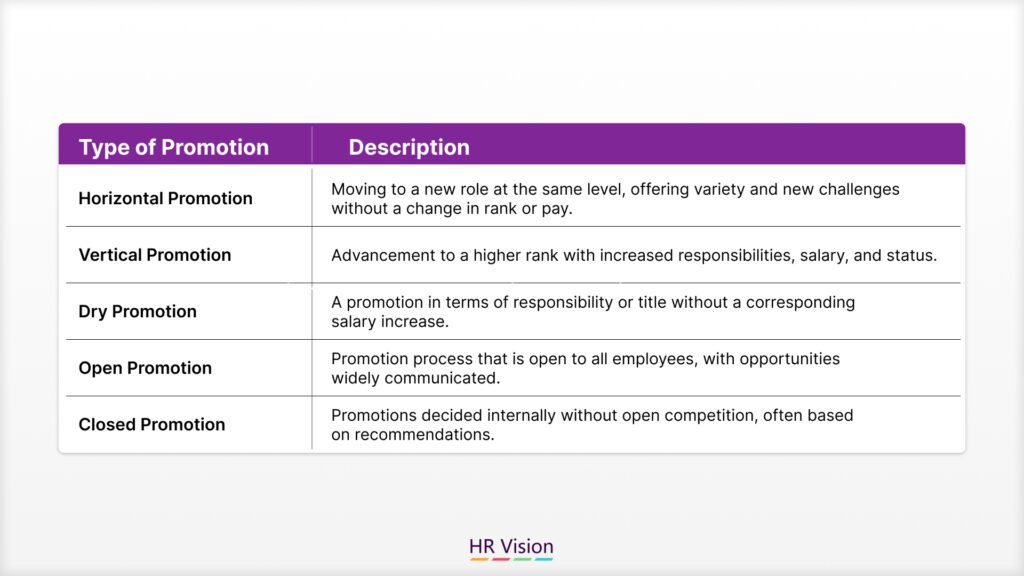
3. Dry Promotion
A dry promotion occurs when an employee is given a new title or additional responsibilities without a corresponding salary increase. This type of promotion can be beneficial for employees seeking career advancement without an immediate financial incentive. However, it can also lead to frustration if employees feel their contributions are not adequately recognized. Organizations must manage dry promotions carefully to ensure employees see the value in their new responsibilities and understand how they can lead to future opportunities.
4. Open and Closed Promotion
Promotions can also be categorized based on the process through which they are awarded:
- • Open Promotion: In an open promotion process, opportunities for advancement are widely communicated to all employees. This approach encourages transparency and allows employees to compete for positions based on merit, fostering a sense of fairness within the organization. Open promotions can lead to increased motivation, as employees are aware of their potential pathways for growth.
- • Closed Promotion: Conversely, closed promotions are determined internally, often without public competition. This process may rely on recommendations from management or other leaders within the organization. While closed promotions can streamline decision-making, they may also raise concerns about favoritism or bias if employees feel excluded from the promotion process. Organizations should strive for balance, ensuring that closed promotions are based on clear criteria to maintain trust among employees.
What Are the Challenges in Workplace Promotions?
While promotions can significantly benefit both employees and organizations, several challenges often arise in the process. Understanding these challenges is essential for creating a fair and effective promotion system.
Equity and Fairness
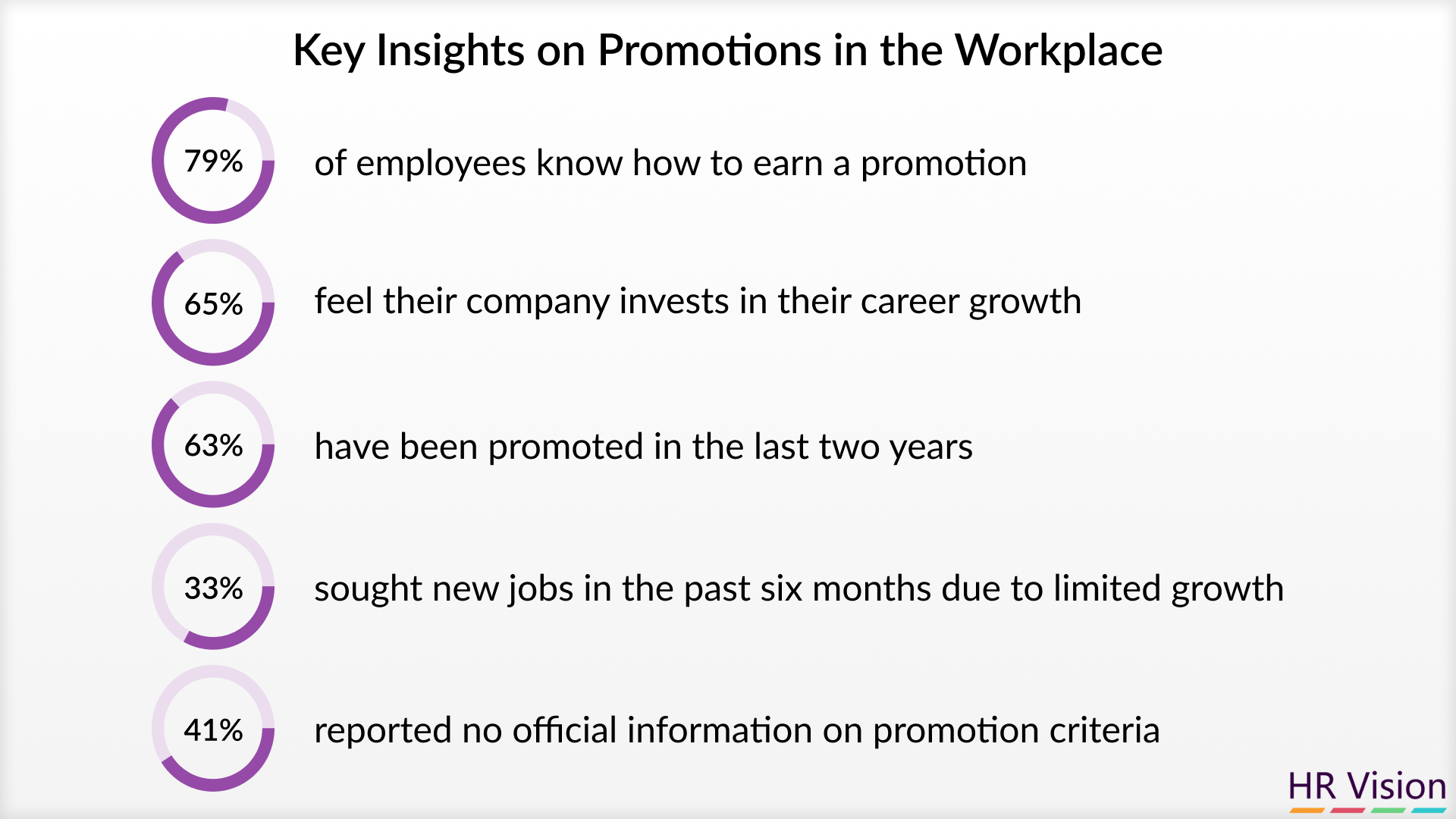
Equity and fairness are paramount in promoting employee trust and satisfaction. However, issues with transparency can hinder this goal. In open promotions, lack of clear communication about opportunities can leave employees feeling uncertain and overlooked. Similarly, closed promotions can foster perceptions of favoritism, especially if employees feel decisions are made behind closed doors without adequate justification. According to recent findings, 41% of employees reported having no official information on promotion criteria, leading to frustrations about fairness and transparency in the promotion process.
Bias and Favoritism
Bias and favoritism can significantly impact promotion decisions, leading to a toxic work environment. Whether conscious or unconscious, biases can skew judgment and influence who gets promoted. This risk is particularly pronounced in closed promotion processes, where subjective assessments can prevail. Employees may feel that promotions are awarded based on personal relationships rather than merit, causing demoralization and disengagement. The potential for discrimination based on gender, race, or other factors can also create barriers to equitable advancement, making it crucial for organizations to implement robust and impartial evaluation processes.
Managing Expectations
Managing employee expectations can be a challenge, especially concerning dry or horizontal promotions. While these promotions may provide new responsibilities or titles, the lack of a salary increase can lead to dissatisfaction among employees who feel their contributions are undervalued. In fact, a survey found that 33% of employees sought new jobs in the past six months due to limited growth opportunities. Organizations need to communicate effectively about the potential benefits of such promotions, helping employees understand the long-term value of gaining new skills and experiences.
Role Fit and Readiness
Ensuring that employees are prepared for the responsibilities associated with a vertical promotion is another critical challenge. Organizations must assess not only the current performance of an employee but also their potential to thrive in a higher role. Failing to provide adequate training or support can lead to frustration and burnout, ultimately impacting both employee morale and organizational effectiveness. It is essential for HR to implement comprehensive assessment methods to determine an employee’s readiness for promotion, coupled with training programs to facilitate a smooth transition.
Key Trends in Workplace Promotions
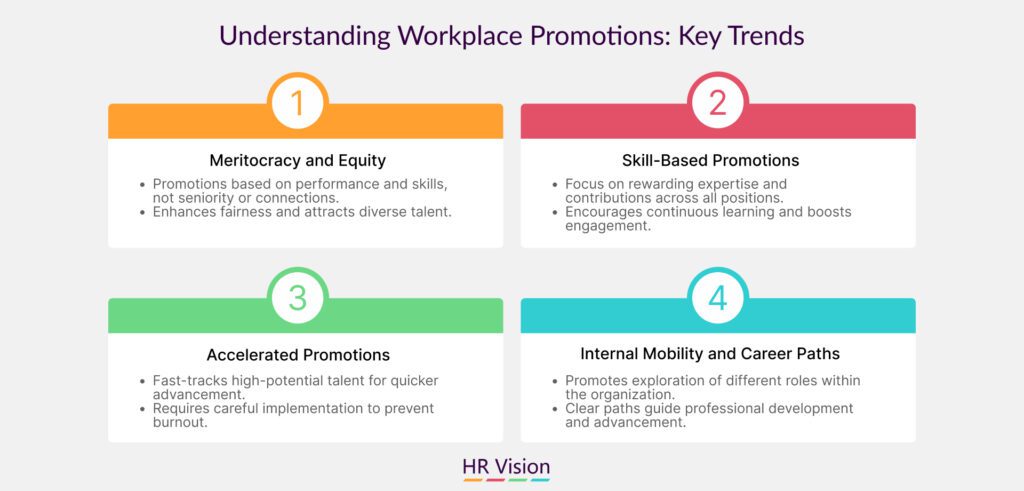
As the workplace landscape continues to evolve, so too do the trends surrounding promotions. Let’s delve into some of the key trends shaping the way promotions are approached today.
Trend #1: Meritocracy and Equity
One of the most significant trends in workplace promotions is a growing emphasis on meritocracy and equity. This means that promotions are increasingly based on individual performance, skills, and contributions rather than factors like seniority or personal connections. Organizations are recognizing the importance of fair and equitable promotion practices to foster a positive work environment and attract top talent.
Diversity and inclusion initiatives also play a crucial role in ensuring that promotion decisions are free from bias. By creating inclusive workplaces where everyone has equal opportunities to succeed, organizations can promote a sense of belonging and encourage diverse talent to thrive.
Trend #2: Skill-Based Promotions
Another emerging trend is the shift towards skill-based promotions. Instead of solely focusing on hierarchical advancement, organizations are recognizing the value of employees’ skills and competencies. By rewarding individuals for their expertise and contributions, regardless of their position within the company, organizations can foster a culture of continuous learning and innovation.
Implementing skill-based promotion systems can be challenging, as it requires organizations to have clear frameworks for identifying, assessing, and recognizing employee skills. However, the benefits of this approach can be significant, including increased employee engagement, productivity, and job satisfaction.
Trend #3: Accelerated Promotions
In today’s fast-paced business environment, some organizations are adopting accelerated promotion programs to identify and nurture high-potential talent. These programs allow exceptional employees to advance more rapidly through the ranks, providing them with greater opportunities for growth and development.
While accelerated promotions can be a powerful tool for retaining top talent and driving innovation, it’s important to ensure that they are implemented thoughtfully and fairly. Overly rapid advancements can sometimes lead to burnout or a lack of preparedness for new responsibilities.
Trend #4: Internal Mobility and Career Paths
Internal mobility plays a vital role in providing employees with opportunities for growth and advancement. By encouraging employees to explore different roles and departments within the organization, companies can foster a more dynamic and engaged workforce.
Clear career paths are essential for guiding employees toward their desired career goals. By outlining the steps and skills required for advancement, organizations can help employees make informed decisions about their professional development and create a sense of direction.
Want to learn more about innovative approaches to career growth? Check out the article “Redefining Career Growth With Nonlinear Paths.”
Conclusion
Workplace promotions play a vital role in fostering a positive and productive work environment. They not only recognize and reward employee achievements but also serve as a powerful motivator for career development. A well-structured promotion process enhances employee satisfaction, boosts morale, and ultimately contributes to organizational success by retaining top talent and encouraging continuous improvement.
HR professionals play a pivotal role in facilitating fair and strategic promotion processes. By ensuring transparency, equity, and alignment with organizational goals, HR can help create an environment where all employees feel valued and empowered to advance their careers. Addressing challenges such as bias, favoritism, and managing expectations is essential for building trust and maintaining a healthy workplace culture.
Want to explore innovative strategies for navigating the challenges of workplace promotions and enhancing HR practices? Join us at HR Vision! This two-day conference will feature top HR leaders discussing the latest trends in HR, talent management, and leadership.