

Chatbots, powered by artificial intelligence (AI), have gained significant attention across various industries, including HR. These virtual assistants, capable of engaging in natural language conversations, are transforming HR processes and enhancing the employee experience. From answering routine inquiries to assisting in recruitment and onboarding, chatbots are becoming indispensable tools for HR professionals.
What Is AI Chatbot?
Chatbots, short for “chat robots,” are AI-powered software applications designed to simulate human conversation. These digital assistants interact with users through text or voice interfaces, providing real-time responses and assistance. In the HR context, chatbots serve as virtual HR assistants, automating various HR-related tasks and providing support to employees and candidates.
Check out this list of the top 5 AI chatbot platforms to automate conversations and streamline HR processes:
How Do Chatbots Improve Efficiency And Productivity?
Chatbots have emerged as valuable assets in HR, offering a myriad of benefits that help streamline operations, enhance the candidate experience, and drive data-driven decision-making.
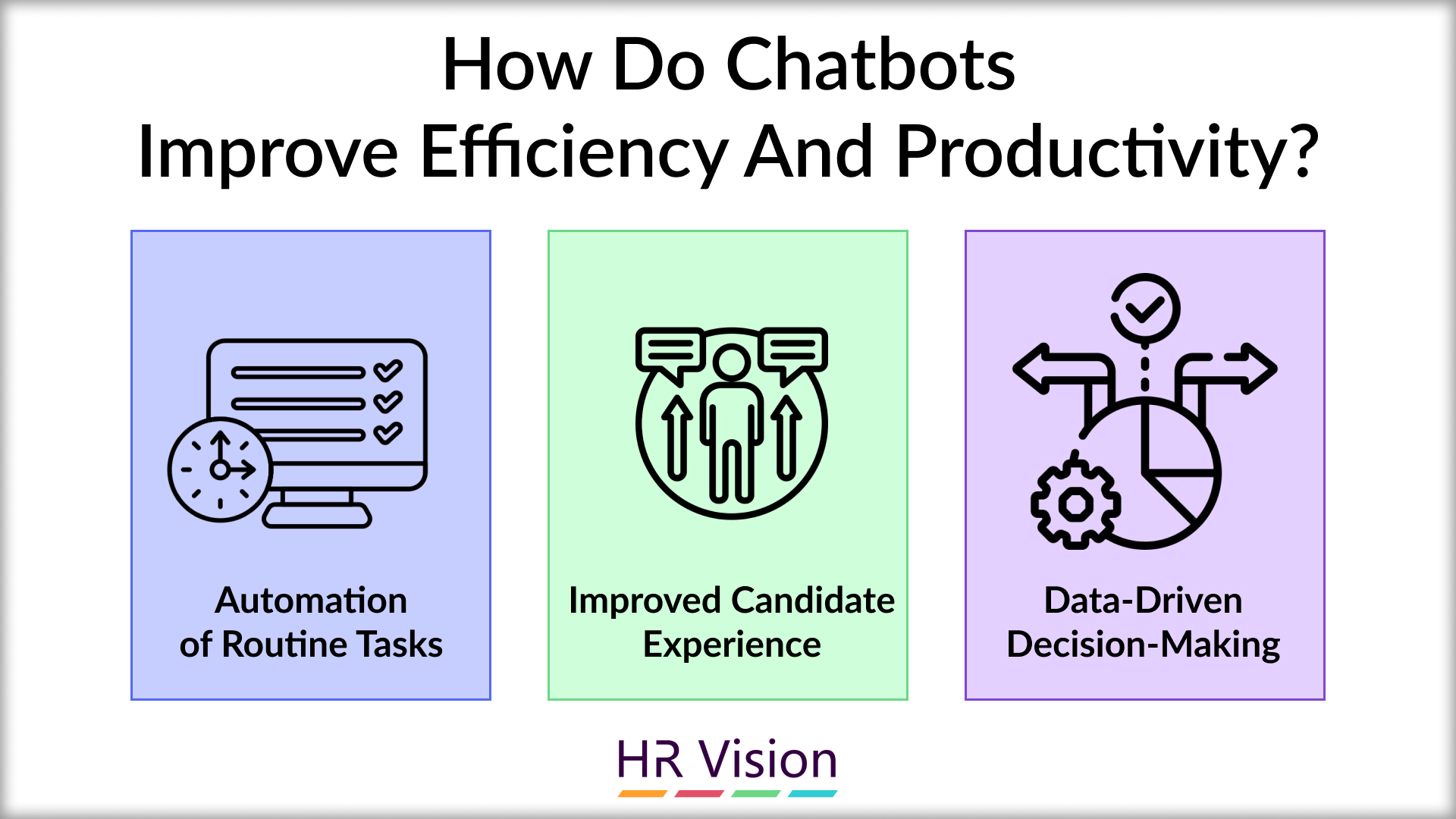
Automation of Routine Tasks
Chatbots excel at automating repetitive and time-consuming HR tasks. They can handle a wide range of administrative responsibilities, such as answering employee queries, scheduling interviews, and onboarding paperwork.
Chatbots don’t take coffee breaks or vacations. They are available around the clock to assist employees with their questions and concerns. This accessibility ensures that HR support is available whenever employees need it, regardless of the time zone or working hours. This continuous support contributes to improved employee satisfaction and engagement, as employees feel heard and supported at any hour.
Improved Candidate Experience
A seamless and efficient hiring process is crucial for attracting top talent. Chatbots play a significant role in enhancing the candidate experience.
- Streamlined Application Processes. Chatbots can guide candidates through the application process, offering assistance with resume submissions, explaining job requirements, and even conducting preliminary assessments. This simplifies the application process, making it more user-friendly and reducing drop-off rates.
- Faster Response Times. Candidates appreciate timely responses. Chatbots can instantly acknowledge receipt of applications, provide updates on the hiring process, and answer common candidate questions. This not only keeps candidates engaged but also helps HR teams manage their workload more effectively.
Data-Driven Decision-Making
Data-driven HR decisions are key to improving processes, retaining talent, and driving organizational success. Chatbots contribute significantly to this aspect of HR.
Analytics and Insights from Chatbot Interactions
Analytics and Insights from Chatbot Interactions. Every interaction they have with employees or candidates generates valuable data. HR professionals can analyze this data to gain insights into frequently asked questions, common pain points, and areas of improvement within the organization. By mining this information, HR can make data-driven decisions to enhance various HR processes, from onboarding to employee engagement initiatives.
Identifying HR Trends and Areas for Improvement. The data collected from chatbot interactions can also be used to identify emerging HR trends and areas for improvement. For example, if a chatbot consistently receives questions related to a particular benefit package or HR policy, it may signal a need for clarification or adjustment in those areas. This proactive approach to problem-solving can lead to a more streamlined and employee-friendly HR environment.
Key HR Processes Improved by Chatbots
Streamlining Candidate Sourcing and Automating Onboarding Tasks with Chatbots
The hiring process can be a time-consuming endeavor for HR professionals, involving everything from posting job listings to conducting interviews and onboarding new hires. Chatbots have proven to be invaluable tools in simplifying this process.
Candidate Sourcing. Chatbots can assist HR teams by automatically screening resumes and applications, identifying qualified candidates, and even conducting initial pre-screening interviews.
Onboarding Automation. Onboarding new employees can be a complex and resource-intensive task. Chatbots can facilitate the onboarding process by providing new hires with information about company policies, benefits, and procedures. They can also help in completing essential paperwork, thus reducing the administrative burden on HR professionals.
Common Employee Queries that Chatbots Can Handle
HR departments often deal with a myriad of employee inquiries on a daily basis. Chatbots can be programmed to handle routine queries efficiently, freeing up HR staff to focus on more complex issues.
Benefits and Leave Requests. Employees frequently have questions regarding their benefits packages or need to request leave. Chatbots can provide quick responses to these queries, offering information about available benefits and guiding employees through the leave request process.
Payroll and Tax Information. Questions about payroll, tax deductions, and direct deposit details can be answered promptly by chatbots. This ensures that employees have access to accurate financial information without having to wait for HR assistance.
Policy and Procedure Clarifications. HR policies and procedures can sometimes be unclear to employees. Chatbots can serve as a knowledge base, offering explanations and guidance on a wide range of HR-related topics, from dress codes to performance evaluations.
The Role of Chatbots in Tracking Employee Performance
Monitoring employee performance is a crucial aspect of HR management. Chatbots can play a significant role in this area by facilitating communication and data collection.
Performance Feedback. Chatbots can send automated reminders to managers and employees for performance reviews, making sure they are conducted on time. Additionally, they can collect feedback from employees about their performance and job satisfaction, helping HR professionals gain insights into the workforce’s sentiments.
Training and Development. HR chatbots can recommend training programs and development opportunities to employees based on their performance and career goals. They can also provide access to relevant resources and track progress.
Navigating Challenges in HR Chatbot Implementation
First and foremost, the implementation of chatbots in HR processes is undoubtedly a progressive step forward, offering numerous advantages to both organizations and employees. However, it’s crucial to acknowledge that along with these benefits come several key challenges and considerations that must be meticulously addressed.
One of the primary concerns that arise in the context of HR chatbot implementation is Data Security and Privacy. In today’s era of heightened data sensitivity, safeguarding confidential employee information takes precedence. Robust security measures and strict adherence to data protection regulations are essential prerequisites.
To ensure the success of HR chatbots, they require thorough training and seamless integration into existing HR systems. This includes building a robust knowledge base, refining natural language processing capabilities, and integrating with various data sources to ensure they provide accurate and relevant responses.
However, it’s important to note that while chatbots excel at handling routine tasks efficiently, they may encounter difficulties with more complex inquiries. Striking the right balance between automation and human interaction is paramount. HR teams must carefully determine when to escalate queries to human agents, ensuring that employees receive the appropriate level of support and expertise when needed.
Lastly, the journey of HR chatbot implementation doesn’t end with the initial setup. Regular monitoring, refinement, and bias checks are essential for ongoing success. This process involves continuously analyzing user interactions, feedback, and performance data to make necessary improvements and enhancements.
To delve deeper into the transformative power of HR technology, analytics, and the future of work, we invite you to join us at HR Vision.


