In the UK, 97% of employers say that soft skills are key to business growth or success. This statistic speaks volumes about the changing priorities in the modern workplace. While technical qualifications and experience remain important, it is the intangible, interpersonal qualities that are increasingly seen as the linchpin to an organization’s prosperity.
This paradigm shift in the workplace is largely attributed to the rise of knowledge-based industries and the automation of routine tasks. In a world where machines can handle many repetitive and rule-based responsibilities, it is the uniquely human attributes of creativity, empathy, and problem-solving that have become invaluable. Soft skills enable individuals to leverage their creativity, navigate interpersonal complexities, and solve challenges that require a nuanced, human touch.
What Are Soft Skills?
Soft skills, often referred to as interpersonal or people skills, encompass a range of personal attributes and qualities that enable individuals to interact effectively with others.
These skills are distinct from technical or hard skills, which relate to a person’s specific knowledge and expertise in a particular field. Soft skills include communication, teamwork, adaptability, problem-solving, emotional intelligence, leadership, and time management, among others. Soft skills are critical for building and maintaining healthy work relationships, fostering collaboration, and enhancing overall workplace productivity. While hard skills are important for job performance, soft skills are equally, if not more, essential for successful teamwork, leadership, and career advancement.
Key Soft Skills in Demand
As industries continue to change and technology advances, the demand for specific soft skills may shift, but several remain perennially crucial in the workplace. Here are some of the key soft skills that are highly sought after:
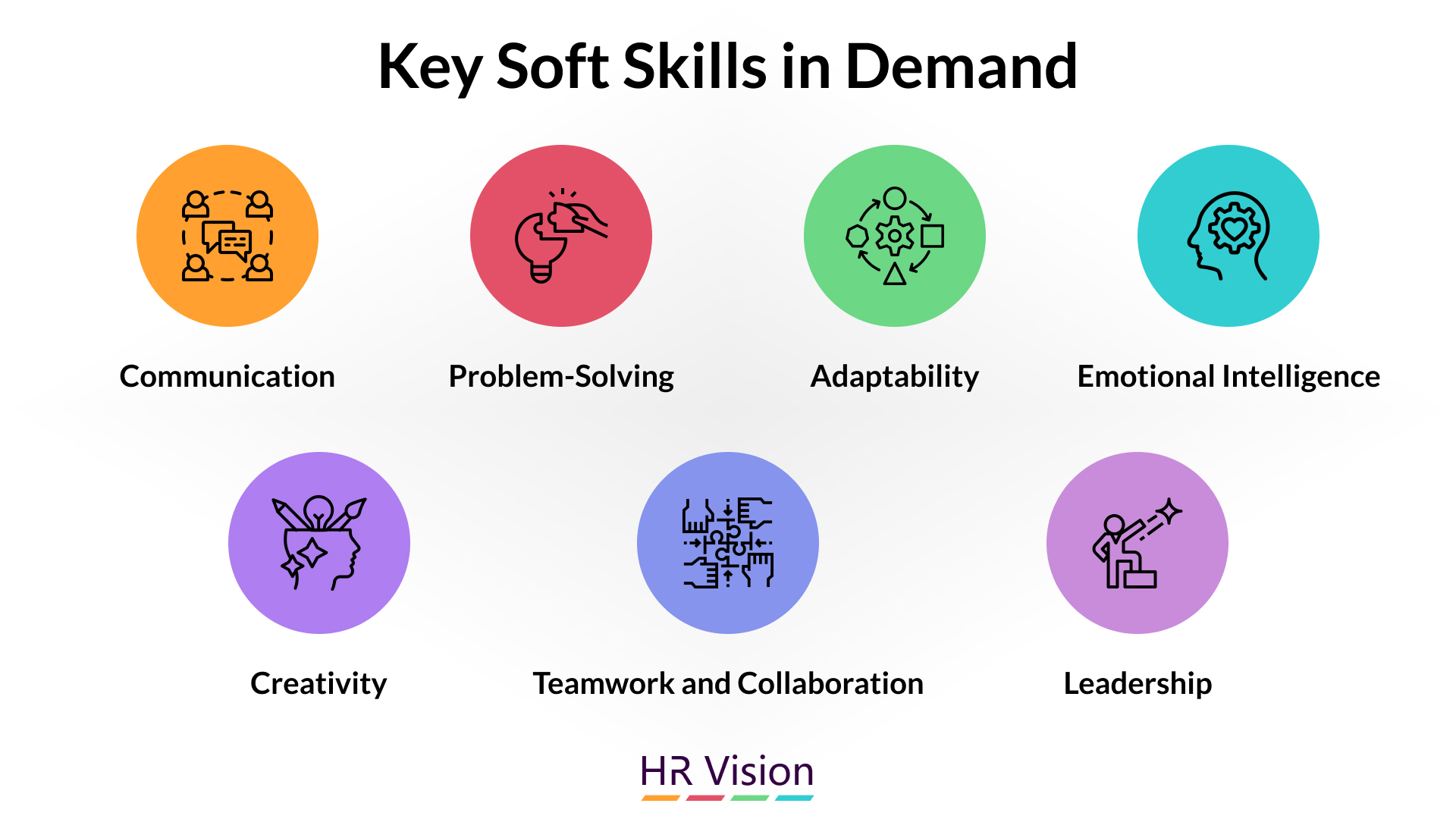
1. Communication: Effective communication, both verbal and written, is consistently in demand. In a globalized world, the ability to convey ideas clearly and persuasively is invaluable.
2. Problem-Solving: In a world full of complex challenges, individuals who can approach problems with innovative and efficient solutions are highly prized.
3. Adaptability: The capacity to adapt to new technologies, processes, and work environments is essential in today’s rapidly changing world.
4. Emotional Intelligence: Understanding and managing emotions, as well as recognizing and empathizing with the emotions of others, fosters a harmonious and productive workplace.
5. Teamwork and Collaboration: Strong teamwork and collaboration skills are vital for a harmonious work environment. The ability to collaborate effectively increases productivity and drives success.
6. Creativity: The ability to think outside the box and generate novel ideas is particularly valuable in industries driven by innovation.
7. Leadership: Strong leadership skills inspire confidence and enable individuals to guide their teams towards success.
Why Soft Skills Matter in the Workplace
Soft skills are indispensable in the workplace because they underpin the harmonious and effective functioning of teams and organizations. Effective communication, for instance, ensures that ideas and information flow seamlessly, reducing the likelihood of misunderstandings and conflicts. The ability to collaborate and work in teams is paramount, as most modern workplaces emphasize collective efforts to achieve common goals. Soft skills like teamwork, adaptability, and conflict resolution enable employees to navigate group dynamics, resolve interpersonal issues, and maintain a positive work environment. In leadership and managerial roles, soft skills are equally vital, as they empower individuals to inspire and motivate their teams, make informed decisions, and handle complex problem-solving tasks. Furthermore, soft skills like empathy, patience, and adaptability are essential in customer-facing roles, as they enhance the quality of service, foster customer satisfaction, and contribute to customer loyalty.
Measuring Soft Skills
Measuring soft skills can be a complex task, but various assessment methods have been developed to help employers and individuals evaluate and improve these essential attributes.
Resume and Cover Letter Evaluation: The initial screening often begins with a candidate’s resume and cover letter. These documents provide insights into a person’s communication skills, attention to detail, and professionalism.
Self-assessment: Self-reflection can be a valuable tool in gauging one’s soft skills. Individuals can use self-assessment questionnaires or seek feedback from peers, mentors, or supervisors to gain a better understanding of their strengths and areas for improvement.
Behavioral Interviews: Conducting interviews that focus on past behaviors and experiences is a common method for assessing soft skills. Interviewers ask questions about how candidates have handled various situations, which can reveal their ability to adapt, problem-solve, and collaborate.
Skills Assessments and Testing: Several standardized tests and assessments, such as the Emotional Intelligence Appraisal, Myers-Briggs Type Indicator (MBTI), and DiSC Personality Assessment, can help measure specific soft skills like emotional intelligence, personality traits, and communication styles.
Impact on Organizational Success
The impact of measuring and cultivating soft skills on organizational success is profound. In a competitive business landscape, where teamwork, effective communication, and adaptability are paramount, employees with strong soft skills can drive innovation, enhance collaboration, and foster a positive workplace culture. Organizations that prioritize the assessment and development of soft skills are better equipped to build high-performing teams, improve employee engagement, and provide exceptional customer service. Furthermore, leaders with well-honed soft skills can inspire and motivate their teams, leading to increased productivity and job satisfaction. The presence of robust soft skills within an organization can significantly contribute to its long-term success by fostering a harmonious, efficient, and resilient workforce.
Ready to explore the pivotal role of soft skills in modern talent assessment further? Join us at HR Vision, where we’ll bring together leading HR experts to delve into the ever-changing landscape of work