

Traditionally, HR professionals have relied on manual, time-intensive methods to identify, interview, and select potential candidates. However, the increasing complexity of job markets, coupled with the demand for diverse skill sets, has illuminated the limitations of these conventional approaches. Organizations grapple with challenges such as lengthy hiring cycles, limited access to a diverse pool of candidates, and the inherent biases embedded in traditional recruitment practices. Recognizing these challenges, many forward-thinking companies are turning to AI in recruitment to streamline processes, enhance candidate experiences, and mitigate biases for more effective and inclusive talent acquisition.
The integration of advanced technologies is reshaping the HR landscape, offering unprecedented opportunities to streamline processes and enhance decision-making. Artificial Intelligence (AI) emerges as a key player in redefining the future of recruitment.
The Current Challenges in Recruitment
One of the prevailing challenges is the pervasive inefficiency and time-consuming nature inherent in traditional recruitment processes. Sorting through a large volume of resumes, scheduling interviews, and coordinating feedback among hiring teams can be arduous and resource-intensive. This not only extends the time it takes to fill crucial positions but also increases the likelihood of losing top-tier candidates to more agile competitors.
The traditional reliance on gut feelings and subjective judgments is gradually giving way to predictive analytics and machine learning algorithms that can analyze vast datasets to identify patterns and predict candidate success. Organizations are increasingly seeking to harness the power of data to not only streamline the recruitment process but also to make more informed decisions about the suitability of candidates for specific roles. The need for a predictive approach underscores the growing importance of technology, particularly AI, in reshaping the future of recruitment.
The Integration of AI in Recruitment
As technology continues to reshape the landscape of various industries, the realm of recruitment is no exception. The integration of AI in the recruitment process has become a game-changer, offering efficiency, objectivity, and enhanced decision-making capabilities.
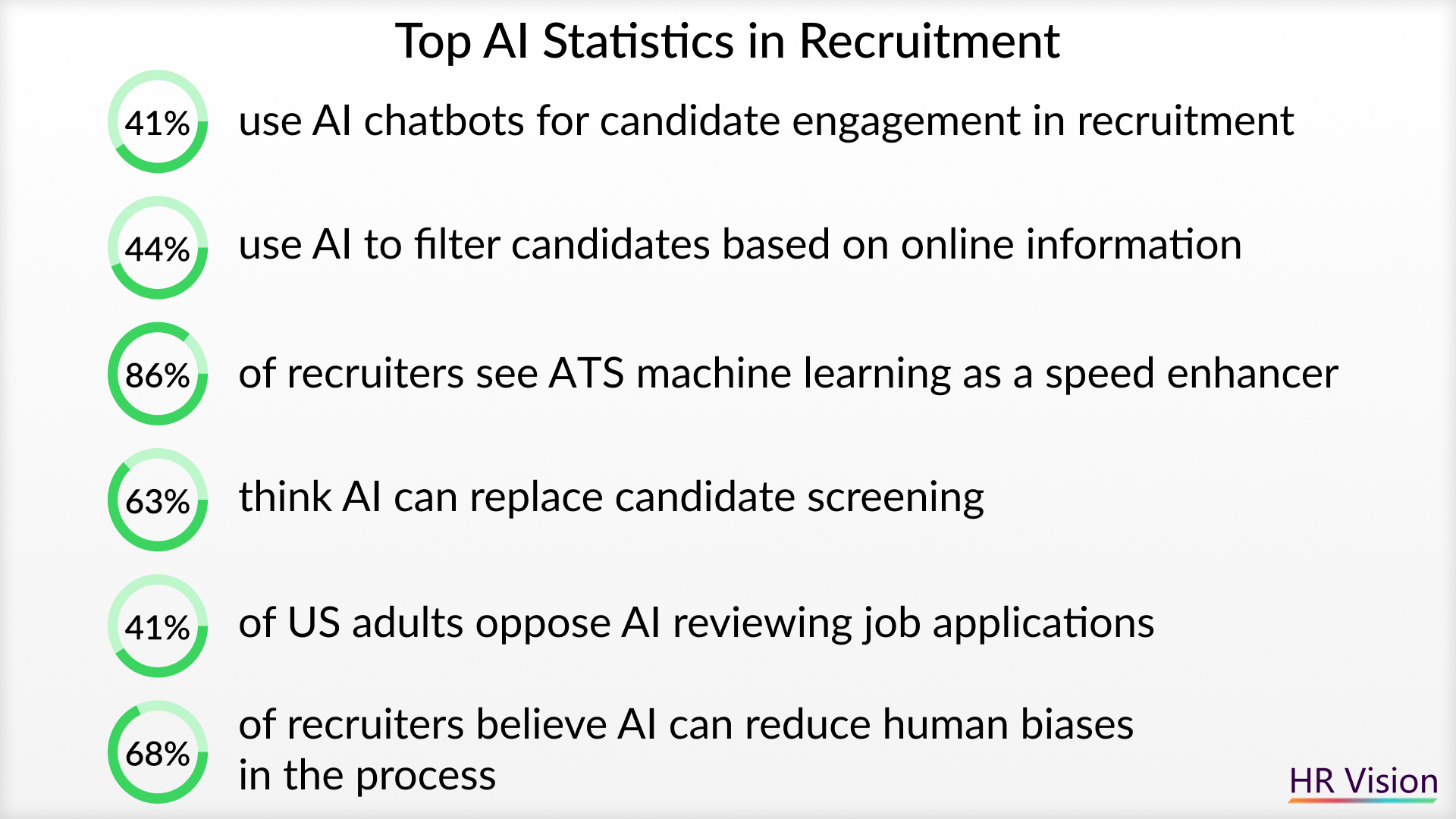
The infusion of AI into recruitment and selection processes heralds a new era of efficiency, particularly through the automation of mundane and time-consuming tasks. Application screening, a historically labor-intensive process, can now be expedited with AI algorithms that quickly sift through resumes, identifying key qualifications and relevance to job descriptions. Similarly, resume parsing, the extraction of pertinent information from resumes, is streamlined, freeing up valuable human resources for more strategic aspects of recruitment. Scheduling interviews, often a logistical puzzle, becomes a seamless process with AI-driven scheduling tools that consider the availability of both candidates and interviewers, optimizing the entire workflow.
AI-powered chatbots have become an integral part of the recruitment process, especially during the initial stages of candidate interaction. These bots engage with applicants, answering queries, and collecting basic information. Mya, an AI recruiting assistant, is a prime example. It engages candidates in natural conversations, asking relevant questions about their experience and preferences. This not only streamlines the process but also provides a positive candidate experience.
The Future of Recruitment
As the integration of AI becomes more prevalent in recruitment processes, it sets the stage for a dynamic and transformative future. The ongoing evolution of technology and its applications in talent acquisition points toward several key trends that are shaping the future of recruitment.
1. AI Augmented Decision-Making
In the future, AI in recruitment is expected to play an even more significant role in decision-making processes. Advanced algorithms will not only assist in shortlisting candidates but also in predicting long-term success within a specific role. Companies like Entelo are already exploring the use of AI in recruitment to assess a candidate’s cultural fit and potential for growth within the organization.
2. Virtual Reality (VR) in Recruitment
The integration of Virtual Reality promises to take candidate engagement to new heights. VR can provide immersive experiences, allowing candidates to virtually tour a company’s office, meet potential colleagues, or even engage in simulated work scenarios. This technology not only enhances the candidate experience but also helps employers assess a candidate’s adaptability and problem-solving skills in a more realistic setting.
3. Emphasis on Soft Skills Assessment
As the importance of soft skills continues to rise, AI tools are likely to evolve to assess these attributes more effectively. Tools like Pymetrics already use AI to evaluate candidates based on their cognitive and emotional traits. Future advancements may include more sophisticated algorithms that can analyze subtle nuances in communication styles, emotional intelligence, and adaptability. AI in recruitment transforms hiring by efficiently matching candidates to the right positions using predictive analytics and machine learning for better decision-making.
Continuous Learning and Adaptation to Evolving Technologies
In this dynamic landscape, the future of recruitment hinges on the ability to adapt to evolving technologies. Continuous learning becomes imperative for HR professionals to stay abreast of the latest developments in AI, machine learning, and other technological advancements. Organizations that foster a culture of adaptability and provide ongoing training will be better positioned to navigate the ever-changing recruitment landscape. As AI in recruitment and selection continues to evolve, so too must the skills and knowledge of HR professionals, ensuring a workforce that is not only tech-savvy but also capable of leveraging AI to its fullest potential in the pursuit of top-tier talent. AI in the recruitment process streamlines talent acquisition, enhancing efficiency and precision in candidate selection. The future of recruitment lies in the hands of those who embrace innovation, balance, and a commitment to staying at the forefront of technological advancements.
Ready to explore the future of recruitment and stay ahead of industry trends? Join us at HR Vision, where top HR leaders converge to discuss the best practices for navigating this transformative time.


