
Employees are the beating heart of any organization. Their ideas, dedication, and well-being directly impact a company’s success. Yet, how often do their voices feel truly heard? Enter the powerful tool of employee feedback. Imagine a work environment where a simple question like “How can we improve?” sparks a dynamic conversation. Employees feel valued, their perspectives are acknowledged, and their suggestions fuel positive change.
The impact is undeniable. According to a recent Clutch survey, 68% of employees who receive accurate and consistent feedback report feeling fulfilled. In the contemporary talent market, retaining top performers who feel engaged and motivated is crucial.
Why It’s Crucial Now
Ever feel like a great employee is slowly slipping away? Maybe they’re not as excited about their work anymore. This can happen if they feel like their voice needs to be heard. Today, with lots of companies competing for the best people, listening to your employees is more important than ever for a strong employee proposition. According to OfficeVibe, 24 out of 25 employees believe receiving regular feedback is good. By asking your employees for their ideas and how things can be better, you learn what’s bothering them and what they’d like to see changed. This makes them feel like they matter and are part of the team.
But have you ever thought about how often companies ask their employees for feedback? There’s some data on this, and it shows us what’s happening with feedback in workplaces.
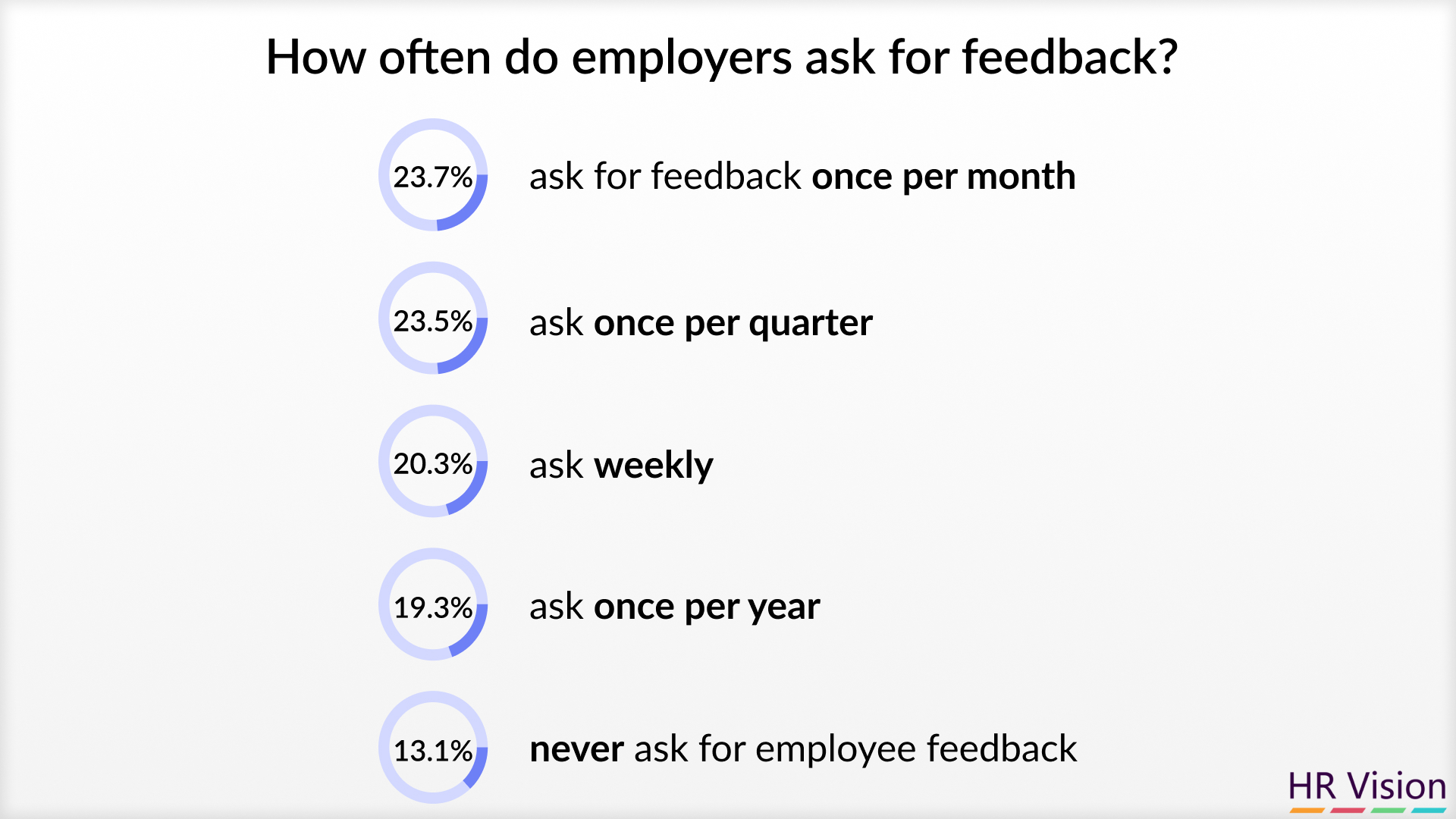
Working from home or other places has become more common, but it also comes with challenges. Since everyone isn’t in the same office, it can be harder to stay connected and know what’s going on. Employees might feel unsure about what their boss expects or be afraid to speak up about problems.
Regularly asking your team for their input, you create a way for them to share their experiences, ask questions, and suggest ways to make working remotely better. This back-and-forth conversation builds trust and makes everyone feel like they’re part of the team, even if they’re not in the same place.
Benefits of Effective Feedback
Employee feedback isn’t just about keeping everyone happy, it’s a powerful tool that drives real business benefits. Here’s how:
1. A More Engaged and Productive Workforce
Imagine a team buzzing with ideas and a genuine desire to excel. That’s the power of regular feedback! When employees receive clear and consistent feedback, they understand their role better, know what’s expected of them, and feel a sense of ownership over their work. This leads to a more engaged workforce. A Forbes survey highlights this connection, showing that 43% of highly engaged employees receive feedback at least once a week.
Effective feedback goes beyond simply identifying weaknesses. It’s about recognizing and capitalizing on strengths as well. By highlighting an employee’s natural talents and offering opportunities to leverage them, you create a win-win situation. The employee feels valued and motivated, and the company benefits from their increased confidence and productivity. This approach is supported by Gallup research, which found that teams receiving strength-based feedback were 12.5% more productive than those without feedback.
Looking to implement a system for regular employee feedback? Consider using an employee feedback form. These forms can be a valuable tool for gathering insights from your team and fostering a culture of continuous improvement.
2. A Culture of Retention and Recognition
Feeling valued and appreciated is a basic human need, and employees are no different. When management actively listens to their feedback and implements positive changes based on it, it shows they care about their well-being and contributions. This recognition acts as a powerful motivator. According to Achievers, a provider of employee experience solutions, 37% of employees say they’d be more motivated to do better work if they felt recognized by management.
The converse is also true. Feeling ignored or unheard can lead to frustration and disengagement. According to AllVoices, 41% of employees have left a job because they didn’t feel listened to. Effective feedback creates a culture where employees feel their voices matter, leading to higher retention rates and a happier workforce. This translates to a more stable and productive work environment, ultimately benefiting the company’s bottom line.
Building a Feedback Feedback Loop
Now that we’ve explored the compelling benefits of effective feedback, let’s delve into how to make it a reality in your organization. Here’s where employee feedback software comes into play. These are structured systems designed to gather feedback from employees in a consistent and meaningful way. These are structured systems designed to gather feedback from employees in a consistent and meaningful way.
There are various program options, each with its advantages:
- Surveys: Online surveys are a popular choice for gathering feedback on specific topics or conducting large-scale employee engagement surveys. Additionally, using an online employee feedback form can streamline the feedback process for both employees and managers.
- One-on-One Meetings: Regularly scheduled meetings between managers and employees offer a personal touch and allow for in-depth discussions about performance, goals, and challenges. This two-way communication fosters trust and creates a safe space for honest feedback.
- Pulse Surveys: Short and frequent surveys (think weekly or monthly) can gauge employee sentiment on a variety of topics. This real-time feedback allows companies to identify emerging issues and address them quickly.
- Suggestion Boxes (Physical or Digital): Suggestion boxes, whether physical or digital, are a valuable tool for companies looking to strengthen their employee proposition. This classic method provides a simple way for employees to anonymously submit ideas or concerns. While it might not provide detailed information, it allows for a low-barrier entry point for feedback.
The key lies in choosing a program (or a combination) that best suits your organization’s size, culture, and specific needs.
Employee Feedback Tools & Software
The good news is there’s a wealth of technology available to streamline and enhance your employee feedback efforts. Employee feedback software offers a variety of features to simplify the process, from creating and distributing surveys to analyzing data and generating reports. These tools can help you:
- Reach all your employees easily: No matter how geographically dispersed your workforce is, online platforms allow everyone to participate.
- Ensure anonymity: Guarantee confidentiality to encourage honest and open feedback.
- Analyze trends and identify patterns: Use data visualization tools to gain deeper insights from employee responses.
- Take action and track progress: Software can help you manage the feedback loop, track implementation steps, and measure the impact of changes based on employee input.
By leveraging technology alongside well-designed feedback programs, you can create a robust system that empowers employees to share their voices and shapes a more positive and productive work environment for everyone.
Examples of Employee Feedback Tools:
Several user-friendly options are available to cater to different needs and budgets. Here are a few examples to get you started:
- SurveyMonkey. A popular choice for creating and distributing surveys of all shapes and sizes, including employee engagement surveys.
- CultureAmp. Offers a comprehensive suite of tools for employee engagement, performance management, and feedback.
- 15Five. Focuses on continuous performance management through regular check-ins and feedback exchanges.
- Reflektive. Specializes in real-time performance management and feedback, fostering a culture of ongoing development.
What Do Employees Talk About?
Understanding the topics that employees raise most frequently can help you tailor your feedback programs for maximum impact. A recent study revealed some interesting insights. Over 42% of employees indicated that improving morale is a key topic they bring up when giving feedback. This highlights the importance of fostering a positive and supportive work environment.
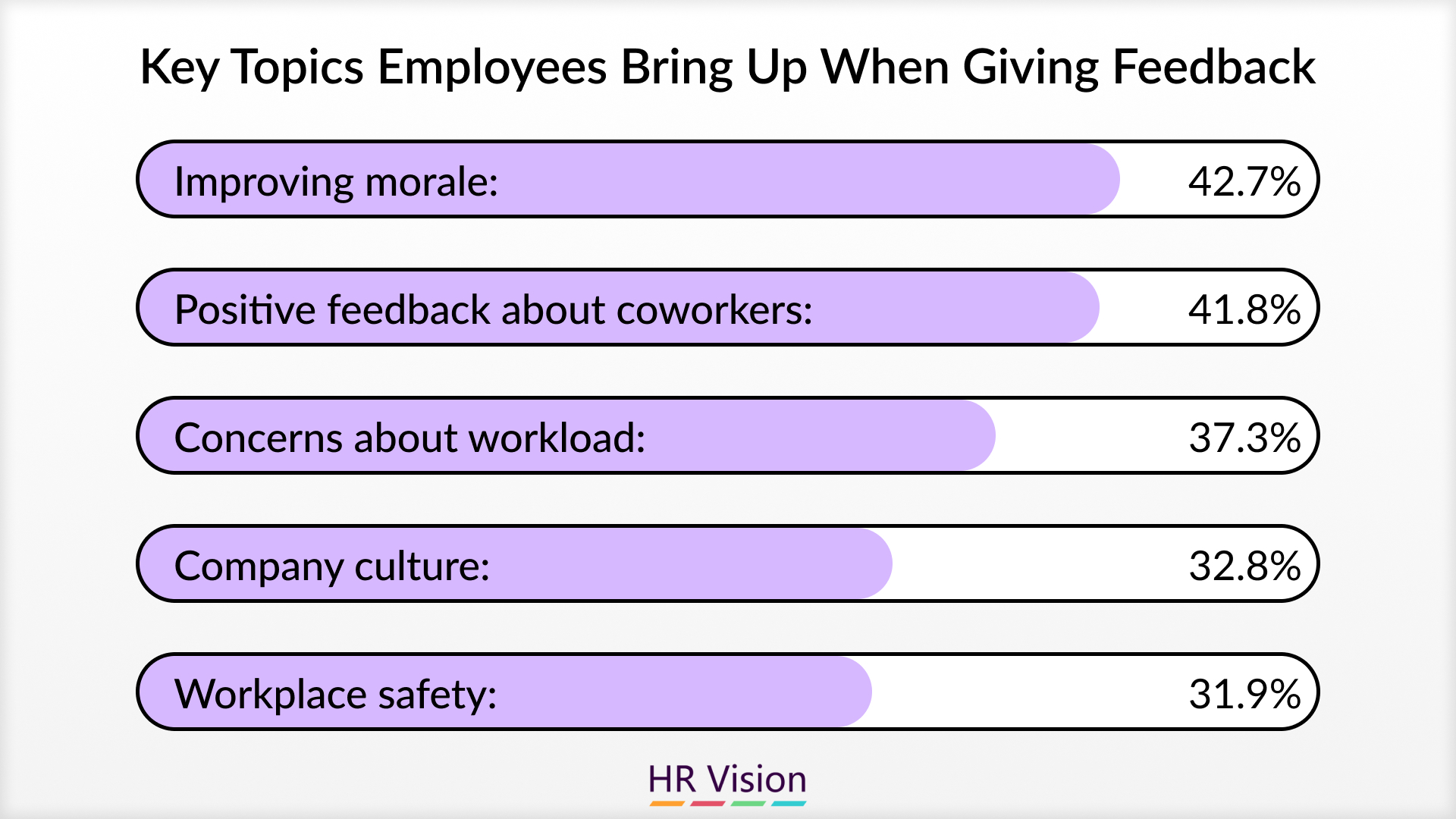
Other commonly mentioned areas include recognizing and appreciating colleagues (41.8%), addressing workload concerns (37.3%), providing feedback on company culture (32.8%), and ensuring workplace safety (31.9%). By incorporating these themes into your feedback program design, you encourage employees to share their perspectives on the whole employee experience, leading to a more well-rounded and effective approach.
Show, Don’t Tell: Employee Feedback Examples
So, you’re convinced of the importance of employee feedback, but how do you actually put it into action? Here’s where specific examples come in handy. They illustrate the real-world impact feedback can have on various aspects of the employee experience:
- Improving Work Processes: Imagine receiving employee feedback highlighting inefficiencies in a specific workflow. By analyzing their suggestions, you might streamline the process, saving everyone time and frustration.
- Boosting Team Morale: Feedback can reveal areas where team dynamics need a boost. Employee suggestions for team-building activities or recognition programs can foster a more positive and collaborative work environment.
- Identifying Training Needs: Feedback might highlight knowledge gaps or a desire for additional training in specific areas. This allows you to tailor professional development opportunities to address employee needs and enhance overall skillsets.
These are just a few employee feedback examples, and the possibilities are endless! The key is to actively listen to your employees’ voices and use their feedback to make tangible improvements across the organization.
Conclusion
Employee feedback isn’t just a nice thing to do – it’s a must-have for any successful company today. Here’s the key: When employees feel like their voices are heard and valued, they’re more likely to stick around and do their best work. Imagine a team that works together to solve problems and come up with new ideas – that’s the power of effective feedback in action!
Set up a system for collecting feedback regularly, listen carefully to what your employees have to say, and then take steps to make things better based on their input. By building a culture of open communication, you’re investing in the future of your company and creating a place where everyone feels like they can contribute and succeed.
Want to take your employee feedback skills to the next level? The world of work is rapidly changing, and staying ahead of the curve is crucial. Join us at HR Vision for two days of thought-provoking discussions with top HR leaders.