What is a toxic work environment?
Have you ever dreaded going to work? Felt constantly stressed or undervalued? If so, you might be experiencing a toxic work environment. According to a staggering 2023 study by Oak Engage, 75% of UK employees report experiencing a “toxic workplace culture.”
So, what exactly is a toxic work environment? In essence, it’s a workplace characterized by negativity, hostility, and unprofessional behavior. This can manifest in various ways, impacting employee well-being and ultimately harming the business itself. Therefore, it’s crucial for HR professionals to recognize the signs of a toxic work environment.

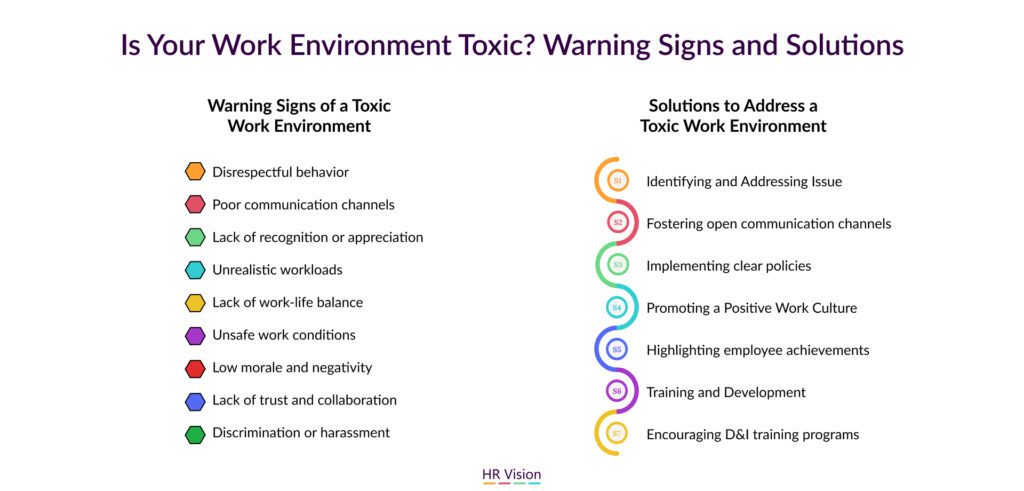
Warning Signs of a Toxic Work Environment
A healthy work environment thrives on respect, clear communication, and appreciation. When these elements are missing, it can be a strong indicator of a toxic workplace. Let’s delve into some of the key warning signs:
- Disrespectful behavior (bullying, micromanagement, gossip)
- Poor communication channels
- Lack of recognition or appreciation
- Unrealistic workloads
- Lack of work-life balance
- Unsafe work conditions (physical or emotional)
- Lack of transparency in decision-making
- High turnover rate
- Low morale and negativity
- Lack of trust and collaboration
- Discrimination or harassment (race, gender, etc.)
1. Lack of Respect and Communication
The foundation of any healthy workplace is built on mutual respect and clear communication. In a toxic environment, these essential elements begin to erode. Here’s how you might recognize it:
- Dismissive or condescending behavior: Cutting off colleagues mid-sentence, rolling eyes during presentations, or making negative jokes at someone’s expense are all signs of disrespect. This kind of behavior creates a hostile atmosphere where employees feel undervalued and unheard.
- Yelling, bullying, or intimidation: These more extreme forms of disrespect are clear signs of a toxic environment. When employees are afraid to speak up or express their ideas for fear of retaliation, creativity and collaboration suffer.
- Unclear expectations and mixed messages: Leaders who are unclear about their expectations or constantly change direction create confusion and frustration. This can lead to employees feeling like they can never do anything right, further damaging morale and trust.
- Gossip and negativity: Constant negativity and a culture of gossip not only make the workplace unpleasant but also erode trust between colleagues. This negativity can quickly spread and infect the entire team.
2. Unhealthy Work Practices
Beyond the fundamental breakdown of respect and communication, several unhealthy work practices can contribute to a toxic environment. Here are some key red flags:
- Unrealistic workloads leading to burnout and stress: When employees are consistently overloaded with work, it creates a sense of overwhelm and leads to burnout. This can manifest in missed deadlines, decreased quality of work, and a decline in employee morale.
- Lack of work-life balance and pressure to constantly be available: A healthy work-life balance is essential for employee well-being. In a toxic environment, however, employees might feel pressured to be constantly available, even outside of work hours.
- Unsafe work conditions (physical or emotional): A safe work environment goes beyond physical hazards. In a toxic workplace, employees might be subjected to bullying, harassment, or other forms of emotional abuse. This can create a climate of fear and anxiety, making it difficult for employees to feel comfortable and productive.
- Lack of transparency in decision-making processes: When employees are left out of the loop regarding decisions that impact them, it breeds distrust and resentment. A lack of transparency can also lead to confusion and inefficiency, further contributing to a negative work environment.
3. Negative Company Culture
The overall company culture plays a significant role in shaping the work environment. Here are some warning signs of a toxic culture:
- High turnover rate indicating employee dissatisfaction: A company with a high turnover rate is a strong indicator of underlying issues. Employees who are consistently unhappy and disengaged are more likely to leave for greener pastures.
- Low morale and negativity among colleagues: In a healthy workplace, there’s a sense of camaraderie and positivity. A toxic environment, however, will be characterized by low morale, negativity, and a general sense of unhappiness among colleagues.
- Lack of trust and collaboration within teams: Collaboration is essential for success in most workplaces. When a lack of trust prevails within teams, it hinders communication and collaboration. Employees may become reluctant to share ideas or work together effectively, ultimately impacting productivity and innovation.
- Discrimination or harassment based on race, gender, etc.: No one should feel unsafe or unwelcome at work. Discrimination or harassment based on race, gender, sexual orientation, or any other factor creates a hostile work environment and is a clear sign of a toxic culture.
Solutions for HR Professionals
Having identified the warning signs of a toxic work environment, HR professionals play a crucial role in creating positive change.
1. Identifying and Addressing Issues
The first step is to actively listen to employees. This can be achieved through anonymous surveys, focus groups, and one-on-one meetings. Encouraging open communication and creating a safe space for employees to voice their concerns is key. By gathering employee feedback, HR can identify specific areas of concern and understand the root causes of the toxicity.
Once the issues are identified, HR professionals should work collaboratively with leadership to develop a clear action plan. This plan should address the specific problems identified and outline concrete steps to create a more positive and productive work environment. This might involve implementing new policies, conducting training programs, or even restructuring teams.
Transparency throughout the process is crucial. HR should communicate openly with employees about the identified issues and the steps being taken to address them. This helps to rebuild trust and demonstrates the organization’s commitment to creating a better workplace.
2. Promoting a Positive Work Culture
Building a positive work culture requires a proactive approach that goes beyond simply addressing existing problems.
Respectful communication and appreciation are cornerstones of a positive culture. HR can encourage these values through training programs focused on effective communication and conflict resolution. Additionally, implementing employee recognition programs that celebrate achievements and contributions can significantly boost morale and engagement.
Burnout is a major contributor to toxicity. HR can promote healthy work-life balance by encouraging employees to utilize vacation time, offering flexible work arrangements, and setting clear boundaries around after-hours communication. Additionally, promoting well-being initiatives like exercise programs or mental health resources demonstrates the organization’s commitment to employee well-being.
Employees who feel challenged and valued are more likely to be engaged and satisfied. HR can work with managers to create opportunities for professional development. This could include providing access to training programs, supporting educational pursuits, or offering mentorship opportunities. Investing in employee growth not only benefits the individual but also strengthens the organization’s talent pool.
3. Training and Development
Targeted training programs play a vital role in fostering a healthier work environment. Here’s how HR can leverage training and development:
- Leadership Development: Leaders set the tone for the entire organization. HR can invest in leadership development programs that equip managers with the skills they need to create a positive and supportive work environment. This could include training on effective communication, conflict resolution, delegation, and fostering a culture of respect and trust.
- Soft Skills Training: Beyond leadership, developing soft skills across the organization is crucial. HR can implement training programs focused on communication, teamwork, emotional intelligence, and managing stress. These skills not only enhance professional interactions but also equip employees to navigate challenging situations constructively, fostering a more collaborative and positive work environment.
Conclusion
A toxic work environment is a serious issue with far-reaching consequences for both employees and businesses. Through open communication, identifying root causes, and implementing clear action plans, HR plays a critical role in fostering a healthy work culture. This involves promoting respect and recognition, prioritizing work-life balance, and investing in employee development through targeted training programs.
Remember, a healthy work environment benefits everyone. By creating a positive and supportive culture, HR professionals can help organizations thrive and employees reach their full potential.
Want to delve deeper into creating a thriving work environment and explore the latest HR trends? Join us at HR Vision!