

Generation X refers to people born between 1965 and 1980. Often called the “middle child” of generations, they grew up during times of social and economic change. This group experienced the rise of personal computers, witnessed the end of the Cold War, and saw the beginning of the internet age. These events shaped their independent, adaptable, and skeptical nature.
Studies indicate that older workers, typically those aged 55 to 64, and mid-career employees, aged 45 to 54, often encounter stereotypes and misconceptions. Generation X, born between 1965 and 1980, spans both these age groups, making them particularly susceptible to these challenges. Managing and motivating Generation X requires a tailored approach. They value autonomy, work-life balance, and direct communication. By addressing these priorities, organizations can harness their skills and keep them engaged.
Key Characteristics of Gen X
Generation X, often referred to as the “Latchkey Generation,” grew up during a time when both parents worked, leading many in this cohort to develop a strong sense of independence and self-reliance. This has translated into a preference for working autonomously, making decisions on their own, and managing their work without excessive guidance.
Gen Xers were witnesses to the rise of technology, particularly the internet and personal computers. While they may not have grown up with smartphones or social media, they quickly adapted to new technological advancements. This generation is comfortable using technology in their daily lives, whether for work or personal use, but they don’t rely on it to the same extent as younger generations.
Generation X places high importance on work-life balance. Having grown up during a time of significant societal changes and economic uncertainty, many value flexibility in their professional lives. They seek careers that allow them time to pursue personal interests, family activities, and self-care, avoiding burnout from long hours or excessive stress.
Work Preferences and Attitudes
Generation X places a significant emphasis on work-life balance, with 28% of Gen X workers stating that this is one of their top priorities. This preference is more pronounced among women, with 32% of female Gen X workers prioritizing balance over their male counterparts at 25%. Gen X employees understand the importance of managing their professional responsibilities while still having time to spend with family, pursue personal interests, or engage in self-care activities. They tend to avoid overworking and prefer flexible work arrangements that allow them to meet both personal and professional obligations.
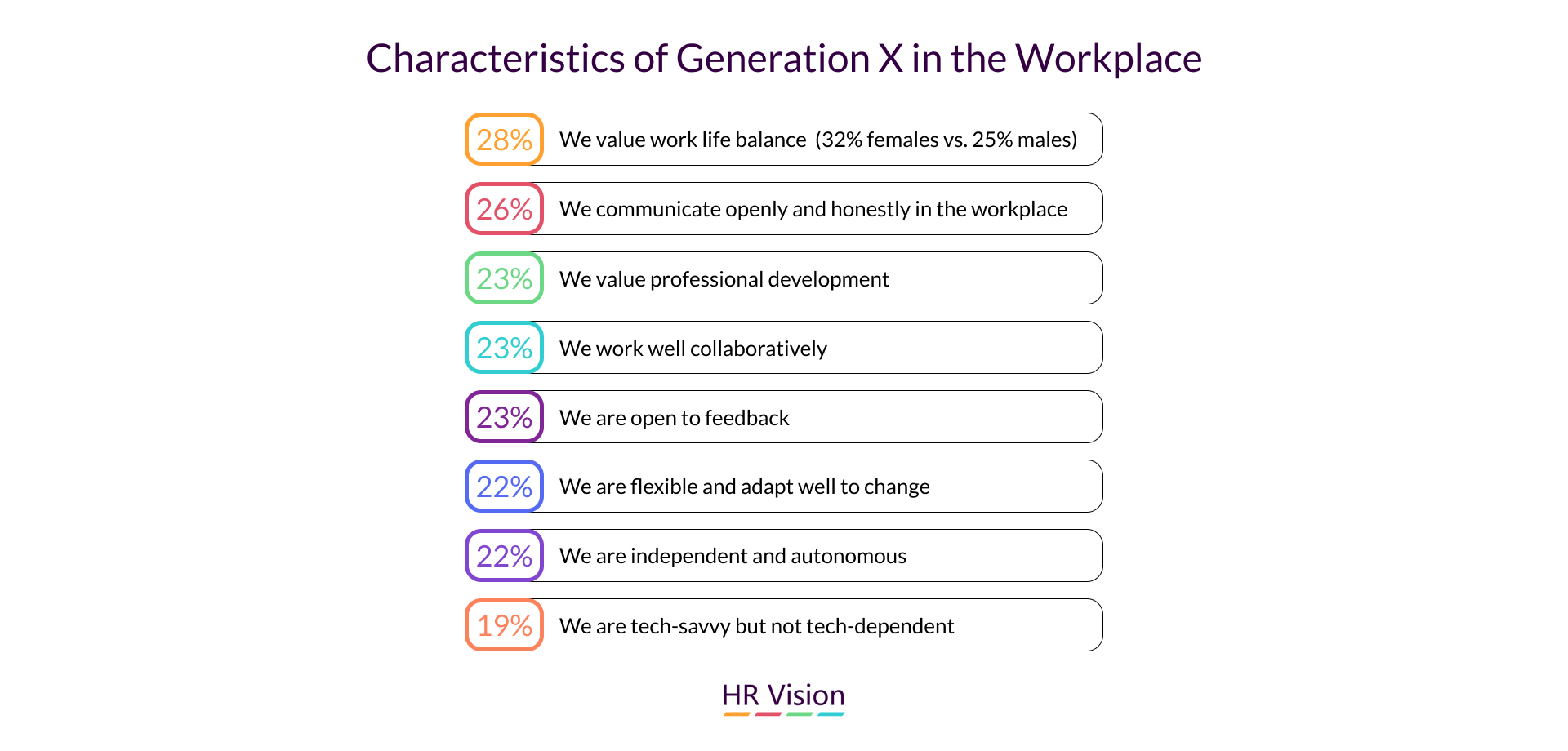
In the workplace, 26% of Gen X workers value open and honest communication. This generation values transparency and clear communication from leadership and colleagues. They expect straightforward, respectful exchanges of ideas and feedback, and they appreciate environments where they can express their opinions without fear of repercussions. Gen X workers are less likely to tolerate workplace politics or vague communication, preferring honesty and clarity in all interactions.
Professional growth is important to 23% of Gen X employees, highlighting their desire to continue learning and advancing in their careers. Although this generation may not be as focused on climbing the corporate ladder as previous generations, they still value opportunities to acquire new skills, broaden their knowledge, and stay competitive in the workforce. Whether through formal training programs, mentorship, or self-guided learning, Gen Xers are proactive in seeking ways to grow professionally and ensure long-term career stability.
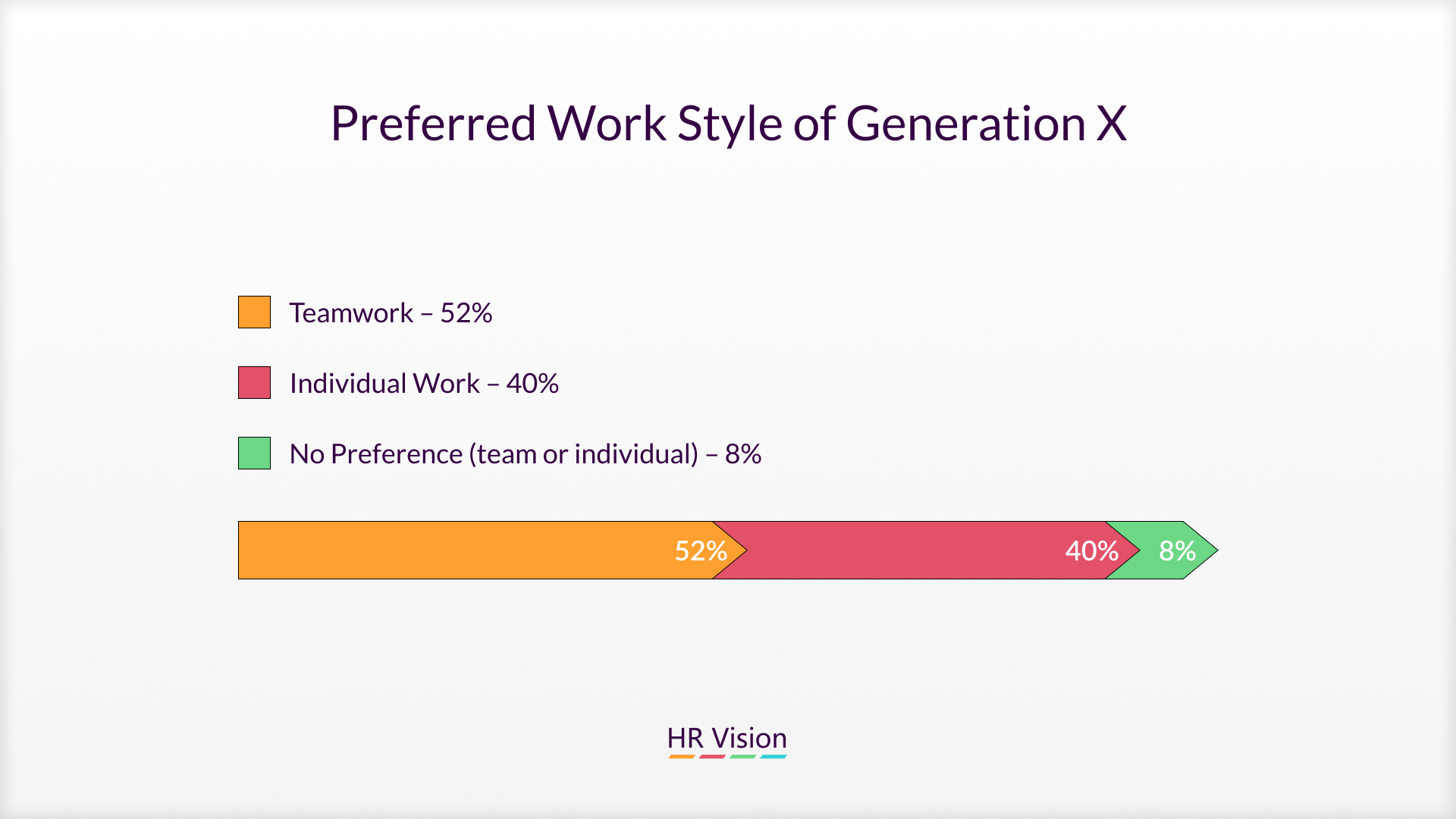
When it comes to the type of work they prefer, 52% of surveyed Gen X employees chose teamwork as their preferred mode of working. They value collaboration and believe that working in teams fosters creativity and problem-solving. However, 40% prefer working individually, reflecting the independence and self-reliance that characterize this generation. Only 8% of respondents indicated that it wouldn’t matter whether they worked in a team or individually. This indicates that while teamwork is valued, Gen X also enjoys the autonomy of individual work when needed.
Effective Management Techniques for Gen X
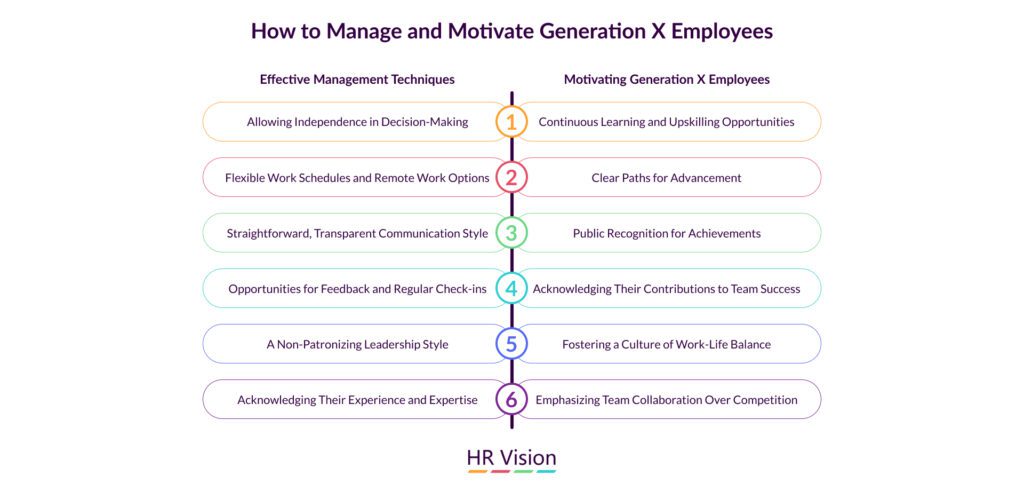
1. Allowing Independence in Decision-Making
Gen X values independence and self-reliance, so providing them with the autonomy to make decisions is key to engaging and motivating them. Allowing employees to take ownership of their projects and make decisions without micromanagement shows trust and respects their experience. This also leads to higher job satisfaction as Gen X workers feel empowered and responsible for their outcomes.
2. Flexible Work Schedules and Remote Work Options
As mentioned earlier, work-life balance is a priority for Gen X, so offering flexible work schedules or remote work options can go a long way in attracting and retaining this generation. Allowing them to design their own work schedules, or enabling them to work from home when necessary, gives them more control over their time and helps them achieve a better balance between their professional and personal lives.
3. Straightforward, Transparent Communication Style
Gen Xers value honest, clear, and direct communication. They expect transparency from their leaders and colleagues. Managers should avoid vague language and communicate decisions, changes, and expectations in a straightforward manner. This transparency helps build trust and ensures that Gen X employees understand the reasoning behind decisions, which in turn reduces confusion and increases their engagement.
4. Opportunities for Feedback and Regular Check-ins
Providing Gen X employees with regular opportunities to give and receive feedback is essential. They appreciate constructive feedback that helps them improve their work, but they also want to know that their opinions are heard. Regular check-ins provide a space for open discussion and can help managers address concerns or issues early on. This approach fosters a two-way conversation that builds trust and strengthens relationships between employees and management.
5. A Non-Patronizing Leadership Style
Gen X tends to be skeptical of authority figures and hierarchical structures. They value leaders who treat them as equals and who avoid micromanaging or being overly controlling. A non-patronizing leadership style that empowers employees to take initiative and make decisions fosters trust and respect. Gen X workers appreciate leaders who show respect for their experience and expertise, rather than trying to assert dominance or impose unnecessary rules.
6. Acknowledging Their Experience and Expertise
Gen X brings a wealth of experience and knowledge to the workplace, and they appreciate being recognized for their contributions. Acknowledging their expertise and valuing their insights not only boosts morale but also promotes a sense of belonging and purpose. Managers should leverage the skills and experience of Gen X employees, giving them opportunities to mentor others or lead projects. This recognition helps Gen X employees feel valued and reinforces their commitment to the organization.
Motivating Generation X Employees
Career Development and Growth Opportunities
Generation X values continuous learning and the opportunity to grow in their careers. To keep them motivated, it’s important for employers to provide:
- • Continuous Learning and Upskilling Opportunities: Gen X employees appreciate access to professional development programs, training courses, and certifications that allow them to stay current in their field. This generation understands the importance of evolving their skills to remain competitive and relevant in a rapidly changing work environment.
- • Clear Paths for Advancement: Gen Xers want to know that their hard work can lead to career advancement. Offering clear and transparent paths for promotion, as well as opportunities to take on new challenges, helps keep them motivated and engaged. They may not be as focused on rapid promotions as younger generations, but they value job stability and incremental progress.
Recognition and Appreciation
Acknowledging the efforts of Gen X employees is essential to keep them motivated and engaged. Key approaches include:
- • Public Recognition for Achievements: Publicly acknowledging accomplishments—whether in team meetings or company-wide communications—helps Gen X employees feel valued. Recognition not only boosts morale but also fosters a sense of pride in their work.
- • Acknowledging Their Contributions to Team Success: Gen X workers appreciate being recognized for their role in contributing to team successes. Highlighting their achievements in a collaborative context reinforces the importance of teamwork and strengthens relationships with peers.
Creating a Positive Work Environment
A positive, supportive work environment is crucial for keeping Gen X employees motivated. Important aspects include:
- • Fostering a Culture of Work-Life Balance: As previously mentioned, Gen X places high value on work-life balance. Employers can keep them motivated by offering flexible work arrangements, encouraging time off, and respecting personal boundaries to avoid burnout.
- • Emphasizing Team Collaboration Over Competition: While Gen X values independence, they also thrive in collaborative environments. Encouraging teamwork rather than a competitive, cutthroat atmosphere helps build trust and cooperation, leading to greater job satisfaction and motivation.
Conclusion
As the workforce becomes increasingly multigenerational, it’s crucial for HR professionals to adapt practices that meet the diverse needs of employees from all generations. Understanding the unique characteristics of Generation X, as well as those of Baby Boomers, Millennials, and Gen Z, will enable organizations to create inclusive, supportive environments where everyone can thrive.
Looking ahead, Generation X will continue to play an important role in the workforce. With their mix of experience, independence, and adaptability, Gen X workers are essential to bridging the gap between younger and older generations. As companies navigate the evolving work landscape, prioritizing the needs and preferences of Gen X will ensure their continued success in the workplace.
Want to learn more about managing and motivating a multigenerational workforce? Join us at HR Vision! At this two-day event, we’ll bring together top HR leaders to discuss the best strategies for navigating the evolving landscape of work.


